 Ver en contexto
 Enviar
 Compartir
 Detalles

 Descargar
 Similares
 Radiografía
 Presentación de diapositivas
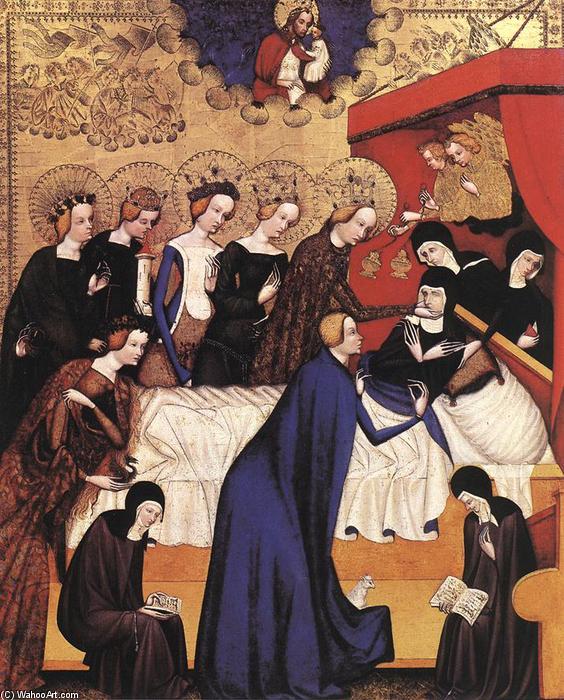
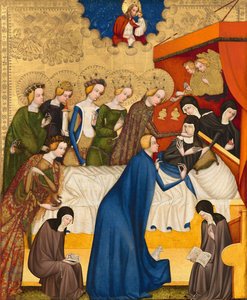
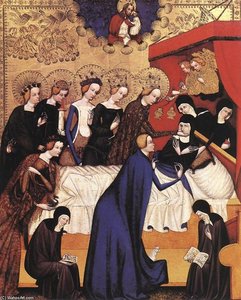
La muerte de Santa Clara
 Acrílico sobre lienzo
- Arte de pared
- International Gothic Style
 1410
1410 66.0 x 53.0 cm
 Galería Nacional de Arte
 Ver más
Giclée / Impresión de arte
Impresiones giclée o en lienzo de calidad de museo con producción rápida y opciones de acabado flexibles. ( Comprar pintura hecha a mano Comprar imagen)




P118B $10

P118H $10

P118W $10

P438Z $10

P508JH $12

P508YH $12

P805H $10

P805Z $10

P919BZ $10

P919G $10

P919XJ $10

P959ZH $10

P968JZ $12

W106C $8

W218G $10

W218JH $8

W218Y $10

W307PJ $10

W316G $10

W316PJ $8

W316Y $10

W398PJ $8

W4111J $10

W500HY $15

W500JH $15

W692G $12

W849H $8

W940BG $15

W953PJ $8




Elija entre nuestros tamaños predefinidos que respetan las proporciones originales de la obra.

Puede introducir sus propias dimensiones para adaptarse a un marco o espacio específico. Si el tamaño seleccionado no coincide con las proporciones de la imagen original, recortaremos la obra de arte o extenderemos la imagen con un borde con efecto espejo o de color sólido. Se enviará una maqueta digital para su aprobación antes de que comience la producción.
Tenga en cuenta que la vista previa en pantalla no refleja el recorte o la extensión real. Solo la maqueta mostrará con precisión la composición final.
Aunque existen tamaños personalizados, recomendamos seleccionar una dimensión de la lista predefinida para preservar las proporciones originales.
Envío a todo el mundo () en 2 semanas en lugar de las 4/5 semanas estándar. (29 agosto)

Envío exprés gratuito a todo el mundo

Lienzo de lino de alta calidad

Seguro de envío total

Garantía de reembolso de impuestos aduaneros

Garantía de fidelidad cromática exacta

Política de devolución de 60 días (solo por defectos)

Garantía de devolución del 100% del dinero

Descuento por cantidad
 La opción de vidrio solo está disponible en tamaños inferiores a 110 cm.

La muerte de Santa Clara
Giclée / Impresión de arte
Dimensiones de la reproducción
-


Precio total final
$ 62
El Maestro de Heiligenkreuz y La Muerte de Santa Clara: Un Estudio Sobre la Religiosidad Visual Medieval
La identidad del “Maestro de Heiligenkreuz” sigue siendo uno de los enigmas más fascinantes de la historia del arte, un rompecabezas cautivador que ha ocupado a eruditos durante más de un siglo. Este pintor austriaco activo principalmente en el primer cuarto del siglo XV produjo una obra impresionante caracterizada por escenas religiosas dramáticas – particularmente representaciones de la muerte de Santa Clara y Annunciaciones – que muestran una mezcla única de estilo gótico e internacional gótico. Aunque sus orígenes precisos permanecen ocultos, rastrear la evolución de su arte ofrece una visión fascinante del paisaje artístico de principios del Renacimiento Central Europeo. El descubrimiento temprano de los diptychos – dos paneles pintados unidos – atribuidos al Maestro en el monasterio Cisterciense de Heiligenkreuz, Austria, alrededor de 1400-1410, estableció inmediatamente su estilo distintivo: figuras alargadas con manos delicadas, una característica común entre artistas de la época que buscaban transmitir emociones profundas y belleza estética. Esta técnica innovadora fue influenciada por las tradiciones artísticas francesas pero también reflejó las tendencias regionales austriacas, donde el interés por la representación realista y simbólica estaba creciendo. Los investigadores actuales consideran que el Maestro recibió formación en París, aunque desarrolló una sensibilidad propia que lo llevó a producir obras originales con un carácter único. La composición de “La Muerte de Santa Clara” ejemplifica magistralmente las convenciones artísticas del período medieval tardío. El artista utilizó la técnica del temple sobre paneles de madera, una práctica frecuente para el arte religioso en esa época, buscando crear una imagen rica en colores y texturas que evocara sentimientos religiosos y morales. La iluminación dorada cuidadosamente aplicada refuerza esta intención expresiva, simbolizando la luz divina asociada con la santidad y la trascendencia espiritual. Además, los detalles minuciosos de las vestimentas religiosas – especialmente las capas largas y los tocados femeninos – reflejan la importancia de la apariencia física en la sociedad medieval, donde la imagen era considerada esencial para transmitir mensajes religiosos y culturales. El cuadro captura un momento crucial en la vida de Santa Clara: su muerte rodeada por otras monjas y figuras angelicales que expresan dolor y devoción. Esta escena simboliza el paso del mundo terrenal al reino celestial, una temática recurrente en el arte religioso medieval que buscaba ofrecer inspiración espiritual y reforzar los valores morales cristianos. La habilidad del Maestro para transmitir emociones humanas complejas – como la tristeza, la esperanza y la fe – demuestra su dominio de las técnicas pictóricas tradicionales y su profundo conocimiento de la psicología humana. Más allá de su valor artístico, “La Muerte de Santa Clara” ofrece información valiosa sobre las creencias religiosas y culturales de la época medieval tardía. Este cuadro sigue siendo una obra maestra que invita a la reflexión sobre cuestiones fundamentales como la muerte, el sufrimiento y la salvación, temas centrales en la filosofía cristiana y en la sensibilidad artística del siglo XV. Una reproducción de alta calidad puede aportar belleza estética y profundidad emocional a cualquier espacio interior, ofreciendo un vínculo con la historia del arte y la espiritualidad medieval.- Título: La Muerte de Santa Clara
- Artista: Maestro de Heiligenkreuz
- Fecha: 1410
- Material: Temple sobre madera
- Ubicación Actual: Museo Nacional de Arte en Washington, Estados Unidos
Obras relacionadas
![Leyenda De San Francisco - [23] - San Francisco Lamentado Por Santa Clara — Giotto Di Bondone, Gótico](/media/artworks/images-thumb/17/1c/171c284c41dc3ef8bca83e51c1e1e531.jpg)
Biografía del artista
The Enigmatic Master of Heiligenkreuz: A Portrait of a Lost Renaissance
The identity of the “Master of Heiligenkreuz” remains one of art history’s most enduring mysteries, a captivating puzzle that has occupied scholars for over a century. This Austrian painter, active primarily during the first half of the 15th century, produced a remarkable body of work characterized by dramatic religious scenes—particularly depictions of St. Clare’s death and Annunciations—that showcase a unique blend of Gothic and International Gothic styles. While his precise origins remain elusive, tracing the evolution of his art offers a fascinating glimpse into the artistic landscape of early Renaissance Central Europe.
The earliest known works attributed to the Master are diptychs – two-panel paintings – discovered at the Cistercian Abbey of Heiligenkreuz in southeastern Austria. These pieces, dating from around 1400-1410, immediately established his distinctive style: elongated figures with delicate hands and faces, a penchant for rich color palettes, and an expressive use of light and shadow. The left panel depicts the Annunciation, showcasing the Virgin Mary receiving the news of her divine conception, while the reverse portrays the Madonna and Child – a tender scene brimming with serenity. The right panel presents the Mystical Marriage of Saint Catherine, alongside Saint Dorothy, demonstrating a masterful command of detail and emotional depth.
What immediately sets the Master’s work apart is its synthesis of influences. While firmly rooted in the Gothic tradition—evident in his meticulous rendering of drapery and architectural details—he also absorbed elements from the International Gothic style, which was gaining prominence across Europe at the time. This fusion resulted in a highly individualistic aesthetic, characterized by an almost unsettling realism combined with a profound sense of spirituality. The figures possess a certain elongated quality, reminiscent of Northern European art, yet their expressions are imbued with a palpable emotional intensity rarely seen in contemporary works.
Several theories have been proposed regarding the Master’s origins and artistic influences. Initially, scholars suggested a French connection, pointing to similarities with Franco-Burgundian goldsmithing techniques evident in his use of gold leaf and decorative elements. Later investigations explored potential links to Prague, citing stylistic parallels with panel painting workshops active at the Bohemian court. The debate continues, fueled by the scarcity of documentary evidence and the fragmentary nature of the surviving corpus. It’s possible that the Master was an itinerant artist, traveling between different courts and absorbing influences from various artistic centers.
Despite the lack of definitive answers about his identity, the Master of Heiligenkreuz's legacy is undeniable. His paintings are prized for their emotional intensity, technical skill, and unique stylistic synthesis. They represent a crucial link in the development of early Renaissance art in Austria, bridging the gap between the late Gothic period and the burgeoning realism of the High Renaissance. Works like “The Death of St. Clare,” currently housed at the National Gallery of Washington D.C., exemplify his ability to convey profound religious themes with remarkable sensitivity and dramatic power. The enduring mystery surrounding his life and origins only adds to the allure of this enigmatic artist, ensuring that the Master of Heiligenkreuz will continue to fascinate art historians for generations to come.
Key Works & Characteristics
- The Death of St. Clare (c. 1400-1410): National Gallery of Art, Washington D.C. – A cornerstone of the Master’s oeuvre, showcasing his dramatic use of light and shadow to convey a sense of profound sorrow and spiritual transcendence.
- Annunciation (c. 1400-1410): Cistercian Abbey of Heiligenkreuz – Demonstrates the artist's mastery of composition and detail, capturing the moment of divine revelation with remarkable precision.
- Mystical Marriage of Saint Catherine (c. 1400-1410): Cistercian Abbey of Heiligenkreuz – Highlights the Master’s ability to imbue religious figures with a sense of human emotion and vulnerability.
- Diptychs:** The majority of the Master's known works are diptychs, reflecting the prevalent format for devotional paintings during this period.
Stylistic Influences & Techniques
The Master’s style is a complex synthesis of influences. He drew heavily from the Gothic tradition, evident in his meticulous attention to detail, particularly in the rendering of drapery and architectural elements. However, he also incorporated elements of the International Gothic style, characterized by elongated figures, delicate hands, and an expressive use of color. His technique involved layering thin glazes of paint to achieve luminous effects and creating a sense of depth through careful modeling of forms. The use of gold leaf was particularly prominent, adding richness and splendor to his works.
Historical Context & Legacy
The Master of Heiligenkreuz operated during a period of significant artistic and cultural change in Central Europe. The rise of the Renaissance coincided with the decline of feudalism and the emergence of new urban centers. His work reflects this dynamic environment, blending traditional religious iconography with innovative stylistic approaches. Despite the lack of definitive biographical information, his paintings are considered to be among the most important examples of early Renaissance art in Austria, offering valuable insights into the artistic development of the region. The enduring mystery surrounding his identity only serves to heighten the fascination with this enigmatic and profoundly talented artist.
master of heiligenkreuz
Austria
Datos clave
- Artistic Movement Or Style: International Gothic
- Artists Or Movements Influenced By This Artist: ['French and German artists']
- Artists Who Influenced This Artist:
- Franco-Burgundian goldsmiths
- Prague panel painters
- Date Of Birth: c. 1395-1430
- Full Name: Master of Heiligenkreuz
- Nationality: Austrian
- Notable Artworks:
- The Death of St. Clare
- Annunciation
- Mystical Marriage of Saint Catherine
- Place Of Birth: Heiligenkreuz, Austria
Artículos relacionados
El Resplandor del Tiempo: Explorando la Técnica y el Legado de la Témpera sobre Tabla
Descubra la fascinante historia y técnica de la témpera sobre tabla. Explore los materiales, el simbolismo y la conservación de esta antigua forma de arte con ArtsDot.
Las 10 Obras Maestras del Alto Medieval: Arte, Historia y Decoración Exclusiva
Descubre las 10 obras maestras del Alto Medieval. Explora la historia, el simbolismo y la belleza de la pintura románica y gótica. Reproducciones exclusivas en ArtsDot.com para decorar tu hogar con arte atemporal.
Illuminating History: A Comprehensive Exploration of Tempera Painting Techniques & Artistic Legacy
Explore the rich history & techniques of tempera painting! Discover Renaissance masters like Botticelli & Fra Angelico, conservation insights, and the enduring legacy of this captivating art form.

El Greco: Las 25 Obras Maestras que Definen un Genio del Arte y la Fe
Descubre las 25 obras maestras de El Greco, el genio del Renacimiento español. Explora su arte religioso, manierismo y la historia detrás de cuadros icónicos como 'El Entierro del Conde de Orgaz'. Encuentra reproducciones de alta calidad en ArtsDot.com.

10 Obras Maestras Medievales que Definen el Arte (y tu Hogar)
Descubre 10 obras maestras del arte medieval, desde Duccio a Van Eyck. Explora la historia, simbolismo y belleza de Giotto, Simone Martini y más. Encuentra reproducciones de alta calidad para decorar tu hogar en ArtsDot.com.