

 Ver en contexto
 Enviar
 Compartir
 Detalles

 Descargar
 Similares
 Radiografía
 Presentación de diapositivas
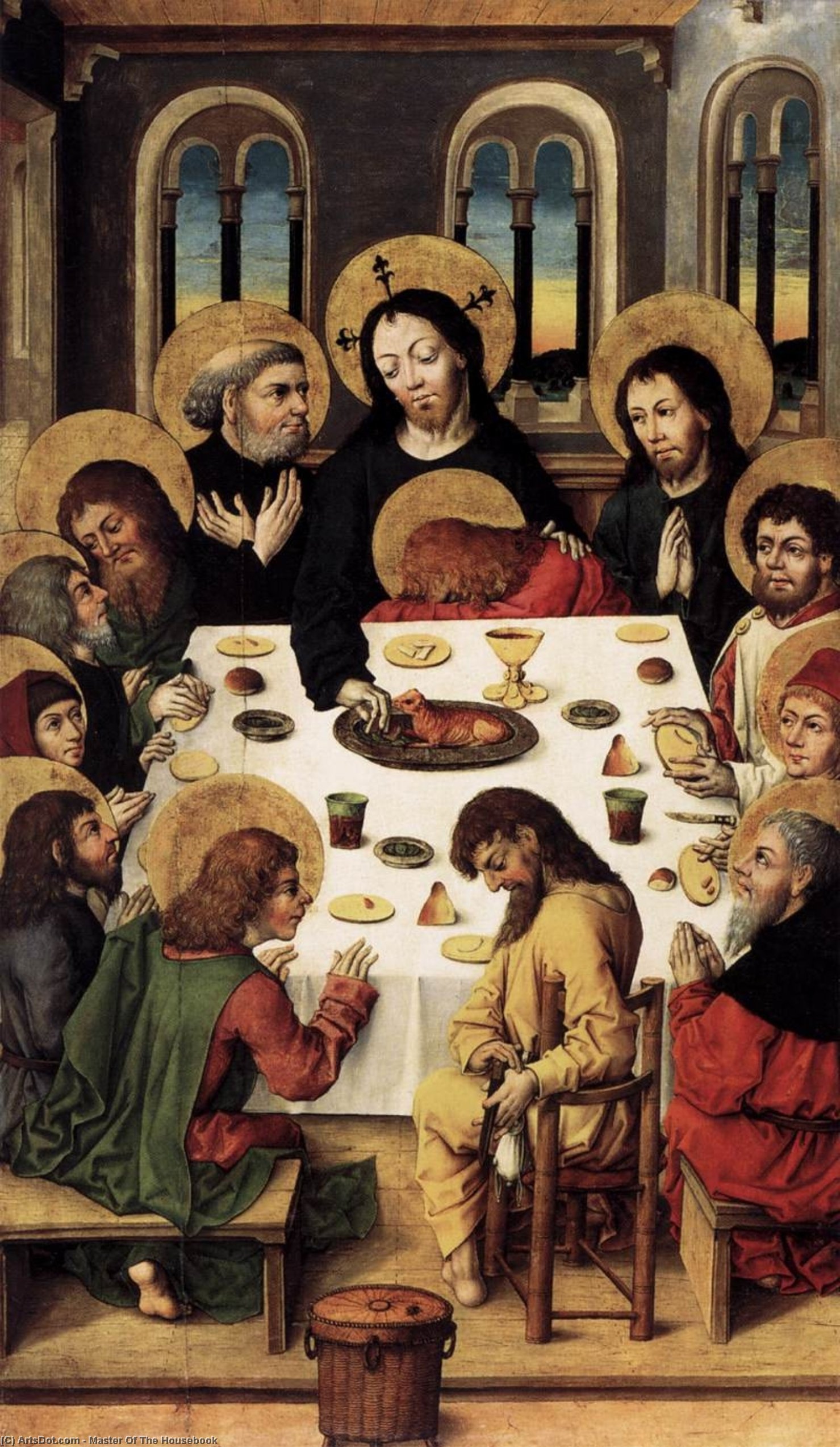
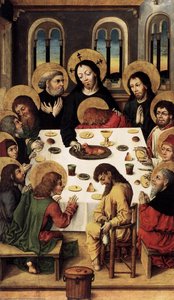
La Última Cena
 Óleo sobre lienzo
- Arte de pared
 1475
1475 131.0 x 76.0 cm
 Staatliche Museen zu Berlin
 Ver más
Adquiera una imagen digital de alta resolución y optimizada, muy superior a la vista previa en línea.
Cada archivo es preparado meticulosamente por nuestros especialistas internos mediante el uso de herramientas avanzadas y un experto retoque manual. Nos aseguramos de que cada imagen posea una claridad excepcional, una precisión cromática impecable y un detalle minucioso.
El archivo final se entrega por correo electrónico en un plazo de 72 horas, optimizado para su uso inmediato en entornos profesionales, editoriales y de impresión. Esta es la misma calidad en la que confían los estudios de diseño, las editoriales y las galerías de primer nivel.
Imagen Digital
Descarga un archivo de alta resolución para exhibición personal, impresión y proyectos creativos. ( Comprar impresión Comprar pintura hecha a mano)
Incluido en cada pedido de imágenes digitales
Entrega digital experta, garantizada.
Al elegir ArtsDot.com, no solo está adquiriendo una imagen; está recibiendo una obra de arte digital mejorada profesionalmente, elaborada con precisión y respaldada por una garantía de satisfacción. Esto es todo lo que incluye su pedido, automáticamente:

Entrega rápida por email
Recibirá su archivo de imagen digital en alta resolución por correo electrónico en un plazo de 72 horas tras realizar su pedido, listo para su uso inmediato.

Archivo digital optimizado por IA
Su obra de arte se optimiza profesionalmente mediante herramientas avanzadas de IA y edición manual, garantizando el máximo detalle, claridad y precisión cromática.

Reenvío gratuito de por vida
¿Has borrado o perdido tu archivo por error? No te preocupes: te lo volveremos a enviar en cualquier momento, sin coste adicional.

Sin gastos de importación, siempre
Disfrute de su obra de arte al instante sin aduanas, aranceles ni gastos de envío; las descargas digitales siempre están libres de impuestos.

Garantía de fidelidad de color
Garantizamos que su imagen digital refleje los colores originales con la mayor fidelidad posible, mediante el uso de herramientas profesionales y gestión del color.

Garantía de satisfacción de 60 días
Si no está satisfecho con su imagen digital, la revisaremos o le reembolsaremos el 100% en un plazo de 60 días, sin preguntas.

100% Garantía de devolución de dinero
¿No está satisfecho? Obtenga un reembolso completo dentro de los 60 días posteriores a la recepción de su archivo digital, sin necesidad de explicaciones.

Descuentos por pedidos grandes
Compra 3 imágenes, ahorra 10% - Compra 5, ahorra 15% - Compra 10+, ahorra 20%. Ideal para proyectos creativos, galerías y agencias.
Obras relacionadas


Biografía del artista
The Enigmatic Master of the Housebook: A Renaissance Pioneer
The identity of the “Master of the Housebook” remains one of art history’s most enduring mysteries, a captivating puzzle that has occupied scholars for over a century. This anonymous artist, active in South Germany during the late 15th and early 16th centuries, stands as a pivotal figure bridging the gap between the Late Gothic and Early Renaissance periods. His legacy isn't defined by grand monuments or universally recognized masterpieces, but rather by a remarkable collection of prints – ninety-one works that offer an unprecedented glimpse into the daily life, social customs, and artistic sensibilities of his time. The core of his fame rests upon the “Housebook of Wolfegg Castle,” a lavishly illustrated manuscript commissioned by the Waldburg-Wolfegg noble family, which provides both the subject matter and the visual vocabulary for his prints.
The Housebook itself is a treasure trove of information. It’s not merely a chronicle of courtly life; it's a practical manual encompassing household management, weaponry instruction (including detailed depictions of siege engines), mining techniques, recipes, astrological observations, and even moral tales – all rendered in vibrant watercolor illustrations. The artist’s skill is immediately apparent: he masterfully blended meticulous detail with a remarkable sense of dynamism and human interest. The scenes are not idealized or allegorical; they depict ordinary people engaged in everyday activities—farmers tending their fields, servants preparing meals, huntsmen pursuing game, and noblemen enjoying leisure pursuits. This focus on secular subjects was remarkably progressive for the era, marking a departure from the predominantly religious themes that dominated much of medieval art.
The Art of Drypoint: A Revolutionary Technique
What truly distinguishes the Master of the Housebook is his pioneering use of drypoint engraving – a technique he essentially invented. Unlike traditional engraving, which relies on incising lines into metal with sharp tools, drypoint involves scratching an image directly onto a copper plate using a needle or stylus. This creates a burr—a raised ridge along the line—that catches ink and produces a velvety, soft tonal effect. The result is a print that possesses a unique richness and immediacy, capturing subtle gradations of light and shadow with unparalleled sensitivity. The limited number of impressions possible with drypoint – typically only ten to twenty – further enhances the rarity and value of his prints.
This technique was revolutionary for its time, offering an unprecedented level of detail and tonal variation. It allowed the artist to create images that were remarkably lifelike and expressive, capturing not just the appearance but also the texture and atmosphere of the subjects depicted. The influence of this innovation can be seen in the work of later engravers, most notably Albrecht Dürer, who adopted drypoint as a key component of his artistic practice.
Notable Works and Recurring Themes
Among the Master’s numerous prints, several stand out for their technical brilliance and expressive power. “The Lovers” (also known as the Gotha Lovers), depicting a young couple embracing under a canopy of scrolls, is arguably his most famous work. The painting captures an intimate moment of affection with remarkable realism and tenderness. Other notable works include depictions of hunting scenes, household activities, and portraits of noble figures. Recurring themes in his oeuvre include domesticity, leisure, and the celebration of human life – subjects that reflect the artist’s interest in portraying the everyday experiences of his patrons.
The “Pair of Peasants Fighting” is another significant work, showcasing the artist's ability to capture movement and emotion. The dynamic composition and expressive faces of the combatants demonstrate a keen understanding of human psychology. Similarly, the “Foolish Old Man and the Young Girl” offers a poignant commentary on social inequality and the folly of age-based prejudice.
The Identity Debate: Erhard Reuwich and Beyond
For decades, art historians have debated the identity of the Master of the Housebook. The most enduring theory – championed by Arthur Mayger Hind – identifies him as Erhard Reuwich, a Utrecht-based engraver and printer who is believed to have created the panoramic view of Venice in 1483/84 for Jean de Berry’s itinerary. This identification rests on stylistic similarities between Reuwich's woodcuts and the engravings attributed to the Master, as well as evidence suggesting that Reuwich worked for the Waldburg-Wolfegg family. However, this attribution remains controversial, with some scholars arguing that the stylistic differences are too significant to ignore.
Despite ongoing debate, the “Master of the Housebook” continues to fascinate art historians and collectors alike. His prints represent a remarkable achievement in printmaking—a testament to his technical skill, artistic vision, and profound understanding of human nature. The mystery surrounding his identity only adds to the allure of this enigmatic Renaissance pioneer.
Breves datos
- Artistic Movement Or Style: Early Netherlandish
- Artists Or Movements Influenced By This Artist: ['Albrecht Dürer']
- Artists Who Influenced This Artist:
- Masaccio
- Martin Schongauer
- Full Name: Master of the Housebook
- Nationality: German
- Notable Artworks:
- The Lovers
- Two Peasants Fighting
- Virgin in the Clouds
- Place Of Birth: South Germany

