 Ver en contexto
 Enviar
 Compartir
 Detalles

 Descargar
 Similares
 Radiografía
 Presentación de diapositivas
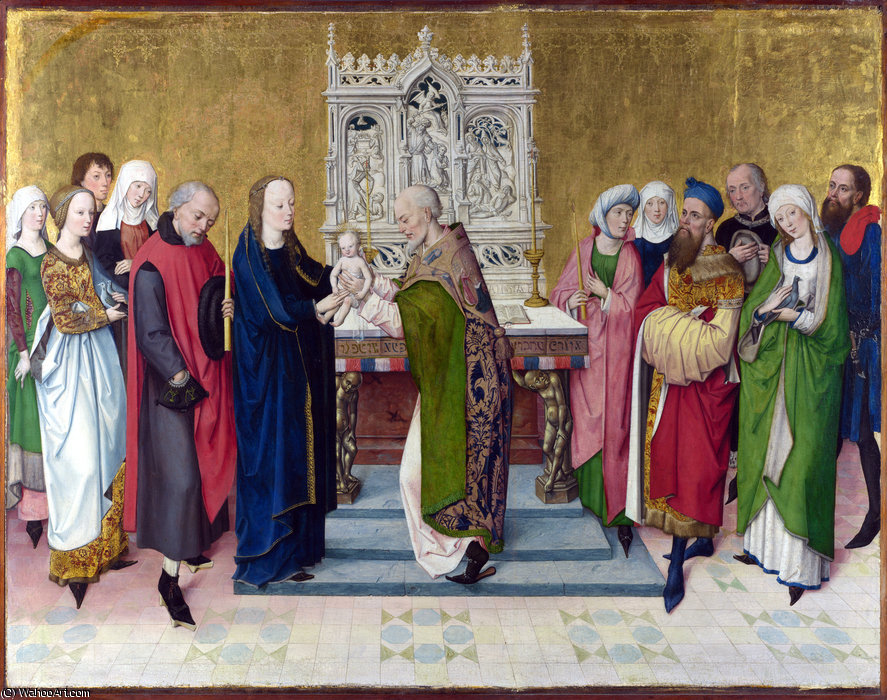
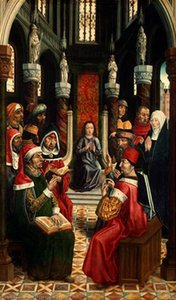
Presentation in the Temple
 Ver más
Giclée / Impresión de arte
Impresiones giclée o en lienzo de calidad de museo con producción rápida y opciones de acabado flexibles. ( Comprar pintura hecha a mano Comprar imagen)




































Elija entre nuestros tamaños predefinidos que respetan las proporciones originales de la obra.

Puede introducir sus propias dimensiones para adaptarse a un marco o espacio específico. Si el tamaño seleccionado no coincide con las proporciones de la imagen original, recortaremos la obra de arte o extenderemos la imagen con un borde con efecto espejo o de color sólido. Se enviará una maqueta digital para su aprobación antes de que comience la producción.
Tenga en cuenta que la vista previa en pantalla no refleja el recorte o la extensión real. Solo la maqueta mostrará con precisión la composición final.
Aunque existen tamaños personalizados, recomendamos seleccionar una dimensión de la lista predefinida para preservar las proporciones originales.
Envío a todo el mundo () en 2 semanas en lugar de las 4/5 semanas estándar. (3 septiembre)

Envío exprés gratuito a todo el mundo

Lienzo de lino de alta calidad

Seguro de envío total

Garantía de reembolso de impuestos aduaneros

Garantía de fidelidad cromática exacta

Política de devolución de 60 días (solo por defectos)

Garantía de devolución del 100% del dinero

Descuento por cantidad
 La opción de vidrio solo está disponible en tamaños inferiores a 110 cm.

Presentation in the Temple
Giclée / Impresión de arte
Dimensiones de la reproducción
-


Precio total final
$ 62
Composition and Narrative
The painting depicts a group of people gathered around a baby, placed on a table or couch in the center of the room. Several men stand around the baby, some wearing robes while others are dressed in regular clothing. A few women can also be seen among the crowd. Notably, two dogs are present in the scene, one near the right side and another closer to the center. The setting appears to be a church or a similar religious environment, with a couch and table as part of the furnishings.Artistic Style
The Master Of The Life Of The Virgin is known for his detailed and intricate paintings, often focusing on religious themes. This particular work showcases his ability to create a sense of community and reverence in a single scene. The use of color and light adds depth and emotion to the painting, drawing the viewer's attention to the central figure of the baby.Similar Works
Other notable paintings that share similar themes and styles include:- Albrecht Durer's "The Adoration of the Magi" (https://ArtsDot.com)
- Rogier Van Der Weyden's "Presentation of Christ" (https://ArtsDot.com)
- Dierec Bouts's "The middle panel of The Pearl of Brabant: Adoration of the Magi" (https://ArtsDot.com)
Conclusion
"Presentation in the Temple" by Master Of The Life Of The Virgin is a significant work that highlights the artist's skill in creating engaging religious scenes. For those interested in exploring more of his works or similar paintings, https://ArtsDot.com offers a wide range of hand-made oil painting reproductions.This article is part of our ongoing series to explore and appreciate the masterpieces available on https://ArtsDot.com.
Obras relacionadas
![Adoración De Los Magos — El Joven Maestro De Los Claveles De Zúrich [nelkenmeister], Renacimiento Temprano](/media/artworks/images-thumb/2f/6d/2f6d73ec5fc9c27e013112f02083ff54.jpg)
Biografía del artista
A Shadowy Figure in Late Gothic Art
The identity of the “Master of the Life of the Virgin” remains one of art history’s most enduring mysteries. This elusive 15th-century Flemish painter, active primarily in Cologne and identified through his remarkably consistent style and a body of devotional panels depicting scenes from Mary's life, operated under an assumed name – a common practice among artists of the period. Often referred to as the “Meister des Marienlebens” (Master of the Virgin), or occasionally Johann van Duyren, he’s a figure shrouded in anonymity, yet his work profoundly influenced generations of Northern European painters. His legacy lies not just in the beauty of his paintings but also in the questions they raise about artistic attribution and the nature of creative genius.
The earliest evidence of his workshop dates back to around 1463, with the completion of a series of eight panels for the Ursulakirche (Ursuline Church) in Cologne. These scenes – including the Annunciation, Visitation, Nativity, Presentation in the Temple, Flight into Egypt, and various episodes from Mary’s childhood and later life – quickly established his reputation. The style is characterized by its serene elegance, a masterful use of color, and a remarkable attention to detail. He drew heavily on the influence of Netherlandish masters like Dirk Bouts and Rogier van der Weyden, incorporating their sophisticated draftsmanship and expressive figures into his own distinctive vision. However, he possessed a unique ability to imbue these borrowed elements with a profound sense of piety and emotional depth.
The Corpus of Works: A Devotional Cycle
Beyond the panels from Cologne, the Master’s workshop produced a significant body of work, primarily centered around altarpieces and individual devotional paintings. Notable examples include a striking Crucifixion for the hospital chapel in Bernkastel-Kues, an Adoration of the Magi for the Germanisches Nationalmuseum in Nuremberg, and a captivating Deposition at the Wallraf-Richartz Museum in Cologne. The “Triptych of Canon Gerhard ter Streegen de Monte” is another significant work, showcasing his skill in composition and narrative storytelling. The consistent quality across these diverse works—ranging from large-scale altarpieces to intimate devotional panels—demonstrates a highly organized and disciplined workshop, suggesting the involvement of numerous assistants and followers.
Interestingly, many of the scenes from the Life of the Virgin were not considered central or particularly important within the broader narrative. The Master’s cycle often included less-celebrated episodes, such as the Presentation of Mary at the Temple, reflecting a deep understanding of Marian devotion and a desire to offer a comprehensive portrayal of her life. The scarcity of surviving examples—particularly the central panel from the Werden altarpiece—further complicates our understanding of his output and contributes to the enduring mystery surrounding this artist.
Technique and Style: A Synthesis of Influences
The Master’s style is a compelling synthesis of Northern European Gothic and Early Renaissance influences. He employed tempera on wood, a technique favored by artists in the region at the time, achieving remarkable luminosity and detail. His figures are rendered with a graceful elegance, characterized by flowing drapery, subtle modeling, and expressive gestures. He demonstrated a sophisticated understanding of perspective and spatial relationships, creating scenes that feel both intimate and monumental. The use of color is particularly noteworthy—a rich palette of reds, blues, and golds, carefully balanced to create a sense of harmony and serenity.
The influence of Netherlandish masters is readily apparent in his draftsmanship and compositional structure. However, the Master’s work transcends mere imitation; he infused these borrowed elements with his own unique sensibility, creating paintings that are both technically proficient and emotionally resonant. His ability to convey a sense of profound piety and spiritual contemplation distinguishes him as one of the most important figures in late Gothic painting.
Historical Significance: A Window into Northern Renaissance Devotion
The Master of the Life of the Virgin’s work offers invaluable insights into the religious and artistic landscape of 15th-century Germany. His devotional panels reflect the growing importance of Mary within Christian piety, as well as the increasing demand for images of the Virgin and Child in private homes and churches. The cycle he created exemplifies the widespread practice of commissioning altarpieces and individual paintings depicting scenes from the Life of the Virgin—a testament to the enduring power of Marian devotion.
Despite the lack of a definitive identity, the Master’s work continues to captivate viewers with its beauty, serenity, and profound spiritual depth. He remains an enigmatic figure in art history, a shadowy master whose paintings serve as a poignant reminder of the mysteries that surround artistic creation and the enduring power of faith.
Datos clave
- Artistic Movement Or Style: Late Gothic
- Artists Or Movements Influenced By This Artist: ['Cologne School']
- Artists Who Influenced This Artist:
- Dirk Bouts
- Rogier van der Weyden
- Date Of Birth: c. 1463
- Date Of Death: c. 1490
- Full Name: Meister des Marienlebens
- Nationality: German
- Notable Artworks:
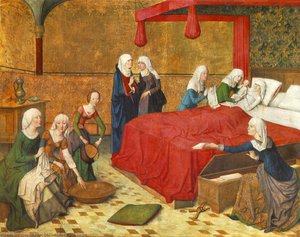
- The Birth of Mary
- Visitation
- Christ on the Cross
- Presentation in the Temple
- Place Of Birth: Cologne, Germany