

 Ver en contexto
 Enviar
 Compartir
 Detalles

 Descargar
 Similares
 Radiografía
 Presentación de diapositivas
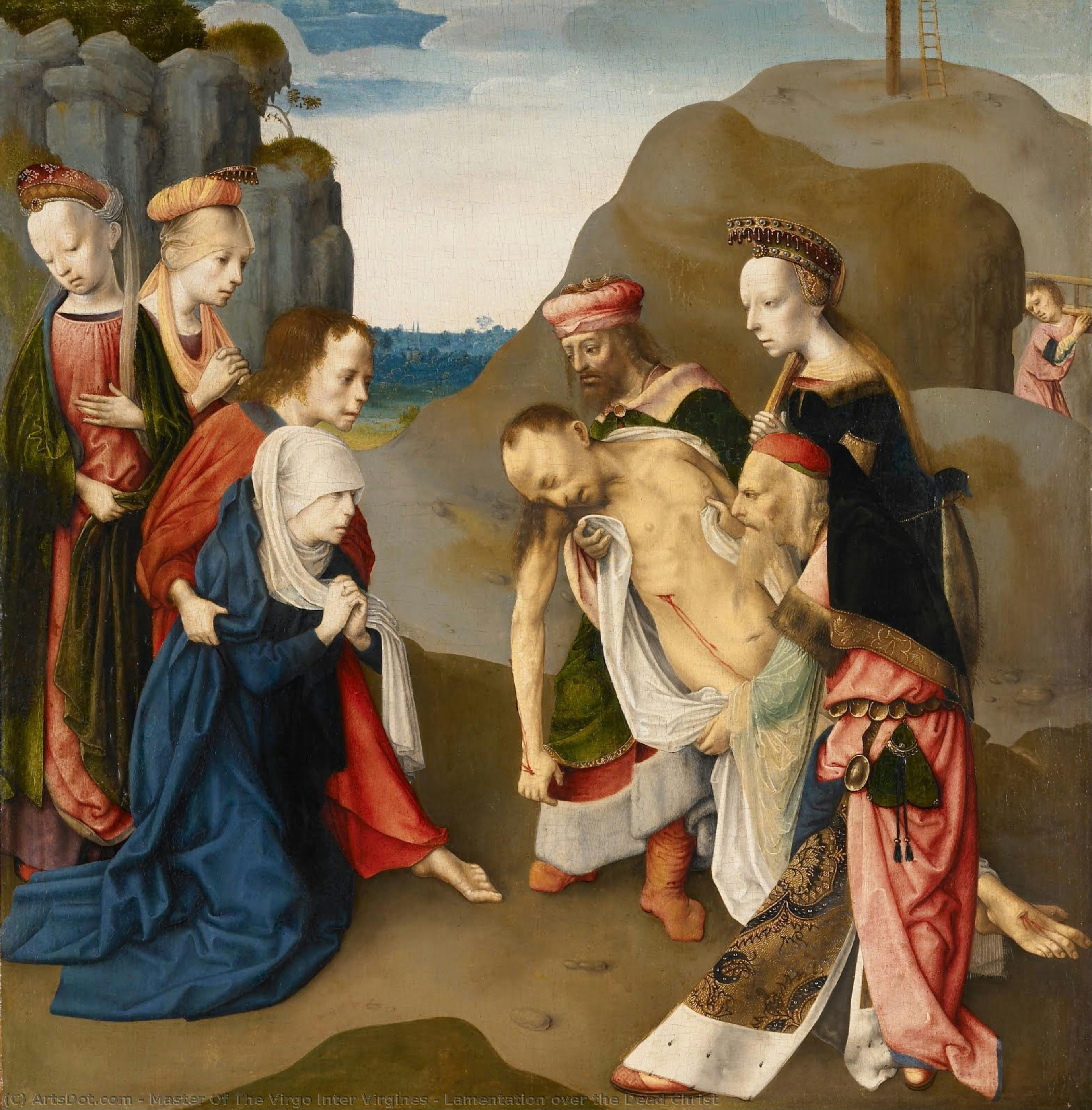
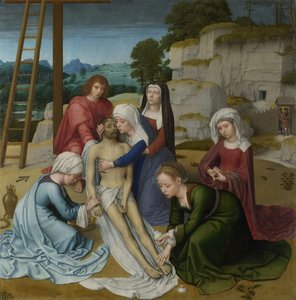
Lamentation over the Dead Christ
 Oil
Oil- WallArt
- Netherlandish realism
 1487
1487- Renaissance
 5630.0 x 5520.0 cm
 Galería de Arte Walker
 Ver más
Adquiera una imagen digital de alta resolución y optimizada, muy superior a la vista previa en línea.
Cada archivo es preparado meticulosamente por nuestros especialistas internos mediante el uso de herramientas avanzadas y un experto retoque manual. Nos aseguramos de que cada imagen posea una claridad excepcional, una precisión cromática impecable y un detalle minucioso.
El archivo final se entrega por correo electrónico en un plazo de 72 horas, optimizado para su uso inmediato en entornos profesionales, editoriales y de impresión. Esta es la misma calidad en la que confían los estudios de diseño, las editoriales y las galerías de primer nivel.
Imagen Digital
Descarga un archivo de alta resolución para exhibición personal, impresión y proyectos creativos. ( Comprar impresión Comprar pintura hecha a mano)
Incluido en cada pedido de imágenes digitales
Entrega digital experta, garantizada.
Al elegir ArtsDot.com, no solo está adquiriendo una imagen; está recibiendo una obra de arte digital mejorada profesionalmente, elaborada con precisión y respaldada por una garantía de satisfacción. Esto es todo lo que incluye su pedido, automáticamente:

Entrega rápida por email
Recibirá su archivo de imagen digital en alta resolución por correo electrónico en un plazo de 72 horas tras realizar su pedido, listo para su uso inmediato.

Archivo digital optimizado por IA
Su obra de arte se optimiza profesionalmente mediante herramientas avanzadas de IA y edición manual, garantizando el máximo detalle, claridad y precisión cromática.

Reenvío gratuito de por vida
¿Has borrado o perdido tu archivo por error? No te preocupes: te lo volveremos a enviar en cualquier momento, sin coste adicional.

Sin gastos de importación, siempre
Disfrute de su obra de arte al instante sin aduanas, aranceles ni gastos de envío; las descargas digitales siempre están libres de impuestos.

Garantía de fidelidad de color
Garantizamos que su imagen digital refleje los colores originales con la mayor fidelidad posible, mediante el uso de herramientas profesionales y gestión del color.

Garantía de satisfacción de 60 días
Si no está satisfecho con su imagen digital, la revisaremos o le reembolsaremos el 100% en un plazo de 60 días, sin preguntas.

100% Garantía de devolución de dinero
¿No está satisfecho? Obtenga un reembolso completo dentro de los 60 días posteriores a la recepción de su archivo digital, sin necesidad de explicaciones.

Descuentos por pedidos grandes
Compra 3 imágenes, ahorra 10% - Compra 5, ahorra 15% - Compra 10+, ahorra 20%. Ideal para proyectos creativos, galerías y agencias.
A Somber Symphony of Grief
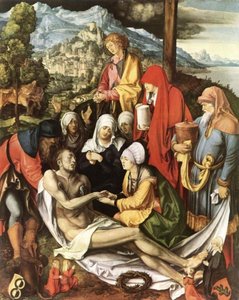
In the quiet, heavy atmosphere of the late fifteenth century, a profound stillness settles over the canvas of Lamentation over the Dead Christ. This evocative masterpiece, attributed to the enigmatic Master of the Virgo inter Virgines, captures one of the most poignant moments in Christian iconography: the mourning of Christ following his descent from the cross. The scene is not merely a depiction of death, but a visceral exploration of human sorrow. As we gaze upon the figures gathered around the lifeless body, we are drawn into a tight-knit circle of grief, where every bowed head and tear-streaked face serves as a mirror to our own capacity for loss. The composition, anchored by the pale, limp form of Christ, creates a powerful focal point that commands the viewer's immediate emotional attention.
The artist’s technique reflects the burgeoning realism of the Netherlandish tradition, moving away from the stylized elegance of earlier eras toward a more grounded, tactile reality. Through meticulous brushwork, the Master brings to life the textures of heavy drapery, the ruggedness of the hillside, and the delicate, translucent quality of skin in the throes of mourning. The lighting plays a crucial role in this narrative; it does not merely illuminate the scene but seems to emanate from the tragedy itself, casting soft shadows that deepen the folds of cloth and the hollows of eyes. This mastery of light and shadow—a precursor to the dramatic chiaroscuro seen in later centuries—imbues the work with a sculptural weight, making the figures feel present, breathing, and profoundly human.
Symbolism and the Weight of Devotion
Beyond its surface-level tragedy, the painting is rich with the symbolic language characteristic of the Dutch School. The arrangement of the nine visible figures is far from accidental; it creates a rhythmic movement of sorrow that guides the eye through the landscape of death. Each individual, from those kneeling in fervent prayer to those standing in silent contemplation, represents a different facet of devotion and communal mourning. The hillside setting, while providing a sense of place, also serves as a symbolic boundary between the earthly realm of suffering and the divine promise of resurrection. The starkness of the landscape emphasizes the isolation of death, yet the closeness of the group suggests that even in the deepest darkness, humanity finds solace in shared experience.
For the discerning collector or interior designer, this piece offers more than just historical significance; it provides a profound emotional anchor for any space. A high-quality reproduction of this work brings a sense of timelessness and contemplative depth to a room. Whether placed in a quiet study, a grand gallery, or a sophisticated living area, the Lamentation over the Dead Christ acts as a window into the soul of the Renaissance. It invites conversation, prompts reflection, and adds a layer of intellectual and spiritual gravity to an environment. To possess such a work is to hold a piece of history that continues to resonate with the universal themes of love, loss, and the enduring strength of the human spirit.
Obras relacionadas
Biografía del artista
The Enigmatic Shadow of the Netherlandish Renaissance
In the annals of fifteenth-century Northern European art, few figures possess a presence as haunting and elusive as the Master of the Virgo inter Virgines. A painter whose true name has been swallowed by the mists of time, he remains a phantom of the Dutch School, known only through the profound impact of his surviving works. Active primarily around Delft between the late 1480s and the dawn of the sixteenth century, this unnamed creator carved out a niche defined by an uncompromising commitment to realism. While many of his contemporaries leaned into the decorative flourishes of the late Gothic or the emerging Mannerist tendencies, this Master sought something deeper: a visceral, unadorned truth that captured the weight of human suffering and the quiet sanctity of divine grace.
The very identity of the artist is inextricably linked to one of the most celebrated altarpieces in the Rijksmuseum collection. The Virgin and Child with Four Holy Virgins, a monumental work completed around 1490, serves as the cornerstone of his known oeuvre. This piece, which once graced the convent of Koningsveld, showcases a painter capable of orchestrating complex theological narratives through a lens of stark naturalism. In this sacred gathering of Saint Catherine, Cecilia, Ursula, and Barbara, we see not just icons, but breathing, emotive figures rendered with an anatomical precision that was revolutionary for its time. It is through this singular masterpiece that art historians first began to distinguish his hand from the broader, more stylized traditions of the era.
A Legacy Forged in Realism and Devotion
The stylistic evolution of the Master suggests a profound engagement with the masters of the Ghent-Bruges school. Scholars often point to the expressive, heavy-set figures of Hugo van der Goes and the contemplative stillness found in the works of Dirk Bouts as primary influences that shaped his aesthetic. From these predecessors, he inherited a fascination with the psychological depth of his subjects, yet he departed from them by stripping away much of the ornamental excess. His work is characterized by a somber palette—deep earth tones, muted blues, and the stark, pale light that illuminates flesh in moments of profound vulnerability.
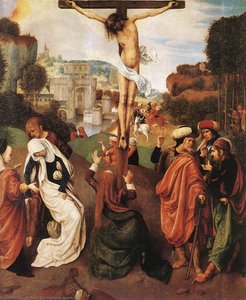
Beyond the celestial calm of his Marian compositions, the Master demonstrated a remarkable ability to navigate the darkest corridors of Christian iconography. His depictions of the Crucifixion and the Lamentation over the Dead Christ reveal an artist obsessed with the physical reality of sacrifice. In these works, the viewer is not merely a spectator to a religious event but a witness to the palpable weight of mortality. The handling of flesh tones in his more tragic scenes avoids idealization; instead, he captures the strain of muscle and the pallor of death, creating a symphony of grief that resonates with an almost modern intensity.
The historical significance of the Master of the Virgo inter Virgines lies in his role as a bridge between the medieval and the early modern. His contributions to both painting and the design of woodcuts helped establish a foundation for the Dutch tradition of realism that would flourish in later centuries. Though his biography remains a collection of scholarly fragments and educated guesses, his artistic voice remains unmistakable:
- Uncompromising Naturalism: A rejection of decorative artifice in favor of anatomical and emotional truth.
- Psychological Depth: The ability to convey complex internal states through subtle gesture and gaze.
- Mastery of Light and Texture: Using a somber, focused palette to heighten the spiritual gravity of his subjects.
Breves datos
- Artistic Movement Or Style: Realism
- Artists Or Movements Influenced By This Artist: ['Dutch School']
- Artists Who Influenced This Artist:
- Hugo van der Goes
- Geertgen tot Sint Jans
- Full Name: Master of the Virgo inter Virgines
- Nationality: Dutch
- Notable Artworks:
- Virgin and Child with Sts Catherine, Cecilia, Barbara, and Ursula
- Crucifixion
- Place Of Birth: Delft

