

 Ver en contexto
 Enviar
 Compartir
 Detalles

 Descargar
 Similares
 Radiografía
 Presentación de diapositivas
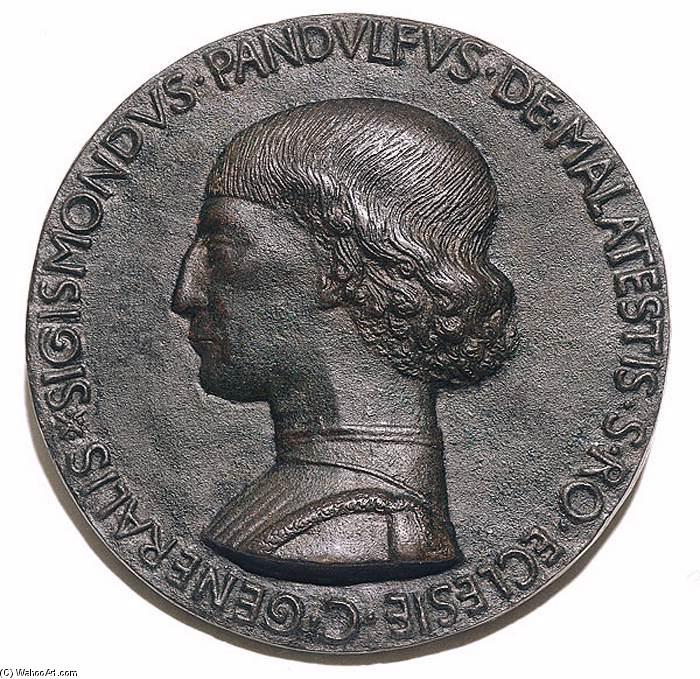
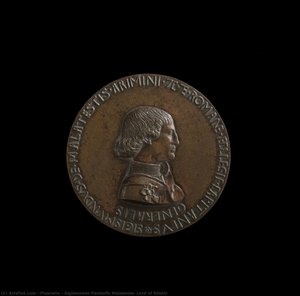
Portrait of Sigismondo Pandolfo Malatesta (obverse)


 Ver más
Giclée / Impresión de arte
Impresiones giclée o en lienzo de calidad de museo con producción rápida y opciones de acabado flexibles. ( Comprar pintura hecha a mano Comprar imagen)




P118B $10

P118H $10

P118W $10

P438Z $10

P508JH $12

P508YH $12

P805H $10

P805Z $10

P919BZ $10

P919G $10

P919XJ $10

P959ZH $10

P968JZ $12

W106C $8

W218G $10

W218JH $8

W218Y $10

W307PJ $10

W316G $10

W316PJ $8

W316Y $10

W398PJ $8

W4111J $10

W500HY $15

W500JH $15

W692G $12

W849H $8

W940BG $15

W953PJ $8




Elija entre nuestros tamaños predefinidos que respetan las proporciones originales de la obra.

Puede introducir sus propias dimensiones para adaptarse a un marco o espacio específico. Si el tamaño seleccionado no coincide con las proporciones de la imagen original, recortaremos la obra de arte o extenderemos la imagen con un borde con efecto espejo o de color sólido. Se enviará una maqueta digital para su aprobación antes de que comience la producción.
Tenga en cuenta que la vista previa en pantalla no refleja el recorte o la extensión real. Solo la maqueta mostrará con precisión la composición final.
Aunque existen tamaños personalizados, recomendamos seleccionar una dimensión de la lista predefinida para preservar las proporciones originales.
Envío a todo el mundo () en 2 semanas en lugar de las 4/5 semanas estándar. (5 septiembre)

Envío exprés gratuito a todo el mundo

Lienzo de lino de alta calidad

Seguro de envío total

Garantía de reembolso de impuestos aduaneros

Garantía de fidelidad cromática exacta

Política de devolución de 60 días (solo por defectos)

Garantía de devolución del 100% del dinero

Descuento por cantidad
 La opción de vidrio solo está disponible en tamaños inferiores a 110 cm.

Portrait of Sigismondo Pandolfo Malatesta (obverse)
Giclée / Impresión de arte
Dimensiones de la reproducción
-


Precio total final
$ 62
A Glimpse into Renaissance Power and Patronage
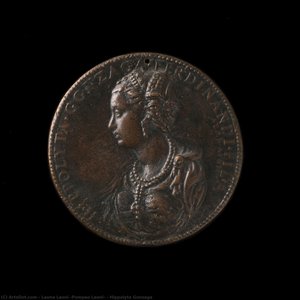
Matteo di Andrea de’ Pasti's “Portrait of Sigismondo Pandolfo Malatesta (obverse)” is more than just a depiction of a 15th-century nobleman; it’s a meticulously crafted testament to the era’s fascination with portraiture, heraldry, and the glorification of power. Created around 1449 in Verona, Italy, during the height of the Early Renaissance, this bronze medal offers a rare window into the world of Italian nobility – specifically, the ambitious and often ruthless Sigismondo Pandolfo Malatesta, Lord of Rimini.
The subject himself, Malatesta, was a formidable figure. A skilled military leader, he commanded Venetian forces in crucial campaigns and ruled over a significant territory with an iron fist. The medal wasn’t merely a likeness; it served as a potent symbol of his authority, commissioned by the man himself to project an image of strength, justice, and divine favor. The choice of bronze – a material valued for its durability and ability to capture detail – speaks volumes about the importance placed on this representation.
A Masterclass in Renaissance Portraiture
De’ Pasti's skill lies not just in his technical proficiency, but also in his understanding of Renaissance artistic conventions. The portrait adheres closely to the idealized proportions and elegant lines favored by artists like Botticelli and Donatello. Malatesta is presented in profile, a common technique for conveying dignity and authority, with a carefully sculpted face exhibiting a subtle yet commanding presence. Note the deliberate sharpness of the features – a hallmark of the period—and the meticulous rendering of his clothing, hinting at wealth and status.
- Profile Composition: The profile view emphasizes Malatesta’s authority and conveys a sense of timelessness.
- Classical Proportions: The portrait adheres to idealized Renaissance proportions, reflecting the humanist ideals of beauty and harmony.
- Detailed Rendering: The artist's attention to detail—from the texture of the clothing to the lines of the face—demonstrates a mastery of his craft.
Symbolism Woven into Bronze
Beyond the portrait itself, the medal is rich in symbolic elements. The inscription encircling Malatesta’s likeness – “SIGISMVNDVS ·PANDVLFVS · MALATESTA · PAN · F” – identifies him and references his titles (Lord of Rimini, Lord of Fano). The laurel wreath, subtly implied by the inscription, signifies honor and victory—a fitting tribute to a successful military leader. The presence of the name “PAN,” likely referring to Pandolfo, further solidifies his identity.
Furthermore, the medal’s design reflects the broader context of Renaissance patronage. Such medals were frequently commissioned by rulers and nobles to commemorate their achievements, solidify their power, and project an image of themselves as virtuous leaders. The use of bronze itself was a deliberate choice; it symbolized strength, permanence, and connection to the divine.
A Window into a Lost World
“Portrait of Sigismondo Pandolfo Malatesta (obverse)” offers a captivating glimpse into the world of 15th-century Italy—a time of political intrigue, military campaigns, and burgeoning artistic innovation. This remarkable bronze medal is not simply an image; it’s a tangible artifact that speaks to the ambitions, anxieties, and aesthetic sensibilities of a bygone era. Reproductions capture the essence of this historical treasure, allowing us to appreciate its beauty and significance for generations to come.
Obras relacionadas

Biografía del artista
Matteo di Andrea de' Pasti: Sculptor of Renaissance Splendor
Matteo di Andrea de’ Pasti (c. 1420 – after 1468/1469) stands as a pivotal figure in the artistic landscape of Verona and the broader Italian Renaissance, renowned primarily for his monumental sculptures and intricately crafted medals that embody the ideals of humanist artistry and royal patronage. Born in Verona, Italy, he emerged from a tradition steeped in Veronese sculptural excellence, inheriting techniques honed by masters like Giovanni Battista Falcone and Andrea Mantegna—skills which would prove instrumental in shaping his distinctive style. His formative years were marked by exposure to the intellectual ferment of the era, fueled by humanist scholarship and artistic innovation emanating from Florence under Lorenzo de’ Medici. This influence is palpable in his embrace of classical proportions and idealized forms, mirroring the stylistic trends championed by Alberti and Brunelleschi. Notably, he collaborated closely with Leone Battista Alberti on the ambitious Tempio Malatestiano in Rimini—a project that cemented his reputation as a visionary architect-sculptor duo. Together, they conceived and executed a breathtaking edifice incorporating innovative structural solutions alongside stunning sculptural decoration, establishing a benchmark for Renaissance grandeur. The Tempio Malatestiano’s soaring dome and intricate mosaics stand as enduring symbols of Alberti's architectural genius and Pasti’s sculptural prowess—a testament to their collaborative vision. Pasti’s prolific output spanned commissions from influential patrons like Lionello d'Este and Sigismondo Pandolfo Malatesta, reflecting the flourishing artistic environment of his time. His sculptures celebrated both religious piety and civic pride, often depicting saints and biblical figures with remarkable realism and emotional depth. The Tempio Malatestiano itself houses several monumental sculptures by Pasti—including a colossal statue of Saint Francis—demonstrating his mastery of scale and expressive power. This sculpture captures the saint’s serene dignity and embodies the humanist ideal of spiritual contemplation, reflecting Pasti's profound understanding of human psychology and artistic technique. Furthermore, he produced numerous portraits and busts for noble families across Italy, capturing the likenesses of prominent individuals with meticulous detail and conveying their character through subtle gestures and facial expressions—a skill that distinguishes him from many of his contemporaries. Beyond sculpture, Matteo de’ Pasti achieved considerable acclaim as a medalist, producing exquisitely crafted coins and commemorative medallions that served as emblems of royal authority and artistic prestige. His medals showcased exceptional technical skill—particularly in embossing techniques—resulting in surfaces adorned with shimmering relief that captivated viewers. These works are now housed in prestigious museums worldwide, including the Cleveland Museum of Art and the British Museum, guaranteeing their enduring legacy as masterpieces of Renaissance metalwork. The intricate designs of his medallions often incorporated allegorical imagery and symbolic references—demonstrating Pasti’s mastery of visual storytelling and his ability to communicate complex ideas through elegant artistic forms. His contribution to art history extends beyond individual pieces; Pasti’s work embodies the humanist spirit of the Renaissance—a commitment to observation, reason, and the pursuit of beauty informed by classical ideals. He remains a testament to the transformative power of artistic collaboration and the ability of sculptors to elevate architectural spaces into symbols of civic virtue and spiritual contemplation. His legacy continues to inspire artists today, reminding us that true artistry lies in harmoniously blending intellectual inquiry with aesthetic excellence—a principle that defines Pasti’s enduring place among the giants of Renaissance sculpture.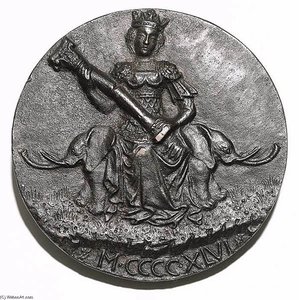
Matteo De Pasti
Italia
Datos clave
- Artistic Movement Or Style: Renacimiento
- Artists Or Movements Influenced By This Artist: ['León Battista Alberti']
- Date Of Birth: Verona, Italy ()
- Date Of Death: Living
- Full Name: Matteo di Andrea de' Pasti
- Nationality: Italian
- Notable Artworks:
- Bust de León Battista Alberti
- Fortitud, sentado en dos elefantes (reverso)
- Tempio Malatestiana
- Place Of Birth: Verona
Artículos relacionados

Goya: Las 25 Obras Maestras del Genio Español | Reproducciones de Arte en ArtsDot
Descubre las 25 obras maestras de Goya, el genio español. Explora retratos icónicos, 'Los Caprichos' y 'Las Pinturas Negras'. Reproducciones de arte en lienzo de alta calidad para decorar tu hogar con estilo. ¡Encuentra tu obra favorita en ArtsDot.com!

The Enduring Legacy of Bronze: A Historical & Artistic Exploration for the Collector
Explore the rich history & enduring appeal of bronze sculpture with expert insights for collectors at ArtsDot. Learn about casting techniques, iconic artists, collecting tips & contemporary interpretations.

Las 10 Obras Maestras de Bronce que Revolucionaron la Historia del Arte | ArtsDot
Descubre las 10 esculturas de bronce más influyentes de la historia del arte. Explora obras maestras de Rodin, Degas y otros genios. Encuentra reproducciones de arte de calidad museo en ArtsDot.com.

Acerca de nosotros
Descubre nuestra historia! Llevamos el arte de clase mundial a tu vida gracias a una selección experta, creaciones personalizadas y vistas previas gratuitas. Aprobado por particulares y empresas desde el año 2000.
The Enduring Legacy of Bronze: History, Technique & Artistic Expression for the Collector
Explore the rich history & enduring appeal of bronze sculpture with expert insights for collectors at ArtsDot. Learn about casting techniques, iconic artists, and collecting tips.

