

 Ver en contexto
 Enviar
 Compartir
 Detalles

 Descargar
 Similares
 Radiografía
 Presentación de diapositivas
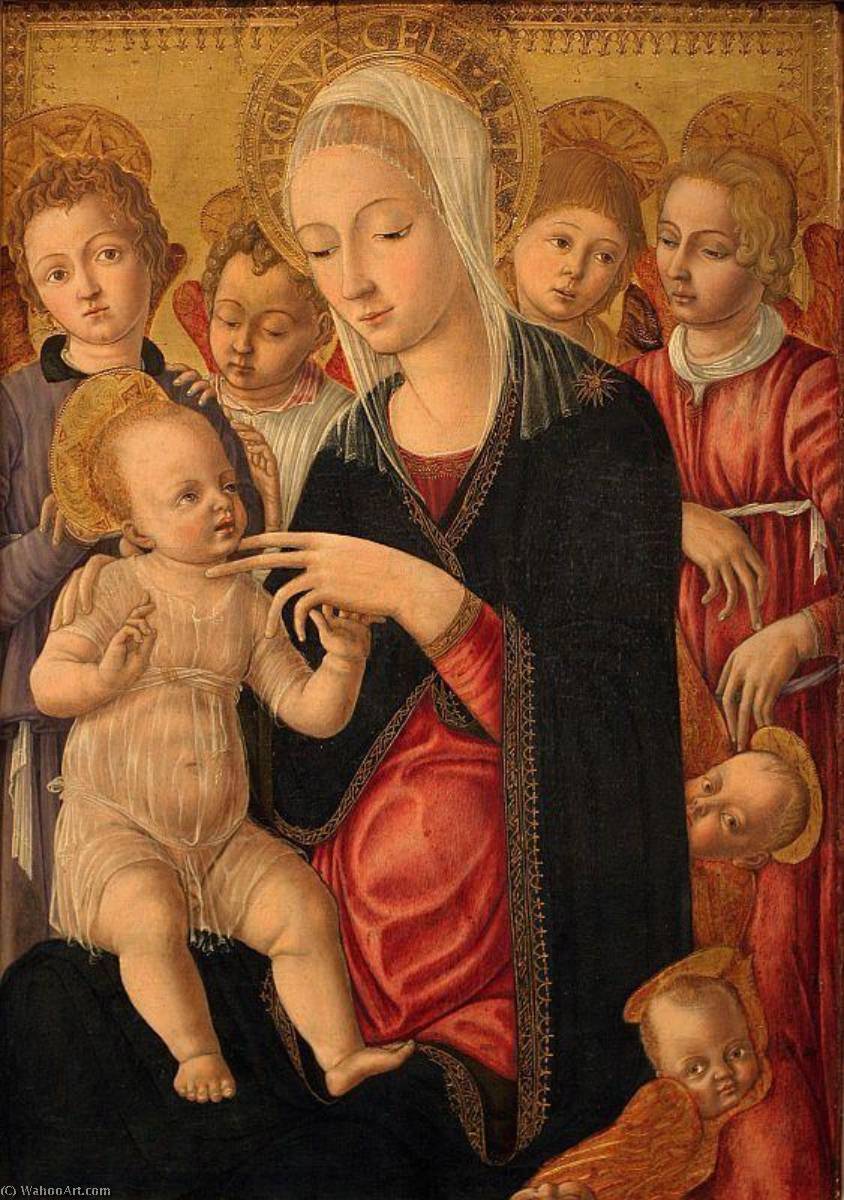
Madonna and Child with Angels and Cherubim

 Ver más
Adquiera una imagen digital de alta resolución y optimizada, muy superior a la vista previa en línea.
Cada archivo es preparado meticulosamente por nuestros especialistas internos mediante el uso de herramientas avanzadas y un experto retoque manual. Nos aseguramos de que cada imagen posea una claridad excepcional, una precisión cromática impecable y un detalle minucioso.
El archivo final se entrega por correo electrónico en un plazo de 72 horas, optimizado para su uso inmediato en entornos profesionales, editoriales y de impresión. Esta es la misma calidad en la que confían los estudios de diseño, las editoriales y las galerías de primer nivel.
Imagen Digital
Descarga un archivo de alta resolución para exhibición personal, impresión y proyectos creativos. ( Comprar impresión Comprar pintura hecha a mano)
Incluido en cada pedido de imágenes digitales
Entrega digital experta, garantizada.
Al elegir ArtsDot.com, no solo está adquiriendo una imagen; está recibiendo una obra de arte digital mejorada profesionalmente, elaborada con precisión y respaldada por una garantía de satisfacción. Esto es todo lo que incluye su pedido, automáticamente:

Entrega rápida por email
Recibirá su archivo de imagen digital en alta resolución por correo electrónico en un plazo de 72 horas tras realizar su pedido, listo para su uso inmediato.

Archivo digital optimizado por IA
Su obra de arte se optimiza profesionalmente mediante herramientas avanzadas de IA y edición manual, garantizando el máximo detalle, claridad y precisión cromática.

Reenvío gratuito de por vida
¿Has borrado o perdido tu archivo por error? No te preocupes: te lo volveremos a enviar en cualquier momento, sin coste adicional.

Sin gastos de importación, siempre
Disfrute de su obra de arte al instante sin aduanas, aranceles ni gastos de envío; las descargas digitales siempre están libres de impuestos.

Garantía de fidelidad de color
Garantizamos que su imagen digital refleje los colores originales con la mayor fidelidad posible, mediante el uso de herramientas profesionales y gestión del color.

Garantía de satisfacción de 60 días
Si no está satisfecho con su imagen digital, la revisaremos o le reembolsaremos el 100% en un plazo de 60 días, sin preguntas.

100% Garantía de devolución de dinero
¿No está satisfecho? Obtenga un reembolso completo dentro de los 60 días posteriores a la recepción de su archivo digital, sin necesidad de explicaciones.

Descuentos por pedidos grandes
Compra 3 imágenes, ahorra 10% - Compra 5, ahorra 15% - Compra 10+, ahorra 20%. Ideal para proyectos creativos, galerías y agencias.
Descripción del coleccionable
The Painting's Composition
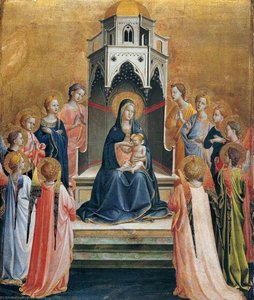
The painting features the Virgin Mary holding her child, surrounded by angels and cherubim, set against a golden background. The scene is filled with a sense of serenity and peace, as the figures seem to be lost in contemplation. The use of tempera as the medium adds a unique texture and depth to the painting, making it even more captivating.Artistic Significance
The Madonna and Child with Angels and Cherubim is not only a beautiful work of art but also holds significant importance in the world of art history. It is considered one of the finest examples of Sienese painting from the 15th century, showcasing the artist's mastery of composition, color, and technique.- The painting is housed in the National Gallery of Art in the United States, where it remains one of the most popular attractions.
- Other notable works by Matteo Di Giovanni Di Bartolo include Madonna and Child with Saint Jerome, Saint Catherine of Alexandria and Angels and Madonna and Child with Sts Jerome, Catherine of Alexandria and Angels, which can be found on ArtsDot.com.
- For more information on the artist and his works, visit The Museum Nave of Sant'Agostino in San Gimignano, Italy.
The Madonna and Child with Angels and Cherubim is a true masterpiece that continues to inspire and captivate audiences today. Its beauty, significance, and historical importance make it a must-see for anyone interested in art and history.
Obras relacionadas
Biografía del artista
A Sienese Master of Renaissance Grace: The Life and Art of Matteo di Giovanni
Matteo di Giovanni di Bartolo, born around 1430 in Borgo Sansepolcro, stands as a compelling figure within the vibrant tapestry of the Sienese School during the Italian Renaissance. Though his early life remains somewhat shrouded in mystery—details regarding his apprenticeship are scarce—his artistic journey quickly became inextricably linked with the city of Siena, where he firmly established himself as a painter of considerable renown. His family’s relocation to Siena marked not merely a change of address but an immersion into a rich artistic tradition that would profoundly shape his style and subject matter. Twice married, first to a noblewoman in 1463 and later to a wealthy widow, Matteo benefited from the financial stability these unions provided, allowing him to acquire property and raise a large family—a testament to his success both as an artist and a provider.Early Influences and Collaborative Beginnings
The artistic lineage of Matteo di Giovanni is fascinatingly complex, reflecting a synthesis of diverse influences. While speculation suggests training within the workshop of Lorenzo di Pietro, known as Vecchietta, it’s clear that he absorbed the stylistic nuances of Stefano di Giovanni, affectionately called Sassetta, and Domenico di Bartolo—cornerstones of Sienese painting. Beyond these local masters, Matteo demonstrated an awareness of broader artistic currents, notably the miniaturist Girolamo da Cremona and the Florentine painter Antonio del Pollaiuolo. This openness to external innovation would become a defining characteristic of his work. In 1452, he entered into partnership with Giovanni di Pietro, sharing living quarters in Siena’s San Salvatore neighborhood. This collaboration wasn't limited to shared space; they undertook joint projects, including the coloring and gilding of sculptures—a common practice for artists of the period—and contributed to the embellishment of organ shutters and chapels within the Siena Cathedral. This early phase reveals Matteo as a versatile craftsman eager to hone his skills through diverse artistic endeavors.The Pienza Commission and Stylistic Development
A pivotal moment in Matteo’s career arrived with his selection, alongside three other Sienese painters, to create altarpieces for the chapels of the newly constructed Pienza Cathedral during the urban renewal spearheaded by Pope Pius II. This prestigious commission, undertaken between 1460 and 1462, provided a crucial platform for Matteo to showcase his burgeoning talent and solidify his artistic identity. The three altarpieces he produced offer invaluable insight into his evolving style. The first, depicting the *Madonna and Saints*, reveals echoes of Sano di Pietro’s compositions and figure types, while the draperies bear the imprint of Vecchietta's influence. Notably, the Saint Catherine type draws inspiration from Domenico di Bartolo. Above this panel, a dramatic *Flagellation of Christ* scene introduces a new dynamism—violent action, anatomically correct bodies, and volumetric plasticity—suggesting an engagement with the progressive draftsmanship flourishing in Florence under Pollaiuolo’s guidance. This blending of local tradition with Florentine innovation became a hallmark of Matteo's artistic approach.Mature Works: The *Massacre of the Innocents* and Beyond
As Matteo matured, his work increasingly reflected a refined sensibility and a growing mastery of narrative detail. The altarpiece commissioned for the oratory of Santa Maria delle Nevi in Siena (1477) and the *Santa Barbara* altarpiece created for the baker’s guild's chapel in San Domenico (1478-79) demonstrate his continued exploration of religious themes. However, it is the *Massacre of the Innocents*, signed and dated 1482, that is widely considered his masterpiece. This powerful depiction of Herod’s decree—a scene fraught with anguish and brutality—showcases Matteo's ability to convey complex emotions through expressive figures and a carefully constructed composition. During this period, he also began incorporating idyllic and naturalistic landscape scenes into his paintings, characterized by delicate lyricism and subtle atmospheric effects.Historical Significance and Lasting Legacy
Matteo di Giovanni’s significance lies not in radical innovation but in his skillful synthesis of diverse artistic influences and his ability to imbue traditional Sienese painting with a renewed sense of vitality and emotional depth. He successfully navigated the shifting currents of Renaissance art, absorbing lessons from Florence while remaining deeply rooted in the aesthetic principles of his native Siena. His paintings—characterized by gracious figures, harmonious color palettes, and meticulous attention to detail—continue to captivate viewers today. His work represents a bridge between the late Gothic traditions of Sienese painting and the emerging Renaissance style, offering a unique perspective on the artistic landscape of 15th-century Italy. Matteo di Giovanni’s legacy endures as a testament to his talent, versatility, and enduring contribution to the rich cultural heritage of Siena.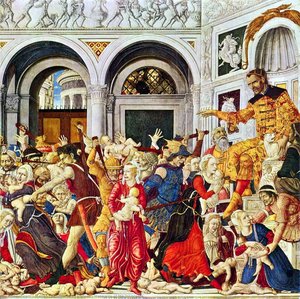
Matteo Di Giovanni Di Bartolo
1435 - 1495

