

 Ver en contexto
 Enviar
 Compartir
 Detalles

 Descargar
 Similares
 Radiografía
 Presentación de diapositivas
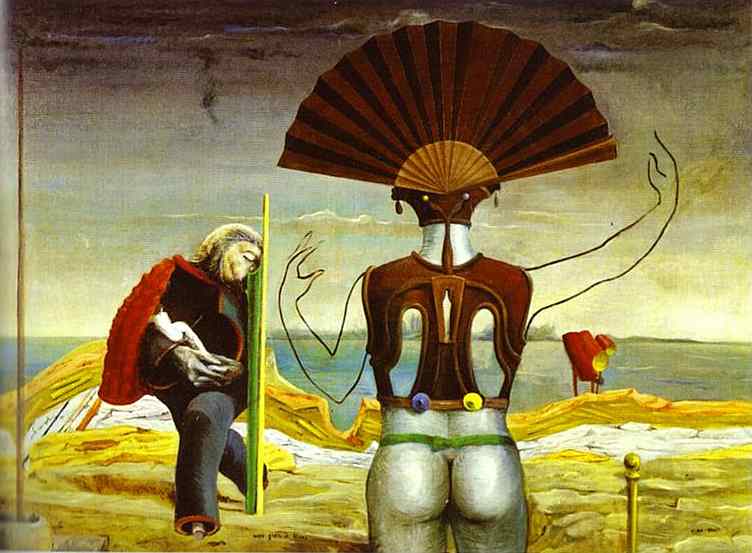
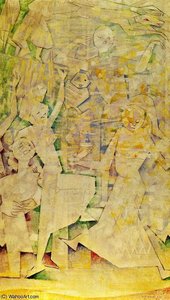
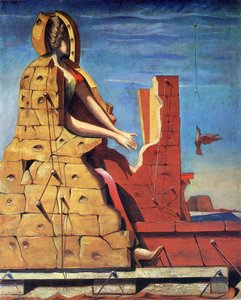
Woman Old Man and Flower - Mujer Viejo y Flor


 Ver más
Adquiera una imagen digital de alta resolución y optimizada, muy superior a la vista previa en línea.
Cada archivo es preparado meticulosamente por nuestros especialistas internos mediante el uso de herramientas avanzadas y un experto retoque manual. Nos aseguramos de que cada imagen posea una claridad excepcional, una precisión cromática impecable y un detalle minucioso.
El archivo final se entrega por correo electrónico en un plazo de 72 horas, optimizado para su uso inmediato en entornos profesionales, editoriales y de impresión. Esta es la misma calidad en la que confían los estudios de diseño, las editoriales y las galerías de primer nivel.
Imagen Digital
Descarga un archivo de alta resolución para exhibición personal, impresión y proyectos creativos. ( Comprar impresión Comprar pintura hecha a mano)
Incluido en cada pedido de imágenes digitales
Entrega digital experta, garantizada.
Al elegir ArtsDot.com, no solo está adquiriendo una imagen; está recibiendo una obra de arte digital mejorada profesionalmente, elaborada con precisión y respaldada por una garantía de satisfacción. Esto es todo lo que incluye su pedido, automáticamente:

Entrega rápida por email
Recibirá su archivo de imagen digital en alta resolución por correo electrónico en un plazo de 72 horas tras realizar su pedido, listo para su uso inmediato.

Archivo digital optimizado por IA
Su obra de arte se optimiza profesionalmente mediante herramientas avanzadas de IA y edición manual, garantizando el máximo detalle, claridad y precisión cromática.

Reenvío gratuito de por vida
¿Has borrado o perdido tu archivo por error? No te preocupes: te lo volveremos a enviar en cualquier momento, sin coste adicional.

Sin gastos de importación, siempre
Disfrute de su obra de arte al instante sin aduanas, aranceles ni gastos de envío; las descargas digitales siempre están libres de impuestos.

Garantía de fidelidad de color
Garantizamos que su imagen digital refleje los colores originales con la mayor fidelidad posible, mediante el uso de herramientas profesionales y gestión del color.

Garantía de satisfacción de 60 días
Si no está satisfecho con su imagen digital, la revisaremos o le reembolsaremos el 100% en un plazo de 60 días, sin preguntas.

100% Garantía de devolución de dinero
¿No está satisfecho? Obtenga un reembolso completo dentro de los 60 días posteriores a la recepción de su archivo digital, sin necesidad de explicaciones.

Descuentos por pedidos grandes
Compra 3 imágenes, ahorra 10% - Compra 5, ahorra 15% - Compra 10+, ahorra 20%. Ideal para proyectos creativos, galerías y agencias.
Descripción del coleccionable
Introduction to Max Ernst and the Dada Art Movement
Max Ernst (1891-1976) was a German-born artist who played a pivotal role in the development of both the Dada and Surrealism movements. Born in Brühl, Germany, Ernst had no formal artistic training but developed an experimental attitude towards art-making that led to his invention of frottage and grattage techniques. These methods, along with his use of collages, allowed him to create unconventional and thought-provoking works of art. The Dada movement emerged in the early 20th century as a reaction to the horrors of World War I and the disillusionment it caused. Artists associated with this movement sought to challenge traditional notions of art, culture, and society through ironic juxtapositions, nonsensical imagery, and provocative statements.
Ernst’s fascination began early; his father instilled in him both a sensitivity to the world and a rebellious spirit against established authority. This duality would become a defining characteristic of his artistic vision. He wasn't merely interested in *how* to paint; he was grappling with profound philosophical questions about existence, identity, and the nature of reality.
His academic pursuits at the University of Bonn – encompassing philosophy, art history, literature, psychology, and psychiatry – were not mere diversions but foundational elements that deeply informed his later work. He visited asylums and became fascinated with the art work of the mentally ill patients; he also began painting that year, producing sketches in the garden of the Brühl castle, and portraits of his sister and himself.
Ernst’s artistic breakthrough arrived during World War I. Drafted into the German army, he experienced firsthand the brutality and senselessness of conflict – an experience that profoundly scarred him emotionally and intellectually. This trauma fueled his rebellious spirit and propelled him toward a radical rejection of conventional artistic conventions.
The Dada movement embraced this rejection wholeheartedly. Artists like Ernst sought to dismantle accepted aesthetic standards and societal hierarchies, using techniques such as collage, photomontage, and assemblage to generate jarring visual combinations that defied logic and reason. They aimed to provoke viewers into questioning their assumptions about the world around them.
“Woman, Old Man and Flower,” painted in 1924, exemplifies Ernst’s Dadaist style perfectly. This oil painting features an unusual composition with a woman, an old man, and a flower as its central elements. The woman, depicted with her head turned away, appears to be floating or merging with the background – a motif that speaks to themes of subconsciousness and transformation.
The old man, on the other hand, is shown in profile with a bird-like nose, evoking Ernst’s fascination with birds and his alter ego, Loplop. This figure embodies vulnerability and fragility, juxtaposed against the solidity of the landscape.
The flower, placed prominently between the woman and the old man, serves as a symbol of life, growth, and transformation – mirroring Ernst's exploration of psychological symbolism. Its delicate petals contrast sharply with the angular lines of the figures, creating visual tension that invites contemplation.
Ernst’s innovative techniques—particularly frottage and grattage—were crucial to achieving this unsettling effect. Frottage involves rubbing a pencil or stylus over textured surfaces (such as wood grain or fabric) to transfer an image onto canvas – a method Ernst famously used to create works like “The Flower Cart.” Grattage, conversely, entails scraping paint off the surface of a canvas with tools like knives or spatulas, revealing underlying layers and creating a tactile quality that enhances the artwork’s expressive power.
Max Ernst's legacy extends far beyond Dada and Surrealism. His exploration of dreams, the subconscious, and irrationality has broadened our understanding of what art can communicate – its ability to tap into hidden emotions and challenge conventional perceptions. He remains an influential figure in contemporary art, inspiring artists to experiment with new materials and methods.
If you’re interested in delving deeper into Max Ernst's artistic universe or discovering other groundbreaking movements in art history, visit ArtsDot.com to explore their extensive collection of art reproductions and resources.
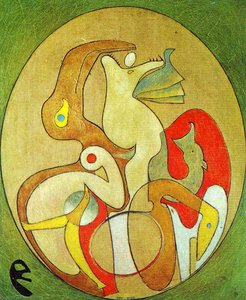
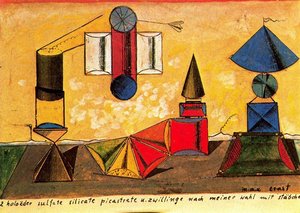
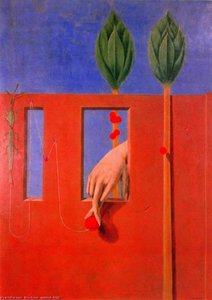
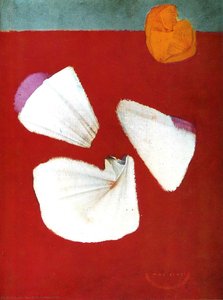
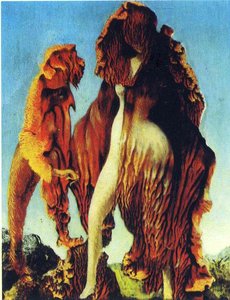
Biografía del artista
Max Ernst: Una Vida en el Surrealismo
Juventud y Educación
- Nacido: 1 de abril de 1891, en Brühl, Alemania.
- El padre de Ernst, Philipp Ernst, era maestro de sordos y pintor aficionado, fomentando el interés temprano de Max por el arte.
- Estudió filosofía, historia del arte, literatura, psicología y psiquiatría en la Universidad de Bonn desde 1909.
- Esta diversa formación académica influyó profundamente en sus posteriores exploraciones artísticas.
Desarrollo Artístico e Influencias
- Un momento decisivo fue la exposición Sonderbund en Colonia (1912), donde conoció obras de Pablo Picasso, Vincent van Gogh, y Paul Gauguin.
- En 1914, conoció a Hans Arp, comenzando una amistad que duró toda la vida e influyó significativamente en su trayectoria artística.
- La Primera Guerra Mundial impactó profundamente a Ernst; sus experiencias como soldado llevaron al desencanto y a una visión crítica de la sociedad.
- Se sintió influenciado por las obras de Sigmund Freud, explorando temas de la mente inconsciente en su arte.
Dada y Surrealismo
- Ernst se convirtió en una figura clave del grupo Dada de Colonia después de la Primera Guerra Mundial, rechazando las convenciones artísticas tradicionales.
- Pionero en técnicas innovadoras como frottage (frotar lápiz sobre superficies texturizadas) y grattage (raspar pintura para revelar capas subyacentes).
- En la década de 1920, se unió al movimiento Surrealista en París, colaborando con artistas como Paul Éluard.
- Su obra durante este período exploró imágenes oníricas y temas psicológicos.
Obras Principales y Técnicas
- Frottage: Una técnica utilizada para crear texturas e imágenes inesperadas, ejemplificada en muchas de sus obras.
- Collage: Ernst empleó con frecuencia el collage, combinando elementos dispares para crear composiciones surrealistas.
- Obras Notables:
- La Ciudad Entera
- Euclides
- De Esto Ninguno Debería Saber
- Bosque y Paloma
- Sus pinturas a menudo presentan imágenes simbólicas, incluyendo pájaros (particularmente su alter ego Loplop), paisajes y yuxtaposiciones inquietantes.
Vida Tardía y Legado
- Ernst se trasladó a Estados Unidos durante la Segunda Guerra Mundial, continuando pintando y experimentando con nuevas técnicas.
- Regresó a Francia después de la guerra y permaneció activo hasta su muerte el 1 de abril de 1976, en París.
- Significado Histórico: Las contribuciones de Max Ernst a Dada y Surrealismo fueron innovadoras. Desafió las normas artísticas, exploró la mente subconsciente e inventó técnicas innovadoras que continúan inspirando a los artistas de hoy en día.
- Sigue siendo una de las figuras más importantes e influyentes del arte del siglo XX.
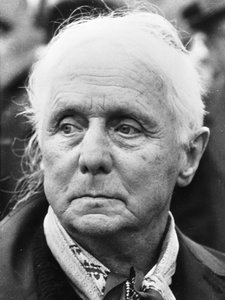
Max Ernst
1891 - 1976 , Alemania
Breves datos
- Artistas Influenciados: ['Muchos artistas posteriores']
- Artistas Que Influyeron:
- Pablo Picasso
- Vincent van Gogh
- Paul Gauguin
- Sigmund Freud
- Fecha De Muerte: 1 de abril de 1976
- Fecha De Nacimiento: 1 de abril de 1891
- Lugar De Nacimiento: Brühl, Alemania
- Movimiento Artístico: Dadaísmo y Surrealismo
- Nacionalidad: Alemán/Americano/Francés
- Nombre Completo: Max Ernst
- Obras Notables:
- La Ciudad Entera
- Euclides
- Bosque y Paloma
- El Elefante de Célebes

