

 Ver en contexto
 Enviar
 Compartir
 Detalles

 Descargar
 Similares
 Radiografía
 Presentación de diapositivas
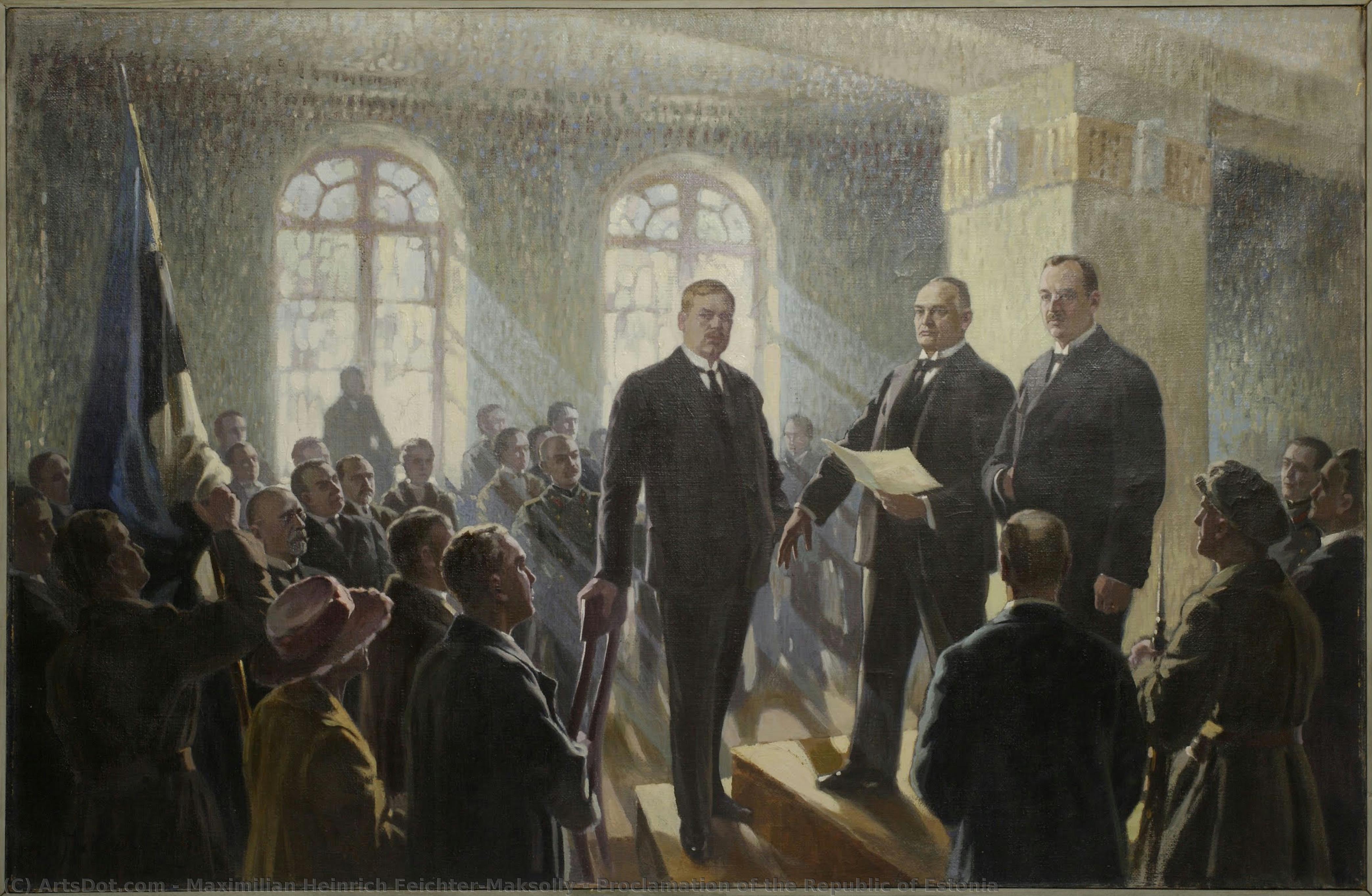
Proclamation of the Republic of Estonia


 Ver más
Giclée / Impresión de arte
Impresiones giclée o en lienzo de calidad de museo con producción rápida y opciones de acabado flexibles. ( Comprar pintura hecha a mano Comprar imagen)




































Elija entre nuestros tamaños predefinidos que respetan las proporciones originales de la obra.

Puede introducir sus propias dimensiones para adaptarse a un marco o espacio específico. Si el tamaño seleccionado no coincide con las proporciones de la imagen original, recortaremos la obra de arte o extenderemos la imagen con un borde con efecto espejo o de color sólido. Se enviará una maqueta digital para su aprobación antes de que comience la producción.
Tenga en cuenta que la vista previa en pantalla no refleja el recorte o la extensión real. Solo la maqueta mostrará con precisión la composición final.
Aunque existen tamaños personalizados, recomendamos seleccionar una dimensión de la lista predefinida para preservar las proporciones originales.
Envío a todo el mundo () en 2 semanas en lugar de las 4/5 semanas estándar. (4 septiembre)

Envío exprés gratuito a todo el mundo

Lienzo de lino de alta calidad

Seguro de envío total

Garantía de reembolso de impuestos aduaneros

Garantía de fidelidad cromática exacta

Política de devolución de 60 días (solo por defectos)

Garantía de devolución del 100% del dinero

Descuento por cantidad
 La opción de vidrio solo está disponible en tamaños inferiores a 110 cm.

Proclamation of the Republic of Estonia
Giclée / Impresión de arte
Dimensiones de la reproducción
-


Precio total final
$ 62
Obras relacionadas








Biografía del artista
Maximilian Heinrich Feichter-Maksolly: A Voice of Estonian Resilience
Maximilian Heinrich Feichter-Maksolly (1880 – 1968) stands as a pivotal figure in Estonian art history, embodying the spirit of national revival and documenting crucial moments of independence. Born in Tallinn, Estonia, to Hungarian parents, Maksolly’s artistic journey began amidst the burgeoning cultural landscape of Imperial Russia, where he honed his skills at Saint Petersburg Academy of Arts.Early Influences & Training: Maksolly's formative years were steeped in Russian artistic traditions, particularly Impressionism and Symbolism. These influences profoundly shaped his stylistic approach—characterized by luminous color palettes and expressive brushstrokes—reflecting a desire to convey emotion and atmosphere alongside meticulous observation of the natural world. He absorbed the techniques of masters like Ilya Repin and Vasily Surikov, prioritizing realism blended with emotive interpretation.
Career in Russia & Marriage: Following graduation, Maksolly pursued a professional artistic career primarily in Russia, undertaking significant restoration projects for churches and monasteries—a vocation that demonstrated his dedication to preserving cultural heritage. He skillfully recreated frescoes depicting biblical scenes, showcasing his mastery of technique and compositional planning. His marriage to Klikeria Taigatsova in 1912 provided him with unwavering support and inspiration throughout his life’s artistic endeavors.
The Estonian War of Independence & Artistic Activism: The outbreak of World War I dramatically altered Maksolly's trajectory, propelling him back to Estonia through Poland. Recognizing the urgent need for artistic commemoration of this defining moment in Estonian history, he dedicated himself to documenting the Estonian War of Independence (1918-1920), producing powerful canvases that immortalized heroic deeds and conveyed the fervor of national aspiration. He captured scenes of battle with remarkable detail—particularly ‘Paju lahing 31. jaanuaril 1919. a.’—demonstrating his commitment to portraying historical events accurately.
Notable Works & Recognition: Maksolly’s oeuvre includes iconic paintings such as ‘Paju lahing 31. jaanuaril 1919. a.’ (Battle of Pajula Hill, January 31st, 1919) and ‘Need, kes vabastasid isamaa’ (Those Who Liberated Fatherland), capturing pivotal scenes from the conflict with remarkable detail and emotional intensity. His canvases were exhibited extensively throughout Estonia and Poland during the interwar years and adorned public spaces—most notably the War Museum—establishing him as a champion of Estonian artistic heritage. He was recognized for his contribution to Estonian art education, establishing Estonia’s first art school.
Maksolly's legacy extends beyond his individual artworks; he served as an educator, fostering talent amongst younger artists and contributing to the establishment of Estonia's first art school. His unwavering commitment to portraying Estonian history and culture cemented his place as a national icon—a testament to the enduring power of art to inspire resilience and celebrate identity.
Maksimilian Maksolly
1880 - 1968 , Estonia
Datos clave
- Artistic Movement Or Style: Arte ruso
- Date Of Birth: 1880 Tallinn Estonia
- Date Of Death: 1968 Río de Janeiro Brasil
- Full Name: Maximilian Heinrich Feichter-Maksolly
- Nationality: Estoniano
- Notable Artworks:
- Paju lahing 31. jaanuaril 1919. a.
- Need, kes vabastasid isamaa
- Place Of Birth: Tallinn Estonia

