

 Ver en contexto
 Enviar
 Compartir
 Detalles

 Descargar
 Similares
 Radiografía
 Presentación de diapositivas
Game Piece
 Oil On Canvas
- WallArt
- Baroque
 1667
1667- Early Modern
 126.0 x 173.0 cm
 Akademie Der Bildenden Künste Wien
 Ver más
Reproducción al óleo hecha a mano
Óleo sobre lienzo pintado a mano en el tamaño y marco de su elección, realizado por encargo por nuestros artistas. ( Comprar impresión Comprar imagen)




P118B $10

P118H $10

P118W $10

P438Z $10

P508JH $12

P508YH $12

P805H $10

P805Z $10

P919BZ $10

P919G $10

P919XJ $10

P959ZH $10

P968JZ $12

W106C $8

W218G $10

W218JH $8

W218Y $10

W307PJ $10

W316G $10

W316PJ $8

W316Y $10

W398PJ $8

W4111J $10

W500HY $15

W500JH $15

W692G $12

W849H $8

W940BG $15

W953PJ $8




Elija entre nuestros tamaños predefinidos que respetan las proporciones originales de la obra.

Puede ingresar sus propias dimensiones para adaptarse a un marco o espacio específico. Si el tamaño seleccionado no coincide con las proporciones de la imagen original, recortaremos la obra o extenderemos la pintura con elementos adicionales pintados a mano. Se le enviará una maqueta digital para su aprobación antes de comenzar la producción.
Tenga en cuenta que la vista previa en pantalla no refleja el recorte o la extensión reales. Solo la maqueta mostrará con precisión la composición final.
Si bien existen tamaños personalizados, recomendamos seleccionar una dimensión de la lista predefinida para preservar las proporciones originales.
Tras realizar el pedido, el equipo de ArtsDot.com enviará un correo electrónico al cliente para solicitar instrucciones y proporcionarle una vista previa del boceto.
Envío a todo el mundo () en 3-4 semanas en lugar de las 5 semanas estándar. (23 agosto). Sin comprometer la calidad.

Envío exprés gratuito a todo el mundo

Lienzo de lino de alta calidad

Seguro de envío total

Garantía de reembolso de impuestos aduaneros

Garantía de fidelidad cromática exacta

Política de devolución de 60 días (solo por defectos)

Garantía de devolución del 100% del dinero

Descuento por cantidad
 La opción de vidrio solo está disponible en tamaños inferiores a 110 cm.

Game Piece
Técnica de reproducción
Dimensiones de la reproducción
-


Precio total final
$ 263
Descripción de la obra
A Dramatic Encounter in the Dutch Golden Age
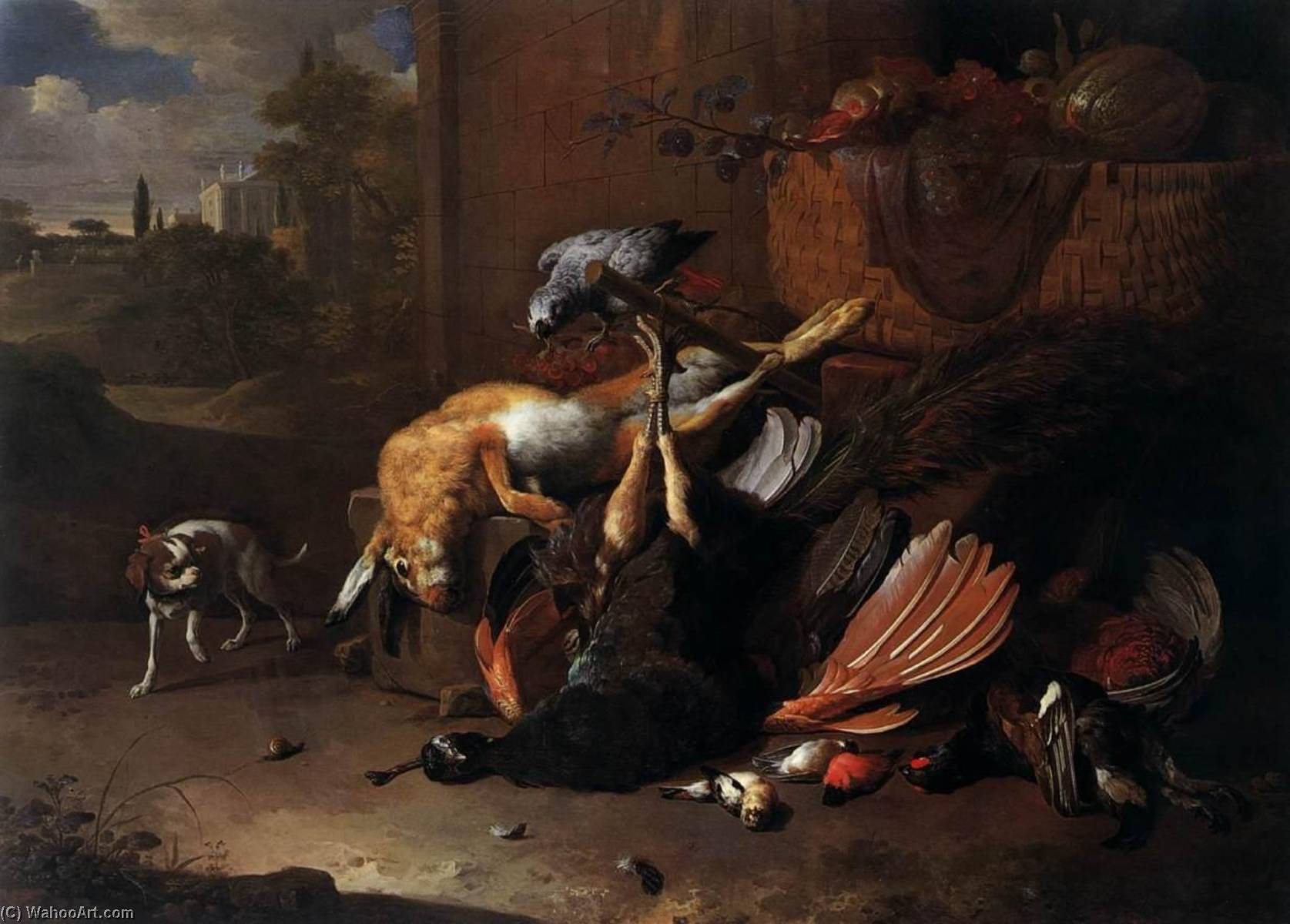
In the heart of the seventeenth century, the Dutch Golden Age reached a pinnacle of expressive vitality, and few artists captured this era's kinetic energy as masterfully as Melchior De Hondecoeter. His 1667 masterpiece, Game Piece, serves as a breathtaking window into a world where nature and human struggle intersect with theatrical intensity. The canvas unfolds within the confines of a rustic courtyard, yet it feels infinitely expansive due to the artist's command over movement. At the center of this unfolding drama, a man is locked in a visceral struggle with two birds; one bird clings to his grasp while another descends from above in a sudden, feathered assault. This central conflict is not merely a depiction of a moment in time, but an exploration of the raw, unbridled forces of life and instinct.
The composition is far from a solitary struggle. De Hondecoeter breathes life into the entire environment, populating the scene with a diverse cast of creatures that heighten the sense of organized chaos. Dogs weave through the foreground, their watchful eyes adding layers of tension to the courtyard setting, while in the distant background, the presence of a horse lends a sense of scale and pastoral depth. The inclusion of domestic elements—a simple bench and a solitary chair—anchors the wildness of the avian battle within a recognizable, human space, creating a poignant contrast between the tranquility of home and the sudden eruption of natural ferocity.
Mastery of Light and Baroque Technique
To behold Game Piece is to witness the profound technical prowess of a true animalier. De Hondecoeter employs the dramatic techniques of chiaroscuro and tenebrism to sculpt his subjects out of the shadows. By manipulating extreme contrasts between light and dark, he directs the viewer's gaze with surgical precision, ensuring that the frantic motion of the birds and the strained muscles of the man are illuminated against a more somber, atmospheric backdrop. This play of light does more than provide visibility; it imbues the scene with a psychological weight, turning a courtyard skirmish into a high-stakes theatrical performance.
The artist's brushwork is equally evocative, utilizing warm color palettes and soft, textured strokes to create a palpable sense of depth. One can almost feel the flutter of wings and the coarse texture of the animals' coats. This meticulous attention to detail allows for a sensory experience that transcends the visual, inviting collectors and art enthusiasts to lose themselves in the tactile reality of the painting. For those seeking to bring this level of sophistication into a curated space, the painting offers a rich tapestry of textures that complement both classical and contemporary interior designs.
A Timeless Legacy for the Discerning Collector
Beyond its technical brilliance, Game Piece resonates with an emotional complexity that remains timeless. It captures the duality of existence: the coexistence of domestic peace and wild unpredictability. For the art lover, it is a study in the beauty of motion; for the interior designer, it is a commanding focal point capable of anchoring a room with its historical gravity and vibrant energy. As a significant work housed in the Akademie Der Bildenden Künste Wien, this painting represents the zenith of Dutch animal portraiture.
Owning a high-quality reproduction of such a monumental work allows one to invite the spirit of the Baroque era into a modern home. It is an opportunity to celebrate the legacy of Melchior De Hondecoeter and to surround oneself with the enduring power of the Dutch masters—a piece that does not merely decorate a wall, but tells a story of survival, struggle, and the magnificent, chaotic beauty of the natural world.
Obras relacionadas
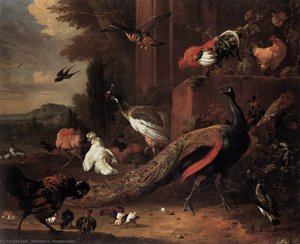
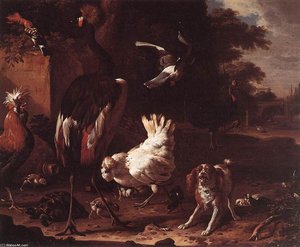
Biografía del artista
Melchior de Hondecoetter: A Master of Baroque Bird Painting
Melchior de Hondecoetter (c. 1636 – 3 April 1695) stands as a pivotal figure in Dutch Golden Age art, celebrated primarily for his breathtaking depictions of birds—particularly exotic specimens—that embody the spirit and precision characteristic of the Baroque style. Born in Utrecht, Netherlands, he ascended to prominence as an animalier painter, meticulously capturing the dynamism and beauty of avian life with unparalleled skill. His legacy resides not only in the sheer artistry of his canvases but also in his contribution to establishing a distinct visual language that continues to inspire artists today.Early Life and Artistic Training
Information regarding Hondecoetter’s formative years remains somewhat sparse, reflecting the limitations of archival records during the seventeenth century. However, he apprenticed under Willem van Royen, a respected Utrecht painter known for his landscapes and genre scenes, providing him with a foundational understanding of artistic principles and techniques. This early training instilled in Hondecoetter a commitment to observation and realism—qualities that would define his oeuvre throughout his career. He was the grandson of Gilles d’Hondecoeter, whose artistic lineage stretched back centuries, fostering an environment rich in artistic tradition. His father, Gijsbrecht de Hondecoeter, similarly pursued painting, demonstrating a familial dedication to visual arts. Recognizing the importance of formal education, Melchior studied under Jan Baptist Weenix, a prominent Utrecht artist who championed dramatic lighting and expressive brushwork—influences that would profoundly shape Hondecoetter’s artistic vision.Style and Technique: Bold Strokes and Precise Observation
Hondecoetter’s distinctive style is immediately recognizable by its bold brushstrokes, vibrant colors, and masterful rendering of texture. Unlike many of his contemporaries who favored subtle tonal gradations, Hondecoetter embraced expressive marks that conveyed movement and energy—a hallmark of Baroque art. Crucially, he achieved this dynamism through painstaking anatomical study and meticulous attention to detail. He dissected birds with scientific accuracy, meticulously documenting their plumage, musculature, and skeletal structure before translating these observations onto canvas. This dedication to realism elevated Hondecoetter’s paintings beyond mere representation; they communicated a profound understanding of the natural world. His technique involved layering pigments with remarkable precision, creating textures that mimicked feathers and foliage—a testament to his mastery of artistic craftmanship.Notable Works and Commissions
Hondecoeter's artistic reputation soared during his lifetime thanks to numerous prestigious commissions—most notably adorning the royal palaces of Bensberg and Oranienstein. His masterpiece, “The Floating Feather,” exemplifies his stylistic prowess and technical virtuosity. This monumental canvas showcases a magnificent peacock in flight amidst lush foliage, rendered with breathtaking detail and luminous color. Beyond these grand commissions, Hondecoetter produced an impressive body of work encompassing landscapes populated by birds, portraits of avian subjects, and decorative panels for interiors—demonstrating his versatility as an artist. His paintings are housed in prominent collections worldwide, including the Wallace Collection in London and Belton House in England, cementing his place among the most revered painters of his era.Influences and Legacy
Hondecoetter’s artistic vision was shaped by influences ranging from Flemish Baroque masters like Peter Paul Rubens to Italian Mannerist artists such as Caravaggio. He absorbed techniques of dramatic lighting and expressive brushwork—elements that would become integral to his own distinctive style. Furthermore, Hondecoetter fostered a collaborative spirit among his pupils, including Willem Hendrik Wilhemus van Royen and Jan Weenix, ensuring the continuation of his artistic legacy. Today, Melchior de Hondecoetter’s paintings continue to captivate audiences with their beauty and scientific rigor—serving as enduring symbols of Dutch Baroque artistry and demonstrating the transformative power of observation and meticulous craftsmanship. He remains an inspiration for artists striving to capture the essence of nature with unparalleled skill and emotional intensity.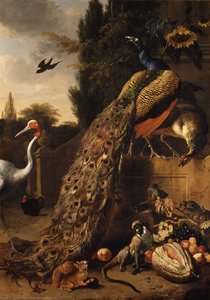
Melchior de Hondecoetter
1636 - 1695 , Países Bajos
Datos clave
- Artistic Movement Or Style: Baroque
- Artists Or Movements Influenced By This Artist: ['William Hendrik Wilhemus van Royen']
- Artists Who Influenced This Artist: ['None Known']
- Date Of Birth: c. 1636
- Full Name: Melchior de Hondecoetter
- Nationality: Dutch
- Notable Artworks:
- The Fight Between a Cock and a Turkey
- Ornamental Fowl in and beside a Pond in a Park, with a Peacock in Flight
- Place Of Birth: Utrecht, Netherlands
Artículos relacionados

Los 10 Maestros del Barroco Holandés: Obras que Definen una Época | ArtsDot
Descubre los 10 imprescindibles del Barroco holandés: Rembrandt, Vermeer y más. Explora la historia, técnica y belleza de estas obras maestras. Reproducciones de arte en ArtsDot.com para decorar tu hogar con elegancia.

Reflejos de una Época Dorada: La Pintura Barroca Holandesa y la Innovación Cultural
Descubra la riqueza y el detalle de la pintura barroca holandesa del Siglo de Oro. Explore las obras maestras de Rembrandt, Vermeer y otros artistas clave. Análisis experto e historia cultural.

Barroco Sublime: 10 Obras Maestras que Definieron una Época |
Descubre las 10 obras maestras del Barroco que marcaron una época. Caravaggio, Bernini y Velázquez cobran vida en . Reproducciones de arte de calidad museo para decorar tu hogar con elegancia. ¡Explora la colección online!
Decoding Baroque Grandeur: A Guide to the Drama and Emotion of 17th-Century Art
Explore the breathtaking drama of 17th-century Baroque art. Our expert guide decodes the use of chiaroscuro, emotional intensity, and historical grandeur to help you appreciate and curate timeless masterpieces for your collection.

The Visceral Stage: Exploring Dramatic Narratives & Emotional Intensity in Baroque Art
Explore the dramatic world of Baroque art! Discover iconic masters like Caravaggio & Rembrandt, their techniques, and the movement's lasting impact. Expert insights for collectors & enthusiasts at ArtsDot.

