

 Ver en contexto
 Enviar
 Compartir
 Detalles

 Descargar
 Similares
 Radiografía
 Presentación de diapositivas
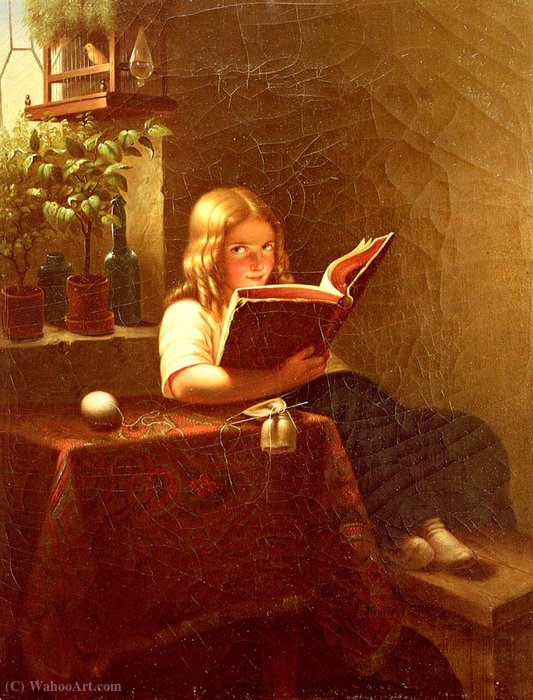
The reading girl
 Ver más
Reproducción al óleo hecha a mano
Óleo sobre lienzo pintado a mano en el tamaño y marco de su elección, realizado por encargo por nuestros artistas. ( Comprar impresión Comprar imagen)




































Elija entre nuestros tamaños predefinidos que respetan las proporciones originales de la obra.

Puede ingresar sus propias dimensiones para adaptarse a un marco o espacio específico. Si el tamaño seleccionado no coincide con las proporciones de la imagen original, recortaremos la obra o extenderemos la pintura con elementos adicionales pintados a mano. Se le enviará una maqueta digital para su aprobación antes de comenzar la producción.
Tenga en cuenta que la vista previa en pantalla no refleja el recorte o la extensión reales. Solo la maqueta mostrará con precisión la composición final.
Si bien existen tamaños personalizados, recomendamos seleccionar una dimensión de la lista predefinida para preservar las proporciones originales.
Tras realizar el pedido, el equipo de ArtsDot.com enviará un correo electrónico al cliente para solicitar instrucciones y proporcionarle una vista previa del boceto.
Envío a todo el mundo () en 3-4 semanas en lugar de las 5 semanas estándar. (25 agosto). Sin comprometer la calidad.

Envío exprés gratuito a todo el mundo

Lienzo de lino de alta calidad

Seguro de envío total

Garantía de reembolso de impuestos aduaneros

Garantía de fidelidad cromática exacta

Política de devolución de 60 días (solo por defectos)

Garantía de devolución del 100% del dinero

Descuento por cantidad
 La opción de vidrio solo está disponible en tamaños inferiores a 110 cm.

The reading girl
Técnica de reproducción
Dimensiones de la reproducción
-


Precio total final
$ 263
Obras relacionadas
Biografía del artista
The Soul of German Realism: The Life and Legacy of Meyer von Bremen
In the heart of the nineteenth century, a period defined by a profound shift from romantic idealism toward the unvarnished truths of existence, Johann Georg Meyer von Bremen emerged as a master of the human condition. Born on October 28, 1813, in the Hanseatic city of Bremen, his path to artistic greatness was shaped by both sudden tragedy and rigorous academic discipline. Following the untimely death of his father, the young Meyer found himself steered away from the mercantile traditions of his family and toward the vibrant, transformative atmosphere of the Düsseldorf School of Painting. This transition would eventually allow him to become one of the most poignant voices in German Realism, a painter capable of finding the extraordinary within the ordinary.
His artistic foundation was laid at the prestigious Düsseldorf Kunstakademie, where he studied under the influential Friedrich Wilhelm Schadow. Under Schadow’s guidance, Meyer mastered the art of meticulous observation—a hallmark of the Düsseldorf style that demanded a scientific precision in capturing light, texture, and shadow. This period of his life was characterized by an intense focus on plein air techniques, learning to translate the fleeting nuances of the natural world onto canvas with unparalleled accuracy. As he honed his craft, his work began to move beyond mere technical excellence, developing a unique ability to imbue even the simplest subjects with deep psychological resonance and emotional warmth.
From Biblical Narratives to the Poetics of Everyday Life
The evolution of Meyer von Bremen’s oeuvre is a fascinating journey through the changing sensibilities of his era. In the early stages of his career, his brush was often turned toward the grander, more structured themes of Biblical narratives. These works allowed him to explore dramatic tension and moral weight through carefully composed scenes. However, as his reputation grew and he moved from Düsseldorf to Berlin in 1853, his artistic focus underwent a beautiful metamorphosis. He began to turn his gaze away from the divine and toward the "simple annals of the poor," finding profound beauty in the lives of the Hessian peasantry and the quiet dignity of rural existence.
This shift marked his true arrival as a pioneer of realism. His later works became celebrated for their intense sympathy and spirited humor, particularly when depicting the innocence of childhood. He possessed a rare gift for capturing the spontaneous joy and tender vulnerability of youth, creating scenes that felt both timeless and intimately personal. Some of his most enduring thematic explorations include:
- Peasant Life: Capturing the rugged yet soulful existence of the rural working class with dignity and detail.
- Childhood Innocence: Utilizing a sense of humor and lightheartedness to portray children at play, such as in 'Children Playing Blindman's Buff.'
- Domestic Intimacy: Rendering family scenes that evoke nostalgia and the warmth of home life.
- Portraiture of Youth: Creating evocative single figures, such as 'The Little Flower Girl,' which showcase his mastery of texture and light.
A Lasting Impression on the German Canon
The historical significance of Meyer von Bremen lies in his ability to bridge the gap between the technical rigor of the Academy and the emotional accessibility of Realism. While many of his contemporaries focused on grand historical or mythological subjects, Meyer found greatness in a strawberry basket, a playing child, or a quiet moment of prayer. His work serves as a vital cultural record of nineteenth-century German life, preserving the textures of clothing, the light of the countryside, and the social fabric of the era with a painterly devotion that feels remarkably modern.
Even today, his influence can be felt in the way we perceive the beauty of the mundane. His paintings, held in prestigious institutions such as the Metropolitan Museum of Art and the Kunsthalle Bremen, continue to resonate with viewers who seek a connection to the authentic human experience. Through his disciplined technique and empathetic eye, Meyer von Bremen did more than just paint scenes; he elevated the everyday to the level of high art, ensuring that the quiet, uncelebrated moments of history would never be forgotten.
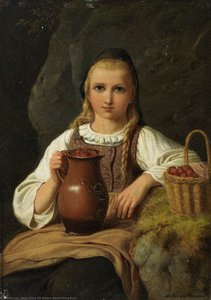
meyer georg von bremen (johann georg meyer)
1813 - 1886
Datos clave
- Artistic Movement Or Style: Düsseldorf School of Painting
- Artists Who Influenced This Artist: ['Friedrich Wilhelm Schadow']
- Date Of Birth: October 28, 1813
- Full Name: Johann Georg Meyer von Bremen
- Nationality: German
- Notable Artworks:
- Tending The Little Ones
- The reading girl
- The Sleeping Child
- Place Of Birth: Bremen, Germany

