

 Enviar
 Compartir
 Detalles

 Descargar
 Similares
 Presentación de diapositivas
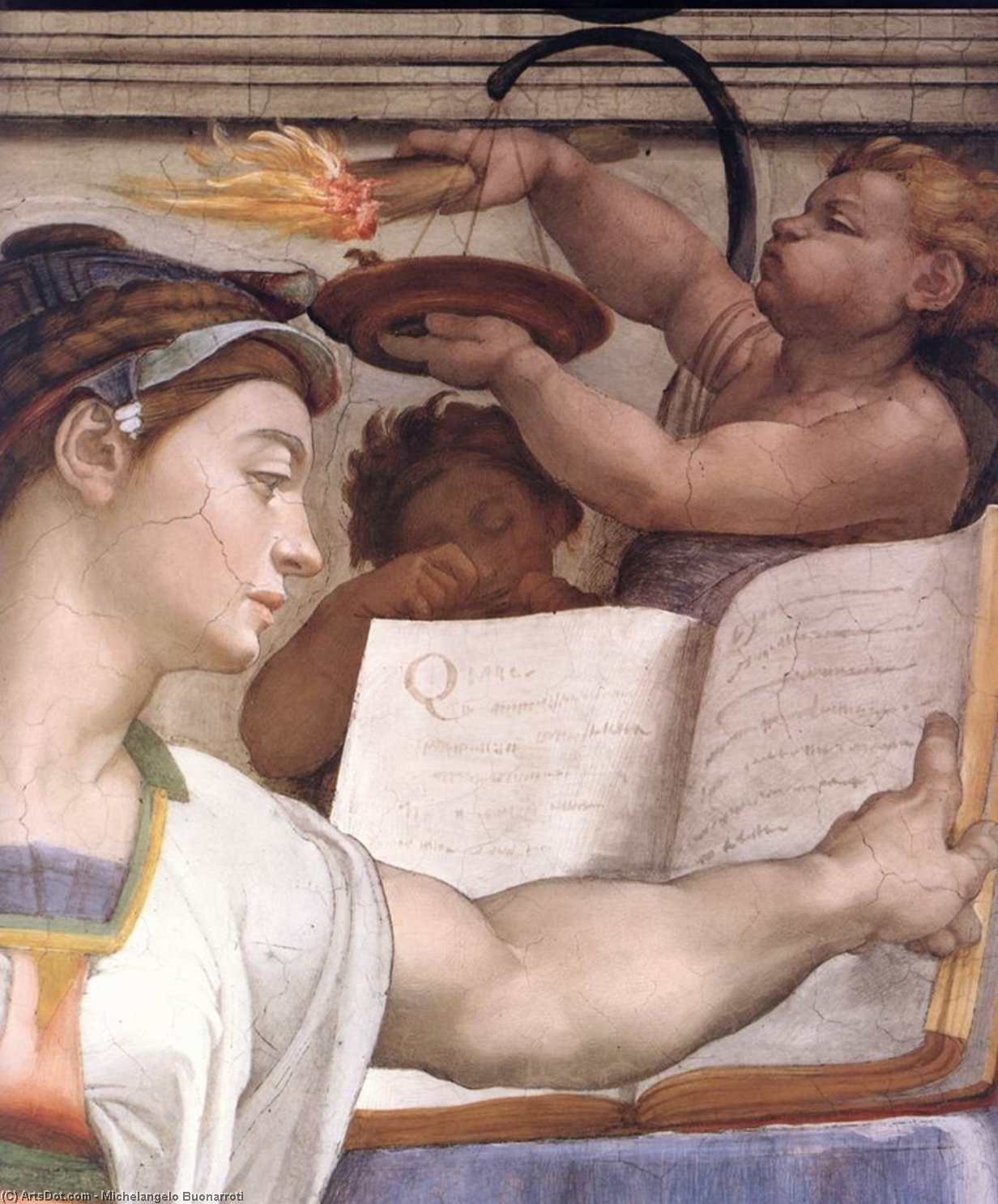
La Sibilia Eritrea (detalle)


 Ver más
Adquiera una imagen digital de alta resolución y optimizada, muy superior a la vista previa en línea.
Cada archivo es preparado meticulosamente por nuestros especialistas internos mediante el uso de herramientas avanzadas y un experto retoque manual. Nos aseguramos de que cada imagen posea una claridad excepcional, una precisión cromática impecable y un detalle minucioso.
El archivo final se entrega por correo electrónico en un plazo de 72 horas, optimizado para su uso inmediato en entornos profesionales, editoriales y de impresión. Esta es la misma calidad en la que confían los estudios de diseño, las editoriales y las galerías de primer nivel.
Imagen Digital
Descarga un archivo de alta resolución para exhibición personal, impresión y proyectos creativos. ( Comprar impresión Comprar pintura hecha a mano)
Incluido en cada pedido de imágenes digitales
Entrega digital experta, garantizada.
Al elegir ArtsDot.com, no solo está adquiriendo una imagen; está recibiendo una obra de arte digital mejorada profesionalmente, elaborada con precisión y respaldada por una garantía de satisfacción. Esto es todo lo que incluye su pedido, automáticamente:

Entrega rápida por email
Recibirá su archivo de imagen digital en alta resolución por correo electrónico en un plazo de 72 horas tras realizar su pedido, listo para su uso inmediato.

Archivo digital optimizado por IA
Su obra de arte se optimiza profesionalmente mediante herramientas avanzadas de IA y edición manual, garantizando el máximo detalle, claridad y precisión cromática.

Reenvío gratuito de por vida
¿Has borrado o perdido tu archivo por error? No te preocupes: te lo volveremos a enviar en cualquier momento, sin coste adicional.

Sin gastos de importación, siempre
Disfrute de su obra de arte al instante sin aduanas, aranceles ni gastos de envío; las descargas digitales siempre están libres de impuestos.

Garantía de fidelidad de color
Garantizamos que su imagen digital refleje los colores originales con la mayor fidelidad posible, mediante el uso de herramientas profesionales y gestión del color.

Garantía de satisfacción de 60 días
Si no está satisfecho con su imagen digital, la revisaremos o le reembolsaremos el 100% en un plazo de 60 días, sin preguntas.

100% Garantía de devolución de dinero
¿No está satisfecho? Obtenga un reembolso completo dentro de los 60 días posteriores a la recepción de su archivo digital, sin necesidad de explicaciones.

Descuentos por pedidos grandes
Compra 3 imágenes, ahorra 10% - Compra 5, ahorra 15% - Compra 10+, ahorra 20%. Ideal para proyectos creativos, galerías y agencias.
Descripción del coleccionable
Michelangelo Buonarroti: A Renaissance Forged in Stone and Paint
Michelangelo Buonarroti, a name synonymous with the High Renaissance, resonates through centuries as a testament to human artistic potential. Born on March 6, 1475, in Caprese Michelangelo, nestled in the Tuscan hills of Italy, his life was an extraordinary convergence of talent, ambition, and divine inspiration. Though initially met with resistance from his father regarding an artistic path, young Michelangelo’s innate gift for drawing proved undeniable, setting him on a course to redefine the boundaries of sculpture, painting, and architecture. His early apprenticeship under Domenico Ghirlandaio provided foundational skills in fresco and draftsmanship, but it was within the Medici gardens—a haven of classical antiquity—that his artistic soul truly awakened. Immersed in the study of Greek and Roman sculptures, Michelangelo absorbed the principles of anatomy, proportion, and idealized beauty that would become hallmarksThe Erythraean Sibyl: A Vision of Prophecy
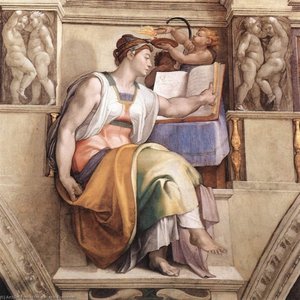
This captivating detail from Michelangelo's fresco unveils a powerful depiction of the Erythraean Sibyl, one of the prophetic women of antiquity who foretold the coming of Christ. Painted in 1509 as part of the monumental decoration of the Sistine Chapel ceiling within Vatican City, this segment offers an intimate glimpse into Michelangelo’s artistic genius and his profound engagement with classical mythology and Christian theology. The Sibyl isn't portrayed as a passive oracle; instead, she is rendered with dynamic energy and intellectual strength. This reflects the High Renaissance fascination with human potential and the revival of classical learning. The inclusion of Sibyls alongside Old Testament prophets on the Sistine Chapel ceiling was a deliberate choice by Pope Julius II, signifying the universality of God’s message and the continuity between pagan wisdom and Christian revelation.Compositional Mastery & Artistic Technique
Michelangelo's mastery of *figura serpentinata* – a twisting, spiraling pose – is evident in the Sibyl’s form. Her body curves with graceful power, conveying both physical strength and spiritual intensity. The fresco technique demanded exceptional skill; pigments were applied to wet plaster (*intonaco*), requiring rapid execution and precise planning. The subtle modeling of her features, achieved through delicate shading ( *chiaroscuro* ), brings a remarkable sense of realism and emotional depth to the figure. Note the inclusion of two children – an infant and a slightly older child – symbolizing the lineage of prophecy and the enduring nature of faith across generations.Symbolism &; Narrative Layers
The open book held by the Sibyl is central to her identity, representing knowledge, divine inspiration, and the prophecies she delivered. The surrounding figures—including those partially visible on either side—contribute to a complex narrative that invites contemplation. While the exact interpretation of these supporting characters remains debated among art historians, they likely represent different eras or aspects of prophetic tradition. The overall composition is not merely illustrative; it’s a carefully constructed visual argument about faith, knowledge, and the relationship between humanity and the divine.Historical Significance & Lasting Impact
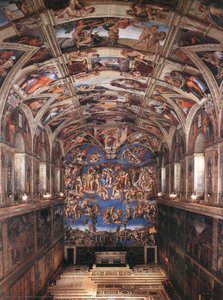
Commissioned by Pope Julius II, the Sistine Chapel ceiling stands as one of the most important artistic achievements in Western history. Michelangelo's work revolutionized fresco painting and profoundly influenced subsequent generations of artists. The *Erythraean Sibyl* exemplifies the ideals of High Renaissance art: anatomical accuracy, dramatic composition, emotional intensity, and a synthesis of classical and Christian themes. The recent restorations have revealed the vibrant colors and intricate details that Michelangelo originally intended, allowing us to appreciate his genius with renewed clarity.Emotional Resonance &; Interior Design
Beyond its historical importance, this detail evokes a powerful sense of contemplation and awe. The Sibyl’s gaze—intense and focused—draws the viewer into her world of prophecy and spiritual insight. A reproduction of this artwork would serve as a striking focal point in any interior space, adding a touch of Renaissance grandeur and intellectual sophistication. Its rich colors and dynamic composition complement both traditional and contemporary design schemes, inspiring conversation and enriching the aesthetic experience. For those seeking to bring the beauty and power of Michelangelo’s art into their homes or collections, high-quality reproductions are available, allowing you to appreciate this masterpiece in exquisite detail. Explore a range of options at ArtsDot.com.Obras relacionadas
Biografía del artista
Miguel Ángel Buonarroti: Un Titán del Renacimiento
Vida Temprana y Formación (1475-1496)
- Miguel ángel de Lodovico Buonarroti Simoni nació el 6 de marzo de 1475, en Caprese Michelangelo, Toscana.
- Inicialmente, su padre resistió una carrera artística, pero accedió al excepcional talento de su hijo para dibujar.
- A los 13 años, se hizo aprendiz de Domenico Ghirlandaio, aprendiendo técnicas de fresco y dibujo.
- Pronto se inclinó hacia la escultura, estudiando obras clásicas en los jardines de los Medici – una influencia decisiva.
Periodo Temprano: Estableciendo el Dominio (1490-1505)
- Alrededor de 1496, recibió su primera comisión importante: la escultura de la Piedad, completada en 1499.
- La Piedad, ubicada en la Basílica de San Pedro, demostró su maestría en el tallado del mármol y su profundidad emocional.
- Su siguiente obra maestra fue la colosal estatua de David (1501-1504), que simbolizaba los ideales republicanos florentinos.
- El David, más de 17 pies de alto, demostró su comprensión anatómica y su capacidad para dar vida a la piedra.
El Alto Renacimiento: Pinturas de la Capilla Sixtina (1505-1520)
- Papa Julio II encargó a Miguel ángel pintar el techo de la Capilla Sixtina en 1508.
- Durante cuatro años, pintó más de 300 figuras que representan escenas del Génesis, incluyendo La Creación de Adán.
- Este ciclo monumental de frescos es un logro destacado en el arte occidental, demostrando su habilidad compositiva y su poder narrativo.
- También comenzó a trabajar en la tumba de Papa Julio II – un proyecto que abarcaría décadas pero permanecería sin terminar según lo concebido originalmente.
Años Tardíos: Arquitectura y el ‘Juicio Final’ (1520-1564)
- En 1520, Miguel ángel se convirtió en arquitecto de la Basílica de San Pedro, alterando significativamente el diseño de Bramante.
- Entre 1536 y 1541, pintó El Juicio Final en la pared del altar de la Capilla Sixtina.
- Este vasto fresco representaba la Segunda Venida de Cristo con una composición dramática e intensidad emocional, reflejando un cambio hacia el Manierismo.
Influencias y Desarrollo Artístico
- Antigüedad Clásica: El estudio de las esculturas griegas y romanas impactó profundamente su comprensión de la anatomía y la proporción.
- Humanismo Renacentista: La énfasis en el potencial humano es evidente en su celebración de la forma humana.
- Tradición Florentina: Construyó sobre el legado de artistas como Donatello y Masaccio.
- Su estilo evolucionó desde el idealismo clásico a un manierismo más dinámico y expresivo.
Significado Histórico y Legado
- Miguel ángel es considerado uno de los mayores artistas de todos los tiempos, encarnando al “hombre del Renacimiento”.
- Sus esculturas, pinturas y arquitectura han inspirado a generaciones y continúan cautivando al público en todo el mundo.
- Influyó profundamente tanto en los movimientos artísticos del Alto Renacimiento como del Manierismo.
- Su precisión anatómica, sus composiciones dramáticas y su profundidad emocional establecieron nuevos estándares de excelencia artística.
Años Finales
- Miguel ángel murió el 18 de febrero de 1564, en Roma, dejando atrás una obra incomparable.
- Su legado continúa dando forma a nuestra comprensión de la belleza, el poder y el potencial humano.
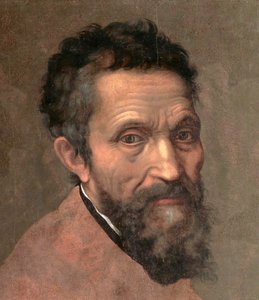
Miguel Ángel
1475 - 1564 , Italia
Breves datos
- Artistas Que Influyeron:
- Donatello
- Masaccio
- Estilo Artístico: Alto Renacimiento, Manierismo
- Fecha De Muerte: 18 de febrero de 1564
- Fecha De Nacimiento: 6 de marzo de 1475
- Influenciado A Artistas: ['Manierismo']
- Lugar De Nacimiento: Caprese Michelangelo, Italia
- Nacionalidad: Italiana
- Nombre Completo: Miguel Ángel Buonarroti
- Obras Notables:
- La Piedad
- David
- Techo de la Capilla Sixtina
- El Juicio Final

