 Ver en contexto
 Enviar
 Compartir
 Detalles

 Descargar
 Similares
 Radiografía
 Presentación de diapositivas
 Estadísticas
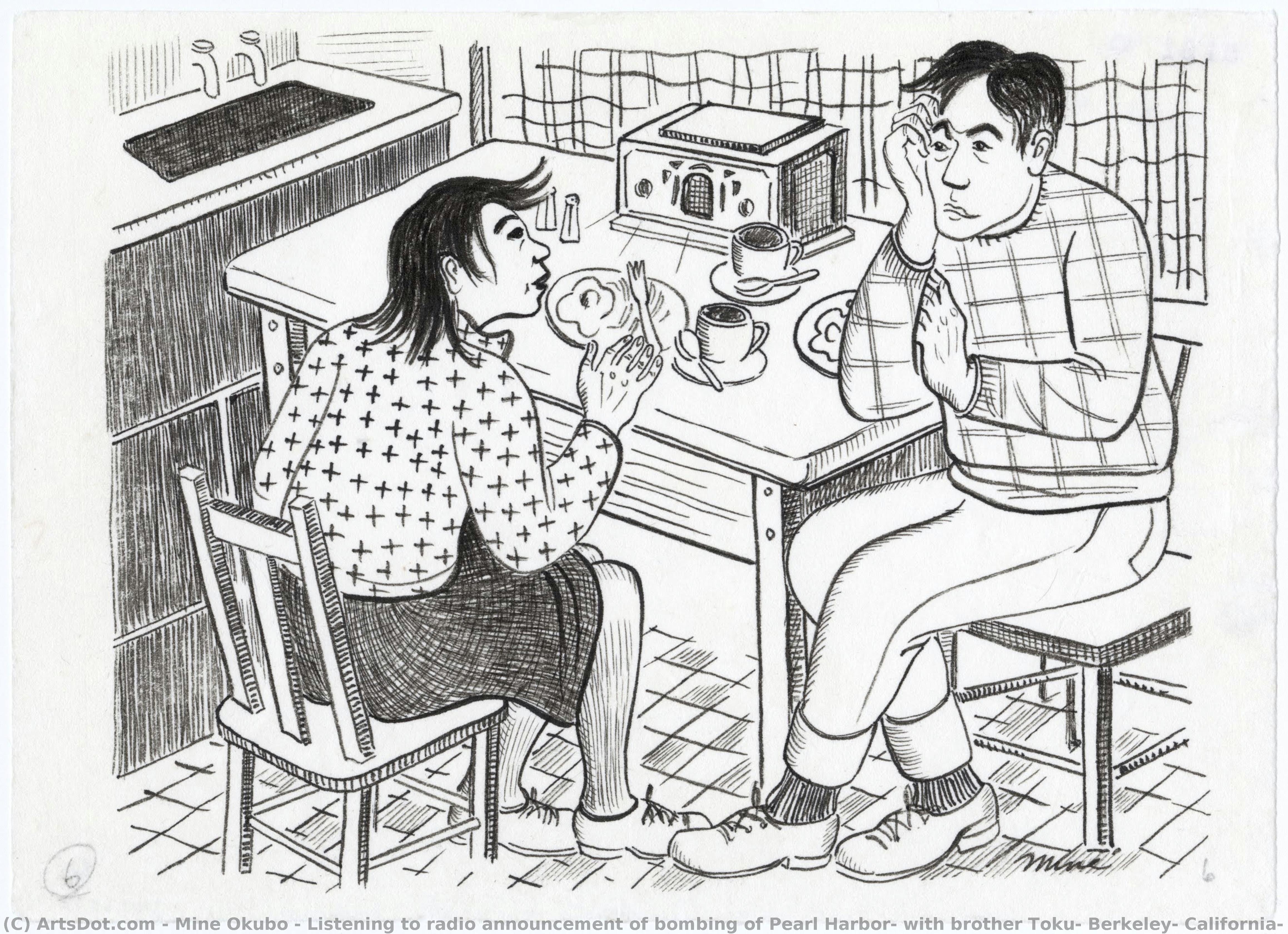
Listening to radio announcement of bombing of Pearl Harbor, with brother Toku, Berkeley, California, 1941


 Ver más
Reproducción al óleo hecha a mano
Óleo sobre lienzo pintado a mano en el tamaño y marco de su elección, realizado por encargo por nuestros artistas. ( Cambiar a Impresión Cambiar a imagen digital)




P118B $10

P118H $10

P118W $10

P438Z $10

P508JH $12

P508YH $12

P805H $10

P805Z $10

P919BZ $10

P919G $10

P919XJ $10

P959ZH $10

P968JZ $12

W106C $8

W218G $10

W218JH $8

W218Y $10

W307PJ $10

W316G $10

W316PJ $8

W316Y $10

W398PJ $8

W4111J $10

W500HY $15

W500JH $15

W692G $12

W849H $8

W940BG $15

W953PJ $8




Elija entre nuestros tamaños predefinidos que respetan las proporciones originales de la obra.

Puede ingresar sus propias dimensiones para adaptarse a un marco o espacio específico. Si el tamaño seleccionado no coincide con las proporciones de la imagen original, recortaremos la obra o extenderemos la pintura con elementos adicionales pintados a mano. Se le enviará una maqueta digital para su aprobación antes de comenzar la producción.
Tenga en cuenta que la vista previa en pantalla no refleja el recorte o la extensión reales. Solo la maqueta mostrará con precisión la composición final.
Si bien existen tamaños personalizados, recomendamos seleccionar una dimensión de la lista predefinida para preservar las proporciones originales.
Tras realizar el pedido, el equipo de ArtsDot.com enviará un correo electrónico al cliente para solicitar instrucciones y proporcionarle una vista previa del boceto.
Envío a todo el mundo () en 3-4 semanas en lugar de las 5 semanas estándar. (9 septiembre). Sin comprometer la calidad.

Envío exprés gratuito a todo el mundo

Lienzo de lino de alta calidad

Seguro de envío total

Garantía de reembolso de impuestos aduaneros

Garantía de fidelidad cromática exacta

Política de devolución de 100 días (solo por defectos)

Garantía de devolución del 100% del dinero

Descuento por cantidad
 La opción de vidrio solo está disponible en tamaños inferiores a 110 cm.

Listening to radio announcement of bombing of Pearl Harbor, with brother Toku, Berkeley, California, 1941
Técnica de reproducción
Dimensiones de la reproducción
-


Precio total final
$ 288
A Frozen Moment of Shock: Miné Okubo’s “Listening to Radio Announcement of Bombing of Pearl Harbor…”
Miné Okubo's 1941 drawing, "Listening to Radio Announcement of Bombing of Pearl Harbor…," isn’t merely a snapshot of a family in wartime; it’s a profoundly intimate and devastatingly honest portrayal of the immediate aftermath of an event that irrevocably altered American history. Rendered in meticulous pen and ink on paper, the artwork captures a quiet domestic scene—a woman, identified as Miné Okubo herself, and her brother Toku seated at a breakfast table in their Berkeley, California home—as they listen to news reports detailing the surprise attack on Pearl Harbor. The image transcends its simple composition, becoming a poignant emblem of vulnerability, uncertainty, and the sudden intrusion of global conflict into the lives of ordinary people.
Okubo’s artistic style leans heavily toward illustrative realism, reminiscent of both cartooning and documentary art. The figures are rendered with careful attention to detail – Miné's flipped forelock, a subtle signifier of her Japanese American heritage, is immediately striking; Toku’s head resting on his hand conveys a sense of quiet despair. The use of hatching and cross-hatching creates a remarkable illusion of texture and depth, particularly in the depiction of the wooden furniture and the radio itself – a central device symbolizing the dissemination of devastating news. The muted grayscale palette further enhances the somber mood, emphasizing the gravity of the situation without resorting to dramatic color.
A Window into Wartime Experience
Created during a tumultuous period in American history—just months after the attack on Pearl Harbor—the drawing offers a rare glimpse into the lived experience of Japanese Americans facing increasing suspicion and discrimination. The Okubo family’s story is inextricably linked to the broader narrative of internment, as they were later forced to relocate to Topaz War Relocation Center in Utah. This artwork serves as a powerful reminder of the anxieties and uncertainties that permeated American society during World War II, particularly for those whose ancestry was Japanese.
The choice of depicting a seemingly mundane domestic scene—breakfast—is deliberate and profoundly moving. It underscores the jarring contrast between the ordinary rhythms of daily life and the sudden eruption of violence and fear. The act of listening to the radio becomes an almost ritualistic moment, highlighting the family’s shared experience of shock and disbelief as they grapple with the unfolding tragedy. The inclusion of the sink and window in the background subtly suggests a sense of confinement and isolation, mirroring the broader context of wartime restrictions.
Symbolism and Emotional Resonance
Beyond its historical significance, “Listening to Radio Announcement…” is rich in symbolic meaning. The radio itself represents not just information but also the inescapable intrusion of war into private lives. Miné’s bowed head conveys a sense of vulnerability and grief—a silent acknowledgment of the immense loss and uncertainty that lie ahead. Toku's posture speaks volumes, suggesting a quiet resignation or perhaps even a premonition of hardship. The composition as a whole evokes a powerful emotional response, prompting viewers to contemplate the human cost of conflict and the enduring impact of historical trauma.
The artwork’s strength lies in its ability to capture a fleeting moment of intense emotion with remarkable precision and sensitivity. It's not a grand historical statement but rather a deeply personal narrative—a testament to the resilience of the human spirit in the face of unimaginable adversity. It remains a vital piece of American art history, offering a poignant reminder of a pivotal moment in time and the enduring importance of bearing witness to injustice.
Technical Details & Reproduction Considerations
The artwork was created using traditional pen and ink techniques on paper, resulting in a distinctive graphic quality characterized by sharp lines and subtle tonal variations. The meticulous hatching and cross-hatching create a sense of texture and depth, lending the scene a remarkable level of realism. Reproductions should strive to faithfully capture this detail while maintaining the artwork’s inherent intimacy and emotional resonance. High-quality archival paper is recommended to ensure the longevity and vibrancy of the image.
Dimensions are unknown, but it's believed to be approximately 9.25 x 13 inches. The piece was created in 1942-1944 as part of Miné Okubo’s “Citizen 13660” series documenting her experiences during the internment period.
Obras relacionadas
Biografía del artista
Miné Okubo: Vida, Arte y Legado
Primeros Años y Educación
- Nacimiento: 27 de junio de 1912 en Riverside, California, hija de padres inmigrantes japoneses.
- Okubo demostró un talento temprano para el arte, alentada por su familia.
- Estudió arte formalmente, asistiendo a la Universidad de California, Berkeley, y posteriormente viajando a Europa en 1938 para continuar sus estudios.
- Su tiempo en Suiza se vio interrumpido por las crecientes tensiones políticas que precedieron a la Segunda Guerra Mundial.
Internamiento y Respuesta Artística
- Tras el ataque a Pearl Harbor, Okubo, junto con su hermano Benji, fueron removidos por la fuerza de sus hogares e internados en los campos de concentración japoneses americanos.
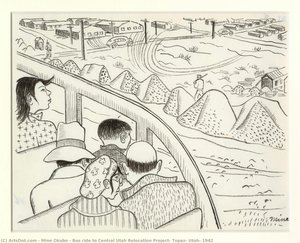
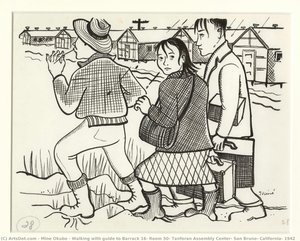
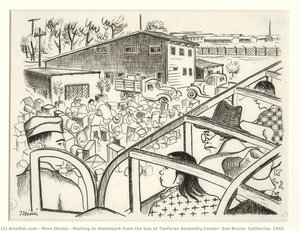
- Primero enviados al Tanforan Assembly Center en 1942, luego fueron trasladados al Topaz War Relocation Center en Utah.
- Durante su confinamiento, Okubo comenzó un proyecto notable: documentó meticulosamente la vida cotidiana dentro de los campos a través de más de 2.000 dibujos y bocetos.
- Estas obras capturaron las duras realidades de la existencia en el campo, las condiciones de vida hacinadas, los procesos burocráticos, el impacto emocional y la resiliencia de los internados.
Ciudadano 13660: Un Testimonio Poderoso
- Después de su liberación en 1944, Okubo compiló una selección de 198 dibujos y texto acompañante en un libro titulado Ciudadano 13660.
- Publicado en 1946, el libro se considera una obra fundamental que documenta la experiencia del internamiento japonés americano.
- El título hace referencia a su número asignado dentro del sistema de internamiento, enfatizando el aspecto deshumanizador de la reubicación forzada.
- Los dibujos se caracterizan por su directividad, honestidad y profundidad emocional, ofreciendo un registro visual conmovedor de un capítulo oscuro en la historia americana.
Carrera Post-Guerra y Desarrollo Artístico
- Okubo se trasladó a Nueva York City después de la guerra, donde continuó su carrera artística.
- Trabajó como artista independiente, creando ilustraciones para revistas y libros, y también realizó proyectos de murales.
- Su estilo evolucionó con el tiempo, pero mantuvo constantemente un enfoque en el comentario social y los temas humanísticos.
- Okubo recibió numerosos premios y reconocimientos a lo largo de su carrera, incluyendo subvenciones del Fondo Nacional para las Artes.
Influencias y Legado
- La obra de Okubo fue influenciada por el movimiento Social Realista, que enfatizaba la representación de los problemas sociales y la vida cotidiana con un enfoque en el realismo.
- Se inspiró en artistas como Käthe Kollwitz, conocida por sus poderosas representaciones del sufrimiento humano.
- Su legado reside en su valiente documentación de la experiencia del internamiento y su contribución a crear conciencia sobre los derechos civiles y la justicia social.
- “Ciudadano 13660” sigue siendo un documento histórico vital y continúa resonando con el público actual, sirviendo como un recordatorio de la importancia de la vigilancia contra la discriminación y el prejuicio.
Muerte y Remembrance
- Miné Okubo falleció el 10 de febrero de 2001, dejando atrás un poderoso cuerpo de trabajo que continúa inspirando y educando.
- Su arte se conserva en numerosas colecciones públicas y privadas, asegurando que su historia y mensaje perduren para las generaciones venideras.
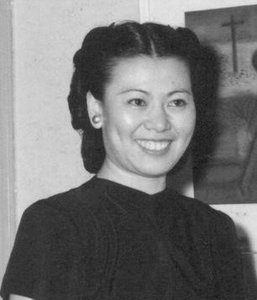
Miné Okubo
1912 - 2001 , Estados Unidos de América
Datos clave
- Artistic Movement Or Style: Social Realism
- Artists Or Movements Influenced By This Artist: ['Diego Rivera']
- Artists Who Influenced This Artist: ['Käthe Kollwitz']
- Date Of Birth: Jun 27, 1912
- Date Of Death: Feb 10, 2001
- Full Name: Miné Okubo
- Nationality: American
- Notable Artworks:
- Citizen 13660
- Interior of Mine and Toku
- Place Of Birth: Riverside, USA
Artículos relacionados
Realismo Estadounidense: 10 Obras Maestras que Cambiaron el Arte y la Decoración
Descubre 10 obras maestras del Realismo Estadounidense: Winslow Homer, Edward Hopper y más. Explora la historia, técnica y emoción de estos icónicos cuadros. Encuentra reproducciones de arte de museo en ArtsDot.com.
Robert W. Salmon: Navigating the Currents of Maritime Painting & American Realism
Explore the captivating maritime paintings of Robert W. Salmon, a pioneer of American Luminism. Discover his Boston Harbor scenes, legacy, and collecting guide at ArtsDot.
Grant Wood & American Regionalism: Identity, Myth & the Rural Landscape
Explore the world of Grant Wood & American Regionalism with ArtsDot. Discover the symbolism behind 'American Gothic', recurring themes, and the movement's lasting impact on art history. High-quality reproductions available.
The Nuances of Graphite: Exploring Emotional Depth & Technical Mastery in Pencil Drawing
Explore the captivating world of graphite drawing! Discover its rich history, master essential techniques like chiaroscuro, and learn how artists evoke emotion through this timeless medium. Expert insights for art enthusiasts.
Ecos del Lugar: Regionalismo e Identidad Americana en el Arte Entre Guerras
Descubra el Regionalismo americano: un movimiento artístico que capturó la esencia de la identidad rural y la vida en Estados Unidos entre guerras. Análisis experto, obras clave y legado cultural.
![[Sin título]](/media/artworks/images-thumb/da/f5/daf58ec86f2a4b9d0b02cc6cd4383556.jpg)