

 Ver en contexto
 Enviar
 Compartir
 Detalles

 Descargar
 Similares
 Radiografía
 Presentación de diapositivas
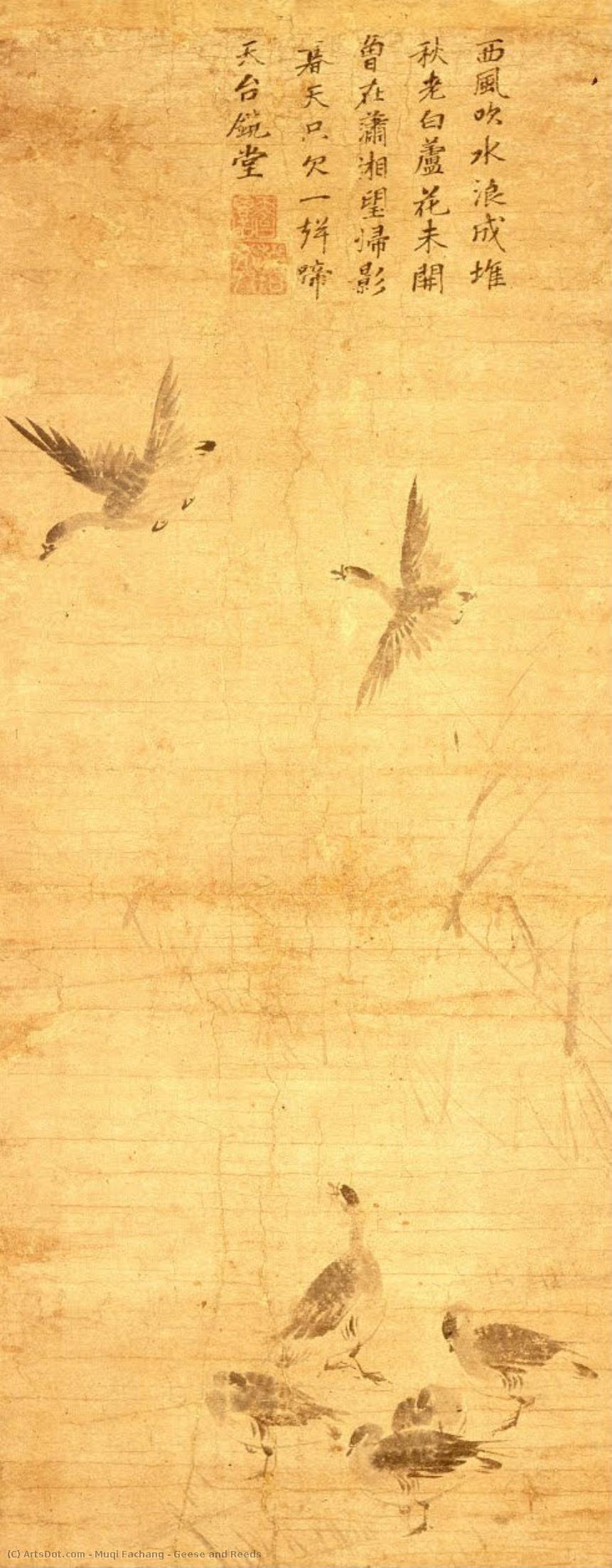
Geese and Reeds
 70.0 x 27.0 cm
 Ver más
Reproducción al óleo hecha a mano
Óleo sobre lienzo pintado a mano en el tamaño y marco de su elección, realizado por encargo por nuestros artistas. ( Comprar impresión Comprar imagen)




































Elija entre nuestros tamaños predefinidos que respetan las proporciones originales de la obra.

Puede ingresar sus propias dimensiones para adaptarse a un marco o espacio específico. Si el tamaño seleccionado no coincide con las proporciones de la imagen original, recortaremos la obra o extenderemos la pintura con elementos adicionales pintados a mano. Se le enviará una maqueta digital para su aprobación antes de comenzar la producción.
Tenga en cuenta que la vista previa en pantalla no refleja el recorte o la extensión reales. Solo la maqueta mostrará con precisión la composición final.
Si bien existen tamaños personalizados, recomendamos seleccionar una dimensión de la lista predefinida para preservar las proporciones originales.
Tras realizar el pedido, el equipo de ArtsDot.com enviará un correo electrónico al cliente para solicitar instrucciones y proporcionarle una vista previa del boceto.
Envío a todo el mundo () en 3-4 semanas en lugar de las 5 semanas estándar. (22 agosto). Sin comprometer la calidad.

Envío exprés gratuito a todo el mundo

Lienzo de lino de alta calidad

Seguro de envío total

Garantía de reembolso de impuestos aduaneros

Garantía de fidelidad cromática exacta

Política de devolución de 60 días (solo por defectos)

Garantía de devolución del 100% del dinero

Descuento por cantidad
 La opción de vidrio solo está disponible en tamaños inferiores a 110 cm.

Geese and Reeds
Técnica de reproducción
Dimensiones de la reproducción
-


Precio total final
$ 263
Obras relacionadas
Biografía del artista
Muqi Fachang (牧谿法常) – The Monk Painter of Six Persimmons
Muqi Fachang (牧谿法常, flourished 13th century, Sichuan province, China) stands as one of the most revered figures in Chinese Chan painting—a tradition profoundly shaped by his artistic vision. Despite scant biographical details beyond his monastic affiliation and birthplace, Muqi’s legacy persists through his iconic works, particularly “Six Persimmons,” which continue to inspire artists and scholars alike. His influence extended far beyond Sichuan, reaching Japan where he became a pivotal figure in establishing the aesthetic principles of Zen landscape art. ### Early Life and Artistic Training Information regarding Muqi Fachang's early life remains elusive. He was born around 1200 CE in Sichuan province—a region known for its rich Buddhist heritage—and received his initial artistic training under Liang Kai, a prominent Chan painter himself. This mentorship instilled in Muqi a foundational understanding of Chan aesthetics and techniques—characterized by simplicity, spontaneity, and an unwavering focus on capturing the essence of nature. The Abbot Wuzhun Shifan at Liutong Temple further nurtured Muqi’s talent, shaping him into a contemplative artist deeply attuned to Buddhist philosophy. ### Style and Technique – Embracing Spontaneity Muqi Fachang's artistic style is instantly recognizable for its distinctive approach—a deliberate rejection of meticulous detail in favor of capturing the immediacy of perception. Unlike many contemporary painters who adhered to rigid conventions, Muqi favored a technique rooted in “yunshuo” (雲水學)—the study of clouds and water—which emphasized spontaneity and intuitive brushwork. This method involved applying ink blots with broad strokes, allowing for variations in tone and texture that conveyed the dynamic energy of the natural world. The resulting paintings possess an ethereal quality, reflecting Muqi’s profound engagement with Zen principles. ### “Six Persimmons” – A Masterpiece of Minimalist Expression “Six Persimmons,” arguably Muqi Fachang's most celebrated work, exemplifies his artistic philosophy perfectly. Executed in 1269 CE—the final years of his life—this triptych depicts six persimmon fruits suspended in an empty space—a visual metaphor for emptiness and enlightenment. The composition is strikingly simple: the fruit are rendered with minimal shading and outline, creating a luminous effect that captures the subtle nuances of light and color. Muqi’s masterful use of ink blots—particularly the darker shades—suggests movement and depth without resorting to conventional perspective. This painting embodies the Zen ideal of “wu wei” (無為)—effortless action—where the artist strives to capture the beauty of nature without imposing his own will upon it. ### Influence on Japanese Landscape Art Muqi Fachang’s artistic legacy extended far beyond China, profoundly impacting the development of landscape art in Japan during the Muromachi period (1392–1573). Japanese pilgrims traveled to Muqi's monastery seeking inspiration and guidance—a journey that resulted in the acquisition of two seals from Muqi by Mokuan—the abbot of Liutong Temple. This encounter solidified Muqi’s reputation as a master of Zen aesthetics, influencing generations of Japanese painters who adopted his technique of spontaneous brushwork and minimalist composition. The resulting paintings—characterized by serene landscapes and subtle tonal variations—became cornerstones of Japanese landscape art, establishing the aesthetic principles that continue to resonate today. ### Legacy and Significance Muqi Fachang’s contribution to Chan painting remains unparalleled. His unwavering commitment to simplicity, spontaneity, and capturing the essence of nature cemented his place as one of China's greatest artists—a figure whose influence transcends time and borders. “Six Persimmons,” in particular, continues to inspire artists worldwide—serving as a testament to Muqi Fachang’s enduring vision and artistic genius. His legacy persists not merely as an aesthetic achievement but also as a symbol of Zen philosophy itself—a reminder that true beauty lies in embracing emptiness and accepting the natural flow of existence.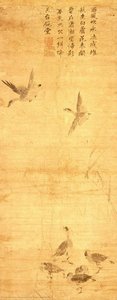
muqi fachang
1210 - 1269 , People's Republic of China
Datos clave
- Artistic Movement Or Style: Chan painting
- Artists Or Movements Influenced By This Artist: ['Japanese ink painting']
- Artists Who Influenced This Artist: ['Liang Kai']
- Date Of Death: 1269
- Full Name: Muqi Fachang
- Nationality: Chinese
- Notable Artworks:
- Six Persimmons
- Daitokuji Triptych
- Place Of Birth: Sichuan province, China

