 Ver en contexto
 Enviar
 Compartir
 Detalles

 Descargar
 Similares
 Radiografía
 Presentación de diapositivas
 Estadísticas
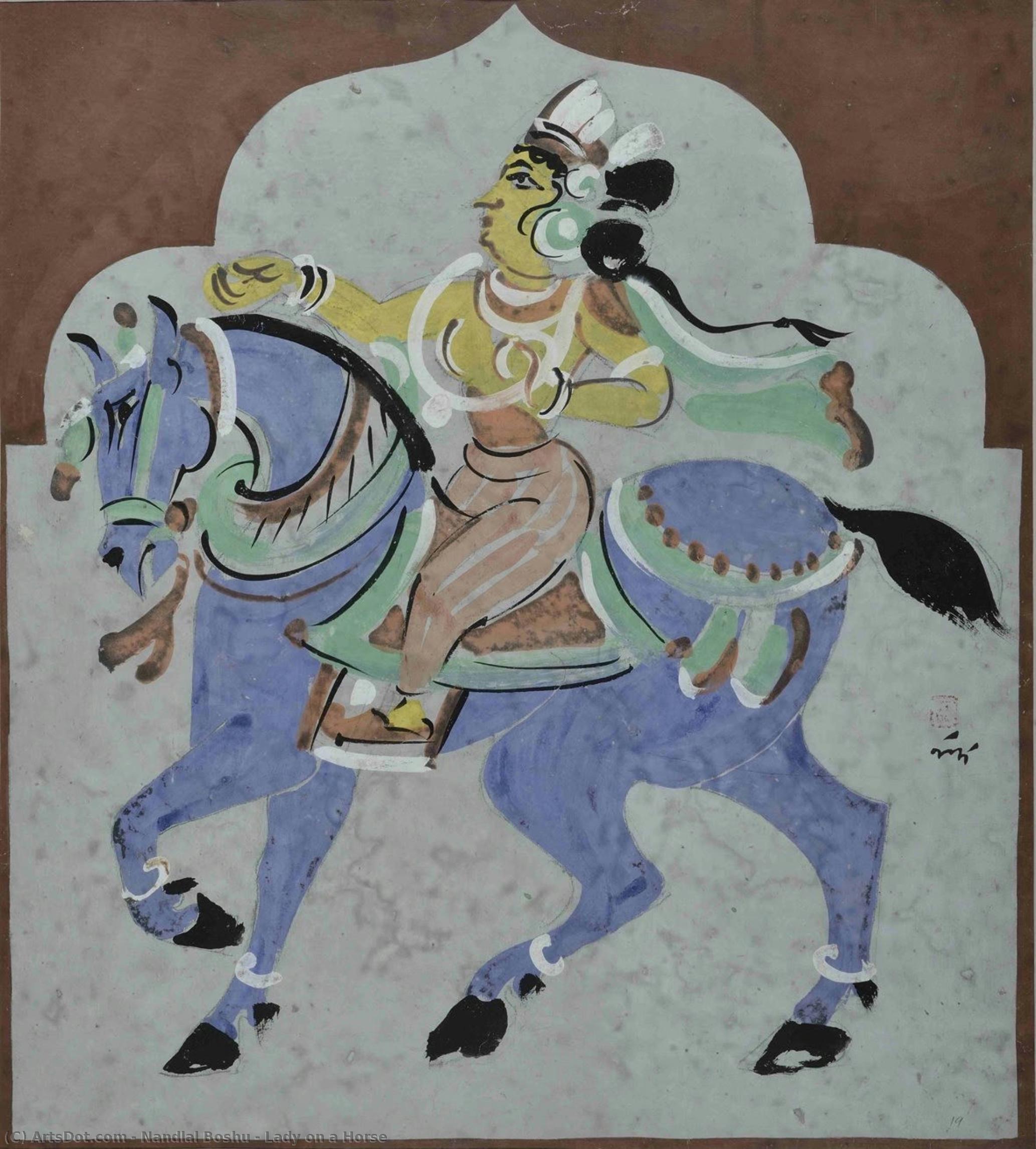
Lady on a Horse
 Painting
- Bengal School
 1937
1937- Modern
 58.0 x 62.0 cm
 Galería Nacional de Arte Moderno
 Ver más
Reproducción al óleo hecha a mano
Óleo sobre lienzo pintado a mano en el tamaño y marco de su elección, realizado por encargo por nuestros artistas. ( Cambiar a Impresión Cambiar a imagen digital)




P118B $10

P118H $10

P118W $10

P438Z $10

P508JH $12

P508YH $12

P805H $10

P805Z $10

P919BZ $10

P919G $10

P919XJ $10

P959ZH $10

P968JZ $12

W106C $8

W218G $10

W218JH $8

W218Y $10

W307PJ $10

W316G $10

W316PJ $8

W316Y $10

W398PJ $8

W4111J $10

W500HY $15

W500JH $15

W692G $12

W849H $8

W940BG $15

W953PJ $8




Elija entre nuestros tamaños predefinidos que respetan las proporciones originales de la obra.

Puede ingresar sus propias dimensiones para adaptarse a un marco o espacio específico. Si el tamaño seleccionado no coincide con las proporciones de la imagen original, recortaremos la obra o extenderemos la pintura con elementos adicionales pintados a mano. Se le enviará una maqueta digital para su aprobación antes de comenzar la producción.
Tenga en cuenta que la vista previa en pantalla no refleja el recorte o la extensión reales. Solo la maqueta mostrará con precisión la composición final.
Si bien existen tamaños personalizados, recomendamos seleccionar una dimensión de la lista predefinida para preservar las proporciones originales.
Tras realizar el pedido, el equipo de ArtsDot.com enviará un correo electrónico al cliente para solicitar instrucciones y proporcionarle una vista previa del boceto.
Envío a todo el mundo () en 3-4 semanas en lugar de las 5 semanas estándar. (10 septiembre). Sin comprometer la calidad.

Envío exprés gratuito a todo el mundo

Lienzo de lino de alta calidad

Seguro de envío total

Garantía de reembolso de impuestos aduaneros

Garantía de fidelidad cromática exacta

Política de devolución de 100 días (solo por defectos)

Garantía de devolución del 100% del dinero

Descuento por cantidad
 La opción de vidrio solo está disponible en tamaños inferiores a 110 cm.

Lady on a Horse
Técnica de reproducción
Dimensiones de la reproducción
-


Precio total final
$ 263
A Vision of Grace: The Ethereal Spirit of Nandlal Bose
In the sweeping landscape of modern Indian art, few names resonate with as much cultural significance and rhythmic beauty as Nandlal Bose. His 1937 masterpiece, Lady on a Horse, serves as a breathtaking window into a world where tradition meets a profound, poetic movement. This painting is not merely a depiction of a rider; it is an evocative celebration of freedom and the harmonious connection between humanity and the natural realm. As one gazes upon the canvas, the viewer is immediately transported to an era defined by the revival of classical Indian aesthetics, where every brushstroke seeks to capture the soul of a nation finding its modern voice.
The composition is anchored by the striking presence of a blue horse, a choice of color that transcends mere realism to enter the realm of the symbolic and the dreamlike. Riding atop this magnificent creature is a woman, her form draped in the flowing elegance of a traditional sari. Her posture—arms raised toward the heavens—conveys an unbridled sense of joy and liberation. This gesture, captured in a moment of pure, kinetic energy, invites the observer to share in her exhilaration. The surrounding elements, from the distant figure on the periphery to the birds soaring gracefully through the sky, create a layered narrative of life in motion, suggesting a universe that is both vast and intimately connected.
Technique and the Mastery of Line
Bose’s technique in Lady on a Horse reflects his deep-seated reverence for the ancient murals of the Ajanta caves, blended seamlessly with a sophisticated, modern sensibility. The artist utilizes a fluid, rhythmic line that guides the eye across the canvas, mimicking the very movement of the horse and the wind. There is a deliberate balance between the weight of the large, central subject and the delicate, airy quality of the background elements. This mastery of line allows the painting to possess a structural strength while maintaining an almost lyrical lightness.
For the discerning collector or interior designer, this piece offers a unique opportunity to introduce a sense of historical depth and cultural sophistication into a space. The palette, characterized by its bold yet harmonious tones, provides a focal point that is both commanding and serene. Whether placed in a contemporary gallery setting or a classic study, the painting acts as a conversation piece, drawing the eye with its vibrant blue hues and captivating subject matter. It is an artwork that does not merely decorate a wall; it breathes life into an environment, offering a timeless elegance that transcends fleeting trends.
A Legacy of Cultural Revival
To understand this work is to understand the heart of the Indian nationalist movement and the artistic renaissance that accompanied it. Bose was a pioneer who sought to strip away colonial influences to rediscover the intrinsic beauty of Indian mythology, village life, and classical motifs. In Lady on a Horse, we see the culmination of this mission—a painting that feels both ancient in its spirit and strikingly modern in its execution. It captures a moment of triumph and peace, making it an emotionally resonant acquisition for those who value art as a vessel for history and human emotion.
Obras relacionadas
Biografía del artista
Early Life and Career
Nandalal Bose, a luminary of modern Indian art, was born on December 3rd, 1882, in Haveli Kharagpur—a location somewhat obscure to Western eyes—one of the more modest Bengali families residing in Munger district, Bihar. His artistic inclination emerged early in life, shaping his trajectory despite initial reservations from his parents regarding a vocation dedicated solely to art. Bose embarked on his artistic journey by enrolling at Calcutta School of Art, where he found profound inspiration in the monumental murals adorning Ajanta Caves—a formative experience that cemented his connection with ancient Indian iconography and storytelling traditions. This association propelled him into an international circle of artists and writers passionately pursuing a revival of classical Indian culture, fostering collaborations that broadened his artistic horizons. Notably, Bose’s involvement in the Gandhian movement culminated in the poignant linocut print depicting Mahatma Gandhi walking with a staff—a visual emblem encapsulating the spirit of nonviolent resistance and solidifying his role as a champion of social justice.Artistic Style and Contributions
Bose's artistic style—often termed “Indian Style”—represented a masterful fusion of traditional Indian aesthetics and influences from Persian art, resulting in compositions characterized by vibrant colors, intricate detailing, and a deliberate embrace of symbolic imagery. His oeuvre encompasses captivating depictions of Hindu mythology—particularly deities like Shiva and Vishnu—as well as evocative portrayals of rural life—capturing the essence of village occupations and customs. These works garnered considerable acclaim during his lifetime, establishing Bose as one of the foremost pioneers of modern Indian art and securing his place among the influential figures shaping the artistic landscape of the 20th century. Among his most celebrated creations are:- A Lion (59 x 63 cm):
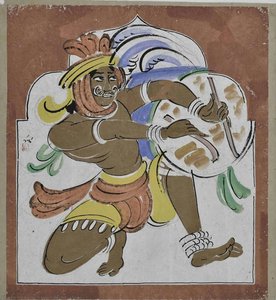
- Dhol Wala (59 x 63 cm):
- Pranam (50 x 55 cm):
Influences and Mentorship
Bose's artistic development was profoundly shaped by Abanindranath Tagore—a fellow artist who recognized Bose’s exceptional talent and nurtured his creative potential. Tagore’s encouragement fostered Bose’s fascination with European painting styles, particularly those of Raphael and Dürer—influences that informed Bose’s stylistic choices and broadened his artistic repertoire. Furthermore, Bose's engagement with the teachings of Swami Vivekananda instilled in him a conviction about the importance of art as a vehicle for moral instruction and cultural enrichment—a perspective that permeated his artistic endeavors throughout his career.Recognition and Legacy
Nandalal Bose received widespread recognition for his contributions to Indian art, culminating in the honorific Padma Vibhushan bestowed upon him by the Government of India in 1954—a testament to his enduring influence on the nation’s artistic heritage. He was entrusted with the monumental task of illustrating the Constitution of India—a symbolic undertaking reflecting Bose's dedication to upholding democratic values and fostering national unity. Moreover, he was honored by the Archaeological Survey of India in 1976 as one of the “nine artists” whose work constitutes an “art treasure”—affirming his status as a cornerstone of Indian artistic excellence. Today, the National Gallery of Modern Art in Delhi houses over 7,000 of Bose’s paintings—a tangible reminder of his prolific output and enduring legacy as a visionary artist who championed both classical and folk traditions.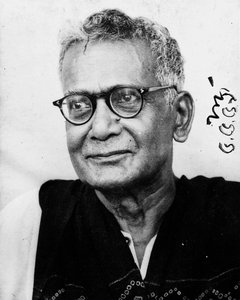
Nandalal Bose
1882 - 1966 , India
Datos clave
- Artistic Movement Or Style: Indian Style
- Artists Or Movements Influenced By This Artist: ['Ajanta Caves']
- Artists Who Influenced This Artist: ['Abanindranath Tagore']
- Date Of Birth: December 3, 1882
- Date Of Death: April 16, 1966
- Full Name: Nandalal Bose
- Nationality: Indian
- Notable Artworks:
- A Lion
- Dhol Wala
- Pranam
- Place Of Birth: Kharagpur, India
Artículos relacionados
The Noble Steed on Canvas: A Historical & Artistic Exploration of Horse Painting Across Cultures
Explore the rich history of horse painting! Discover masterpieces from Stubbs to Munnings & learn about symbolism, techniques & artists. Find museum-quality reproductions at ArtsDot.
Las 10 Obras Maestras del Azul Pizarra: Arte, Historia y Decoración
Descubre las 10 pinturas más famosas dominadas por el azul pizarra. Explora la historia, técnica y belleza de Monet, Van Gogh y otros maestros. Encuentra reproducciones de arte exclusivas para decorar tu hogar en .
Raja Ravi Varma: Bridging Tradition & Modernity in 19th-Century Indian Art
Explore the life & art of Raja Ravi Varma, a pioneer who fused European techniques with Indian iconography. Discover his iconic paintings, lasting legacy, and influence on modern Indian art at ArtsDot.
The Equine Muse: A Historical & Artistic Exploration of Horses in Painting
Explore the captivating history of horses in painting! Discover Renaissance masterpieces, Baroque grandeur & expert insights for collecting equestrian art. Learn about symbolism, techniques & lasting value with ArtsDot.
The Allure of Azure: Exploring the Symbolic & Aesthetic Depths of Blue in Art History
Explore the rich history of blue in art! Discover its symbolism, from ancient pigments to modern masterpieces by Kandinsky & Seurat. Uncover the psychological impact and cultural meanings behind this captivating hue.