 Ver en contexto
 Enviar
 Compartir
 Detalles

 Descargar
 Similares
 Radiografía
 Presentación de diapositivas
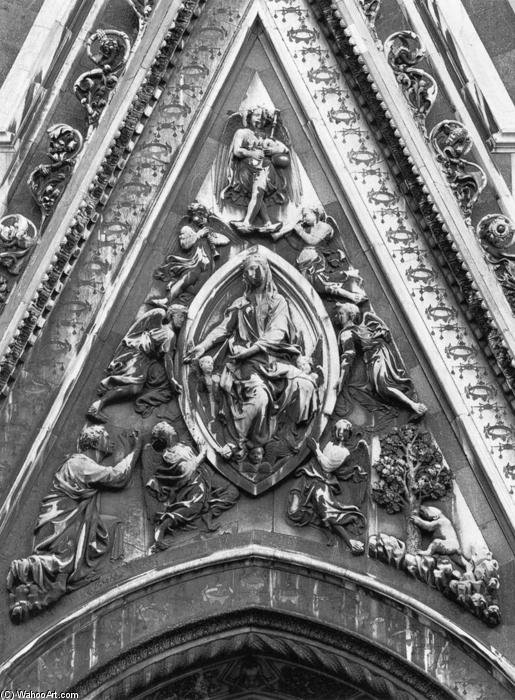
Assumption of the Virgin


 Ver más
Giclée / Impresión de arte
Impresiones giclée o en lienzo de calidad de museo con producción rápida y opciones de acabado flexibles. ( Comprar pintura hecha a mano Comprar imagen)




P118B $10

P118H $10

P118W $10

P438Z $10

P508JH $12

P508YH $12

P805H $10

P805Z $10

P919BZ $10

P919G $10

P919XJ $10

P959ZH $10

P968JZ $12

W106C $8

W218G $10

W218JH $8

W218Y $10

W307PJ $10

W316G $10

W316PJ $8

W316Y $10

W398PJ $8

W4111J $10

W500HY $15

W500JH $15

W692G $12

W849H $8

W940BG $15

W953PJ $8




Elija entre nuestros tamaños predefinidos que respetan las proporciones originales de la obra.

Puede introducir sus propias dimensiones para adaptarse a un marco o espacio específico. Si el tamaño seleccionado no coincide con las proporciones de la imagen original, recortaremos la obra de arte o extenderemos la imagen con un borde con efecto espejo o de color sólido. Se enviará una maqueta digital para su aprobación antes de que comience la producción.
Tenga en cuenta que la vista previa en pantalla no refleja el recorte o la extensión real. Solo la maqueta mostrará con precisión la composición final.
Aunque existen tamaños personalizados, recomendamos seleccionar una dimensión de la lista predefinida para preservar las proporciones originales.
Envío a todo el mundo () en 2 semanas en lugar de las 4/5 semanas estándar. (26 agosto)

Envío exprés gratuito a todo el mundo

Lienzo de lino de alta calidad

Seguro de envío total

Garantía de reembolso de impuestos aduaneros

Garantía de fidelidad cromática exacta

Política de devolución de 60 días (solo por defectos)

Garantía de devolución del 100% del dinero

Descuento por cantidad
 La opción de vidrio solo está disponible en tamaños inferiores a 110 cm.

Assumption of the Virgin
Giclée / Impresión de arte
Dimensiones de la reproducción
-


Precio total final
$ 62
Descripción de la pieza
Nanni di Banco’s Assumption of the Virgin: Bridging Gothic Legacy with Renaissance Vision
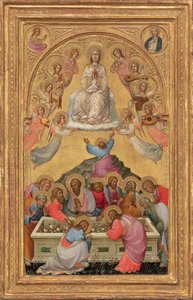
The sculpture known as “Assumption of the Virgin,” created by Nanni di Banco around 1414, stands as a remarkable testament to the transformative period marking the dawn of the Italian Renaissance. More than just a depiction of religious iconography—the ascension of Mary into heaven—it embodies a crucial juncture in artistic history: the deliberate fusion of enduring Gothic traditions with nascent humanist ideals reshaping Florentine art. Examining its intricate details reveals not merely aesthetic beauty but also profound symbolic resonance and technical mastery that continues to captivate viewers today.A Synthesis of Styles: Gothic Roots, Renaissance Flourish
Nanni di Banco’s artistic approach distinguishes itself from his contemporaries like Donatello and Ghiberti. While these masters championed groundbreaking innovations in sculpture—particularly naturalism—Banco skillfully retained elements of Gothic style, notably the elongated proportions characteristic of ecclesiastical art. However, he simultaneously embraced the humanist spirit burgeoning in Florence, evident in the dynamic pose of Mary’s figure – a departure from the static postures prevalent in earlier Gothic representations. This duality is powerfully conveyed through the sculpture's composition; the Virgin ascends gracefully within an oval frame reminiscent of Byzantine iconography, yet her body exhibits contrapposto—a stance that anticipates the Renaissance emphasis on anatomical accuracy and expressive movement.Detailed Examination: Composition and Technique
The sculpture’s visual impact stems from its meticulously crafted design. The triangular shape formed by the architectural framework surrounding the relief serves as a structural anchor, directing the viewer's gaze towards the central figure of Mary—the focal point of the artwork. Surrounding her are numerous angels and saints arranged in a swirling pattern that imparts a sense of dynamism and grandeur. Banco’s technique involved carving from white marble, utilizing a subtractive process to liberate form from stone. The sculptor skillfully employed intricate detailing—evident in the drapery folds and facial expressions—to achieve remarkable realism. Furthermore, he incorporated inlaid marble – a technique borrowed from Byzantine art – creating shimmering accents that heighten the sculpture's visual splendor.Symbolism and Emotional Resonance: Heavenly Ascent and Divine Grace
The Assumption of the Virgin transcends mere artistic representation; it embodies profound theological significance. Mary’s ascension symbolizes her divine elevation—a cornerstone of Christian faith—and conveys a sense of spiritual transcendence. The angels surrounding her represent messengers of God, conveying reassurance and majesty. Banco's masterful execution captures not only the visual beauty of the scene but also its emotional depth, inviting contemplation on themes of faith, hope, and redemption.Further Exploration: Contextualizing Banco’s Achievement
The sculpture resides within the Porta della Mandorla—the gable atop Florence Cathedral—a monumental architectural project undertaken during Banco's lifetime. This commission underscores the importance of patronage in shaping artistic production during the Renaissance. Comparing Banco’s work to other contemporaneous sculptures reveals a shared commitment to humanist ideals and naturalistic representation, cementing his place as one of the foremost sculptors of his era. The sculpture’s enduring appeal testifies to Banco’s ability to synthesize disparate stylistic influences into a cohesive masterpiece—a symbol of Florentine artistic excellence and spiritual aspiration.Obras relacionadas
Biografía del artista
Nanni d'Antonio di Banco: Vida y Legado
Primeros Años y Formación
- Nacido en Florencia, Italia alrededor de 1380, Nanni di Banco surgió como un escultor significativo durante el Primer Renacimiento.
- Los detalles sobre su vida temprana y formación formal siguen siendo algo escasos, pero sin duda se benefició del próspero entorno artístico de Florencia.
- Probablemente hizo un aprendizaje en un taller local, absorbiendo las tradiciones góticas predominantes mientras simultáneamente presenciaba los ideales humanistas emergentes que moldearían su obra.
Desarrollo Artístico e Influencias
- El estilo de Di Banco representa una transición crucial entre el gótico tardío y la estética renacentista plenamente desarrollada.
- Fue contemporáneo de artistas destacados como Donatello y Lorenzo Ghiberti, y aunque sus estilos individuales difirieron, todos contribuyeron a la efervescencia artística de Florencia.
- Las primeras influencias probablemente incluyeron el estilo gótico internacional prevalente en la escultura florentina, caracterizado por elegantes drapeados y detalles refinados.
- Sin embargo, incorporó cada vez más elementos de la antigüedad clásica – una característica distintiva del Renacimiento – en sus esculturas, esforzándose por lograr un mayor naturalismo y precisión anatómica.
Logros Principales y Obras Notables
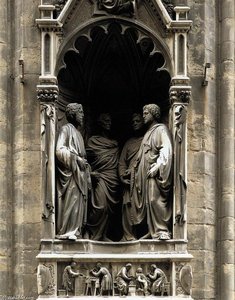
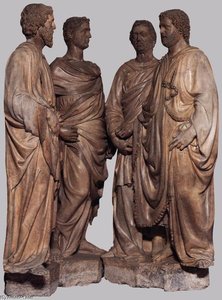
- Su obra más celebrada es sin duda el Quattro Santi Coronati (Cuatro Santos Mártires) (1412-1415), encargada por el gremio de canteros y carpinteros para la iglesia de Orsanmichele en Florencia.
- Este grupo escultórico destaca no solo por su sorprendente naturalismo – cada figura posee una personalidad distinta – sino también por su compleja construcción como un conjunto unificado.
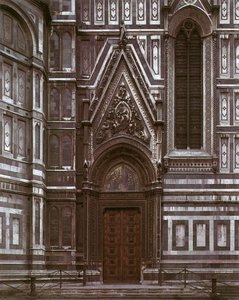
- Di Banco también contribuyó a la Porta della Mandorla (Puerta de la Almendra) (1414-1420) en el Baptisterio de Florencia, trabajando junto con otros escultores. Sus paneles representan escenas de la vida de la Virgen María.
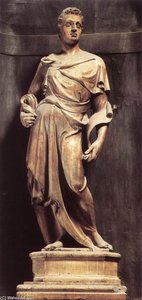
- Otras obras notables incluyen esculturas de San Lucas y Isaías, que demuestran su habilidad para retratar el carácter y la emoción individual.
Estilo Artístico y Características
- El estilo de Di Banco se caracteriza por un sentido de clasicismo contenido. Evitó la expresividad dramática favorecida por Donatello, optando en cambio por un enfoque más digno y sereno.
- Sus figuras son generalmente sólidas y bien proporcionadas, con una atención cuidadosa al detalle anatómico.
- Empleó hábilmente el drapeado para crear volumen y movimiento, manteniendo al mismo tiempo una sensación de compostura y equilibrio.
- Un aspecto clave de su obra es la individualización de sus figuras; cada santo o personaje bíblico posee rasgos y expresiones únicos.
Significado Histórico y Legado
- Nanni di Banco desempeñó un papel vital en la transición de la escultura gótica al Renacimiento, allanando el camino para maestros posteriores como Donatello y Miguel Ángel.
- Su énfasis en el naturalismo, la precisión anatómica y el retrato individualizado ayudaron a establecer nuevos estándares para la representación escultórica.
- Giorgio Vasari, en sus “Vidas de los más excelentes pintores, escultores y arquitectos”, incluyó una biografía de Di Banco, reconociendo su importancia dentro de la tradición artística florentina.
- Aunque quizás menos celebrado que algunos de sus contemporáneos, Nanni di Banco sigue siendo una figura significativa en el arte del Primer Renacimiento, representando un paso crucial hacia los logros artísticos del Alto Renacimiento.
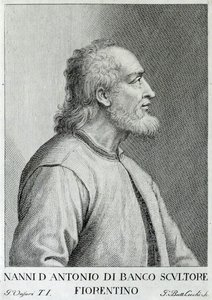
nanni d antonio di banco
1380 - 1421 , Italia
Datos clave
- Artistic Movement Or Style: Early Renaissance
- Artists Who Influenced This Artist: ['International Gothic style']
- Date Of Birth: c. 1380
- Date Of Death: 1421
- Full Name: Nanni d'Antonio di Banco
- Nationality: Italian
- Notable Artworks:
- Quattro Santi Coronati
- Porta della Mandorla
- Place Of Birth: Florence, Italia
Artículos relacionados

Giotto di Bondone: Las 25 Obras Maestras que Definieron el Renacimiento | ArtsDot
Descubre las 25 obras maestras de Giotto di Bondone, el pionero del Renacimiento. Explora la historia, técnica y simbolismo de sus frescos italianos más icónicos. Encuentra reproducciones de arte exclusivas para decorar tu hogar en ArtsDot.com.

Esculturas de Bronce Legendarias: 10 Obras Maestras que Transformaron el Arte | ArtsDot
Descubre las 10 esculturas de bronce más legendarias que revolucionaron el arte. Explora la historia de Rodin, Degas y otros maestros del bronce. Encuentra reproducciones de alta calidad e inspiración para tu hogar en ArtsDot.com.

The Enduring Form: Exploring Themes & Techniques in Sculpture Across Historical Periods
Explore the rich history of sculpture from ancient masterpieces to contemporary innovations. Discover key techniques, influential artists & investment potential for discerning art collectors.

Las 10 Obras Maestras de Bronce que Revolucionaron la Historia del Arte | ArtsDot
Descubre las 10 esculturas de bronce más influyentes de la historia del arte. Explora obras maestras de Rodin, Degas y otros genios. Encuentra reproducciones de arte de calidad museo en ArtsDot.com.

The Enduring Form: Sculpture Across History, Technique & Emotional Resonance
Explore the rich history of sculpture with ArtsDot. Discover key techniques, influential artists & investment potential for discerning collectors. Expert insights into valuing and collecting timeless masterpieces.