 Ver en contexto
 Enviar
 Compartir
 Detalles

 Descargar
 Similares
 Radiografía
 Presentación de diapositivas
A Glimpse in the Forest of Fontainebleau


 Ver más
Reproducción al óleo hecha a mano
Óleo sobre lienzo pintado a mano en el tamaño y marco de su elección, realizado por encargo por nuestros artistas. ( Comprar impresión Comprar imagen)




P118B $10

P118H $10

P118W $10

P438Z $10

P508JH $12

P508YH $12

P805H $10

P805Z $10

P919BZ $10

P919G $10

P919XJ $10

P959ZH $10

P968JZ $12

W106C $8

W218G $10

W218JH $8

W218Y $10

W307PJ $10

W316G $10

W316PJ $8

W316Y $10

W398PJ $8

W4111J $10

W500HY $15

W500JH $15

W692G $12

W849H $8

W940BG $15

W953PJ $8




Elija entre nuestros tamaños predefinidos que respetan las proporciones originales de la obra.

Puede ingresar sus propias dimensiones para adaptarse a un marco o espacio específico. Si el tamaño seleccionado no coincide con las proporciones de la imagen original, recortaremos la obra o extenderemos la pintura con elementos adicionales pintados a mano. Se le enviará una maqueta digital para su aprobación antes de comenzar la producción.
Tenga en cuenta que la vista previa en pantalla no refleja el recorte o la extensión reales. Solo la maqueta mostrará con precisión la composición final.
Si bien existen tamaños personalizados, recomendamos seleccionar una dimensión de la lista predefinida para preservar las proporciones originales.
Tras realizar el pedido, el equipo de ArtsDot.com enviará un correo electrónico al cliente para solicitar instrucciones y proporcionarle una vista previa del boceto.
Envío a todo el mundo () en 3-4 semanas en lugar de las 5 semanas estándar. (29 agosto). Sin comprometer la calidad.

Envío exprés gratuito a todo el mundo

Lienzo de lino de alta calidad

Seguro de envío total

Garantía de reembolso de impuestos aduaneros

Garantía de fidelidad cromática exacta

Política de devolución de 60 días (solo por defectos)

Garantía de devolución del 100% del dinero

Descuento por cantidad
 La opción de vidrio solo está disponible en tamaños inferiores a 110 cm.

A Glimpse in the Forest of Fontainebleau
Técnica de reproducción
Dimensiones de la reproducción
-


Precio total final
$ 263
A Portal into the Verdant Heart of Barbizon
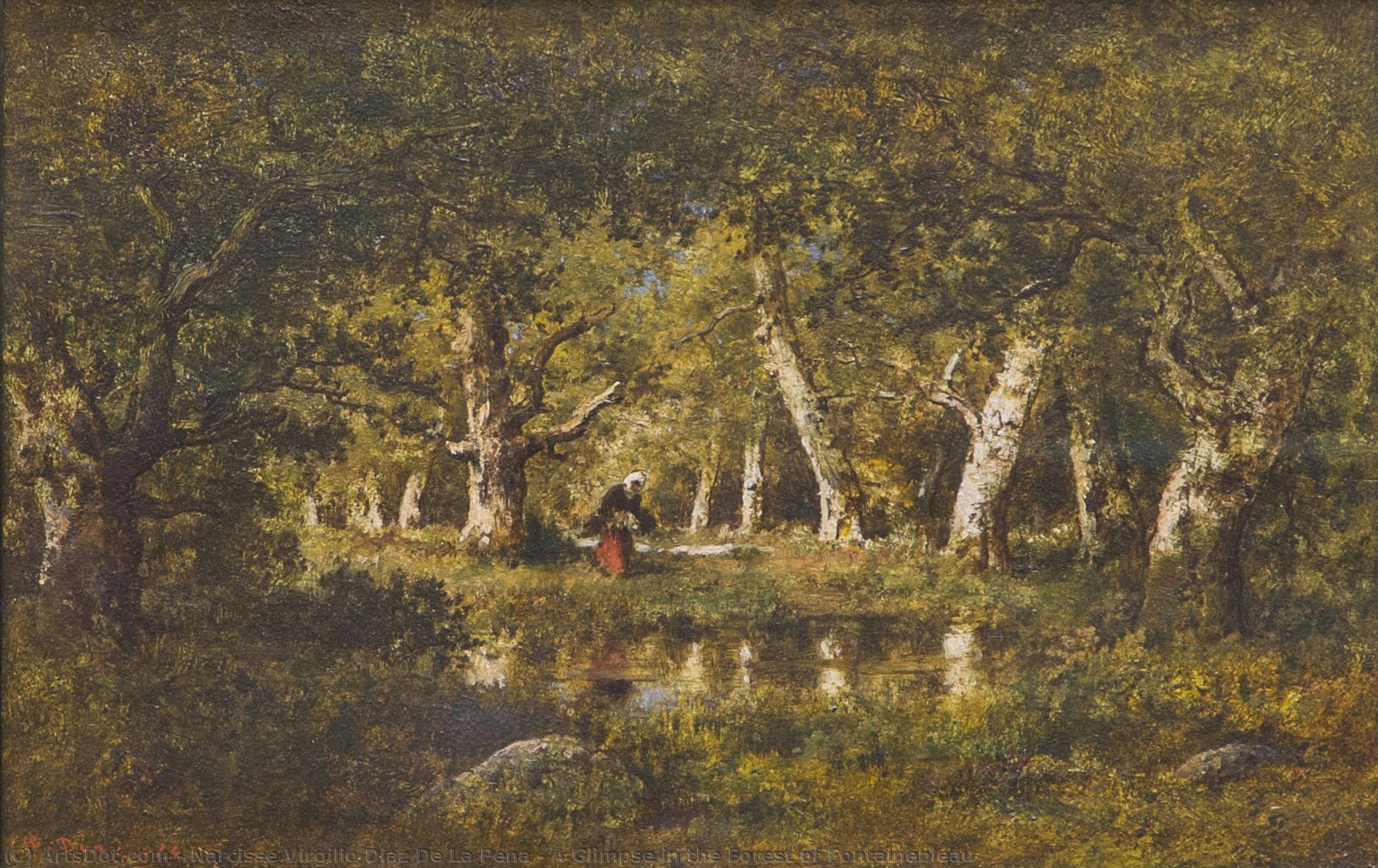
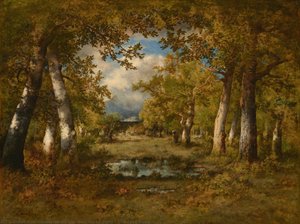
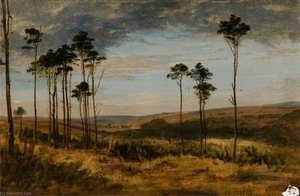
In the evocative masterpiece A Glimpse in the Forest of Fontainebleau, Narcisse Virgilio Díaz de la Peña invites us to step through a natural window into one of the most storied landscapes in art history. The painting captures a moment of profound stillness within the dense, emerald thickets of the Fontainebleau forest, a sanctuary that served as the cradle for the Barbizon School. Through a strategic opening in the heavy foliage, the artist directs our gaze toward a luminous middle distance where birch trees stand like silent sentinels. Their pale, silvery trunks catch the dappled sunlight, creating a striking contrast against the deep, shadowed greens of the surrounding woods. This interplay of light and shadow does more than merely depict a forest; it creates a sense of discovery, as if the viewer has stumbled upon a secret, untouched corner of the world.
The composition is masterfully balanced, utilizing the reflective surface of a quiet pool to double the beauty of the scene. In this mirror-like water, we see the soft reflections of the birch trees and the delicate figure of a peasant woman engaged in the timeless task of gathering wood. This inclusion of human presence adds a layer of narrative depth, grounding the ethereal landscape in the reality of rural life. The technique employed by Díaz de la Parte is characteristic of his Romantic sensibilities, where the brushwork feels both textured and atmospheric. There is a palpable sense of moisture in the air and a rhythmic vitality in the way the light filters through the canopy, making the scene feel alive with the breath of the forest.
The Soul of the Barbizon Tradition
To understand this work is to understand the legacy of the Barbizon painters, a group of artists who sought to move away from the rigid, idealized landscapes of the past in favor of a more honest, emotional connection to nature. As a student of Théodore Rousseau, Díaz de la Peña was deeply influenced by the movement's commitment to capturing the true essence of the French countryside. This painting serves as a quintessential example of that mission. The absence of the sky—completely obscured by the dense, overlapping leaves—creates an intimate, almost immersive atmosphere. It forces the viewer to focus on the textures of bark, moss, and water, fostering a sense of enclosure that is both peaceful and mysterious.
For the discerning collector or interior designer, this piece offers much more than mere decoration; it provides an emotional anchor for a room. The lush palette of deep forest greens, accented by the brilliant white of the birch trunks and the warm glow of sunlight, brings a restorative, organic energy to any space. Whether placed in a sunlit gallery or a moody, sophisticated study, the painting acts as a window to tranquility. It evokes a sense of nostalgia for a simpler, more harmonious existence, making it an ideal selection for those looking to infuse their environment with the timeless elegance and contemplative spirit of 19th-century French Romanticism.
Obras relacionadas
Biografía del artista
Early Life and Influences (1807-1836)
- Birth and Early Challenges: Narcisse Diaz de la Peña was born in 1807. His early life was marked by significant challenges, including poverty and physical disabilities.
- Louvre Studies: He began his artistic journey by studying the works of masters at the Louvre, absorbing influences from Correggio, Prud'hon, Watteau, and others.
- Early Artistic Themes: His early paintings often featured mythological subjects and fêtes-galantes, reflecting the influence of 18th-century artists.
- Barbizon School Connection: In 1836, he became associated with the Barbizon school, marking a turning point in his artistic development.
Development within the Barbizon School (1837-1851)
- Barbizon Aesthetics: He embraced the Barbizon school's emphasis on painting *en plein air* and capturing the essence of nature.
- Influence of Eugène Delacroix & Théodore Rousseau: His work was influenced by Eugène Delacroix’s Orientalist themes and Théodore Rousseau’s dedication to landscape painting.
- Distinctive Style: He developed a distinctive style characterized by somber woodland interiors, dramatic contrasts of light and shadow, and the use of heavily-applied paint.
- Salon Recognition: He exhibited regularly at the Salon, gaining recognition for his artistic talent.
Mature Artistic Career and Achievements (1851-1876)
- Studio in Paris: In 1851, he established a studio in Paris, becoming a prominent figure in the Parisian art scene.
- Salon Gold Medals & Legion of Honor: He was awarded three Salon gold medals and named a Knight of the Legion of Honor, recognizing his artistic achievements.
- Increasing Popularity & Value: His paintings became increasingly popular and valuable throughout the 1870s.
- Family Life: He married and had two sons, Emile and Eugene.
Historical Significance and Legacy
- Pioneer of *En Plein Air* Painting: Diaz de la Peña played a significant role in the development of *en plein air* painting, contributing to the shift away from studio-based art practices.
- Barbizon School Representative: He is considered one of the most important representatives of the Barbizon school, embodying its commitment to capturing the beauty and essence of nature.
- Influence on Later Artists: His work influenced later generations of artists, inspiring them to embrace a more direct and intimate relationship with the natural world.
- Collections Worldwide: His paintings are held in major collections worldwide, including The Louvre, The Metropolitan Museum of Art, and numerous other museums.
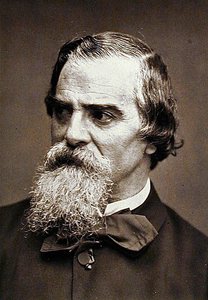
Narciso Díaz de la Peña
1807 - 1876 , Francia
Datos clave
- Artistas Influyentes:
- Eugène Delacroix
- Théodore Rousseau
- Estilo Artístico: Barbizon, Paisajismo
- Influenciado A: ['Pintores paisajistas']
- Nacionalidad: Francesa
- Nombre Completo: Narcisse Díaz de la Peñita
- Obras Notables:
- Fête galante
- Bosque sombrío
Artículos relacionados
Arboreal Echoes: A Historical & Artistic Exploration of Trees in Painting
Explore the rich history of trees in painting! Discover symbolism, Romantic masterpieces by Caspar David Friedrich & beyond. A curated journey for art enthusiasts.

Paisajes Románticos: 10 Obras Maestras que Definieron un Movimiento Artístico
Descubre los 10 paisajes románticos más influyentes de artistas como Caspar David Friedrich y Turner. Explora la belleza, el simbolismo y las técnicas del movimiento romántico. Reproducciones de arte exclusivas en ArtsDot.com.
Arboreal Echoes: A Historical & Artistic Exploration of Trees in Painting
Explore the rich history of trees in painting! Discover symbolism, Romantic masterpieces by Caspar David Friedrich & beyond. A curated journey for art enthusiasts.

John Constable: Las 25 Obras Maestras del Paisaje Inglés | ArtsDot
Descubre las 25 obras maestras de John Constable, el pintor romántico inglés que capturó la belleza del paisaje. Explora su técnica, historia y significado en ArtsDot.com. Reproducciones de arte de alta calidad para tu hogar.
The Enchanted Canopy: Exploring Forests in Art History – From Romantic Idealization to Ecological Consciousness
Explore the rich history of forests in art! Discover Romantic masterpieces by Friedrich & Monet, Symbolist depths, and contemporary visions. Find inspiration & quality reproductions at ArtsDot.