

 Ver en contexto
 Enviar
 Compartir
 Detalles

 Descargar
 Similares
 Radiografía
 Presentación de diapositivas
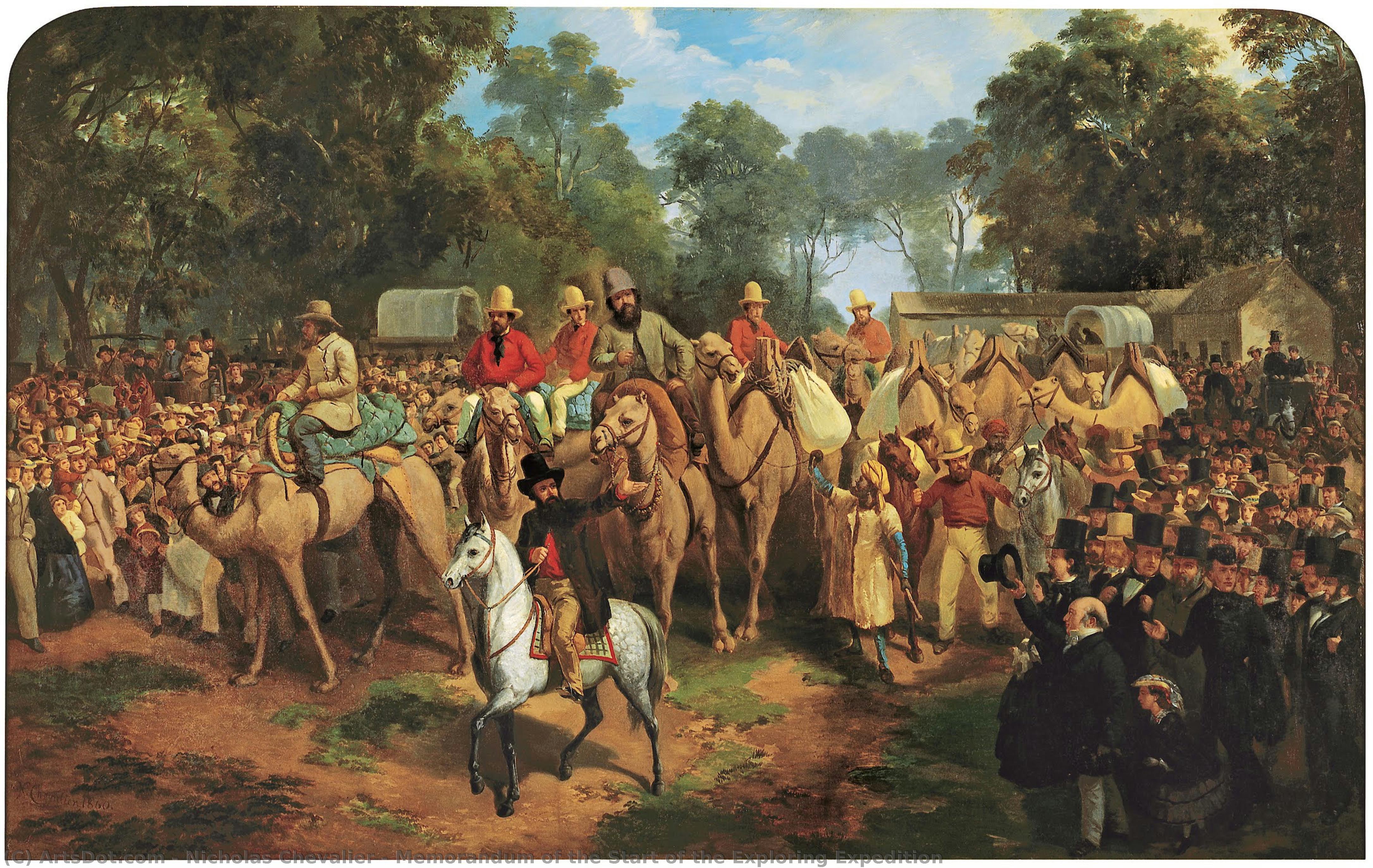
Memorandum of the Start of the Exploring Expedition
 Oil
Oil- WallArt
- Realism
 1860
1860- 19th Century
 153.0 x 97.0 cm
 Galería de Arte de Australia del Sur
 Ver más
Giclée / Impresión de arte
Impresiones giclée o en lienzo de calidad de museo con producción rápida y opciones de acabado flexibles. ( Comprar pintura hecha a mano Comprar imagen)




P118B $10

P118H $10

P118W $10

P438Z $10

P508JH $12

P508YH $12

P805H $10

P805Z $10

P919BZ $10

P919G $10

P919XJ $10

P959ZH $10

P968JZ $12

W106C $8

W218G $10

W218JH $8

W218Y $10

W307PJ $10

W316G $10

W316PJ $8

W316Y $10

W398PJ $8

W4111J $10

W500HY $15

W500JH $15

W692G $12

W849H $8

W940BG $15

W953PJ $8




Elija entre nuestros tamaños predefinidos que respetan las proporciones originales de la obra.

Puede introducir sus propias dimensiones para adaptarse a un marco o espacio específico. Si el tamaño seleccionado no coincide con las proporciones de la imagen original, recortaremos la obra de arte o extenderemos la imagen con un borde con efecto espejo o de color sólido. Se enviará una maqueta digital para su aprobación antes de que comience la producción.
Tenga en cuenta que la vista previa en pantalla no refleja el recorte o la extensión real. Solo la maqueta mostrará con precisión la composición final.
Aunque existen tamaños personalizados, recomendamos seleccionar una dimensión de la lista predefinida para preservar las proporciones originales.
Envío a todo el mundo () en 2 semanas en lugar de las 4/5 semanas estándar. (26 agosto)

Envío exprés gratuito a todo el mundo

Lienzo de lino de alta calidad

Seguro de envío total

Garantía de reembolso de impuestos aduaneros

Garantía de fidelidad cromática exacta

Política de devolución de 60 días (solo por defectos)

Garantía de devolución del 100% del dinero

Descuento por cantidad
 La opción de vidrio solo está disponible en tamaños inferiores a 110 cm.

Memorandum of the Start of the Exploring Expedition
Giclée / Impresión de arte
Dimensiones de la reproducción
-


Precio total final
$ 62
Descripción de la pieza
A Journey Through Time: The Spirit of Exploration
In the vast, sun-drenched expanse of the mid-19th century landscape, Nicholas Chevalier captures more than just a moment in time; he captures the very essence of human ambition. Memorandum of the Start of the Exploring Expedition serves as a breathtaking window into an era defined by discovery and the relentless pursuit of the unknown. The painting presents a sweeping historical tableau where a group of intrepid travelers, mounted on sturdy horses, prepares to venture into the arid heart of the desert. There is a palpable sense of anticipation held within the brushstrokes, as if the dust kicked up by the hooves carries the weight of destiny itself. Through his masterful composition, Chevalier invites the viewer to step alongside these pioneers, feeling the heat of the sun and the quiet tension that precedes a great undertaking.
The technical prowess of Chevalier is on full display in this 1860 masterpiece. Utilizing a rich, layered approach characteristic of his classical training in Munich and Lausanne, the artist employs a palette that breathes life into the desert terrain. The warm, earthy tones of the sand and scrubland are balanced by the subtle, atmospheric shifts in the horizon, creating a profound sense of depth and scale. Notice how the figures in the foreground—some adorned with formal ties and hats, others more ruggedly dressed—are rendered with a precision that allows their individual stories to emerge. The inclusion of a solitary dog near the center and a distant wagon adds layers of narrative texture, grounding the epic scale of the expedition in the intimate, everyday realities of life on the frontier.
Symbolism and the Call of the Wild
Beyond its literal depiction of an expedition, the artwork functions as a profound symbol of the colonial and exploratory spirit that shaped the nineteenth-century world. The desert, often viewed as a formidable adversary, is transformed by Chevalier into a stage for human courage. The movement of the riders, directed toward the unseen horizon, symbolizes the forward momentum of progress and the indomative human will. For the collector or interior designer, this piece offers a sophisticated narrative element; it is not merely a landscape, but a conversation piece about resilience and the romanticism of the frontier. The interplay between the organized group of men and the untamed wilderness creates a compelling tension that resonates deeply with anyone moved by the concept of adventure.
For those seeking to adorn a space with art that inspires contemplation and strength, this reproduction offers an unparalleled opportunity. Whether placed in a grand study, a library, or a contemporary living area, the painting brings a sense of historical gravity and warmth. The composition’s ability to command attention through its sweeping vistas and detailed character studies makes it a timeless addition to any curated collection. It serves as a reminder that every great journey begins with a single, determined step into the unknown, making it an evocative centerpiece for any home designed to celebrate history, culture, and the enduring beauty of the natural world.
Obras relacionadas

Biografía del artista
early life and career
Nicholas Chevalier (1828 - 1902) fue un artista ruso nacido en San Petersburgo, hijo de Louis Chevalier y su esposa rusa. Su padre emigró de Vaud, Suiza, para convertirse en administrador de las propiedades del príncipe Wittgenstein, asesor de Nicolás I, y en 1845 regresó a Suiza con su hijo pintor. Nicolas estudió pintura y arquitectura en Lausanne y Múnich donde ayudó con los planos del Palacio Ludwig I en Baviera.
artistic journey
Chevalier se trasladó a Londres en 1851 donde trabajó como ilustrador en litografía y acuarela. También diseñó una fuente que fue construida en los terrenos reales de Osborne para la Reina Victoria, y dos de sus pinturas fueron expuestas en la Academia en 1852. Estudios adicionales en Roma precedieron su traslado a Australia a finales de 1854.
- Mount Arapiles fue una pintura de este período que es uno de sus trabajos más reconocidos.
- Colaboró con Lady Barkly en un regalo para la princesa de Gales, presentando iconos de la vida australiana.
- En 1864, su óleo The Buffalo Ranges fue seleccionado por la Galería Nacional de Victoria, convirtiéndose en la primera pintura pintada en Australia incluida en la colección de Melbourne.
legacy and later life
La vida posterior de Chevalier vio surgir una comisión para pintar un cuadro del matrimonio del Duque de Edimburgo. Estableció Londres como su hogar, exhibiendo en la Academia desde 1871 hasta 1887 aunque dejó de pintar prácticamente en 1895 pero su legado perdura.
- Nicholas Chevalier se casó con Caroline Wilkie en 1855, hija de un antiguo amigo y relación de Sir David Wilkie (1785-1841).
- Hablaba ruso, inglés, francés, alemán e italiano con fluidez y era músico amateur.
- Las obras de Chevalier están alojadas en colecciones públicas incluyendo el Museo Nacional de Nueva Zelanda Te Papa Tongarewa, la Galería Pública de Dunedin y la Galería Nacional de Victoria.
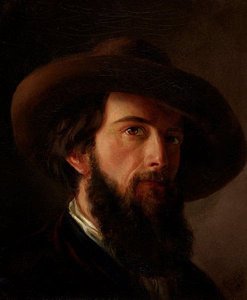
Nicholas Chevalier
1828 - 1902 , Rusia
Datos clave
- Artistic Movement Or Style: Romanticismo
- Artists Who Influenced This Artist: ['David Wilkie']
- Date Of Birth: May 9, 1828
- Date Of Death: March 15, 1902
- Full Name: Nicholas Chevalier
- Nationality: Ruso
- Notable Artworks:
- Mount Arapiles
- El Rancho Grande
- La Isla Margarita
- Place Of Birth: Saint Petersburg, Rusia
Artículos relacionados
¿Pedidos Urgentes en ? F.A.Q. para Coleccionistas Exigentes
¿Necesita una obra de arte urgente? ofrece reproducciones personalizadas express con la calidad que exige un coleccionista. Expertos artistas, envío rápido y garantía de satisfacción.
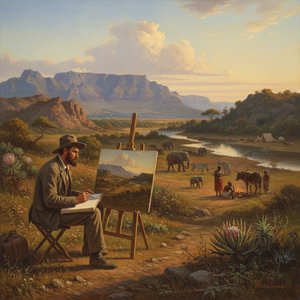
Thomas Baines: Pioneering Landscape Art & Visual Documentation of 19th-Century Southern Africa
Explore the life & art of Thomas Baines, a pioneering British explorer and artist who documented 19th-century Southern Africa & Australia. Discover his stunning landscapes, war paintings, and invaluable cartographic contributions.

