

 Ver en contexto
 Enviar
 Compartir
 Detalles

 Descargar
 Similares
 Radiografía
 Presentación de diapositivas
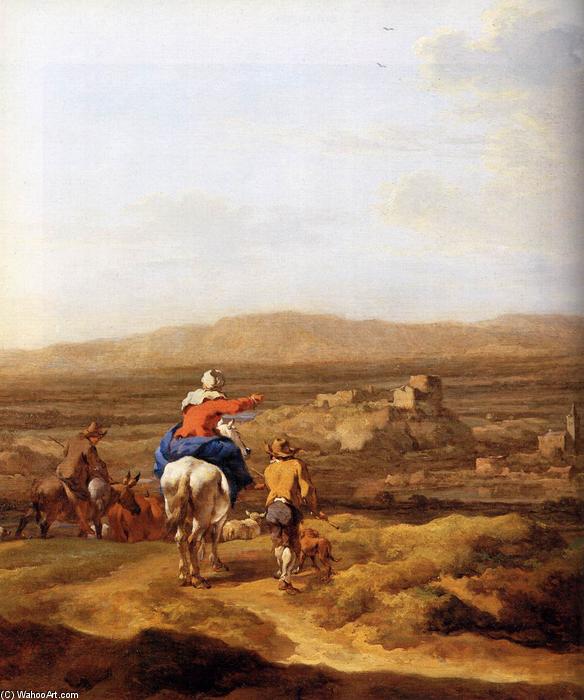
Italian Landscape with Mountain Plateau (detail)


 Ver más
Adquiera una imagen digital de alta resolución y optimizada, muy superior a la vista previa en línea.
Cada archivo es preparado meticulosamente por nuestros especialistas internos mediante el uso de herramientas avanzadas y un experto retoque manual. Nos aseguramos de que cada imagen posea una claridad excepcional, una precisión cromática impecable y un detalle minucioso.
El archivo final se entrega por correo electrónico en un plazo de 72 horas, optimizado para su uso inmediato en entornos profesionales, editoriales y de impresión. Esta es la misma calidad en la que confían los estudios de diseño, las editoriales y las galerías de primer nivel.
Imagen Digital
Descarga un archivo de alta resolución para exhibición personal, impresión y proyectos creativos. ( Comprar impresión Comprar pintura hecha a mano)
Incluido en cada pedido de imágenes digitales
Entrega digital experta, garantizada.
Al elegir ArtsDot.com, no solo está adquiriendo una imagen; está recibiendo una obra de arte digital mejorada profesionalmente, elaborada con precisión y respaldada por una garantía de satisfacción. Esto es todo lo que incluye su pedido, automáticamente:

Entrega rápida por email
Recibirá su archivo de imagen digital en alta resolución por correo electrónico en un plazo de 72 horas tras realizar su pedido, listo para su uso inmediato.

Archivo digital optimizado por IA
Su obra de arte se optimiza profesionalmente mediante herramientas avanzadas de IA y edición manual, garantizando el máximo detalle, claridad y precisión cromática.

Reenvío gratuito de por vida
¿Has borrado o perdido tu archivo por error? No te preocupes: te lo volveremos a enviar en cualquier momento, sin coste adicional.

Sin gastos de importación, siempre
Disfrute de su obra de arte al instante sin aduanas, aranceles ni gastos de envío; las descargas digitales siempre están libres de impuestos.

Garantía de fidelidad de color
Garantizamos que su imagen digital refleje los colores originales con la mayor fidelidad posible, mediante el uso de herramientas profesionales y gestión del color.

Garantía de satisfacción de 100 días
Si no está satisfecho con su imagen digital, la revisaremos o le reembolsaremos el 100% en un plazo de 100 días, sin preguntas.

100% Garantía de devolución de dinero
¿No está satisfecho? Obtenga un reembolso completo dentro de los 100 días posteriores a la recepción de su archivo digital, sin necesidad de explicaciones.

Descuentos por pedidos grandes
Compra 3 imágenes, ahorra 10% - Compra 5, ahorra 15% - Compra 10+, ahorra 20%. Ideal para proyectos creativos, galerías y agencias.
Nicolaes Berchem’s Italian Dreamscape
The world of Dutch Golden Age painting often conjures images of meticulously rendered still lifes and dramatic landscapes—but within that rich tradition resides a subtle, almost secret, fascination with the idealized beauty of Italy. Nicolaes Pietersz Berchem, born in Haarlem in 1620, wasn’t merely a painter; he was an architect of atmosphere, a master craftsman who meticulously constructed scenes designed to evoke tranquility and a profound sense of timelessness. His work, particularly pieces like “Italian Landscape with Mountain Plateau (detail)” (circa 1655), offers a glimpse into this carefully cultivated vision—a world where the gentle slopes of Italian hills meet the vast expanse of the sky, all bathed in the warm, diffused light that defines his signature style.
Berchem’s artistic journey began within the shadow of his father, Pieter Claesz, a celebrated still-life painter. However, young Nicolaes quickly developed an independent voice, one deeply influenced by the burgeoning interest in classical antiquity and the allure of the Italian peninsula. While precise details regarding a personal visit to Italy remain elusive, Berchem’s paintings suggest he either drew inspiration from accounts and descriptions of the region or, more likely, absorbed the techniques and sensibilities of artists who had returned home after extended sojourns—a lineage that included figures like Cornelis van Poelenburgh and Jan Both. This confluence of influences resulted in a distinctive style characterized by an almost dreamlike quality, where reality is subtly enhanced with elements of idealized beauty and classical allusion.
A Symphony of Light and Texture
Technically, Berchem’s work represents a remarkable achievement in the manipulation of light and texture. He eschewed the stark contrasts favored by some contemporaries, instead opting for a delicate gradation of tones that creates an atmosphere of luminous serenity. The painting's surface is alive with subtle brushstrokes—a deliberate choice intended to emphasize the materiality of the paint itself. As Samuel van Hoogstraten, a prominent art theorist of the period, eloquently described, Berchem prioritized “softness with a well-nourished brush,” allowing the texture and patterns of the paint to emerge organically. This technique wasn’t about achieving a flawlessly smooth surface; rather, it was about imbuing the work with a sense of vitality and immediacy—a testament to the artist's skill and his deep understanding of the medium.
The composition itself is carefully orchestrated. A small village nestles amongst rolling hills, its buildings rendered in muted tones that blend seamlessly into the landscape. A winding path leads towards the distant mountains, inviting the viewer to lose themselves in the scene’s tranquil embrace. The inclusion of figures—a woman riding a horse with two dogs—adds a touch of narrative and human scale, grounding the idyllic vista while simultaneously reinforcing its timeless quality. The bird soaring overhead further enhances this sense of expansive space and freedom.
Symbolism and Emotional Resonance
Beyond its technical brilliance, “Italian Landscape with Mountain Plateau” is rich in symbolic meaning. The Italian landscape itself represents an idealized vision of paradise—a place of beauty, harmony, and spiritual renewal. The gentle slopes, the warm light, and the abundance of nature all contribute to this sense of serenity and well-being. The figures within the scene are not merely decorative elements; they embody a spirit of adventure and companionship, suggesting that the pursuit of beauty and connection is an essential part of the human experience.
The painting’s enduring appeal lies in its ability to evoke a profound emotional response. It's more than just a landscape; it’s a portal—a window into a world where time seems to slow down, and worries fade away. Berchem masterfully captures the essence of pastoral beauty, offering viewers a moment of respite from the complexities of daily life. Reproductions of this work, like those offered by ArtsDot, allow us to experience this timeless enchantment within our own homes, bringing a touch of Italian serenity into our lives.
Further Exploration
- Original Artwork: Italian Landscape with Figures and Animals: a Village on a Mountain Plateau (Royal Collection, London)
- Artist Website: Nicolaes Pietersz Berchem’s Website
- Related Articles: Nicolaes Berchem: Dutch Golden Age Pastoralism & the Evolution of Landscape Painting (Wallace Collection)
- Wikimedia Commons:Italian Landscape with Mountain Plateau 1655 Nicolaes Berchem
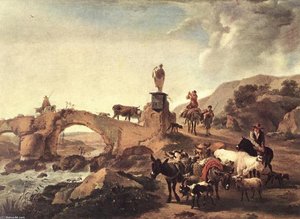
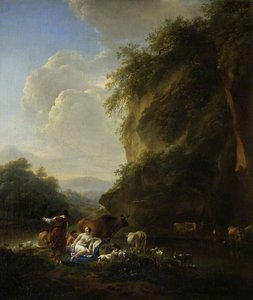
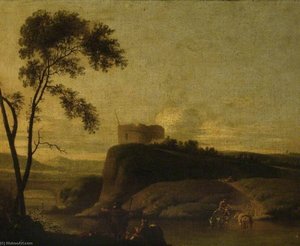
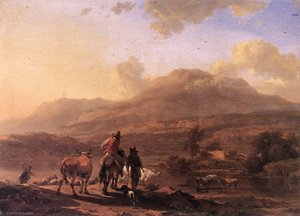
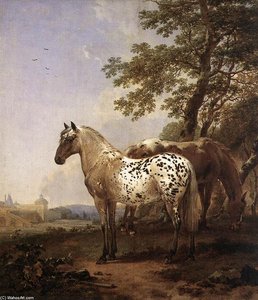
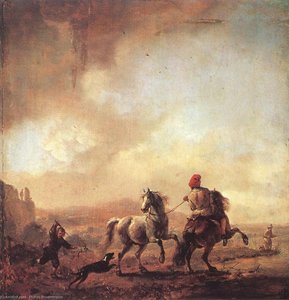
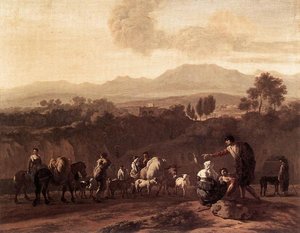
Obras relacionadas

Biografía del artista
Nicolaes Pietersz Berchem: Un Maestro de los Paisajes Pastorales
- Nacido: Haarlem, Países Bajos (1620)
- Fallecido: 1683
Nicolaes Pieterszoon Berchem fue un pintor neerlandés de la Edad de Oro altamente estimado y prolífico, celebrado por sus paisajes pastorales. Estas escenas a menudo estaban pobladas con figuras mitológicas o bíblicas, junto con alegorías y escenas de género. Es reconocido como miembro de la segunda generación de "pintores paisajistas italianizantes holandeses" – artistas que buscaron inspiración en el pintoresco paisaje italiano, trayendo consigo cuadernos llenos de dibujos de ruinas clásicas e imágenes rurales idílicas.
Vida Temprana y Formación
Nacido en Haarlem, Berchem recibió su instrucción artística inicial de su padre, Pieter Claesz. Más tarde perfeccionó sus habilidades bajo la tutela de pintores renombrados que incluyen Jan van Goyen, Pieter de Grebber, Jan Baptist Weenix, Jan Wils y Claes Cornelisz. Moeyaert. Una anécdota divertida cuenta cómo Berchem se ganó su apodo, "Berghem", proveniente de una expresión juguetona utilizada por los compañeros estudiantes en el taller de Van Goyen cada vez que su padre intentaba disciplinarlo – “¡Sálvalo!” Otra historia atribuye el nombre a su reclutamiento como marinero, con el oficial de embarque comentando: "¡Sálvalo!". Sin embargo, ahora se acepta generalmente que el nombre proviene del pueblo natal de su padre, Berchem en Amberes. Viajó a Italia con Jan Baptist Weenix (a quien consideraba su primo) entre 1642 y 1645.
Estilo Artístico y Obras Principales
Las pinturas de Berchem, que suman más de 850 (aunque muchas están mal atribuidas), estaban en gran demanda. Sus paisajes, renderizados en el estilo italiano idealizado con colinas, montañas, acantilados y árboles bañados por una luz dorada al amanecer, siguen siendo muy solicitados hoy en día. También demostró un considerable talento como pintor de "staffage", agregando atractivas figuras humanas y animales a obras de otros artistas como Allaert van Everdingen, Jan Hackaert, Gerrit Dou, Meindert Hobbema y Willem Schellinks.
- Estilo característico: Escenas rurales idealizadas con luz dorada.
- Temática: Paisajes pastorales, figuras mitológicas, narraciones bíblicas, escenas de género.
- Obras notables: Cazadores Descansando, Un Campesino tocando una Zarabanda para una Mujer y un Niño, Paisaje con una Ninfa y un Satir, El Vado, Alto en una Posada.
Influencia y Legado
La influencia de Berchem se extendió más allá de sus contemporáneos. Fue un maestro popular, formando a artistas como Abraham Begeyn, Johannes van der Bent, su hijo Nicolaes, Isaack Croonenbergh, Simon Dubois, Karel du Jardin, Johannes Glauber, Pieter de Hooch, Jacob van Huchtenburg, Justus van Huysum, Dirk Maas, Hendrick Mommers, Jacob Ochtervelt, Willem Romeyn y posiblemente Jan Frans Soolmaker. También fue tío de Govert van der Leeuw y hermano de Pieter Berchem.
- Influencia en artistas posteriores: Jean-Baptiste Pillement (pintor rococó francés) y los pintores paisajistas holandeses del 'Romanticismo Cleves' como Barend Cornelis Koekkoock.
- Contribución a la historia del arte: Una figura clave en el desarrollo de la tradición paisajista "italianizante holandesa", uniendo la realidad nórdica y el romanticismo meridional.
Últimos Años y Muerte
Alrededor de 1650, Berchem viajó a Westfalia con Jacob van Ruisdael, documentado por una obra fechada que representa Burg Bentheim. Es posible que haya revisado Italia antes de trasladarse a Ámsterdam. Estuvo registrado en Ámsterdam entre 1661-1670 y regresó a Haarlem en 1670, aunque residió nuevamente en Ámsterdam en 1677. Berchem murió en Ámsterdam en 1683, dejando atrás una obra significativa que continúa siendo admirada por su belleza y habilidad técnica.
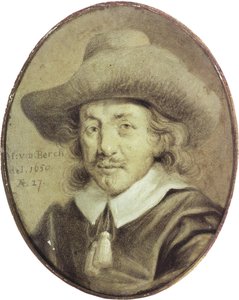
Nicolaes Pietersz Berchem
1620 - 1683 , Países Bajos
Breves datos
- Artistas Influenciados:
- Jean-Baptiste Pillement
- Barend Cornelis Koekkoek
- Artistas Que Influyeron:
- Jan van Goyen
- Pieter de Grebber
- Fecha De Fallecimiento: 18 de febrero de 1683
- Fecha De Nacimiento: 1 de octubre de 1620
- Lugar De Nacimiento: Haarlem, Países Bajos
- Movimiento Artístico: Edad de Oro Holandesa
- Nacionalidad: Neerlandés
- Nombre Completo: Nicolaes Pietersz Berchem
- Obras Notables:
- Cazadores descansando
- Paisaje con una ninfa y sátiro
- Alto en el camino
- El Ford