

 Ver en contexto
 Enviar
 Compartir
 Detalles

 Descargar
 Similares
 Radiografía
 Presentación de diapositivas
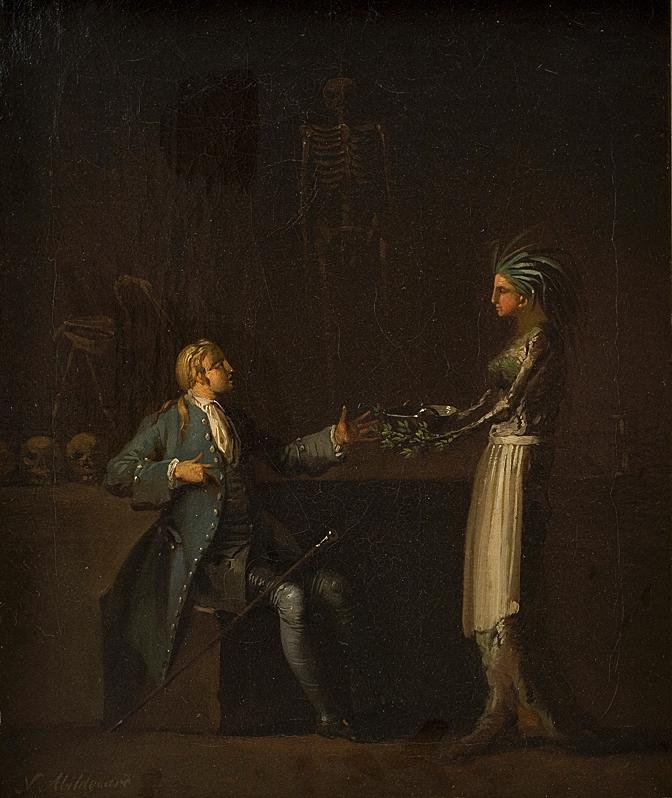
The Doctor's Wife Reveals Her Husband's Intention of Anatomising Niels Klim


 Ver más
Adquiera una imagen digital de alta resolución y optimizada, muy superior a la vista previa en línea.
Cada archivo es preparado meticulosamente por nuestros especialistas internos mediante el uso de herramientas avanzadas y un experto retoque manual. Nos aseguramos de que cada imagen posea una claridad excepcional, una precisión cromática impecable y un detalle minucioso.
El archivo final se entrega por correo electrónico en un plazo de 72 horas, optimizado para su uso inmediato en entornos profesionales, editoriales y de impresión. Esta es la misma calidad en la que confían los estudios de diseño, las editoriales y las galerías de primer nivel.
Imagen Digital
Descarga un archivo de alta resolución para exhibición personal, impresión y proyectos creativos. ( Comprar impresión Comprar pintura hecha a mano)
Incluido en cada pedido de imágenes digitales
Entrega digital experta, garantizada.
Al elegir ArtsDot.com, no solo está adquiriendo una imagen; está recibiendo una obra de arte digital mejorada profesionalmente, elaborada con precisión y respaldada por una garantía de satisfacción. Esto es todo lo que incluye su pedido, automáticamente:

Entrega rápida por email
Recibirá su archivo de imagen digital en alta resolución por correo electrónico en un plazo de 72 horas tras realizar su pedido, listo para su uso inmediato.

Archivo digital optimizado por IA
Su obra de arte se optimiza profesionalmente mediante herramientas avanzadas de IA y edición manual, garantizando el máximo detalle, claridad y precisión cromática.

Reenvío gratuito de por vida
¿Has borrado o perdido tu archivo por error? No te preocupes: te lo volveremos a enviar en cualquier momento, sin coste adicional.

Sin gastos de importación, siempre
Disfrute de su obra de arte al instante sin aduanas, aranceles ni gastos de envío; las descargas digitales siempre están libres de impuestos.

Garantía de fidelidad de color
Garantizamos que su imagen digital refleje los colores originales con la mayor fidelidad posible, mediante el uso de herramientas profesionales y gestión del color.

Garantía de satisfacción de 60 días
Si no está satisfecho con su imagen digital, la revisaremos o le reembolsaremos el 100% en un plazo de 60 días, sin preguntas.

100% Garantía de devolución de dinero
¿No está satisfecho? Obtenga un reembolso completo dentro de los 60 días posteriores a la recepción de su archivo digital, sin necesidad de explicaciones.

Descuentos por pedidos grandes
Compra 3 imágenes, ahorra 10% - Compra 5, ahorra 15% - Compra 10+, ahorra 20%. Ideal para proyectos creativos, galerías y agencias.
The Doctor’s Wife Reveals Her Husband’s Intention – A Study in Mortality and Myth
Nicolai Abraham Abildgaard's "The Doctor’s Wife Reveals Her Husband’s Intention of Anatomising Niels Klim" is not merely a painting; it’s a meticulously constructed tableau vivant, brimming with unsettling beauty and profound psychological depth. Completed in 1787, this arresting work resides within the Statens Museum for Kunst in Copenhagen, offering viewers a glimpse into a world where science, superstition, and domestic drama intertwine. The scene depicts a starkly lit interior – a sparsely furnished room dominated by a central figure seated on a chair, his hand extended towards a standing woman. Scattered around them are unsettling details: three potted plants, a collection of human skulls, and the palpable sense of impending revelation.
Abildgaard, a pivotal figure in Danish art history, was deeply influenced by both Neoclassical ideals and Romantic sensibilities. Trained at the Royal Danish Academy, he initially embraced classical forms but later developed a distinctive style characterized by dramatic lighting, intricate detail, and an exploration of human emotion – particularly anxieties surrounding death and the unknown. This painting exemplifies his ability to fuse these influences, creating a work that is both formally sophisticated and emotionally resonant.
A Dance of Symbolism: Anatomy, Marriage, and Mortality
The central figures are immediately arresting. The seated man, presumed to be a physician – perhaps referencing the titular “Niels Klim,” a character from a satirical Danish novel – extends his hand towards his wife. This gesture is laden with symbolism; it’s not an act of affection but rather a deliberate unveiling, a presentation of something unsettling and potentially disturbing. The woman's expression is one of horrified curiosity, her gaze fixed on the collection of skulls surrounding them. These aren’t simply decorative elements; they represent the fragility of life, the inevitability of death, and the pursuit of knowledge through dissection – a practice increasingly fraught with ethical dilemmas in the Enlightenment era.
The potted plants further contribute to the painting's complex symbolism. They can be interpreted as representing fertility and growth, juxtaposed against the stark reality of mortality. Their presence suggests a desire to preserve life, even as the figures contemplate its inevitable end. The skulls themselves are potent symbols – reminders of human vulnerability and the limitations of earthly existence. Abildgaard masterfully uses these elements to create a scene that is both visually arresting and intellectually stimulating.
Technique and Composition: A Masterclass in Dramatic Lighting
Abildgaard’s technical skill is evident in every detail of this painting. He employs a dramatic chiaroscuro technique – the stark contrast between light and shadow – to heighten the sense of drama and mystery. The figures are bathed in an almost theatrical light, while the background remains shrouded in darkness, drawing the viewer's attention to the central action. The composition is carefully balanced, with the seated man dominating the foreground and the standing woman positioned slightly off-center, creating a dynamic visual flow.
Abildgaard’s meticulous rendering of textures – the rough bark of the plants, the smooth surfaces of the skulls, the fabric of the figures' clothing – adds to the painting’s realism and tactile quality. He demonstrates an exceptional command of color, using muted tones to create a somber atmosphere and emphasizing key details with subtle highlights. The overall effect is one of intense concentration and emotional intensity.
A Window into the Enlightenment: Fear, Knowledge, and Domesticity
"The Doctor’s Wife Reveals Her Husband’s Intention of Anatomising Niels Klim" offers a fascinating glimpse into the intellectual and cultural landscape of 18th-century Denmark. It reflects anxieties surrounding scientific progress, the burgeoning field of anatomy, and the changing role of women in society. The painting raises questions about the ethics of knowledge acquisition, the boundaries between science and superstition, and the complexities of human relationships.
Beyond its historical significance, the work possesses a lasting emotional impact. It evokes a sense of unease, curiosity, and perhaps even horror – prompting viewers to contemplate the darker aspects of human nature and the mysteries that lie beneath the surface of everyday life. Reproductions of this compelling artwork continue to captivate audiences with their haunting beauty and profound psychological depth.
Obras relacionadas
Biografía del artista
Primeros Años y Educación
- Nacido: 11 de septiembre de 1743, Copenhague, Dinamarca
- Padres: Søren Abildgaard (cartógrafo antiguo) y Anne Margrethe Bastholm
- Recibió formación temprana con un maestro pintor.
- Se unió a la Nueva Real Academia de Arte de Dinamarca (Det Kongelige Danske Kunstakademi) en Copenhague en 1764.
- Ganó varias medallas en la academia desde 1764 hasta 1767, demostrando una brillantez temprana.
- Recibió una beca de viaje en 1767, que utilizó cinco años después.
- Estudió bajo Johan Edvard Mandelberg y Johannes Wiedewelt en la Academia.
Período Romano y Desarrollo Artístico (1772-1777)
- Viajó a Roma desde 1772 hasta 1777, un período crucial en su desarrollo artístico.
- Estudió escultura, arquitectura, decoración, frescos (en el Palacio Farnesio) y murales.
- Visitó Nápoles en 1776 con Jens Juel.
- Se centró en desarrollar habilidades en la pintura histórica.
- Sacó inspiración de los frescos de Annibale Carracci, Rafael, Tiziano y Miguel Ángel.
- Se alejó del clasicismo estricto, influenciado por artistas como Johan Tobias Sergel y Johann Heinrich Füssli.
- Desarrolló una apreciación por la literatura que incluía a Shakespeare, Homero y Ossian.
Regreso a Dinamarca y Comisiones Reales
- Regresó a Copenhague en diciembre de 1777.
- Fue nombrado profesor en la Academia en 1778.
- Se convirtió en pintor histórico real alrededor de 1780.
- Recibió una comisión significativa del gobierno danés: pintar una historia de Dinamarca para la Sala de los Caballeros (Riddersal) en el Palacio Christiansborg.
- Este proyecto implicó obras monumentales que combinaban representaciones históricas, elementos alegóricos y referencias mitológicas diseñadas para glorificar a la monarquía.
- Trabajó con Johan Edvard Mandelberg en las decoraciones del Palacio de Fredensborg.
Obras Principales y Estilo Artístico
- Pinturas Notables: "Cristián I Eleva Holstein al Ducado en 1474", "La Pesadilla", "Retrato de Nicolai Abraham Abildgaard", "El Fantasma de Culmin Aparece a su Madre", "Escenas de 'El Viaje Subterráneo de Niels Klim'", "La Comadrona se Despide de la Chica de Andros (de Terencio)", "Magnus Stenbock se Rinde a Frederik IV en 1714", "Nudo masculino sentado con la cara parcialmente cubierta por sus brazos levantados", “Audhumla”, y "El Filoctetes Herido".
- Estilo Artístico: El estilo de Abildgaard combinaba elementos neoclásicos con influencias románticas emergentes. Incorporó alegoría pictórica, utilizando símbolos para transmitir ideas a un público culto. Sus obras a menudo presentaban una iluminación dramática, colores ricos y detalles meticulosos.
- Temas: Exploró temas de la mitología griega y nórdica, eventos históricos y narrativas literarias.
Legado e Influencia
- Fue director de la Academia durante 1789–1791 y 1801–1809.
- Enseñó a artistas influyentes como Asmus Jacob Carstens, Bertel Thorvaldsen, J. L. Lund y Christoffer Wilhelm Eckersberg.
- Eckersberg, su alumno, se hizo conocido como el "padre de la pintura danesa" y sentó las bases para la Edad Dorada de la Pintura Danesa.
- Falleció el 14 de noviembre de 1809 en Copenhague.
- Su trabajo influyó significativamente en el desarrollo del Romanticismo nórdico y contribuyó al panorama artístico de Dinamarca.
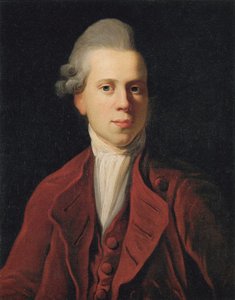
Nicolai Abraham Abildgaard
1743 - 1809 , Dinamarca
Breves datos
- Artistas Influenciados:
- Asmus Jacob Carstens
- Bertel Thorvaldsen
- Christoffer Wilhelm Eckersberg
- Artistas Que Influyeron:
- Annibale Carracci
- Rafael
- Tiziano
- Miguel Ángel
- Fecha De Nacimiento: 11 de septiembre de 1743
- Lugar De Nacimiento: Copenhague, Dinamarca
- Movimiento Artístico: Neoclasicismo, pintura histórica real
- Nacionalidad: Danés
- Nombre Completo: Nicolai Abraham Abildgaard
- Obras Notables:
- Christian I Eleva Holstein
- La pesadilla
- Retrato de N. A. Abildgaard
- El fantasma de Culmin
- Escenas de 'Viaje subterráneo'
- La partera se despide
- Magnus Stenbock se rinde
- Nude masculino sentado
- Audhumla
- El herido Filoctetes

