 Ver en contexto
 Enviar
 Compartir
 Detalles

 Descargar
 Similares
 Radiografía
 Presentación de diapositivas
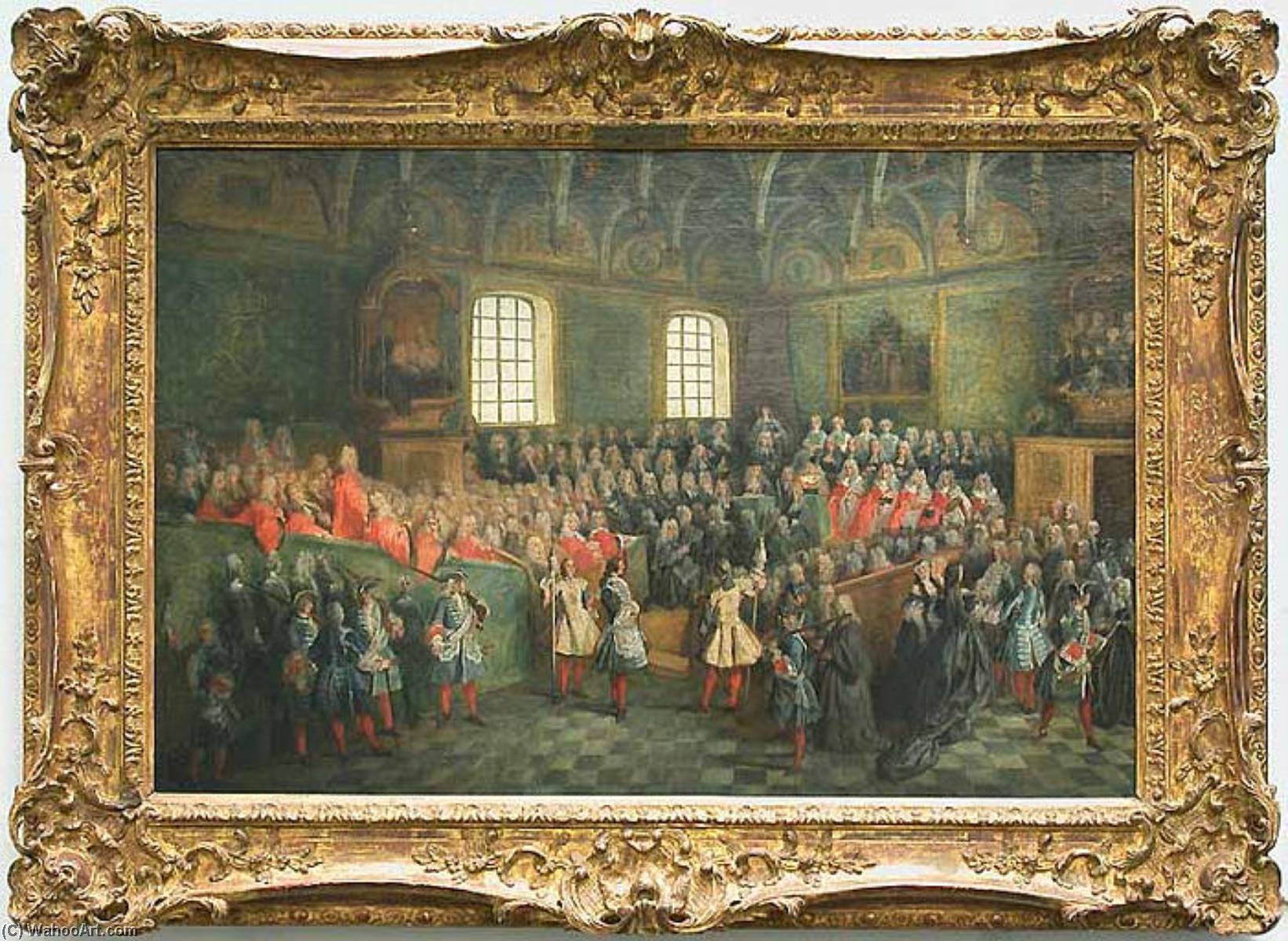
Le lit de justice tenu au parlement à la majorité de Louis XV (22 février 1723)


 Ver más
Giclée / Impresión de arte
Impresiones giclée o en lienzo de calidad de museo con producción rápida y opciones de acabado flexibles. ( Comprar pintura hecha a mano Comprar imagen)




P118B $10

P118H $10

P118W $10

P438Z $10

P508JH $12

P508YH $12

P805H $10

P805Z $10

P919BZ $10

P919G $10

P919XJ $10

P959ZH $10

P968JZ $12

W106C $8

W218G $10

W218JH $8

W218Y $10

W307PJ $10

W316G $10

W316PJ $8

W316Y $10

W398PJ $8

W4111J $10

W500HY $15

W500JH $15

W692G $12

W849H $8

W940BG $15

W953PJ $8




Elija entre nuestros tamaños predefinidos que respetan las proporciones originales de la obra.

Puede introducir sus propias dimensiones para adaptarse a un marco o espacio específico. Si el tamaño seleccionado no coincide con las proporciones de la imagen original, recortaremos la obra de arte o extenderemos la imagen con un borde con efecto espejo o de color sólido. Se enviará una maqueta digital para su aprobación antes de que comience la producción.
Tenga en cuenta que la vista previa en pantalla no refleja el recorte o la extensión real. Solo la maqueta mostrará con precisión la composición final.
Aunque existen tamaños personalizados, recomendamos seleccionar una dimensión de la lista predefinida para preservar las proporciones originales.
Envío a todo el mundo () en 2 semanas en lugar de las 4/5 semanas estándar. (23 agosto)

Envío exprés gratuito a todo el mundo

Lienzo de lino de alta calidad

Seguro de envío total

Garantía de reembolso de impuestos aduaneros

Garantía de fidelidad cromática exacta

Política de devolución de 60 días (solo por defectos)

Garantía de devolución del 100% del dinero

Descuento por cantidad
 La opción de vidrio solo está disponible en tamaños inferiores a 110 cm.

Le lit de justice tenu au parlement à la majorité de Louis XV (22 février 1723)
Giclée / Impresión de arte
Dimensiones de la reproducción
-


Precio total final
$ 62
Descripción de la pieza
A Glimpse into Royal Authority: Nicolas Lancret’s “The Seat of Justice”
Nicolas Lancret's "Le lit de justice tenu au parlement à la majorité de Louis XV (22 février 1723)" is more than just a historical painting; it’s a meticulously crafted tableau vivant, offering a rare and intimate glimpse into the heart of 18th-century French power. Completed in 1723, this opulent scene unfolds within the grand halls of the Parlement de Paris, capturing a pivotal moment – the celebration of Louis XV's majority, a symbolic ascension to full authority within the kingdom. Lancret, a master of *fêtes galantes* and courtly life, elevates a formal legal proceeding into a captivating drama of formality, wealth, and subtle social dynamics.
The composition immediately draws the eye to the raised dais at the center, where figures representing judges, officials, and members of the royal family are arranged with deliberate precision. The sheer density of bodies—a testament to the importance of this occasion—creates a sense of overwhelming grandeur, while the carefully orchestrated layering of figures emphasizes hierarchy and social order. Lancret’s skill lies not just in depicting individuals but in conveying their status through posture, attire, and placement within the scene. Note the richly embroidered robes, the elaborate hairstyles, and the subtle gestures that reveal each figure's role and importance.
Rococo Elegance: Style and Technique
Lancret’s style is quintessential Rococo – a celebration of elegance, light, and playful ornamentation. The painting embodies the movement’s emphasis on beauty, grace, and an idealized vision of courtly life. His brushwork is remarkably fluid and delicate, creating a shimmering effect that captures the luxurious textures of velvet, silk, and brocade. The use of *glazing*, applying thin layers of translucent paint over previous ones, adds depth and luminosity to the colors, particularly in the fabrics and the polished surfaces of the architectural elements.
Technically, Lancret demonstrates a mastery of perspective, subtly guiding the viewer’s eye through the crowded hall. While the composition is undeniably dense, he skillfully employs linear perspective to create a sense of depth, with figures receding into the background and architectural details diminishing in size. The muted color palette—dominated by browns, creams, and touches of burgundy and pale blues—contributes to the painting's overall atmosphere of restrained elegance. The diffused lighting, emanating primarily from windows on the right side of the hall, casts a soft glow upon the scene, highlighting key figures while leaving others shrouded in shadow – a technique that adds drama and intrigue.
A Historical Tableau: Context and Symbolism
“Le lit de justice” is not merely a depiction of a legal ceremony; it’s a carefully constructed symbol of royal authority. The “lit de justice,” or throne, itself represents the seat of power within the Parlement, signifying Louis XV's formal assumption of responsibility for governing France. The event took place on the eve of his thirteenth birthday, marking a significant milestone in his journey to becoming king. The inclusion of the Retable du Parlement—a ceremonial table used during official proceedings—underscores the gravity and importance of the occasion.
Beyond its political significance, the painting offers insights into 18th-century French society. The elaborate costumes, the refined manners, and the carefully orchestrated setting reflect the values and priorities of the court – a world of wealth, privilege, and intricate social rituals. Lancret’s ability to capture this atmosphere with such precision and elegance makes “Le lit de justice” a valuable historical document, offering a window into a bygone era.
Emotional Resonance: A Moment Frozen in Time
Despite its formal subject matter, "Le lit de justice" possesses a remarkable emotional resonance. Lancret doesn’t simply record an event; he captures the *feeling* of it – the sense of solemnity, tradition, and perhaps even a hint of restrained tension. The faces of the figures are carefully rendered, conveying subtle expressions of authority, respect, and formality. The painting invites us to contemplate not just the political significance of the moment but also the human drama unfolding within it.
Reproductions of this masterpiece offer an opportunity to bring a touch of Rococo elegance into any space. Whether displayed in a grand salon or a more intimate setting, “Le lit de justice” serves as a reminder of France’s rich artistic heritage and its enduring fascination with the complexities of power and social order.
Obras relacionadas
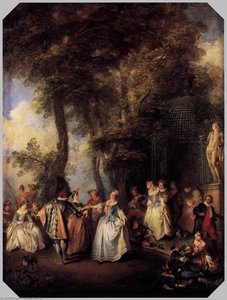
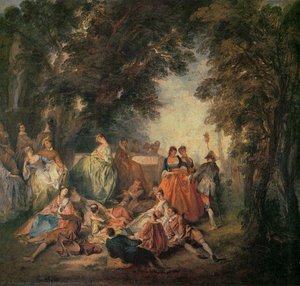
Biografía del artista
Nicolas Lancret: Un Viaje a la Elegancia Rococó
- Nacido: París, Francia (22 de enero de 1690)
- Fallecido: París, Francia (14 de septiembre de 1743)
Primeros Años y Formación
La trayectoria artística de Nicolas Lancret comenzó en París, donde nació en 1690. Aunque los registros detallados de sus primeros años son escasos, se sabe que recibió su formación inicial bajo la tutela de Pierre d’Ulin, un respetado pintor de historia. Un momento crucial llegó cuando conoció la obra de Antoine Watteau, cuya influencia moldeó profundamente la dirección artística de Lancret. Posteriormente estudió con Jean-Baptiste Gillot, quien a su vez había sido alumno de Watteau, solidificando aún más su conexión con esta influyente línea artística. Este período de formación sentó las bases para el estilo distintivo de Lancret, caracterizado por sus alegres representaciones de la sociedad parisina y celebraciones de *fêtes galantes*.Estilo Artístico y Obras Destacadas
Lancret se hizo famoso como un brillante retratista de la vida cotidiana dentro de la sociedad francesa durante el reinado del Duque de Orleans y los primeros años del rey Luis XV. Su estilo artístico se caracteriza por encantadoras escenas de bailes, ferias, bodas de aldea y otros encuentros sociales, reflejando los gustos y las costumbres de su época. Destacó en capturar el espíritu de la elegancia y la frivolidad rococó.- Obras Destacadas:
- *Le Déjeuner de Jambon* (Chantilly, Musée Condé, 1735): Un ejemplo paradigmático de sus escenas de género, que representa un animado desayuno con jamón y figuras vivaces.
- *La Servante Justifiée* (1735-1740): Demuestra la habilidad de Lancret para retratar escenas domésticas con ingenio y encanto.
- *Le Jeu des Quatre-Coins*: Una representación juguetona de un popular juego, capturando la energía y el entretenimiento de la interacción social.
- *Marie-Anne de Camargo* (1730): Un retrato que demuestra su habilidad para representar figuras a la moda.
Influencias y Legado
El estilo artístico de Lancret guarda una clara semejanza con el de Watteau, lo que a menudo lleva a los historiadores del arte a comparar a ambos. Si bien algunos críticos han considerado la obra de Lancret como algo menos profunda que la de Watteau, su capacidad para capturar la esencia de la sociedad francesa en el siglo XVIII le ha asegurado un lugar significativo en la historia del arte. Sus pinturas son celebradas por su alegría y encanto, ofreciendo valiosas perspectivas sobre las costumbres sociales y la estética del período rococó. La influencia de Lancret puede verse en artistas posteriores como François Boucher. Sus obras se encuentran en prestigiosas colecciones de todo el mundo, incluyendo la Galería Nacional y el Musée d'Orsay, asegurando que su legado continúe inspirando a apreciar el arte rococó francés.Desarrollo e Importancia Histórica
A lo largo de su carrera, Lancret demostró una evolución gradual en su enfoque artístico. Si bien inicialmente estuvo fuertemente influenciado por Watteau, desarrolló un estilo más distintivo caracterizado por colores más vivos y una mayor armonía entre las figuras y sus alrededores. Sus obras posteriores, como *Montreir de lanterne magique* y *Familia en un Jardín*, se consideran la cumbre de su logro artístico, mostrando una creciente capacidad para crear profundidad e intimidad dentro de sus composiciones. La importancia histórica de Lancret radica en su contribución al movimiento rococó y en su habilidad para documentar la vida social y los valores culturales de la Francia del siglo XVIII a través de sus pinturas encantadoras y accesibles.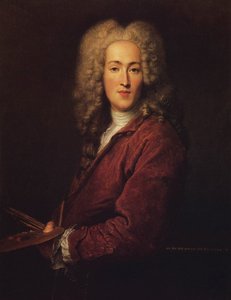
Nicolás Lancret
1690 - 1743 , Francia
Datos clave
- Artistas Influenciados Por Este Artista: ['François Boucher']
- Artistas Que Influyeron:
- Pierre d’Ulin
- Jean-Baptiste Gillot
- Antoine Watteau
- Fecha De Fallecimiento: 14 de septiembre de 1743
- Fecha De Nacimiento: 22 de enero de 1690
- Lugar De Nacimiento: París, Francia
- Movimiento Artístico: Rococó
- Nacionalidad: Francés
- Nombre Completo: Nicolas Lancret
- Obras Notables:
- Le Déjeuner de Jambon
- La Servante Justifiée
- Le Jeu des Quatre-Coins
- Marie-Anne de Camargo
Artículos relacionados

La Estética Rococó: Opulencia, Rebelión y Placer en el Arte del Siglo XVIII
Descubre la fascinante estética rococó: su historia, características clave y los artistas más influyentes del siglo XVIII. Un análisis profundo para amantes del arte y coleccionistas.
Charles-André van Loo: A Study in Rococo Portraiture & the French Court's Artistic Dynamics
Explore the elegant world of Charles-André van Loo, a master of Rococo portraiture at the French court. Discover his life, techniques, and enduring influence on 18th-century art. Hand-painted reproductions available.
François Boucher: Rococo Master of Myth, Sensuality, and the French Court
Explore the captivating world of François Boucher, master of Rococo painting! Discover his iconic works, aristocratic patronage, and lasting influence on French art history. Learn more at ArtsDot.

Rococó: 10 Obras Maestras que Definieron una Época | Arte y Decoración en
Descubre las 10 obras maestras del Rococó que marcaron una época. Explora la elegancia de Fragonard, Boucher y Watteau en . Reproducciones de arte de calidad museo para decorar tu hogar con estilo.
Illuminating the Enlightenment: A Comprehensive Exploration of 18th-Century Painting
Explore the captivating world of 18th-century painting! Discover Rococo's playful elegance & Neoclassicism’s Enlightenment ideals with expert insights into Fragonard, David, and more. A comprehensive guide for art enthusiasts.