 Ver en contexto
 Enviar
 Compartir
 Detalles

 Descargar
 Similares
 Radiografía
 Presentación de diapositivas
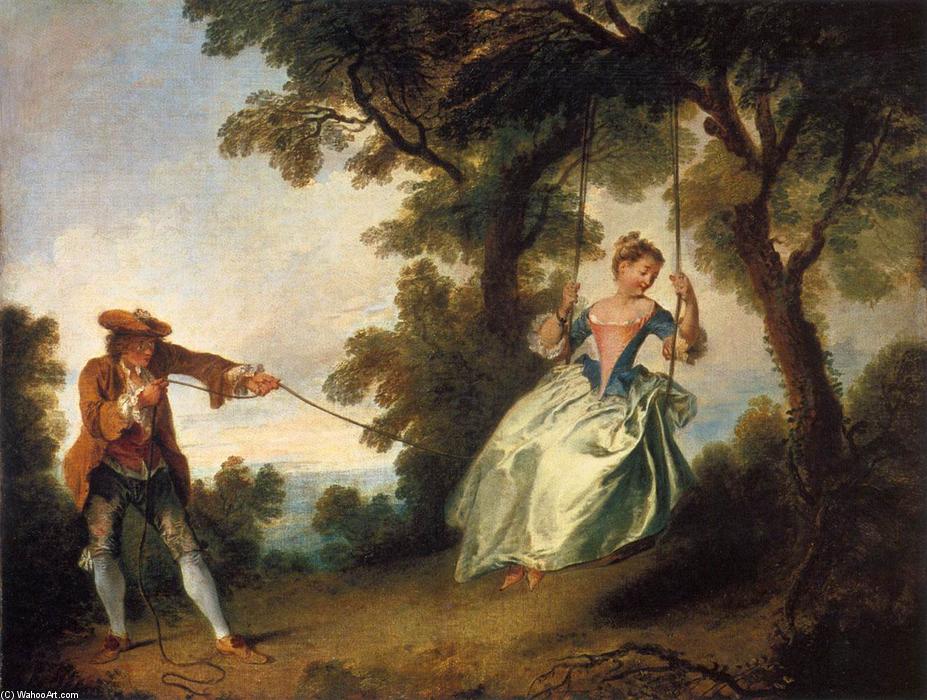
The Swing
 Acrylic On Canvas
- WallArt
- Rococo Art
 1735
1735 70.0 x 89.0 cm
 Museo Victoria y Alberto
 Ver más
Reproducción al óleo hecha a mano
Óleo sobre lienzo pintado a mano en el tamaño y marco de su elección, realizado por encargo por nuestros artistas. ( Comprar impresión Comprar imagen)




































Elija entre nuestros tamaños predefinidos que respetan las proporciones originales de la obra.

Puede ingresar sus propias dimensiones para adaptarse a un marco o espacio específico. Si el tamaño seleccionado no coincide con las proporciones de la imagen original, recortaremos la obra o extenderemos la pintura con elementos adicionales pintados a mano. Se le enviará una maqueta digital para su aprobación antes de comenzar la producción.
Tenga en cuenta que la vista previa en pantalla no refleja el recorte o la extensión reales. Solo la maqueta mostrará con precisión la composición final.
Si bien existen tamaños personalizados, recomendamos seleccionar una dimensión de la lista predefinida para preservar las proporciones originales.
Tras realizar el pedido, el equipo de ArtsDot.com enviará un correo electrónico al cliente para solicitar instrucciones y proporcionarle una vista previa del boceto.
Envío a todo el mundo () en 3-4 semanas en lugar de las 5 semanas estándar. (25 agosto). Sin comprometer la calidad.

Envío exprés gratuito a todo el mundo

Lienzo de lino de alta calidad

Seguro de envío total

Garantía de reembolso de impuestos aduaneros

Garantía de fidelidad cromática exacta

Política de devolución de 60 días (solo por defectos)

Garantía de devolución del 100% del dinero

Descuento por cantidad
 La opción de vidrio solo está disponible en tamaños inferiores a 110 cm.

The Swing
Técnica de reproducción
Dimensiones de la reproducción
-


Precio total final
$ 263
Descripción de la obra
A Moment Frozen in Rococo Delight: Exploring Nicolas Lancret’s “The Swing”
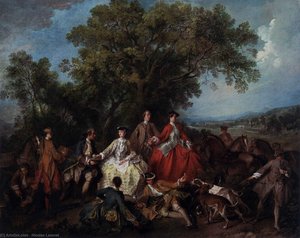
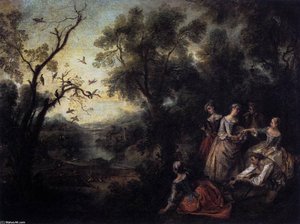
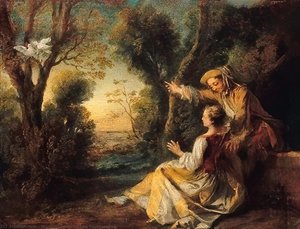
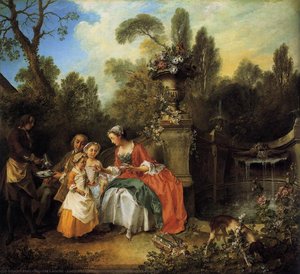
The painting "The Swing" by Nicolas Lancret—a masterpiece of French Rococo art—captures an exquisite tableau of leisure and aristocratic indulgence, transporting viewers back to the gilded age of Louis XV. More than just a depiction of a fashionable outdoor gathering, it embodies the very spirit of the era: effortless grace, playful frivolity, and a deliberate embrace of sensual pleasure. Completed in 1735, this oil on canvas piece resides within the hallowed halls of the Victoria and Albert Museum in London, ensuring its enduring legacy as one of Lancret’s most celebrated achievements.Composition and Style: The Dance of Light and Line
Lancret's genius lies in his masterful manipulation of visual elements to convey a feeling of airy lightness. Unlike the grand narratives favored by earlier Baroque painters, “The Swing” eschews dramatic grandeur for a delicately balanced composition centered around a swing suspended from a tree branch. A man, dressed impeccably in brown attire, leans against the rope, seemingly nonchalant yet undeniably aware of his surroundings—a subtle gesture that speaks volumes about the social conventions of the time. Opposite him sits a woman adorned in a vibrant blue gown embellished with white lace and a blush pink headdress; her posture exudes composure and grace as she enjoys the sway of the swing. The landscape backdrop, rendered in muted greens and browns, serves not merely as scenery but as an integral component of the overall aesthetic experience. Curved lines dominate the scene—the graceful arc of the swing itself, the undulating branches of the tree—reflecting the Rococo penchant for organic forms and creating a harmonious visual rhythm.Technique and Color Palette: Delicate Brushwork and Pastel Hues
Lancret’s technique is characterized by remarkably subtle brushstrokes that contribute significantly to the painting's ethereal quality. He employs a masterful blending of pigments, achieving luminous effects that capture the diffused light characteristic of an afternoon fête. The color palette—primarily pastel shades of pink, blue, and green—further enhances this sense of delicacy and refinement. Lancret skillfully utilizes chiaroscuro—the interplay between light and shadow—to sculpt the figures’ forms and imbue them with depth without resorting to harsh contrasts. This understated approach is particularly evident in the depiction of the woman's dress, where the folds of fabric appear to ripple softly as if caught in a gentle breeze. The artist’s meticulous attention to detail—from the intricate embroidery on the headdress to the delicate rendering of foliage—underscores his commitment to capturing the beauty and nuance of the natural world.Historical Context: Fêtes Galantes and Aristocratic Society
“The Swing” emerged during the “fête galante,” a genre of aristocratic entertainment that flourished in France during Louis XV’s reign. These lavish gatherings celebrated love, courtship, and pastoral ideals—often staged in elaborate gardens or parks—and served as a means of asserting social prestige. Lancret's painting perfectly encapsulates these cultural values, portraying a scene of refined pleasure enjoyed by the upper echelons of society. The swing itself symbolizes movement and dynamism within this static framework, representing not merely physical motion but also the fleeting nature of beauty and desire. Furthermore, the inclusion of two figures in the distance—one standing beneath a tree and the other walking towards the viewer—adds to the painting’s narrative dimension, inviting contemplation on themes of social interaction and romantic longing.Symbolism: An Echo of Classical Ideals
Beyond its aesthetic brilliance, “The Swing” resonates with symbolic significance rooted in classical artistic traditions. The idealized depiction of the figures—their graceful postures and serene expressions—reflects the humanist values prevalent during the Rococo period. Lancret draws inspiration from ancient sculptures depicting mythological scenes of courtship and pastoral romance, subtly conveying a message about the pursuit of happiness and fulfillment within harmonious relationships. The swing’s upward trajectory symbolizes aspiration and transcendence, suggesting that earthly pleasures can elevate the soul to higher realms of contemplation. Ultimately, Lancret's masterpiece remains an enduring testament to the beauty and sophistication of Rococo art—a captivating glimpse into a bygone era defined by elegance, charm, and an unwavering belief in the transformative power of artistic expression.Obras relacionadas
Biografía del artista
Nicolas Lancret: Un Viaje a la Elegancia Rococó
- Nacido: París, Francia (22 de enero de 1690)
- Fallecido: París, Francia (14 de septiembre de 1743)
Primeros Años y Formación
La trayectoria artística de Nicolas Lancret comenzó en París, donde nació en 1690. Aunque los registros detallados de sus primeros años son escasos, se sabe que recibió su formación inicial bajo la tutela de Pierre d’Ulin, un respetado pintor de historia. Un momento crucial llegó cuando conoció la obra de Antoine Watteau, cuya influencia moldeó profundamente la dirección artística de Lancret. Posteriormente estudió con Jean-Baptiste Gillot, quien a su vez había sido alumno de Watteau, solidificando aún más su conexión con esta influyente línea artística. Este período de formación sentó las bases para el estilo distintivo de Lancret, caracterizado por sus alegres representaciones de la sociedad parisina y celebraciones de *fêtes galantes*.Estilo Artístico y Obras Destacadas
Lancret se hizo famoso como un brillante retratista de la vida cotidiana dentro de la sociedad francesa durante el reinado del Duque de Orleans y los primeros años del rey Luis XV. Su estilo artístico se caracteriza por encantadoras escenas de bailes, ferias, bodas de aldea y otros encuentros sociales, reflejando los gustos y las costumbres de su época. Destacó en capturar el espíritu de la elegancia y la frivolidad rococó.- Obras Destacadas:
- *Le Déjeuner de Jambon* (Chantilly, Musée Condé, 1735): Un ejemplo paradigmático de sus escenas de género, que representa un animado desayuno con jamón y figuras vivaces.
- *La Servante Justifiée* (1735-1740): Demuestra la habilidad de Lancret para retratar escenas domésticas con ingenio y encanto.
- *Le Jeu des Quatre-Coins*: Una representación juguetona de un popular juego, capturando la energía y el entretenimiento de la interacción social.
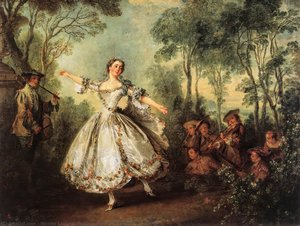
- *Marie-Anne de Camargo* (1730): Un retrato que demuestra su habilidad para representar figuras a la moda.
Influencias y Legado
El estilo artístico de Lancret guarda una clara semejanza con el de Watteau, lo que a menudo lleva a los historiadores del arte a comparar a ambos. Si bien algunos críticos han considerado la obra de Lancret como algo menos profunda que la de Watteau, su capacidad para capturar la esencia de la sociedad francesa en el siglo XVIII le ha asegurado un lugar significativo en la historia del arte. Sus pinturas son celebradas por su alegría y encanto, ofreciendo valiosas perspectivas sobre las costumbres sociales y la estética del período rococó. La influencia de Lancret puede verse en artistas posteriores como François Boucher. Sus obras se encuentran en prestigiosas colecciones de todo el mundo, incluyendo la Galería Nacional y el Musée d'Orsay, asegurando que su legado continúe inspirando a apreciar el arte rococó francés.Desarrollo e Importancia Histórica
A lo largo de su carrera, Lancret demostró una evolución gradual en su enfoque artístico. Si bien inicialmente estuvo fuertemente influenciado por Watteau, desarrolló un estilo más distintivo caracterizado por colores más vivos y una mayor armonía entre las figuras y sus alrededores. Sus obras posteriores, como *Montreir de lanterne magique* y *Familia en un Jardín*, se consideran la cumbre de su logro artístico, mostrando una creciente capacidad para crear profundidad e intimidad dentro de sus composiciones. La importancia histórica de Lancret radica en su contribución al movimiento rococó y en su habilidad para documentar la vida social y los valores culturales de la Francia del siglo XVIII a través de sus pinturas encantadoras y accesibles.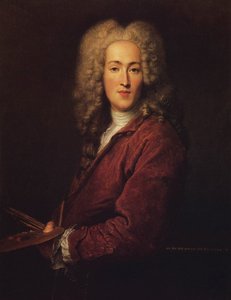
Nicolás Lancret
1690 - 1743 , Francia
Datos clave
- Artistas Influenciados Por Este Artista: ['François Boucher']
- Artistas Que Influyeron:
- Pierre d’Ulin
- Jean-Baptiste Gillot
- Antoine Watteau
- Fecha De Fallecimiento: 14 de septiembre de 1743
- Fecha De Nacimiento: 22 de enero de 1690
- Lugar De Nacimiento: París, Francia
- Movimiento Artístico: Rococó
- Nacionalidad: Francés
- Nombre Completo: Nicolas Lancret
- Obras Notables:
- Le Déjeuner de Jambon
- La Servante Justifiée
- Le Jeu des Quatre-Coins
- Marie-Anne de Camargo
Artículos relacionados

Rococó: 10 Obras Maestras que Definieron una Época | Arte y Decoración en
Descubre las 10 obras maestras del Rococó que marcaron una época. Explora la elegancia de Fragonard, Boucher y Watteau en . Reproducciones de arte de calidad museo para decorar tu hogar con estilo.

La Estética Rococó: Opulencia, Rebelión y Placer en el Arte del Siglo XVIII
Descubre la fascinante estética rococó: su historia, características clave y los artistas más influyentes del siglo XVIII. Un análisis profundo para amantes del arte y coleccionistas.
The Allure of Elegance in Art: A Historical & Aesthetic Exploration of Refinement & Grace
Explore the exquisite world of Rococo art! Discover its history, masters (Watteau, Boucher & more), and defining elegance. Expert insights for collectors seeking museum-quality reproductions & custom portraits.
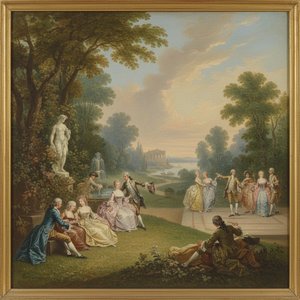
The Fête Galante & Beyond: Exploring the Artistic World of Jean-Antoine Watteau
Discover the captivating world of Jean-Antoine Watteau, master of the Fête Galante! Explore his iconic paintings, symbolism, and lasting influence on Rococo art. A deep dive for classic art enthusiasts.
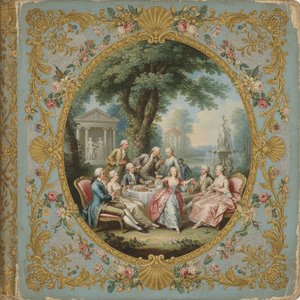
The Rococo Style: Aristocratic Leisure & the Pursuit of Delight in 18th-Century Art
Explore the opulent world of Rococo art! Discover Watteau, Boucher & Nattier's masterpieces. Expert insights for collectors seeking museum-quality reproductions and custom portraits at ArtsDot.