 Ver en contexto
 Enviar
 Compartir
 Detalles

 Descargar
 Similares
 Radiografía
 Presentación de diapositivas
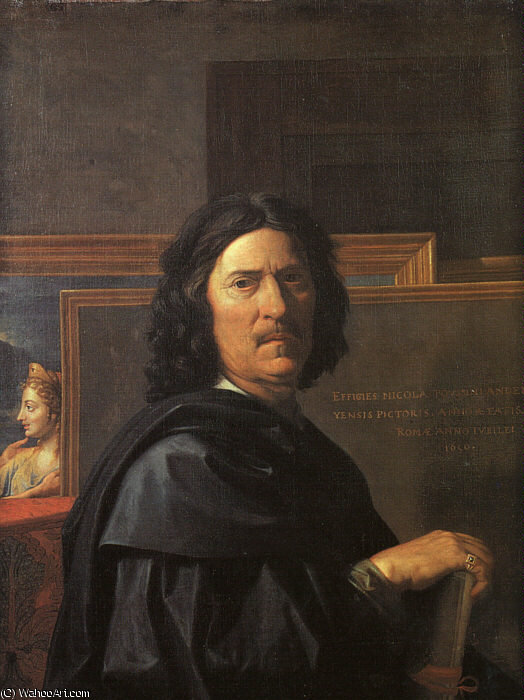
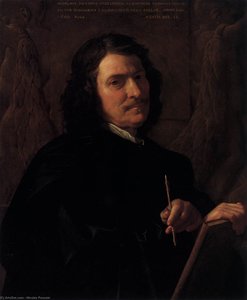
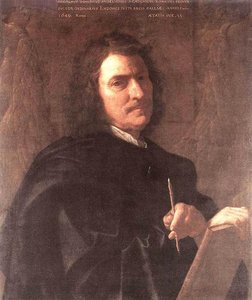
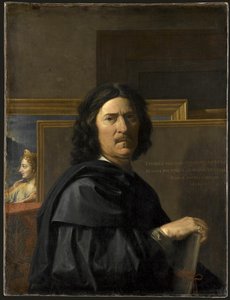
Self - Portrait, Musée du Louvre, Paris.


 Ver más
Reproducción al óleo hecha a mano
Óleo sobre lienzo pintado a mano en el tamaño y marco de su elección, realizado por encargo por nuestros artistas. ( Comprar impresión Comprar imagen)




P118B $10

P118H $10

P118W $10

P438Z $10

P508JH $12

P508YH $12

P805H $10

P805Z $10

P919BZ $10

P919G $10

P919XJ $10

P959ZH $10

P968JZ $12

W106C $8

W218G $10

W218JH $8

W218Y $10

W307PJ $10

W316G $10

W316PJ $8

W316Y $10

W398PJ $8

W4111J $10

W500HY $15

W500JH $15

W692G $12

W849H $8

W940BG $15

W953PJ $8




Elija entre nuestros tamaños predefinidos que respetan las proporciones originales de la obra.

Puede ingresar sus propias dimensiones para adaptarse a un marco o espacio específico. Si el tamaño seleccionado no coincide con las proporciones de la imagen original, recortaremos la obra o extenderemos la pintura con elementos adicionales pintados a mano. Se le enviará una maqueta digital para su aprobación antes de comenzar la producción.
Tenga en cuenta que la vista previa en pantalla no refleja el recorte o la extensión reales. Solo la maqueta mostrará con precisión la composición final.
Si bien existen tamaños personalizados, recomendamos seleccionar una dimensión de la lista predefinida para preservar las proporciones originales.
Tras realizar el pedido, el equipo de ArtsDot.com enviará un correo electrónico al cliente para solicitar instrucciones y proporcionarle una vista previa del boceto.
Envío a todo el mundo () en 3-4 semanas en lugar de las 5 semanas estándar. (28 agosto). Sin comprometer la calidad.

Envío exprés gratuito a todo el mundo

Lienzo de lino de alta calidad

Seguro de envío total

Garantía de reembolso de impuestos aduaneros

Garantía de fidelidad cromática exacta

Política de devolución de 60 días (solo por defectos)

Garantía de devolución del 100% del dinero

Descuento por cantidad
 La opción de vidrio solo está disponible en tamaños inferiores a 110 cm.

Self - Portrait, Musée du Louvre, Paris.
Técnica de reproducción
Dimensiones de la reproducción
-


Precio total final
$ 263
A Window into Classical Idealism: Exploring Nicolas Poussin’s Self Portrait
The painting “Self - Portrait, Musée du Louvre, Paris,” attributed to Nicolas Poussin, transcends mere representation; it's a carefully constructed meditation on artistic identity and the enduring influence of classical thought. Executed around 1650, this portrait offers more than just a glimpse into the artist’s physical appearance—it unveils a profound engagement with humanist ideals that would become hallmarks of his oeuvre.- Subject Matter: At its core lies a contemplative depiction of Poussin himself – a man distinguished by a neatly trimmed beard and draped in a sober black robe. His gaze directs outwards, establishing an immediate connection with the viewer, fostering a sense of intimacy despite the formality of his attire.
- Style & Technique: Poussin’s style embodies the Baroque's restrained elegance, prioritizing clarity and balance over flamboyant ornamentation. He employs meticulous brushwork—particularly evident in capturing the subtle textures of fabric—to achieve an astonishing level of realism while simultaneously adhering to classical principles of composition. The artist skillfully utilizes chiaroscuro – dramatic contrasts between light and shadow – to sculpt form and imbue the scene with a palpable atmosphere.
Historical Context: Rome and the Revival of Antiquity
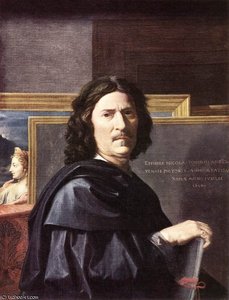
Poussin’s artistic journey began in Paris, where he absorbed influences from contemporary artists. However, it was his relocation to Rome in 1624 that irrevocably altered his trajectory. During this period, Rome experienced a fervent revival of classical art and scholarship—a movement spearheaded by papal patronage and fueled by rediscovered texts from Greece and Italy. Artists like Poussin actively sought inspiration from the sculptures and architectural ruins of antiquity, consciously rejecting the excesses of Mannerism and embracing instead the serene beauty and moral seriousness championed by Renaissance humanists. This engagement with classical ideals is powerfully reflected in the painting’s setting: two canvases hanging on the wall behind Poussin serve as visual anchors to this intellectual landscape.Symbolic Resonance: Beyond Appearance
The inclusion of these flanking paintings isn't merely decorative; it carries significant symbolic weight. They represent a deliberate allusion to Raphael’s frescoes in the Vatican Stanze della Segreti—a testament to Poussin’s admiration for the Renaissance master and his unwavering belief in the transformative power of art. These canvases depict mythological scenes imbued with moral lessons, emphasizing themes of virtue and contemplation – concepts central to humanist philosophy. By positioning himself before these images, Poussin asserts not only his artistic prowess but also his commitment to upholding intellectual values that transcended mere visual splendor.Emotional Impact: Quiet Contemplation and Artistic Integrity
Ultimately, “Self - Portrait” speaks to a deeper emotional core. The artist’s serene gaze conveys an unwavering confidence in his craft and a profound appreciation for the pursuit of beauty and truth. It invites viewers to contemplate their own role as observers—to engage in a dialogue with art that acknowledges its capacity to inspire reflection and elevate the human spirit. This quiet contemplation, combined with Poussin's masterful technique, ensures that this portrait remains an enduring emblem of classical idealism and artistic integrity.Obras relacionadas
Biografía del artista
vida temprana y formación
nicolás poussin, nacido en junio de 1594, fue la quintaesencia de la pintura barroca francesa clásica. A pesar de pasar la mayor parte de su carrera en Roma, permaneció profundamente arraigado en las tradiciones artísticas francesas. Sus primeros días como pintor estuvieron envueltos en incertidumbre, pero ya en 1612 había iniciado estudios formales en París, absorbiendo influencias de artistas menos conocidos antes de ser atraído a Roma en 1624.estilo artístico e influencias
El estilo estético de Poussin, celebrado por su composición coherente y priorización de la linealidad, sentó un precedente que influyó en maestros como jacques-luís david y paul cézanne bien hasta el siglo XX. Su estilo distintivo se cristalizó a través de obras maestras como la muerte de germanicus y su seminal serie de los siete sacramentos.obras notables y museos
- nicolás poussin: autorretrato 1 (barroco, óleo), un testimonio de su maestría en el medio.
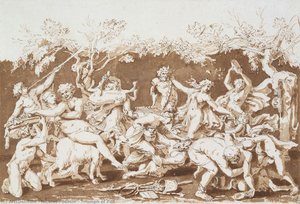
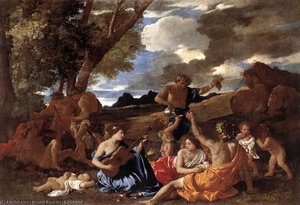
- bacanal frente a un templo (74 x 101 cm, Legión de Honor, San Francisco, Estados Unidos, óleo sobre lienzo), que muestra su capacidad para equilibrar la composición y la narrativa.
- el musée des beaux-arts de carcassonne, un destino imprescindible para los amantes del arte, que alberga una impresionante colección de pinturas occidentales desde el siglo XVII hasta el XX.
legado e impacto
La lealtad de Poussin permaneció en Roma, donde finalmente se centró en incorporar paisajes expansivos a su arte. Su madurez como artista está encapsulada en obras como Orión ciego buscando el sol y las estaciones, que anunciaron una era de composición rigurosa impregnada de la belleza serena del mundo natural.explore más con ArtsDot.com
descubra las obras maestras del musée france e inicie su viaje al mundo de la pintura barroca francesa con musée picasso, musée des beaux-arts de carcassonne y otros museos notables. Visite la página de nicolás poussin en ArtsDot.com para explorar más de sus obras y aprender sobre el contexto en el que fueron creadas.referencias
Nicolás Poussin
1594 - 1665 , Francia
Datos clave
- Artistas Influenciados:
- Jacques-Louis David
- Paul Cézanne
- Artistas Que Influyeron:
- Rafael
- Tiziano
- Fecha De Muerte: 1665
- Fecha De Nacimiento: Junio de 1594
- Lugar De Nacimiento: Le Havre, Francia
- Movimiento Artístico: Barroco clásico
- Nacionalidad: Francés
- Nombre Completo: Nicolás Poussin
- Obras Notables:
- La Muerte de Germanicus
- Los Siete Sacramentos
- Una Carretera Romana
- Orion Ciego Buscando el Sol
- Las Estaciones
Artículos relacionados
Nicolas Poussin: Classicism, Allegory & Order in 17th-Century French Painting
Explore the life & work of Nicolas Poussin, a master of French Classicism. Discover his allegorical paintings, Roman influences, and enduring impact on art history. Expert analysis & insights.
Charles Le Brun: Master of French Baroque Classicism & His Enduring Legacy
Explore the life & art of Charles Le Brun, master of French Baroque Classicism. Discover his royal commissions, influence on Versailles, and enduring legacy through detailed analysis & stunning artworks.

Simon Vouet: A Baroque Master's Journey from Italian Influence to French Classicism
Explore the life & art of Simon Vouet, a pivotal French Baroque painter who introduced Italian styles to France. Discover his masterpieces and lasting influence on 17th-century art.

Baroque Classicism: Reconciling Drama & Order in 17th-Century Art
Explore the captivating world of Baroque Classicism! Discover its history, key artists like Caravaggio & Rubens, and defining characteristics. Expert insights & high-quality reproductions at ArtsDot.
Barroco en su Esplendor: 10 Obras Maestras que Definieron una Época | ArtsDot
Descubre las 10 obras maestras del Barroco que revolucionaron el arte. Caravaggio, Rembrandt y Velázquez te esperan en ArtsDot. Reproducciones de alta calidad para decorar tu hogar con la grandeza de este estilo. ¡Explora la colección online!