 Vista previa
 Compartir
 Compartir
 Ver detalles

 Descargar
 Ver similares
 Radiografía
 Presentación de diapositivas
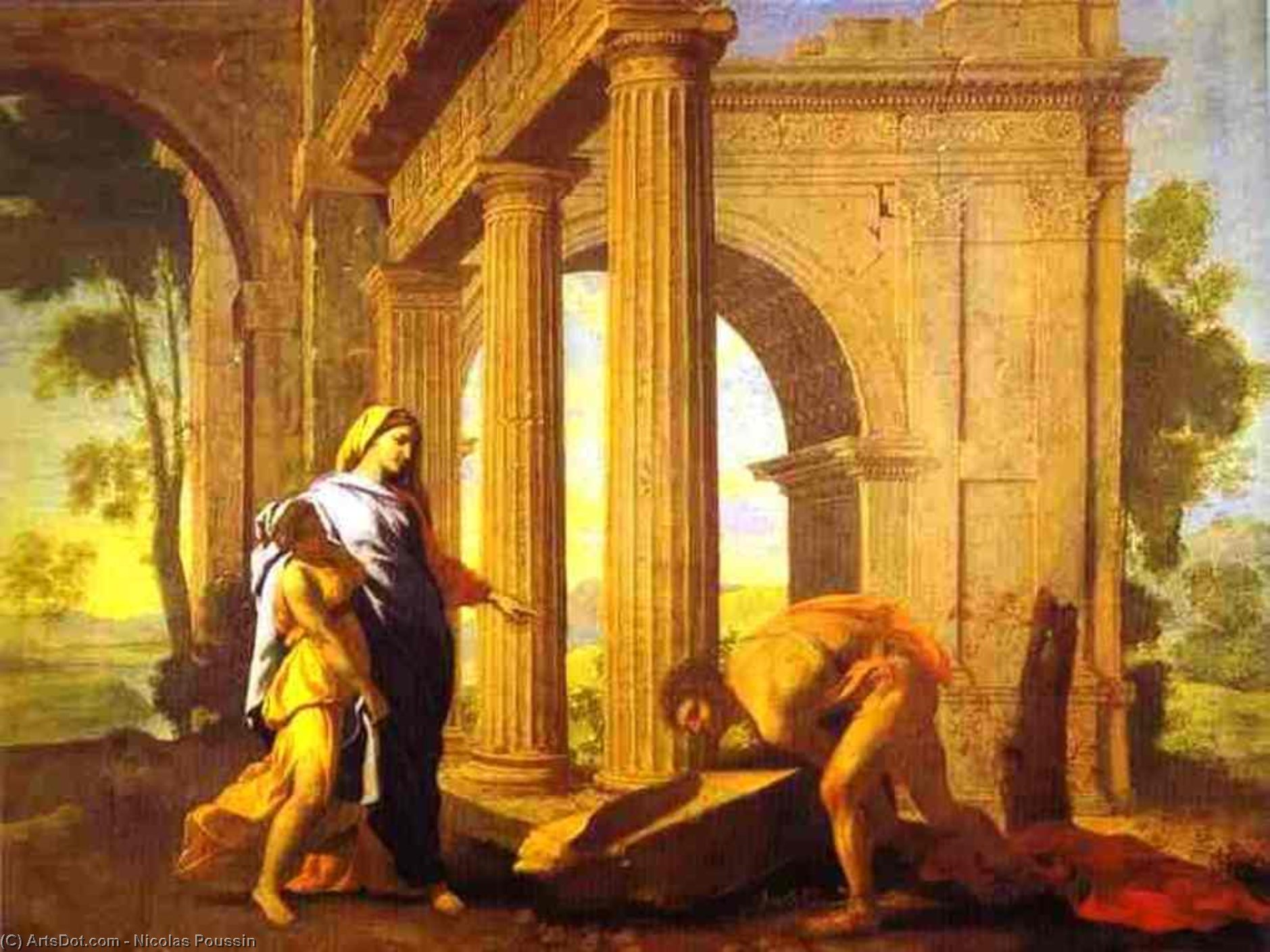
Teseo Encontrando los Brazos de su Padre


 Leer más
Reproducción al óleo hecha a mano
Óleo sobre lienzo pintado a mano en el tamaño y marco de su elección, realizado por encargo por nuestros artistas. ( Pedir impresión Comprar descarga)




P118B $10

P118H $10

P118W $10

P438Z $10

P508JH $12

P508YH $12

P805H $10

P805Z $10

P919BZ $10

P919G $10

P919XJ $10

P959ZH $10

P968JZ $12

W106C $8

W218G $10

W218JH $8

W218Y $10

W307PJ $10

W316G $10

W316PJ $8

W316Y $10

W398PJ $8

W4111J $10

W500HY $15

W500JH $15

W692G $12

W849H $8

W940BG $15

W953PJ $8




Elija entre nuestros tamaños predefinidos que respetan las proporciones originales de la obra.

Puede ingresar sus propias dimensiones para adaptarse a un marco o espacio específico. Si el tamaño seleccionado no coincide con las proporciones de la imagen original, recortaremos la obra o extenderemos la pintura con elementos adicionales pintados a mano. Se le enviará una maqueta digital para su aprobación antes de comenzar la producción.
Tenga en cuenta que la vista previa en pantalla no refleja el recorte o la extensión reales. Solo la maqueta mostrará con precisión la composición final.
Si bien existen tamaños personalizados, recomendamos seleccionar una dimensión de la lista predefinida para preservar las proporciones originales.
Tras realizar el pedido, el equipo de ArtsDot.com enviará un correo electrónico al cliente para solicitar instrucciones y proporcionarle una vista previa del boceto.
Envío a todo el mundo () en 3-4 semanas en lugar de las 5 semanas estándar. (21 agosto). Sin comprometer la calidad.

Envío exprés gratuito a todo el mundo

Lienzo de lino de alta calidad

Seguro de envío completo

Garantía de reembolso de aranceles aduaneros

Garantía de fidelidad cromática exacta

Política de devolución de 60 días (solo por defectos)

Garantía de devolución del 100% del dinero

Oferta por volumen
 La opción de vidrio solo está disponible en tamaños inferiores a 110 cm.

Teseo Encontrando los Brazos de su Padre
Técnica de reproducción
Tamaño de la reproducción
-


Precio total
$ 263
Descripción de la obra
The Timeless Drama of Theseus Finding His Father’s Arms
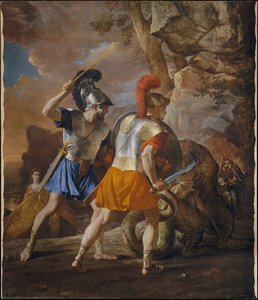
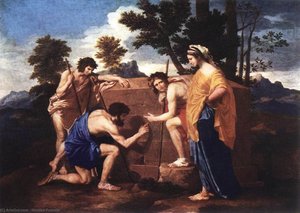
Nicolas Poussin's “Theseus Finding His Father”s Arms,” a cornerstone of the Baroque era, isn’t merely a depiction of a Greek myth; it’s an exquisitely rendered meditation on lineage, destiny, and the profound yearning for connection. Painted in 1633 and currently residing within the hallowed halls of the Galleria degli Uffizi in Florence, Italy, this artwork transcends its mythological subject matter to become a powerful statement about the human condition. Poussin masterfully captures a pivotal moment from Plutarch’s *Life of Theseus*, where the hero discovers his father's discarded sword and sandals – tangible proof of his royal lineage and a catalyst for his heroic journey.
The scene unfolds within a meticulously constructed architectural setting, reminiscent of ancient Greek temples. Columns rise majestically on either side, framing theseus as he kneels before two imposing statues—a poignant reminder of the legacy he’s about to inherit. These figures, rendered with an almost unsettling stillness, represent the weight of history and the expectations placed upon a future king. The subtle use of light, characteristic of Poussin's style, directs our gaze towards theseus, highlighting his youthful vulnerability against the backdrop of monumental antiquity. The composition is remarkably balanced, creating a sense of harmony that belies the emotional intensity of the narrative.
Artistic Mastery and Technique
Poussin’s genius lies not just in his ability to recreate a classical scene but in his masterful manipulation of color, light, and texture. He employs a technique known as *chiaroscuro*, dramatically contrasting areas of illumination with deep shadows, creating a sense of depth and volume that draws the viewer into the painting. The muted palette—dominated by earthy tones of ochre, brown, and gray—evokes a timeless quality, anchoring the scene in antiquity while simultaneously imbuing it with an emotional resonance. Notice particularly how Poussin uses atmospheric perspective – distant elements are rendered paler and less detailed, creating a convincing illusion of space and distance.
The brushwork itself is remarkably subtle, almost deceptively smooth. Poussin’s meticulous attention to detail—from the folds of theseus's tunic to the weathered surfaces of the statues—demonstrates his unparalleled skill as a draftsman and painter. He doesn’t rely on bold strokes or dramatic contrasts; instead, he builds up layers of color and texture with painstaking precision, creating an image that is both visually stunning and intellectually engaging.
Symbolism and Mythological Context
Beyond the simple narrative of recognition, “Theseus Finding His Father”s Arms” is rich in symbolic meaning. The sword and sandals represent more than just lineage; they symbolize Theseus's destiny as a warrior and leader—a responsibility he must embrace to fulfill his father’s legacy. The act of kneeling before the statues suggests a profound humility and respect for the past, while also highlighting the burden of leadership. The presence of the women and children in the background adds another layer of complexity, representing the future Theseus will shape —a future rooted in both tradition and innovation.
Poussin’s choice to depict theseus *finding* his father's arms rather than discovering them is crucial. It emphasizes the active role he plays in forging his own identity—a journey of self-discovery fueled by an understanding of his heritage. The scene isn’t simply about inheriting a title; it’s about accepting responsibility and embracing one’s destiny.
A Legacy Enduring Through Reproduction
Painted during a period of immense artistic innovation, “Theseus Finding His Father”s Arms” stands as a testament to Nicolas Poussin's enduring influence. His ability to seamlessly blend classical ideals with contemporary techniques continues to inspire artists today. While experiencing the painting in person at the Galleria degli Uffizi is undoubtedly a profound experience, ArtsDot offers exquisite hand-painted reproductions that capture the essence of this masterpiece. These meticulously crafted replicas allow art lovers everywhere to appreciate Poussin’s genius and bring the drama of Greek mythology into their homes.
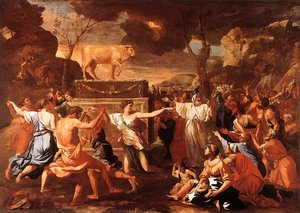
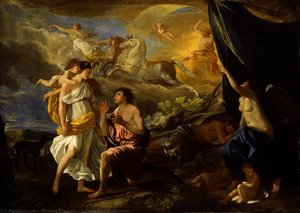
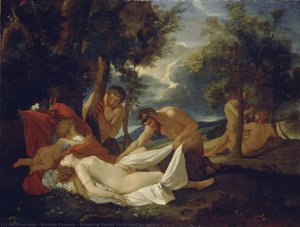
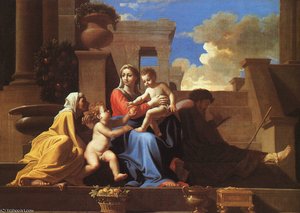
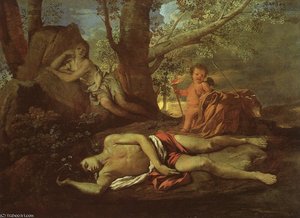
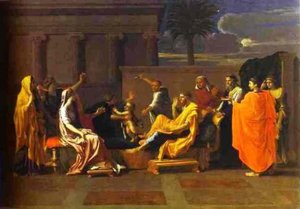
Explore more works by Nicolas Poussin at The Uffizi Gallery, Florence Italy on ArtsDot. And don’t miss his other celebrated paintings, such as “Selene and Endymion” and “The Adoration of the Golden Calf,” available for stunning reproductions at ArtsDot.
- Nicolas Poussin: Theseus Finding His Father’s Arms
- Nicolas Poussin: Selene and Endymion
- Nicolas Poussin: The Adoration of the Golden Calf
A Life Steeped in Classical Reverie
Nicolas Poussin, a name synonymous with the grandeur of French Baroque painting, was nonetheless a soul deeply rooted in Italian soil for much of his artistic life. Born in Le Havre, Normandy, in June 1594, his early years remain somewhat veiled in mystery, yet they undoubtedly laid the foundation for a career that would become pivotal in shaping the classical tradition within French art. Though he briefly studied in Paris during the early 1610s, absorbing influences from lesser-known artists of the time, it was his journey to Rome in 1624 that truly ignited his artistic destiny. This wasn’t merely a geographical relocation; it was an immersion into the heart of antiquity, a pilgrimage to the very source of inspiration that would define his aesthetic vision. Poussin's initial forays into painting were marked by a sensuous quality reminiscent of Venetian masters like Titian, yet even in these early works, a nascent sense of order and iObras relacionadas

Biografía del artista
vida temprana y formación
nicolás poussin, nacido en junio de 1594, fue la quintaesencia de la pintura barroca francesa clásica. A pesar de pasar la mayor parte de su carrera en Roma, permaneció profundamente arraigado en las tradiciones artísticas francesas. Sus primeros días como pintor estuvieron envueltos en incertidumbre, pero ya en 1612 había iniciado estudios formales en París, absorbiendo influencias de artistas menos conocidos antes de ser atraído a Roma en 1624.estilo artístico e influencias
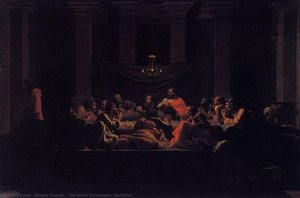
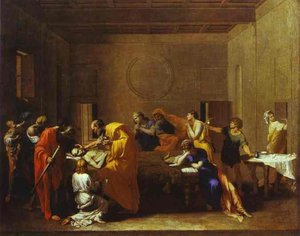
El estilo estético de Poussin, celebrado por su composición coherente y priorización de la linealidad, sentó un precedente que influyó en maestros como jacques-luís david y paul cézanne bien hasta el siglo XX. Su estilo distintivo se cristalizó a través de obras maestras como la muerte de germanicus y su seminal serie de los siete sacramentos.obras notables y museos
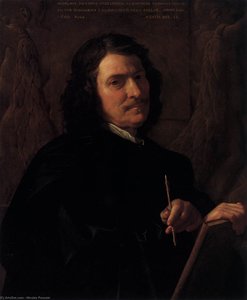
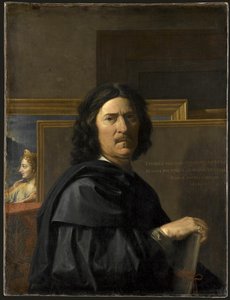
- nicolás poussin: autorretrato 1 (barroco, óleo), un testimonio de su maestría en el medio.
- bacanal frente a un templo (74 x 101 cm, Legión de Honor, San Francisco, Estados Unidos, óleo sobre lienzo), que muestra su capacidad para equilibrar la composición y la narrativa.
- el musée des beaux-arts de carcassonne, un destino imprescindible para los amantes del arte, que alberga una impresionante colección de pinturas occidentales desde el siglo XVII hasta el XX.
legado e impacto
La lealtad de Poussin permaneció en Roma, donde finalmente se centró en incorporar paisajes expansivos a su arte. Su madurez como artista está encapsulada en obras como Orión ciego buscando el sol y las estaciones, que anunciaron una era de composición rigurosa impregnada de la belleza serena del mundo natural.explore más con ArtsDot.com
descubra las obras maestras del musée france e inicie su viaje al mundo de la pintura barroca francesa con musée picasso, musée des beaux-arts de carcassonne y otros museos notables. Visite la página de nicolás poussin en ArtsDot.com para explorar más de sus obras y aprender sobre el contexto en el que fueron creadas.referencias
Nicolás Poussin
1594 - 1665 , Francia
Datos clave
- Artistas Influenciados:
- Jacques-Louis David
- Paul Cézanne
- Artistas Que Influyeron:
- Rafael
- Tiziano
- Fecha De Muerte: 1665
- Fecha De Nacimiento: Junio de 1594
- Lugar De Nacimiento: Le Havre, Francia
- Movimiento Artístico: Barroco clásico
- Nacionalidad: Francés
- Nombre Completo: Nicolás Poussin
- Obras Notables:
- La Muerte de Germanicus
- Los Siete Sacramentos
- Una Carretera Romana
- Orion Ciego Buscando el Sol
- Las Estaciones
Artículos relacionados
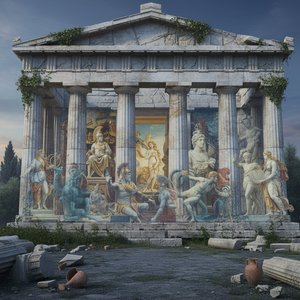
Echoes of Olympus: Mythological Narratives in Western Art Through the Ages
Explore the captivating history of mythological narratives in Western art! From ancient Greece to modern masterpieces, discover iconic artworks & symbolism. Expert analysis and high-quality reproductions at ArtsDot.

Drama Barroca: Llevando la Grandeza y la Emoción a los Interiores Contemporáneos
Descubre cómo el drama y la grandeza del arte barroco pueden transformar tus interiores. Guía experta, inspiración y reproducciones de alta calidad en .

The Dramatic Flourish: Exploring the Baroque Movement's Enduring Legacy in Art History
Explore the dramatic world of Baroque art! Discover iconic artists like Caravaggio & Rubens, defining techniques, and its lasting impact on art history. Expert insights for collectors & enthusiasts at ArtsDot.

Barroco Sublime: 10 Obras Maestras que Definieron una Época |
Descubre las 10 obras maestras del Barroco que marcaron una época. Caravaggio, Bernini y Velázquez cobran vida en . Reproducciones de arte de calidad museo para decorar tu hogar con elegancia. ¡Explora la colección online!

The Visceral Stage: Exploring Dramatic Narratives & Emotional Intensity in Baroque Art
Explore the dramatic world of Baroque art! Discover iconic masters like Caravaggio & Rembrandt, their techniques, and the movement's lasting impact. Expert insights for collectors & enthusiasts at ArtsDot.