 Ver en contexto
 Enviar
 Compartir
 Detalles

 Descargar
 Similares
 Radiografía
 Presentación de diapositivas
The Baby Moses Saved from the River


 Ver más
Giclée / Impresión de arte
Impresiones giclée o en lienzo de calidad de museo con producción rápida y opciones de acabado flexibles. ( Comprar pintura hecha a mano Comprar imagen)




P118B $10

P118H $10

P118W $10

P438Z $10

P508JH $12

P508YH $12

P805H $10

P805Z $10

P919BZ $10

P919G $10

P919XJ $10

P959ZH $10

P968JZ $12

W106C $8

W218G $10

W218JH $8

W218Y $10

W307PJ $10

W316G $10

W316PJ $8

W316Y $10

W398PJ $8

W4111J $10

W500HY $15

W500JH $15

W692G $12

W849H $8

W940BG $15

W953PJ $8




Elija entre nuestros tamaños predefinidos que respetan las proporciones originales de la obra.

Puede introducir sus propias dimensiones para adaptarse a un marco o espacio específico. Si el tamaño seleccionado no coincide con las proporciones de la imagen original, recortaremos la obra de arte o extenderemos la imagen con un borde con efecto espejo o de color sólido. Se enviará una maqueta digital para su aprobación antes de que comience la producción.
Tenga en cuenta que la vista previa en pantalla no refleja el recorte o la extensión real. Solo la maqueta mostrará con precisión la composición final.
Aunque existen tamaños personalizados, recomendamos seleccionar una dimensión de la lista predefinida para preservar las proporciones originales.
Envío a todo el mundo () en 2 semanas en lugar de las 4/5 semanas estándar. (28 agosto)

Envío exprés gratuito a todo el mundo

Lienzo de lino de alta calidad

Seguro de envío total

Garantía de reembolso de impuestos aduaneros

Garantía de fidelidad cromática exacta

Política de devolución de 60 días (solo por defectos)

Garantía de devolución del 100% del dinero

Descuento por cantidad
 La opción de vidrio solo está disponible en tamaños inferiores a 110 cm.

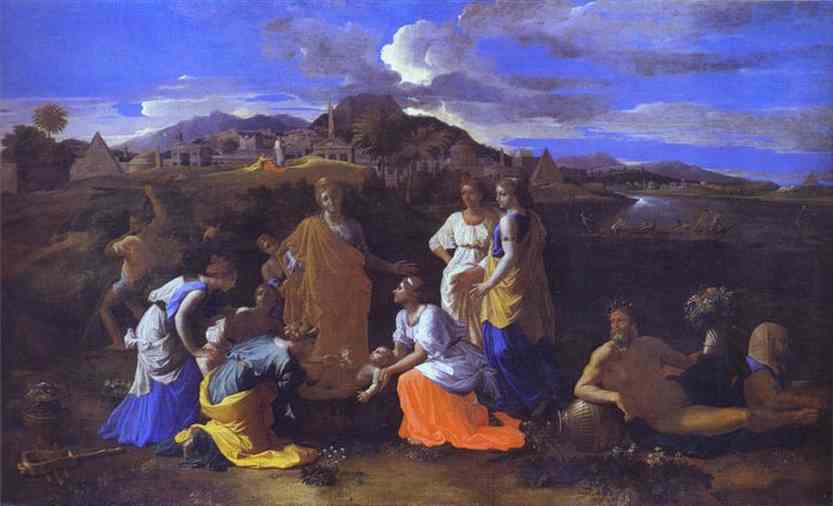
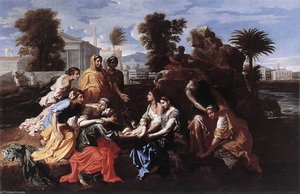
The Baby Moses Saved from the River
Giclée / Impresión de arte
Dimensiones de la reproducción
-


Precio total final
$ 62
A Divine Encounter in the Cradle of the Nile
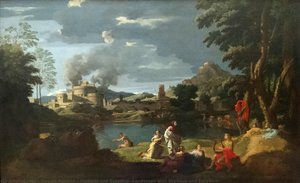
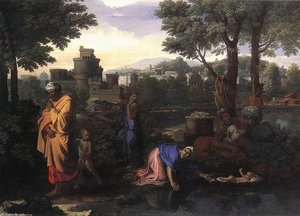
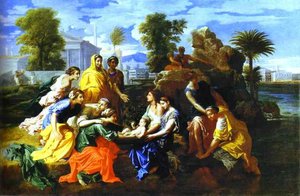
In the profound stillness of Nicolas Poussin’s "The Baby Moses Saved from the River," we are invited into a moment where the cosmic and the human intersect. Painted around 1638, this masterpiece serves as a breathtaking testament to the power of classical grace and the dramatic tension inherent in the Baroque era. The scene captures the pivotal biblical narrative of Pharaoh’s daughter discovering the infant Moses adrift in the reeds. As a group of figures gathers at the water's edge, there is an palpable sense of communal urgency and tender compassion. The composition is not merely a depiction of a rescue; it is a choreographed dance of human emotion, where the vulnerability of the child contrasts sharply with the monumental, rugged landscape that surrounds him.
To gaze upon this work is to witness the meticulous disegno that defined Poussin’s legendary approach. Unlike the more flamboyant and color-saturated works of his Venetian contemporaries, Poussin directs our eyes through a deliberate restraint of palette. He employs a sophisticated arrangement of earthy ochres, deep browns, and soft creams, creating a somber yet majestic atmosphere. Every element is rendered with an almost sculptural precision—from the weathered textures of the distant mountains to the gentle ripples of the river. This commitment to form and line ensures that the painting possesses an intellectual clarity, allowing the viewer to contemplate the gravity of the event without being overwhelmed by unnecessary ornamentation.
The Echoes of Antiquity and Classical Order
Poussin’s artistic soul was forged in the crucible of Rome, where he lived a life deeply immersed in the study of classical antiquity. This profound connection to the past is woven into the very fabric of this canvas. One can sense the influence of Michelangelo and Raphael in the structured, almost architectural arrangement of the figures. The painting transcends its religious subject matter to become an exploration of order, balance, and the eternal struggle between fate and providence. For the discerning collector or interior designer, this piece offers more than just visual beauty; it provides a window into the Renaissance fervor for reviving classical ideals through a Baroque lens.
The emotional resonance of the work lies in its quiet strength. There is no chaotic movement here, but rather a dignified, rhythmic cooperation among the thirteen figures present. The way the light falls upon the infant, highlighting his innocence amidst the rugged terrain, creates a focal point that is both spiritually uplifting and visually arresting. For those seeking to adorn a space with art that inspires contemplation and commands respect, a high-quality reproduction of this Poussin masterpiece brings an air of timeless sophistication and historical depth into any room, serving as a profound conversation piece that bridges the gap between the ancient world and the modern eye.
Obras relacionadas
Biografía del artista
vida temprana y formación
nicolás poussin, nacido en junio de 1594, fue la quintaesencia de la pintura barroca francesa clásica. A pesar de pasar la mayor parte de su carrera en Roma, permaneció profundamente arraigado en las tradiciones artísticas francesas. Sus primeros días como pintor estuvieron envueltos en incertidumbre, pero ya en 1612 había iniciado estudios formales en París, absorbiendo influencias de artistas menos conocidos antes de ser atraído a Roma en 1624.estilo artístico e influencias
El estilo estético de Poussin, celebrado por su composición coherente y priorización de la linealidad, sentó un precedente que influyó en maestros como jacques-luís david y paul cézanne bien hasta el siglo XX. Su estilo distintivo se cristalizó a través de obras maestras como la muerte de germanicus y su seminal serie de los siete sacramentos.obras notables y museos
- nicolás poussin: autorretrato 1 (barroco, óleo), un testimonio de su maestría en el medio.
- bacanal frente a un templo (74 x 101 cm, Legión de Honor, San Francisco, Estados Unidos, óleo sobre lienzo), que muestra su capacidad para equilibrar la composición y la narrativa.
- el musée des beaux-arts de carcassonne, un destino imprescindible para los amantes del arte, que alberga una impresionante colección de pinturas occidentales desde el siglo XVII hasta el XX.
legado e impacto
La lealtad de Poussin permaneció en Roma, donde finalmente se centró en incorporar paisajes expansivos a su arte. Su madurez como artista está encapsulada en obras como Orión ciego buscando el sol y las estaciones, que anunciaron una era de composición rigurosa impregnada de la belleza serena del mundo natural.explore más con ArtsDot.com
descubra las obras maestras del musée france e inicie su viaje al mundo de la pintura barroca francesa con musée picasso, musée des beaux-arts de carcassonne y otros museos notables. Visite la página de nicolás poussin en ArtsDot.com para explorar más de sus obras y aprender sobre el contexto en el que fueron creadas.referencias
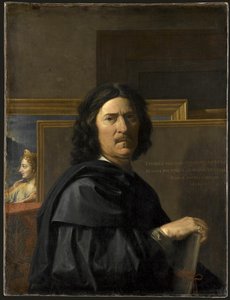
Nicolás Poussin
1594 - 1665 , Francia
Datos clave
- Artistas Influenciados:
- Jacques-Louis David
- Paul Cézanne
- Artistas Que Influyeron:
- Rafael
- Tiziano
- Fecha De Muerte: 1665
- Fecha De Nacimiento: Junio de 1594
- Lugar De Nacimiento: Le Havre, Francia
- Movimiento Artístico: Barroco clásico
- Nacionalidad: Francés
- Nombre Completo: Nicolás Poussin
- Obras Notables:
- La Muerte de Germanicus
- Los Siete Sacramentos
- Una Carretera Romana
- Orion Ciego Buscando el Sol
- Las Estaciones
Artículos relacionados

Baroque Classicism: Reconciling Drama & Order in 17th-Century Art
Explore the captivating world of Baroque Classicism! Discover its history, key artists like Caravaggio & Rubens, and defining characteristics. Expert insights & high-quality reproductions at ArtsDot.

Giclée Prints: Archival Quality & Aesthetic Nuances for the Discerning Collector
Explore the world of giclée prints with ArtsDot. Learn about archival quality, aesthetic nuances & investment potential. Expert guidance for discerning art collectors seeking museum-quality reproductions and lasting value.

The Enduring Legacy of Fine Art Prints: Technique, History & Aesthetic Impact
Explore the rich history & techniques of fine art prints. Discover investment potential, assess authenticity, and learn how to preserve your collection with expert guidance. Trusted insights for discerning collectors.

Drama Barroca: Llevando la Grandeza y la Emoción a los Interiores Contemporáneos
Descubre cómo el drama y la grandeza del arte barroco pueden transformar tus interiores. Guía experta, inspiración y reproducciones de alta calidad en .
Nicolas Poussin: Classicism, Allegory & Order in 17th-Century French Painting
Explore the life & work of Nicolas Poussin, a master of French Classicism. Discover his allegorical paintings, Roman influences, and enduring impact on art history. Expert analysis & insights.