

 Ver en contexto
 Enviar
 Compartir
 Detalles

 Descargar
 Similares
 Radiografía
 Presentación de diapositivas
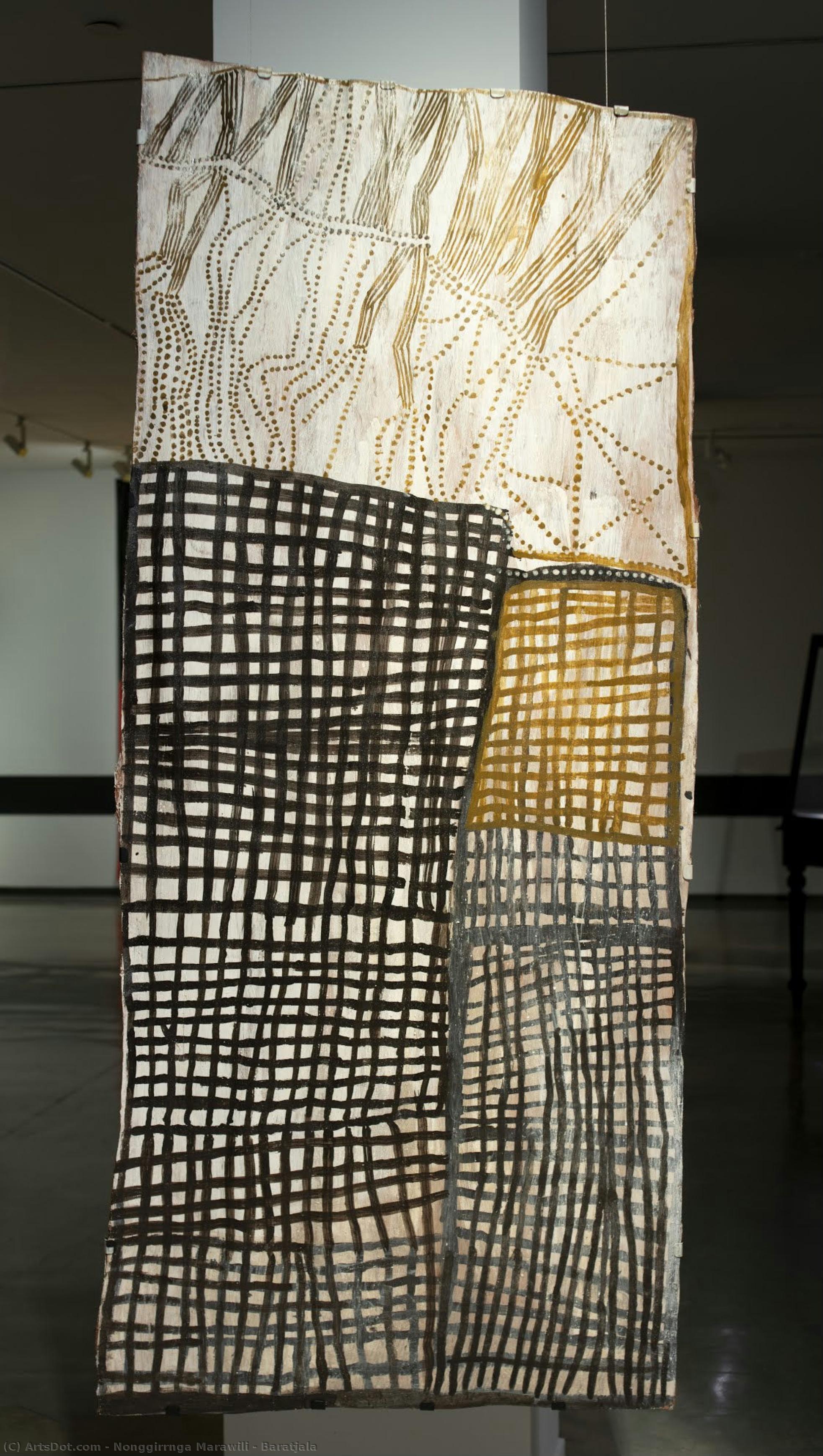
Baratjala
 Painting
- Contemporary Aboriginal
 2019
2019- Contemporary
 188.0 x 81.0 cm
 Biennale of Sydney
 Ver más
Reproducción al óleo hecha a mano
Óleo sobre lienzo pintado a mano en el tamaño y marco de su elección, realizado por encargo por nuestros artistas. ( Comprar impresión Comprar imagen)




































Elija entre nuestros tamaños predefinidos que respetan las proporciones originales de la obra.

Puede ingresar sus propias dimensiones para adaptarse a un marco o espacio específico. Si el tamaño seleccionado no coincide con las proporciones de la imagen original, recortaremos la obra o extenderemos la pintura con elementos adicionales pintados a mano. Se le enviará una maqueta digital para su aprobación antes de comenzar la producción.
Tenga en cuenta que la vista previa en pantalla no refleja el recorte o la extensión reales. Solo la maqueta mostrará con precisión la composición final.
Si bien existen tamaños personalizados, recomendamos seleccionar una dimensión de la lista predefinida para preservar las proporciones originales.
Tras realizar el pedido, el equipo de ArtsDot.com enviará un correo electrónico al cliente para solicitar instrucciones y proporcionarle una vista previa del boceto.
Envío a todo el mundo () en 3-4 semanas en lugar de las 5 semanas estándar. (25 agosto). Sin comprometer la calidad.

Envío exprés gratuito a todo el mundo

Lienzo de lino de alta calidad

Seguro de envío total

Garantía de reembolso de impuestos aduaneros

Garantía de fidelidad cromática exacta

Política de devolución de 60 días (solo por defectos)

Garantía de devolución del 100% del dinero

Descuento por cantidad
 La opción de vidrio solo está disponible en tamaños inferiores a 110 cm.

Baratjala
Técnica de reproducción
Dimensiones de la reproducción
-


Precio total final
$ 263
Descripción de la obra
A Tapestry of Ancestral Rhythms
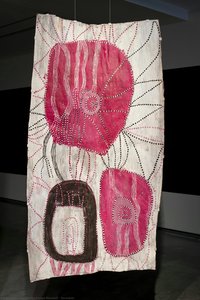
In the profound stillness of Baratjala, one does not merely observe a painting; one enters a living dialogue with the ancient rhythms of the Australian landscape. Created in 2019 by the esteemed Yolngu artist Nonggirrnga Marawili, this masterpiece serves as a visual bridge between the contemporary art world and the primordial energies of Arnhem Land. The work unfolds with a mesmerizing complexity, where a rhythmic interplay of black and white squares creates a structural dance across the canvas. This geometric precision is not merely decorative but acts as a foundational pulse, reminiscent of the seasonal migrations and the structured kinship ties that have defined Marawili’s culture for generations.
As the eye wanders through the composition, it encounters smaller, scattered elements that disrupt the primary pattern, adding layers of depth and a sense of organic movement. These intricate details suggest the flickering light of lightning against sea spray or the subtle shifts in sand patterns left by receding tides. For the discerning collector or interior designer, Baratjala offers a sophisticated balance of modern abstraction and deep-rooted symbolism, making it a commanding presence that anchors a room with both intellectual weight and visual grace.
The Language of Land and Lineage
To understand the soul of this work, one must look to the biography of Marawili herself. Born on the shores of Darrpirra, her artistic vocabulary was forged in the nomadic lifestyle of the wakir’—the seasonal movement between camps. Every stroke and every geometric intersection in Baratlam carries the weight of this heritage. The artist utilizes a technique that blends the precision of symbolic mapping with an almost atmospheric fluidity. While the prominent square patterns provide a sense of stability and order, the secondary motifs introduce a chaotic beauty, mirroring the unpredictable power of cyclones and the ripping currents of the sea that characterize her ancestral home.
The emotional impact of the piece lies in this very tension between the structured and the wild. There is a profound sense of continuity within the canvas; it feels as though the patterns are part of an eternal cycle, much like the tides she observed as a child. For those seeking to incorporate fine art into a curated space, this painting provides more than just aesthetic pleasure—it offers a window into a worldview where the land, the water, and the spirit are inextricably linked. It is a piece that invites contemplation, rewarding the viewer with new discoveries of texture and meaning upon every encounter.
A Timeless Addition to the Modern Collection
For the art enthusiast or the professional decorator, a high-quality reproduction of Baratjala represents an opportunity to possess a fragment of Australian contemporary history. The work’s ability to harmonize with diverse interior styles—from minimalist modernism to more textured, organic aesthetics—is a testament to its universal appeal. Its large scale and striking monochromatic foundation allow it to serve as a focal point that stimulates conversation and evokes a sense of serene power.
Investing in such a piece means bringing the vibrant, enduring spirit of the Yolngu people into a personal sanctuary. Whether placed in a grand gallery setting or a quiet study, Baratjala remains a captivating testament to the resilience of culture and the timeless beauty of the natural world, captured through the masterful hand of one of Australia's most significant contemporary voices.
Obras relacionadas
Biografía del artista
Early Life and Artistic Beginnings
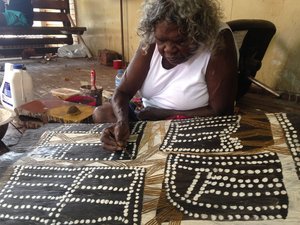
Nonggirrnga Marawili (c. 1939–2023) emerged from the vibrant Yolngu culture of Arnhem Land, Australia, shaping her artistic vision through a formative upbringing steeped in ancestral traditions. Born on the beach at Darrpirra, near Djarrakpi (Cape Shield), she was daughter to Mundukul, a revered warrior and storyteller whose profound connection to the land instilled within Marawili a deep understanding of Yolngu cosmology and worldview. Growing up amidst the nomadic lifestyle of Wakir’—moving camps seasonally—Marawili experienced firsthand the rhythms of Yolngu life, absorbing knowledge of bushcraft, storytelling, and kinship ties that would later permeate her artistic practice. Her early education was unconventional; she eschewed formal schooling preferring to learn from elders and observing the natural world around her. This immersive experience profoundly influenced her aesthetic sensibilities, fostering a sensitivity to subtle nuances of color, texture, and pattern—elements central to her distinctive style.“You may spy on me and think that I am painting sacred things,” Marawili famously remarked, encapsulating her artistic ethos: an unwavering commitment to expressing the spirit of her heritage without resorting to literal representations.The Influence of Djapu Clan Designs and Collaborative Practice
Marawili’s artistic journey gained momentum in the 1980s when she began collaborating with her husband, Djutadjuta Mununggurr, a respected elder and storyteller who championed Yolngu art practice. Together they revitalized traditional bark painting techniques—previously dominated by repetitive “suitcase barks”—introducing a new level of sophistication and artistic exploration. Recognizing the importance of preserving ancestral knowledge, Marawili actively sought permission to depict Djapu clan designs—the sacred emblems of her husband’s lineage—through collaborative projects with fellow artists Rerrkirrwanga Mununggurr and Marrnyula Mununggurr. This pioneering effort challenged conventional gender roles within Yolngu society, demonstrating that women could equally contribute to the transmission of cultural heritage.- This collaboration underscored Marawili's dedication to upholding Yolngu traditions while simultaneously pushing artistic boundaries.
- Her husband’s influence shaped her understanding of storytelling and symbolism—elements interwoven throughout her paintings.
Developing a Distinctive Artistic Style: Elemental Symbolism and Transformation
Marawili's artistic style is characterized by her masterful use of elemental substances and transformative forces inherent in the Australian landscape. Her paintings frequently incorporate cross-hatching and lattice—techniques mirroring the intricate patterns found in Yolngu weaving—creating textured surfaces that evoke the dynamism of country. Diamonds, representing clan emblems and symbolizing ancestral power, appear prominently throughout her compositions.“I don’t paint what I see,” Marawili asserted; rather, she translates “the spirit of country” onto canvas.- Her artistic vision stemmed from a deep connection to Yolngu cosmology—a belief in the interconnectedness of all living things and the influence of ancestral beings on daily life.
- Marawili’s distinctive use of pink pigment—derived from recycled print toner cartridges—served as a poignant reminder of her cultural heritage and artistic innovation.
Notable Achievements and Recognition
Nonggirrnga Marawili achieved international acclaim for her contribution to contemporary Aboriginal art.- Her 2013 exhibition “And I am Still Here” held at Alcaston Gallery in Melbourne showcased fifteen paintings and four larrakitj (memorial poles)—a testament to her artistic legacy.
- Her collaborative work with Buku-Larrnggay Mulka Centre resulted in a series of evocative paintings reflecting the beauty and complexity of Arnhem Land’s environment.
- Marawili's unwavering dedication to preserving Yolngu traditions—particularly through the depiction of Djapu clan designs—earned her recognition as one of Australia’s most influential artists.“It is this un-rhythm that Yolŋu are at one with,” Marawili reiterated—a statement that encapsulates the transformative power of artistic vision.
- She championed collaborative practice—demonstrating that artistic innovation flourishes when traditions are honored alongside experimentation.
- Her pioneering efforts to depict Djapu clan designs challenged gender roles within Yolngu society, paving the way for greater inclusivity in Aboriginal art.
- Marawili’s unwavering dedication to preserving Yolngu culture—expressed through her paintings and storytelling—continues to inspire artists and scholars alike.“I don't paint what I see,” Marawili reiterated—a statement that encapsulates the transformative power of artistic vision.
Nonggirrnga Marawili
2023 , Australia
Datos clave
- Artistic Movement Or Style: Arte Aboriginal Contemporáneo
- Artists Or Movements Influenced By This Artist: ['Bark painting']
- Artists Who Influenced This Artist: ['Mundukul']
- Date Of Birth: c.1939
- Date Of Death: October 2023
- Full Name: Nonggirrnga Marawili
- Nationality: Australiana
- Notable Artworks:
- Baratjala
- Lightning and the Rock
- Place Of Birth: Yirrkala, Australia
Artículos relacionados

Blanco Sublime: Los 10 Cuadros Más Famosos Dominados por la Luz y el Color
Descubre los 10 cuadros blancos más emblemáticos de la historia del arte. Explora Monet, Van Gogh y Klimt, y su magistral uso de la luz y el color. Encuentra reproducciones de alta calidad e inspírate para tu decoración en .
Kazimir Malevich: Las 25 Obras Maestras del Suprematismo para Inspirar tu Hogar
Descubre las 25 obras maestras de Kazimir Malevich, pionero del Suprematismo. Explora la historia, el significado y la belleza del arte abstracto moderno. Reproducciones de alta calidad para inspirar tu hogar en ArtsDot.com.

Las 10 Pinturas Más Famosas Dominadas por el Negro | Arte y Decoración
Descubre las 10 pinturas más impactantes dominadas por el negro. Explora obras maestras de Rembrandt, Goya y Rothko, su historia y significado. Encuentra reproducciones de arte exclusivas para transformar tu hogar en .

Monochrome Visions: Exploring the Aesthetic & Historical Significance of Black & White Photography
Explore the rich history & artistic power of black and white photography. From early techniques to iconic masters like Ansel Adams, discover why monochrome continues to captivate art lovers today. Expert insights for collectors.
The Enduring Appeal of Geometric Patterns in Art: A Historical & Contemporary Exploration
Explore the captivating history of geometric abstraction in art, from ancient roots to contemporary masters. Expert insights for collectors & enthusiasts. Discover key artists, movements & investment potential.

