

 Ver en contexto
 Enviar
 Compartir
 Detalles

 Descargar
 Similares
 Radiografía
 Presentación de diapositivas
 Estadísticas
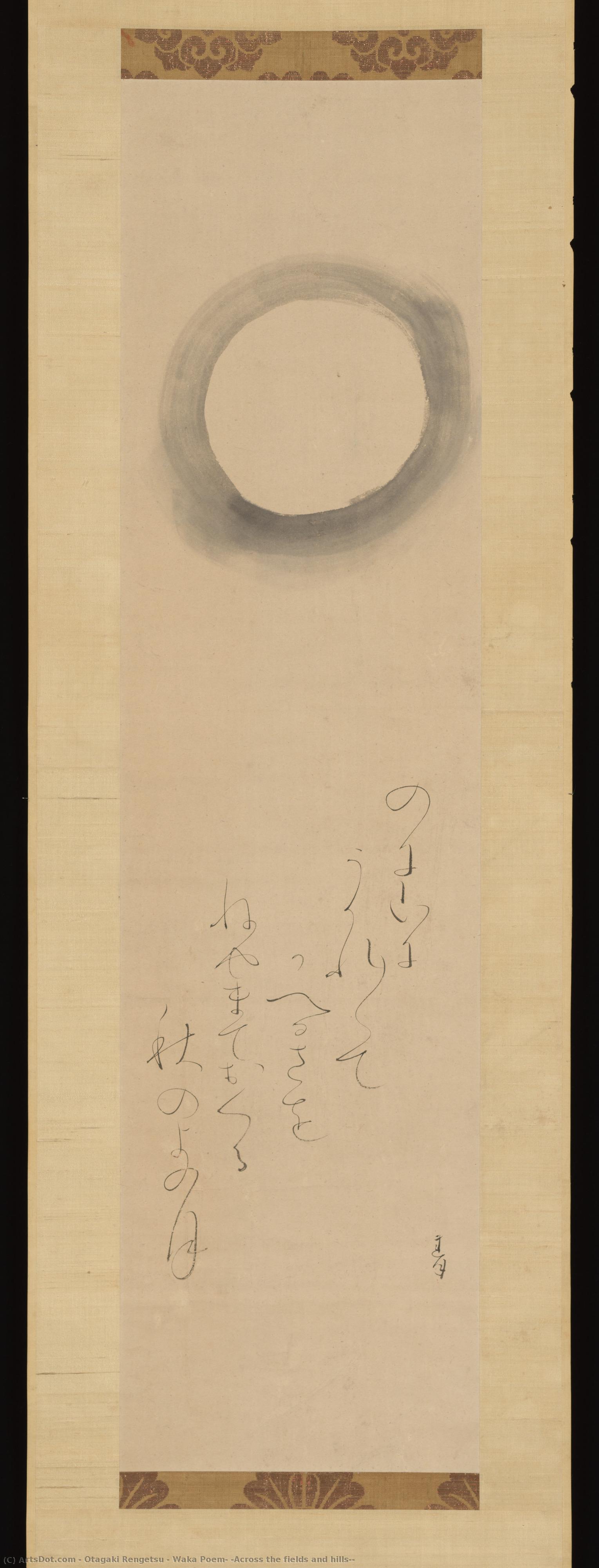
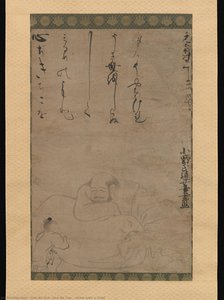
Waka Poem: “Across the fields and hills…”
 801
801 102.0cm x 26.0cm
 Ver más
Adquiera una imagen digital de alta resolución y optimizada, muy superior a la vista previa en línea.
Cada archivo es preparado meticulosamente por nuestros especialistas internos mediante el uso de herramientas avanzadas y un experto retoque manual. Nos aseguramos de que cada imagen posea una claridad excepcional, una precisión cromática impecable y un detalle minucioso.
El archivo final se entrega por correo electrónico en un plazo de 72 horas, optimizado para su uso inmediato en entornos profesionales, editoriales y de impresión. Esta es la misma calidad en la que confían los estudios de diseño, las editoriales y las galerías de primer nivel.
Imagen Digital
Descarga un archivo de alta resolución para exhibición personal, impresión y proyectos creativos. ( Cambiar a Impresión Comprar pintura hecha a mano)
Incluido en cada pedido de imágenes digitales
Entrega digital experta, garantizada.
Al elegir ArtsDot.com, no solo está adquiriendo una imagen; está recibiendo una obra de arte digital mejorada profesionalmente, elaborada con precisión y respaldada por una garantía de satisfacción. Esto es todo lo que incluye su pedido, automáticamente:

Entrega rápida por email
Recibirá su archivo de imagen digital en alta resolución por correo electrónico en un plazo de 72 horas tras realizar su pedido, listo para su uso inmediato.

Archivo digital optimizado por IA
Su obra de arte se optimiza profesionalmente mediante herramientas avanzadas de IA y edición manual, garantizando el máximo detalle, claridad y precisión cromática.

Reenvío gratuito de por vida
¿Has borrado o perdido tu archivo por error? No te preocupes: te lo volveremos a enviar en cualquier momento, sin coste adicional.

Sin gastos de importación, siempre
Disfrute de su obra de arte al instante sin aduanas, aranceles ni gastos de envío; las descargas digitales siempre están libres de impuestos.

Garantía de fidelidad de color
Garantizamos que su imagen digital refleje los colores originales con la mayor fidelidad posible, mediante el uso de herramientas profesionales y gestión del color.

Garantía de satisfacción de 100 días
Si no está satisfecho con su imagen digital, la revisaremos o le reembolsaremos el 100% en un plazo de 100 días, sin preguntas.

100% Garantía de devolución de dinero
¿No está satisfecho? Obtenga un reembolso completo dentro de los 100 días posteriores a la recepción de su archivo digital, sin preguntas.

Descuentos por pedidos grandes
Compra 3 imágenes, ahorra 10% - Compra 5, ahorra 15% - Compra 10+, ahorra 20%. Ideal para proyectos creativos, galerías y agencias.
Introduction to Otagaki Rengetsu
Otagaki Rengetsu, born in 1806, was a Japanese Buddhist nun who is better remembered as one of the foremost waka poets of the nineteenth century. She was also an ink painter, skilled calligrapher, and prolific potter who inscribed poems into ceramic teaware. Her life was marked by tragedy and hardship, but she persevered to become a respected artist and poet.The Painting "Waka Poem: 'Across the Fields and Hills...'"
This painting is an excellent example of Rengetsu's calligraphy skills. The waka poem, written in flowing script, reads: "Across the fields and hills,/The wind carries the scent/Of cherry blossoms./In the heart of spring,/I long for you." Rengetsu's calligraphy is simple yet elegant, with each character carefully executed. The poem itself is a beautiful expression of longing and desire, capturing the essence of spring in just a few lines.The Art of Calligraphy
Calligraphy has been an important art form in Japan for centuries. It combines the beauty of writing with the expressiveness of painting, resulting in a unique and powerful medium. Rengetsu's calligraphy is particularly noteworthy for its simplicity and elegance. She was able to convey complex emotions with just a few strokes of her brush, making her work both accessible and deeply moving.Rengetsu's Legacy
Today, Rengetsu's work is highly sought after by collectors and art enthusiasts around the world. Her paintings and calligraphy are celebrated for their beauty and emotional depth, and her legacy as an artist and poet continues to inspire new generations of artists.Conclusion
The painting "Waka Poem: 'Across the Fields and Hills...'" is a beautiful example of Otagaki Rengetsu's calligraphy skills. It captures the essence of spring in just a few lines, and serves as a testament to Rengetsu's talent as an artist and poet. If you're interested in learning more about Rengetsu or exploring her work further, be sure to check out our collection of hand-made oil painting reproductions at ArtsDot.com.References
Obras relacionadas




Biografía del artista
Ōtagaki Rengetsu: A Life Woven in Ink and Clay
Ōtagaki Rengetsu (1791-1875) remains a singular figure in Japanese art history, an enigma wrapped in the serene beauty of her waka poetry and the understated elegance of her pottery. More than just a nun, a poet, or a potter, she was a confluence of disciplines—a warrior’s daughter raised in the refined traditions of Kyoto, a Buddhist practitioner who found solace and expression through art, and a remarkably perceptive observer of nature. Her life, marked by profound loss and quiet resilience, shaped an artistic vision that continues to resonate with its simplicity, depth, and profound connection to the natural world.
Born Nobu into a family steeped in samurai tradition—her father a military attendant for the Iga clan—Rengetsu’s early life was far from the contemplative existence she would later embrace. She was adopted by the Ōtagaki family, becoming a lady-in-waiting at Kameyama Castle at the tender age of eight. This period instilled in her a rigorous education encompassing courtly manners, martial arts (including jujutsu and swordsmanship), calligraphy, flower arranging, and the intricacies of tea ceremony—skills that would later inform both her poetry and her ceramics. Tragedy struck early; she lost her adoptive mother and stepbrother, followed by the deaths of her own children, leaving her a solitary figure amidst the bustling world of Kyoto.
The Path to Monastic Life and Artistic Flourishing
In 1815, Rengetsu entered the Chion-in temple as a nun, taking the name “Rengetsu,” meaning “Lotus Moon.” This transition marked a profound shift in her life, offering her refuge from personal sorrow and a framework for dedicating herself to spiritual practice. Initially, her monastic role was limited, facing restrictions common to women within Buddhist communities at the time. However, she persevered, seeking out opportunities to hone her artistic skills and engage with other artists, notably Tomioka Tessai, a renowned potter who became a mentor and friend. It was during this period that Rengetsu’s distinctive style began to emerge—a quiet confidence in her brushstrokes, an appreciation for the subtle textures of clay, and a deep understanding of the interplay between form and emptiness.
A Poet of Quiet Contemplation
Rengetsu's waka poetry is perhaps her most celebrated legacy. Her poems, often written on simple slips of paper, are characterized by their understated elegance, profound observations of nature, and a subtle undercurrent of melancholy. Unlike the elaborate courtly verse prevalent at the time, Rengetsu’s work eschewed ornate language and complex metaphors, instead focusing on direct sensory experience—the rustling of leaves, the flight of birds, the changing seasons. Her poems are imbued with a sense of quiet contemplation, reflecting her own journey through loss and acceptance. Themes of impermanence, solitude, and the beauty of simplicity permeate her work, offering glimpses into a soul deeply attuned to the rhythms of life and death.
Rengetsu Ware: A Ceramic Legacy
Alongside her poetry, Rengetsu was a remarkably skilled potter, producing what is now known as “Rengetsu ware.” This distinctive style of ceramics—primarily focused on *sumi-e* inspired landscapes—is characterized by its minimalist aesthetic, use of rough, unglazed clay, and subtle variations in texture. Unlike the polished perfection of many other ceramic styles, Rengetsu ware embraces imperfections, celebrating the natural qualities of the material. Her pieces often depict scenes of nature—grasses, reeds, stones, and water—rendered with a delicate touch and an intuitive understanding of form. The absence of glaze allows the earthy tones of the clay to shine through, creating a tactile and visually arresting effect.
Legacy and Enduring Influence
Ōtagaki Rengetsu’s impact extends far beyond her individual artistic achievements. She defied societal expectations by pursuing both art and spiritual practice with unwavering dedication—a rare combination in 19th-century Japan. Her work continues to inspire artists and scholars today, offering a powerful example of how creativity can emerge from adversity and how art can serve as a means of profound self-expression. The rediscovery of her poetry and ceramics in the late 20th century has cemented her place as one of Japan’s most important female artists, a testament to the enduring power of her vision—a vision rooted in simplicity, nature, and the quiet beauty of the human spirit.
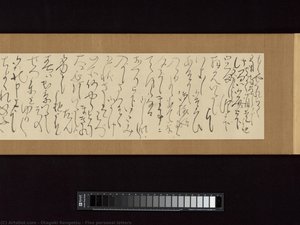
ōtagaki rengetsu
1791 - 1871
Breves datos
- Artistic Movement Or Style: Buddhist art, waka poetry, Rengetsu ware
- Artists Or Movements Influenced By This Artist: ['Tomioka Tessai']
- Artists Who Influenced This Artist:
- Ozawa Roan
- Ueda Akinari
- Date Of Birth: Feb 10, 1791
- Date Of Death: Dec 10, 1875
- Full Name: Ōtagaki Rengetsu
- Nationality: Japanese
- Notable Artworks:
- Purification Rite
- When the nightingale returns.
- Deutzia Crenata
- Place Of Birth: Kyoto, Japan