 Ver en contexto
 Enviar
 Compartir
 Detalles

 Descargar
 Similares
 Radiografía
 Presentación de diapositivas
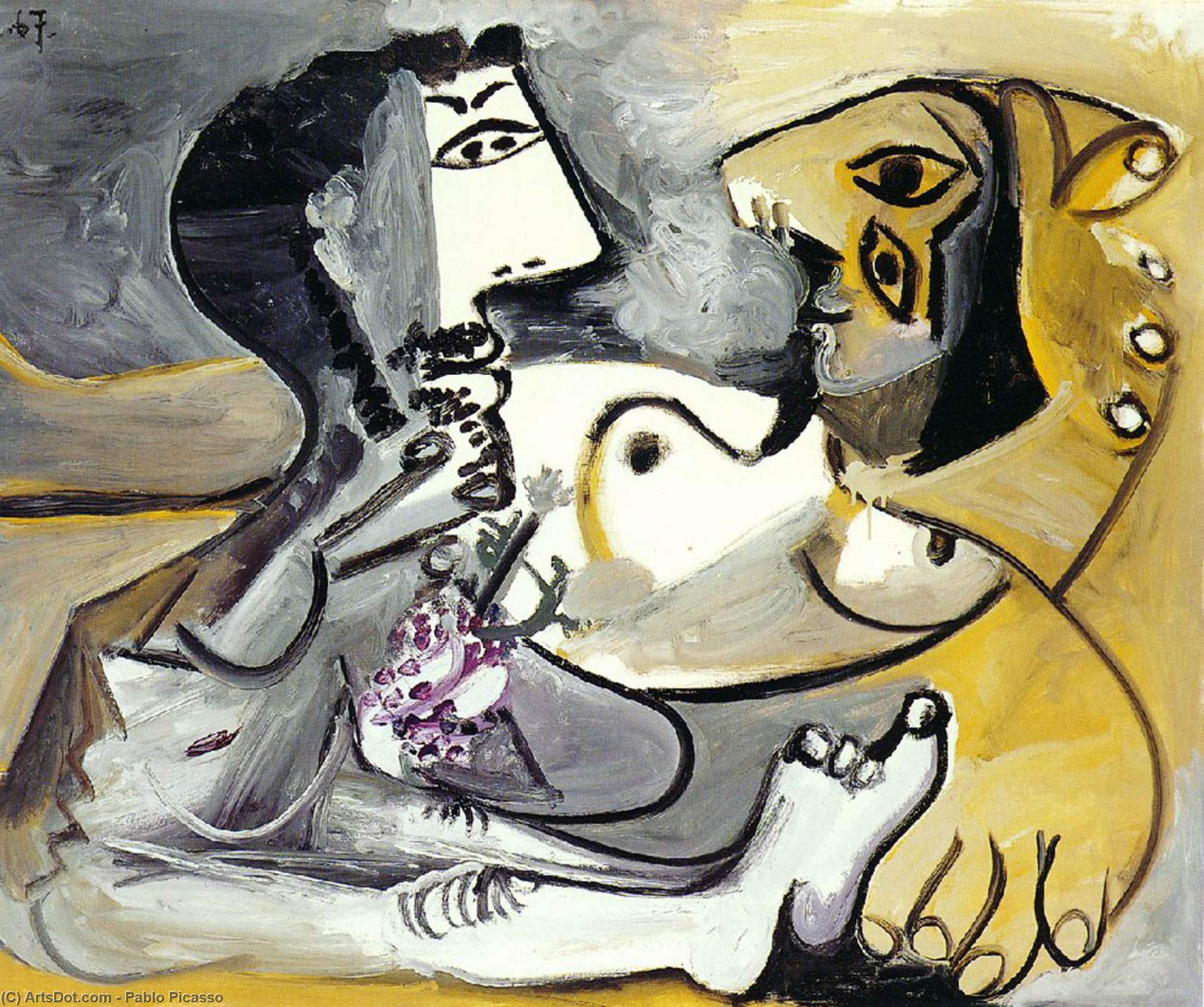
Homme et femme
 Acrílico sobre lienzo
- Arte de pared
- Surrealism
 1967
1967- Moderno
 114.0 x 146.0 cm
 Ver más
Reproducción al óleo hecha a mano
Óleo sobre lienzo pintado a mano en el tamaño y marco de su elección, realizado por encargo por nuestros artistas. ( Comprar impresión Comprar imagen)




P118B $10

P118H $10

P118W $10

P438Z $10

P508JH $12

P508YH $12

P805H $10

P805Z $10

P919BZ $10

P919G $10

P919XJ $10

P959ZH $10

P968JZ $12

W106C $8

W218G $10

W218JH $8

W218Y $10

W307PJ $10

W316G $10

W316PJ $8

W316Y $10

W398PJ $8

W4111J $10

W500HY $15

W500JH $15

W692G $12

W849H $8

W940BG $15

W953PJ $8




Elija entre nuestros tamaños predefinidos que respetan las proporciones originales de la obra.

Puede ingresar sus propias dimensiones para adaptarse a un marco o espacio específico. Si el tamaño seleccionado no coincide con las proporciones de la imagen original, recortaremos la obra o extenderemos la pintura con elementos adicionales pintados a mano. Se le enviará una maqueta digital para su aprobación antes de comenzar la producción.
Tenga en cuenta que la vista previa en pantalla no refleja el recorte o la extensión reales. Solo la maqueta mostrará con precisión la composición final.
Si bien existen tamaños personalizados, recomendamos seleccionar una dimensión de la lista predefinida para preservar las proporciones originales.
Tras realizar el pedido, el equipo de ArtsDot.com enviará un correo electrónico al cliente para solicitar instrucciones y proporcionarle una vista previa del boceto.
Envío a todo el mundo () en 3-4 semanas en lugar de las 5 semanas estándar. (26 agosto). Sin comprometer la calidad.

Envío exprés gratuito a todo el mundo

Lienzo de lino de alta calidad

Seguro de envío total

Garantía de reembolso de impuestos aduaneros

Garantía de fidelidad cromática exacta

Política de devolución de 60 días (solo por defectos)

Garantía de devolución del 100% del dinero

Descuento por cantidad
 La opción de vidrio solo está disponible en tamaños inferiores a 110 cm.

Homme et femme
Técnica de reproducción
Dimensiones de la reproducción
-


Precio total final
$ 263
Descripción de la obra
Pablo Picasso: A Revolutionary Artist
Pablo Diego José Francisco de Paula Juan Nepomuceno María de los Remedios Cipriano de la Santísima Trinidad Ruiz y Picasso (25 October 1881 – 8 April 1973) was a Spanish painter, sculptor, printmaker, ceramicist, and theatre designer who spent most of his adult life in France. One of the most influential artists of the 20th century, he is known for co-founding the Cubist movement, the invention of constructed sculpture, the co-invention of collage, and for the wide variety of styles that he helped develop and explore. Among his most famous works are the proto-Cubist Les Demoiselles d'Avignon (1907) and the anti-war painting Guernica (1937), a dramatic portrayal of the bombing of Guernica by German and Italian air forces during the Spanish Civil War. Beginning his formal training under his father José Ruiz y Blasco aged seven, Picasso demonstrated extraordinary artistic talent from a young age, painting in a naturalistic manner through his childhood and adolescence. During the first decade of the 20th century, his style changed as he experimented with different theories, techniques, and ideas. After 1906, the Fauvist work of the older artist Henri Matisse motivated Picasso to explore more radical styles, beginning a fruitful rivalry between the two artists, who subsequently were often paired by critics as the leaders of modern art. Picasso's output, especially in his early career, is often periodized. While the names of many of his later periods are debated, the most commonly accepted periods in his work are the Blue Period (1901–1904), the Rose Period (1904–1906), the African-influenced Period (1907–1909), Analytic Cubism (1909–1912), and Synthetic Cubism (1912–1919), also referred to as the Crystal period. Much of Picasso's work of the late 1910s and early 1920s is in a neoclassical style, and his work in the mid-1920s often has characteristics of Surrealism. His later work often combines elements of his earlier styles.Les Demoiselles d'Avignon: The Genesis of Cubism
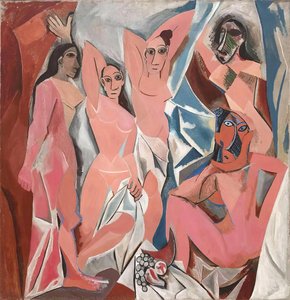
Les Demoiselles d’Avignon (Spanish: Las señoritas de Avignon), painted in 1907, stands as a pivotal moment in art history—the catalyst for the birth of Cubism. Picasso collaborated closely with Georges Braque on this groundbreaking piece, marking the beginning of their artistic partnership and fundamentally altering the visual language of painting. The canvas depicts five nude female figures arranged in an unconventional tableau vivant, or staged scene, inspired by African masks and Iberian sculpture. Picasso’s deliberate fragmentation of form—breaking down objects into geometric planes—challenged traditional perspective and representation, paving the way for a revolutionary new aesthetic.The Influence of Henri Matisse
Picasso's artistic trajectory was profoundly shaped by Henri Matisse, whose Fauvist style – characterized by bold colors and simplified forms – served as an impetus for Picasso’s own stylistic explorations. Matisse’s rejection of academic conventions encouraged Picasso to abandon naturalistic depictions in favor of expressive abstraction, propelling him toward the avant-garde movements that would dominate the decade. The rivalry between Picasso and Matisse fueled artistic innovation and cemented their place as titans of modern art.Guernica: A Testament to Anti-War Sentiment
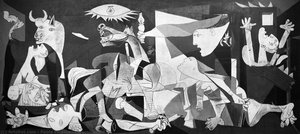
Painted in 1937, Guernica is arguably Picasso’s most iconic work—a monumental black, white, and gray mural commemorating the bombing of Guernica during the Spanish Civil War. Commissioned by the Spanish Republican government for the Paris Exposition Internationale, Guernica embodies Picasso's unwavering commitment to pacifism and his condemnation of violence and oppression. The painting employs a symbolic language—featuring distorted figures representing suffering, grief, and terror—to convey the horrors of war without resorting to explicit imagery. It remains a powerful visual statement against brutality and injustice, continuing to resonate with audiences worldwide.The Berardo Collection Museum: Exploring Surrealist Masterpieces
Located in Lisbon, Portugal, The Berardo Collection Museum houses an impressive assemblage of modern and contemporary art, showcasing the breadth of artistic experimentation throughout the 20th century. Picasso’s influence extends beyond Cubism; his surrealist explorations are represented prominently within the museum's holdings. Visitors can immerse themselves in a captivating journey through diverse artistic movements—from Dada to Surrealism—encountering iconic artworks that redefine our understanding of visual expression and cultural significance.Pablo Picasso: A Legacy Enduring Through Time
Pablo Picasso’s enduring legacy rests upon his unparalleled ability to transform artistic conventions, pushing boundaries and redefining the possibilities of representation. His prolific output spanned decades—from early explorations in realism to groundbreaking innovations in Cubism and Surrealism—establishing him as one of the most influential artists of all time. For art enthusiasts eager to delve deeper into Picasso’s oeuvre, The Berardo Collection Museum offers a comprehensive guide to his artistic achievements, inviting contemplation and appreciation for his transformative contribution to the history of art.Pablo Picasso's Naked Man and Woman
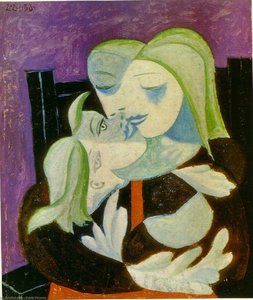
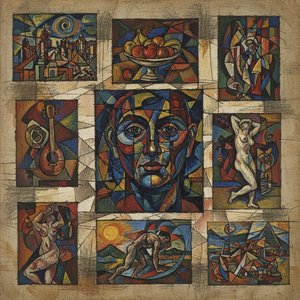
Pablo Picasso's Naked Man and Woman (1967) is a captivating example of Picasso’s surrealistic style, showcasing his innovative approach to art. The painting features two naked figures, one male and the other female, in a surrealistic setting. The man appears to be holding or kissing the woman's face as they both lay down together. The woman has a flower in her hand, adding an interesting detail to the scene. In addition to the main subjects, there are several smaller figures scattered throughout the painting, possibly representing other people or elements from the artist’s imagination. These figures add depth and complexity to the overall composition of the artwork.Exploring Surrealist Art
For art enthusiasts looking to explore more surrealist masterpieces, Pablo Picasso's Naked Man and Woman is a must-see. The Berardo Collection Museum in Lisbon, Portugal, is home to an impressive collection of modern and contemporary art. The museum features works from various artistic movements, including Surrealism, which is represented by artists like Picasso. Visit our website to explore more surrealist artworks and learn about the artists who created them.Pablo Picasso's Naked man and woman
- Pablo Picasso: A renowned Spanish painter, sculptor, printmaker, ceramicist, and theatre designer.
- Les Demoiselles d'Avignon: A seminal work by Picasso that laid the foundation for cubism.
- The Berardo Collection Museum: A museum in Lisbon, Portugal, featuring a comprehensive collection of modern and contemporary art.
The Berardo Collection Museum (Portugal) - A Comprehensive Guide
Pablo Picasso Photo Description: The painting is a surrealistic artwork featuring two naked figures, one male and the other female. The man appears to be holding or kissing the woman's face as they both lay down together. The woman has a flower in her hand, adding an interesting detail to the scene. In addition to the main subjects, there are several smaller figures scattered throughout the painting, possibly representing other people or elements from the artist’s imagination. These figures add depth and complexity to the overall composition of the artwork. Size: 114 x 146 cm Date: 1967 ARTIST INFORMATION: ================== Artist: Pablo Picasso Birth Year: 1881 Death Year: 1973 Birth City: Malaga Birth Country: Spain Biography:
Pablo Picasso: A Revolutionary Artist
## Early Life and Training (1881-1904)- Born on October 25, 1881, in Málaga, Spain, Pablo Ruiz y Picasso demonstrated artistic talent from a very young
Obras relacionadas
Biografía del artista
Pablo Picasso: Un Artista Revolucionario
Vida Temprana y Formación (1881-1904)
- Nacido el 25 de octubre de 1881 en Málaga, España, Pablo Ruiz y Picasso demostró un talento artístico desde muy temprana edad.
- Su padre, José Ruiz y Blasco, era profesor de arte quien proporcionó a su hijo una formación inicial. Se dice que las primeras palabras de Picasso fueron “piz, piz” – intentando decir ‘lápiz’.
- Picasso rápidamente superó las habilidades de su padre, mostrando una habilidad notable en representaciones naturalistas.
- La familia se mudó a A Coruña y luego a Barcelona tras la trágica pérdida de la hermana de Picasso.
- En Barcelona, asistió a la Escuela de Bellas Artes pero a menudo chocaba con las instrucciones académicas tradicionales. Estudió brevemente en la Real Academia de San Fernando en Madrid, encontrándola sofocante y prefiriendo estudiar a los maestros como Velázquez y Goya por su cuenta.
Los Períodos Azul y Rosa (1901-1906)
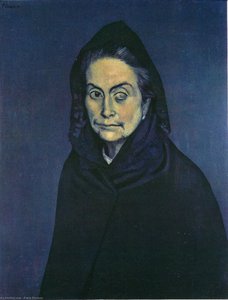
- El Período Azul (aproximadamente 1901-1904) se caracteriza por pinturas sombrías dominadas por tonos de azul y verde azulado.
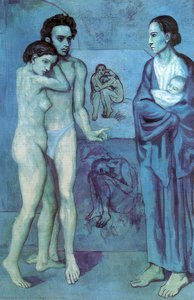
- Estas obras a menudo representan figuras marginadas – mendigos, ciegos, prostitutas – reflejando melancolía y comentario social. Ejemplos clave incluyen La Vie (1903) y El Guitarrista Viejo (1903-1904).
- Después de esto, surgió el Período Rosa (1904-1906) con tonos más cálidos – rosas, naranjas y rojos.
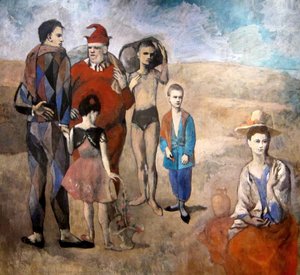
- Este período refleja una perspectiva más optimista, a menudo representando artistas de circo, harlequines y acróbatas. Familia de Saltimbanques (1905) ejemplifica este cambio.
Los Años Revolucionarios: Cubismo y Más Allá (1907-1919)
- 1907 marcó un momento decisivo con Les Demoiselles d'Avignon, influenciado por la escultura iberica y las máscaras africanas. Esta pintura rompió con la perspectiva tradicional, allanando el camino para el Cubismo.
- Trabajando en estrecha colaboración con Georges Braque, Picasso cofundó el Cubismo, alterando fundamentalmente la forma en que los artistas representaban la realidad.
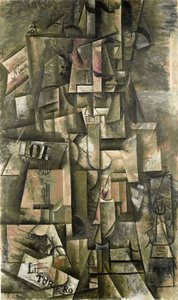
- Cubismo Analítico (1909-1912) presentaba formas fragmentadas, colores apagados y una disección de objetos en formas geométricas.
- Cubismo Sintético (1912-1919) incorporó elementos de collage – recortes de periódicos, retazos de tela – para crear superficies texturizadas y nuevas capas visuales.
Neoclasicismo y Surrealismo (Década de 1920 - Década de 1930)
- La década de 1920 vio a Picasso explorar estilos neoclásicos con figuras monumentales que enfatizaban las formas clásicas.
- También se involucró con el movimiento surrealista, aunque nunca se alineó completamente con sus principios. Su obra combinaba estilos anteriores con imágenes surrealistas y perspectivas distorsionadas.
Años Posteriores y Legado (1940-1973)
- Durante la Segunda Guerra Mundial, Picasso permaneció en Francia, produciendo declaraciones anti-guerra poderosas como Guernica (1937), una respuesta visceral al bombardeo de Guernica durante la Guerra Civil Española.
- Guernica se convirtió en un símbolo perdurable del horror de la guerra y sigue siendo una de sus obras más celebradas.
- A lo largo de las décadas de 1950 y 60, Picasso continuó experimentando con diversos medios – cerámica, escultura, grabado – demostrando una versatilidad notable.
- Se casó con Jacqueline Roque en 1961. Murió el 8 de abril de 1973 en Mougins, Francia.
Influencias y Significado Histórico
- El desarrollo artístico de Picasso estuvo moldeado por los maestros españoles como Velázquez y Goya, la escultura iberica, el arte africano y Henri Matisse.
- Su impacto en el arte del siglo XX es inmenso. Co-fundó el Cubismo, pionero en el collage y la escultura construida, y desafió constantemente las convenciones artísticas.
- La experimentación incansable de Picasso rediseñó el arte moderno y continúa inspirando a los artistas hoy en día.
- Su prolífica producción – estimada en más de 50.000 obras – consolida su posición como uno de los artistas más importantes e influyentes de la historia.
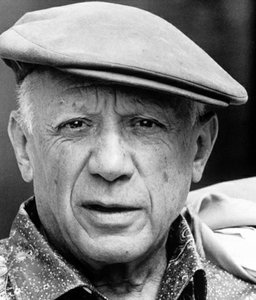
Pablo Picasso
1881 - 1973 , España
Datos clave
- Artistas Que Influyeron:
- Velázquez
- Goya
- Henri Matisse
- Fecha De Muerte: 8 de abril de 1973
- Fecha De Nacimiento: 25 de octubre de 1881
- Influencia En Artistas: ['Numerosos artistas modernos']
- Lugar De Nacimiento: Málaga, España
- Movimiento Artístico: Cubismo, Surrealismo
- Nacionalidad: Española
- Nombre Completo: Pablo Ruiz y Picasso
- Obras Notables:
- Guernica
- La Vie
- El Guitarrista Viejo
- Familia de Saltimbanques
- Les Demoiselles d'Avignon
Artículos relacionados
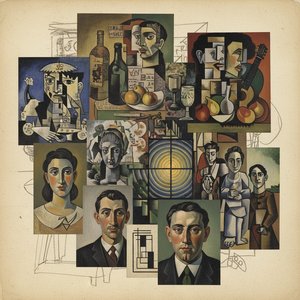
Los 10 Maestros del Cubismo: Obras que Revolucionaron el Arte | ArtsDot
Descubre los 10 lienzos cubistas que revolucionaron el arte moderno. Explora las obras maestras de Picasso, Braque y Gris en ArtsDot.com. Reproducciones de alta calidad para tu hogar.
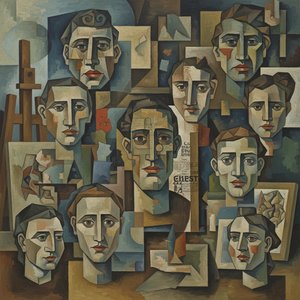
Los 10 Retratos Cubistas Esenciales que Revolucionaron el Arte Moderno | ArtsDot
Descubre los 10 retratos cubistas esenciales de Picasso, Braque y otros maestros. Explora la historia, técnica y significado de este revolucionario movimiento artístico. Encuentra reproducciones de arte exclusivas en ArtsDot.com.
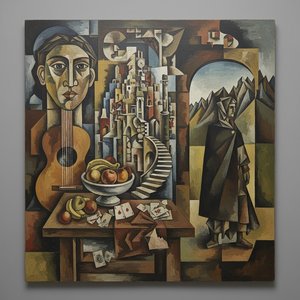
Los 10 Maestros del Cubismo Expresionista: Obras que Transformaron el Arte | ArtsDot
Descubre los 10 lienzos cubistas más influyentes de Picasso, Braque y otros maestros. Explora la historia, técnica y significado del movimiento artístico que revolucionó el arte moderno. Reproducciones de alta calidad en ArtsDot.com.
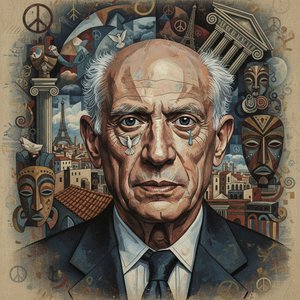
Pablo Picasso: A Revolutionary Vision – Cubism, Symbolism & Enduring Legacy
Explore the revolutionary art of Pablo Picasso with ArtsDot.com. Discover Cubism's origins, symbolism in his masterpieces & investment insights for collectors. Expert appraisal & custom reproductions available.
Cubismo Expresionista: 10 Obras Maestras que Transformaron el Arte | ArtsDot
Descubre las 10 obras maestras del Cubismo Expresionista con ArtsDot. Explora la historia de Picasso, Braque y otros artistas clave. Encuentra reproducciones de arte exclusivas para transformar tu hogar. ¡Explora la colección completa en ArtsDot.com!