


 Vista previa
 Compartir
 Compartir
 Ver detalles

 Descargar
 Ver similares
 Radiografía
 Presentación de diapositivas
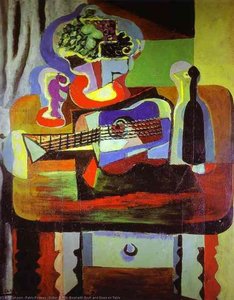
Pablo Picasso - Poissons et bouteilles


 Leer más
Adquiera una imagen digital de alta resolución y optimizada, muy superior a la vista previa en línea.
Cada archivo es preparado meticulosamente por nuestros especialistas internos mediante el uso de herramientas avanzadas y un experto retoque manual. Nos aseguramos de que cada imagen posea una claridad excepcional, una precisión cromática impecable y un detalle minucioso.
El archivo final se entrega por correo electrónico en un plazo de 72 horas, optimizado para su uso inmediato en entornos profesionales, editoriales y de impresión. Esta es la misma calidad en la que confían los estudios de diseño, las editoriales y las galerías de primer nivel.
Imagen Digital
Descarga un archivo de alta resolución para exhibición personal, impresión y proyectos creativos. ( Pedir impresión Encargar reproducción pintada a mano)
Incluido en cada compra de imágenes digitales
Entrega digital experta, garantizada.
Al elegir ArtsDot.com, no solo está adquiriendo una imagen; está recibiendo una obra de arte digital mejorada profesionalmente, elaborada con precisión y respaldada por una garantía de satisfacción. Esto es todo lo que incluye su pedido, automáticamente:

Entrega rápida por email
Recibirá su archivo de imagen digital en alta resolución por correo electrónico en un plazo de 72 horas tras realizar su pedido, listo para su uso inmediato.

Archivo digital optimizado por IA
Su obra de arte se optimiza profesionalmente mediante herramientas avanzadas de IA y edición manual, garantizando el máximo detalle, claridad y precisión cromática.

Reenvío gratuito de por vida
¿Has borrado o perdido tu archivo por error? No te preocupes: te lo volveremos a enviar en cualquier momento, sin coste adicional.

Sin gastos de importación, siempre
Disfrute de su obra de arte al instante sin aduanas, aranceles ni gastos de envío; las descargas digitales siempre están libres de impuestos.

Garantía de precisión de color
Garantizamos que su imagen digital refleje los colores originales con la mayor fidelidad posible, mediante el uso de herramientas profesionales y gestión del color.

Garantía de satisfacción de 60 días
Si no está satisfecho con su imagen digital, la revisaremos o le reembolsaremos el 100% en un plazo de 60 días, sin preguntas.

100% Garantía de devolución de dinero
¿No está satisfecho? Obtenga un reembolso completo dentro de los 60 días posteriores a la recepción de su archivo digital, sin necesidad de explicaciones.

Descuentos por volumen
Compra 3 imágenes, ahorra 10% - Compra 5, ahorra 15% - Compra 10+, ahorra 20%. Ideal para proyectos creativos, galerías y agencias.
Descripción del coleccionable
Pablo Picasso: A Revolutionary Artist
Pablo Diego José Francisco de Paula Juan Nepomuceno María de los Remedios Cipriano de la Santísima Trinidad Ruiz y Picasso (25 October 1881 – 8 April 1973) was a Spanish painter, sculptor, printmaker, ceramicist, and theatre designer who spent most of his adult life in France. One of the most influential artists of the 20th century, he is known for co-founding the Cubist movement, the invention of constructed sculpture, the co-invention of collage, and for the wide variety of styles that he helped develop and explore. Among his most famous works are the proto-Cubist Les Demoiselles d'Avignon (1907) and the anti-war painting Guernica (1937), a dramatic portrayal of the bombing of Guernica by German and Italian air forces during the Spanish Civil War. Beginning his formal training under his father José Ruiz y Blasco aged seven, Picasso demonstrated extraordinary artistic talent from a young age, painting in a naturalistic manner through his childhood and adolescence. During the first decade of the 20th century, his style changed as he experimented with different theories, techniques, and ideas. After 1906, the Fauvist work of the older artist Henri Matisse motivated Picasso to explore more radical styles, beginning a fruitful rivalry between the two artists, who subsequently were often paired by critics as the leaders of modern art. Picasso's output, especially in his early career, is often periodized. While the names of many of his later periods are debated, the most commonly accepted periods in his work are the Blue Period (1901–1904), the Rose Period (1904–1906), the African-influenced Period (1907–1909), Analytic Cubism (1909–1912), and Synthetic Cubism (1912–1919). Much of Picasso's work in the late 1910s and early 1920s is in a neoclassical style, and his work in the mid-1920s often has characteristics of Surrealism. His later work often combines elements of his earlier styles. Exceptionally prolific throughout the course of his long life, Picasso achieved universal renown and immense fortune for his revolutionary artistic accomplishments, and became one of the best-known figures in 20th-century art. He died peacefully at Mougins, France, on April 8, 1973, surrounded by his family.The Blue Period (1901–1904)
The Blue Period is characterized by somber hues—primarily shades of blue and indigo—reflecting Picasso’s emotional turmoil following the death of his younger sister Conchita from diphtheria. During this time, he explored themes of poverty, despair, and loneliness, often depicting marginalized figures such as beggars and prostitutes. Notable paintings from this period include “The Old Guitarist” (1903) and “La Vie”—a poignant depiction of a woman carrying a child—which convey profound sadness and vulnerability. Picasso’s artistic vision during the Blue Period was deeply influenced by Symbolism, particularly Edvard Munch's "The Scream," which captured the psychological anxieties of the era.The Rose Period (1904–1906)
A shift in mood occurred as Picasso moved into the Rose Period, marked by warmer colors—rose pinks, oranges, and yellows—expressing a newfound optimism and tenderness. This period coincided with his relationship with Fernande Olivier, whom he married in 1906. The subject matter of paintings from this era often featured portraits of women and musicians, portraying them with grace and elegance. “Girl Before Mirror” (1905) exemplifies the Rose Period’s aesthetic sensibilities, capturing a serene moment of contemplation. Picasso's exploration of human emotion continued to evolve during this time, reflecting his growing understanding of love and beauty.The African-Influenced Period (1907–1909)
Picasso’s artistic trajectory took another decisive turn with the influence of African tribal art—particularly sculptures from Gabon and Nigeria—which captivated him during a visit to ethnographic museums in Paris. This fascination spurred him to experiment with geometric forms, fragmented perspectives, and simplified representations, laying the groundwork for Analytic Cubism. “Les Demoiselles d’Avignon” (1907), considered a pivotal work of art history, embodies this stylistic innovation, challenging conventional notions of realism and introducing radical new visual concepts. Picasso's artistic vision during this period was profoundly impacted by Marcel Duchamp's conceptual art, which questioned the very definition of art itself.Analytic Cubism (1909–1912)
Analytical Cubism represents a breakthrough in Picasso’s artistic experimentation, characterized by a meticulous dissection of objects into interlocking planes and facets—resulting in a complex interplay of light and shadow. The palette was subdued, consisting primarily of browns, grays, and ochres, reflecting the artist's desire to strip away illusionistic color and explore fundamental geometric principles. “Portrait of Gertrude Stein” (1908) exemplifies Analytical Cubism’s stylistic features, demonstrating Picasso’s mastery of spatial representation and his commitment to artistic innovation. The technique involved a painstaking process of fracturing objects into multiple viewpoints simultaneously—creating an unsettling yet intellectually stimulating visual experience for the viewer.Synthetic Cubism (1912–1919)
Synthetic Cubism marked a departure from Analytical Cubism’s monochromatic palette and fragmented planes, incorporating collage elements—such as newspaper clippings and fabric scraps—to enrich the textural surface of paintings. Picasso's artistic vision during this period was influenced by Futurism, which celebrated speed, dynamism, and technological progress. “Still Life with Guitar” (1913) exemplifies Synthetic Cubism’s aesthetic sensibilities, showcasing Picasso’s inventive use of color and texture—creating a vibrant visual tapestry that defies conventional categorization. The technique involved assembling fragments of different materials onto a canvas—resulting in an unexpected fusion of artistic styles and conceptual ideas. ## Style and Technique Picasso's use of color in “Still Life with Fish and Bottles” is noteworthy. The painting features muted colors such as brown, gray, and blue, which create a sense of harmony and balance. The use of these colors also highlights the artist’s mastery of light and shadow, which adds depth and dimension to the work. This style is reminiscent of his earlier works, such as “Les Demoiselles d’Avignon,” which marked the beginning of Cubism. Picasso's meticulous attention to detail—combined with his daring experimentation—established him as one of the most influential artists of the 20th century. ## Significance in Cubism and Modern Art Picasso’s contributions to Cubism were instrumental in shaping the movement’s development. His unique style, which emphasized geometric shapes and fragmented images, challenged traditional notions of perspective and representation. This approach had a profound impact on modern art, influencing not only painting but also sculpture, literature, and architecture. The Museo Reina Sofía in Fontainebleau, France, is home to several of Picasso's works, including “Still Life with Fish and Bottles.” ## Guernica (1937) Guernica stands as Picasso’s most enduring testament to his artistic vision—a monumental painting that captures the horror and trauma of the bombing of Guernica during the Spanish Civil War. Executed in stark monochrome—black, white, and gray—the artwork conveys a visceral sense of suffering and despair—reflecting Picasso's unwavering commitment to social justice and human compassion. The composition is deliberately unsettling—featuring distorted figures and fragmented perspectives—creating an emotionally charged visual experience for the viewer. Guernica’s enduring influence on art history stems from its masterful depiction of human emotion—its unflinching portrayal of violence—and its symbolic representation of universal themes—such as grief, terror, and resilience. Picasso's artistic legacy continues to inspire artists and audiences worldwide—solidifying his place among the greatest masters of modern art."Obras relacionadas
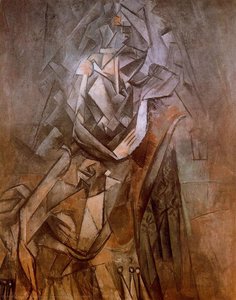
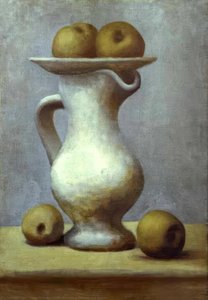
Biografía del artista
Pablo Picasso: Un Artista Revolucionario
Vida Temprana y Formación (1881-1904)
- Nacido el 25 de octubre de 1881 en Málaga, España, Pablo Ruiz y Picasso demostró un talento artístico desde muy temprana edad.
- Su padre, José Ruiz y Blasco, era profesor de arte quien proporcionó a su hijo una formación inicial. Se dice que las primeras palabras de Picasso fueron “piz, piz” – intentando decir ‘lápiz’.
- Picasso rápidamente superó las habilidades de su padre, mostrando una habilidad notable en representaciones naturalistas.
- La familia se mudó a A Coruña y luego a Barcelona tras la trágica pérdida de la hermana de Picasso.
- En Barcelona, asistió a la Escuela de Bellas Artes pero a menudo chocaba con las instrucciones académicas tradicionales. Estudió brevemente en la Real Academia de San Fernando en Madrid, encontrándola sofocante y prefiriendo estudiar a los maestros como Velázquez y Goya por su cuenta.
Los Períodos Azul y Rosa (1901-1906)
- El Período Azul (aproximadamente 1901-1904) se caracteriza por pinturas sombrías dominadas por tonos de azul y verde azulado.
- Estas obras a menudo representan figuras marginadas – mendigos, ciegos, prostitutas – reflejando melancolía y comentario social. Ejemplos clave incluyen La Vie (1903) y El Guitarrista Viejo (1903-1904).
- Después de esto, surgió el Período Rosa (1904-1906) con tonos más cálidos – rosas, naranjas y rojos.
- Este período refleja una perspectiva más optimista, a menudo representando artistas de circo, harlequines y acróbatas. Familia de Saltimbanques (1905) ejemplifica este cambio.
Los Años Revolucionarios: Cubismo y Más Allá (1907-1919)
- 1907 marcó un momento decisivo con Les Demoiselles d'Avignon, influenciado por la escultura iberica y las máscaras africanas. Esta pintura rompió con la perspectiva tradicional, allanando el camino para el Cubismo.
- Trabajando en estrecha colaboración con Georges Braque, Picasso cofundó el Cubismo, alterando fundamentalmente la forma en que los artistas representaban la realidad.
- Cubismo Analítico (1909-1912) presentaba formas fragmentadas, colores apagados y una disección de objetos en formas geométricas.
- Cubismo Sintético (1912-1919) incorporó elementos de collage – recortes de periódicos, retazos de tela – para crear superficies texturizadas y nuevas capas visuales.
Neoclasicismo y Surrealismo (Década de 1920 - Década de 1930)
- La década de 1920 vio a Picasso explorar estilos neoclásicos con figuras monumentales que enfatizaban las formas clásicas.
- También se involucró con el movimiento surrealista, aunque nunca se alineó completamente con sus principios. Su obra combinaba estilos anteriores con imágenes surrealistas y perspectivas distorsionadas.
Años Posteriores y Legado (1940-1973)
- Durante la Segunda Guerra Mundial, Picasso permaneció en Francia, produciendo declaraciones anti-guerra poderosas como Guernica (1937), una respuesta visceral al bombardeo de Guernica durante la Guerra Civil Española.
- Guernica se convirtió en un símbolo perdurable del horror de la guerra y sigue siendo una de sus obras más celebradas.
- A lo largo de las décadas de 1950 y 60, Picasso continuó experimentando con diversos medios – cerámica, escultura, grabado – demostrando una versatilidad notable.
- Se casó con Jacqueline Roque en 1961. Murió el 8 de abril de 1973 en Mougins, Francia.
Influencias y Significado Histórico
- El desarrollo artístico de Picasso estuvo moldeado por los maestros españoles como Velázquez y Goya, la escultura iberica, el arte africano y Henri Matisse.
- Su impacto en el arte del siglo XX es inmenso. Co-fundó el Cubismo, pionero en el collage y la escultura construida, y desafió constantemente las convenciones artísticas.
- La experimentación incansable de Picasso rediseñó el arte moderno y continúa inspirando a los artistas hoy en día.
- Su prolífica producción – estimada en más de 50.000 obras – consolida su posición como uno de los artistas más importantes e influyentes de la historia.
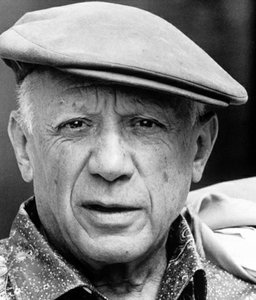
Pablo Picasso
1881 - 1973 , España
Datos clave
- Artistas Que Influyeron:
- Velázquez
- Goya
- Henri Matisse
- Fecha De Muerte: 8 de abril de 1973
- Fecha De Nacimiento: 25 de octubre de 1881
- Influencia En Artistas: ['Numerosos artistas modernos']
- Lugar De Nacimiento: Málaga, España
- Movimiento Artístico: Cubismo, Surrealismo
- Nacionalidad: Española
- Nombre Completo: Pablo Ruiz y Picasso
- Obras Notables:
- Guernica
- La Vie
- El Guitarrista Viejo
- Familia de Saltimbanques
- Les Demoiselles d'Avignon

