 Ver en contexto
 Enviar
 Compartir
 Detalles

 Descargar
 Similares
 Radiografía
 Presentación de diapositivas
Krater Lucano Rosso Figurato


 Ver más
Giclée / Impresión de arte
Impresiones giclée o en lienzo de calidad de museo con producción rápida y opciones de acabado flexibles. ( Comprar pintura hecha a mano Comprar imagen)




P118B $10

P118H $10

P118W $10

P438Z $10

P508JH $12

P508YH $12

P805H $10

P805Z $10

P919BZ $10

P919G $10

P919XJ $10

P959ZH $10

P968JZ $12

W106C $8

W218G $10

W218JH $8

W218Y $10

W307PJ $10

W316G $10

W316PJ $8

W316Y $10

W398PJ $8

W4111J $10

W500HY $15

W500JH $15

W692G $12

W849H $8

W940BG $15

W953PJ $8




Elija entre nuestros tamaños predefinidos que respetan las proporciones originales de la obra.

Puede introducir sus propias dimensiones para adaptarse a un marco o espacio específico. Si el tamaño seleccionado no coincide con las proporciones de la imagen original, recortaremos la obra de arte o extenderemos la imagen con un borde con efecto espejo o de color sólido. Se enviará una maqueta digital para su aprobación antes de que comience la producción.
Tenga en cuenta que la vista previa en pantalla no refleja el recorte o la extensión real. Solo la maqueta mostrará con precisión la composición final.
Aunque existen tamaños personalizados, recomendamos seleccionar una dimensión de la lista predefinida para preservar las proporciones originales.
Envío a todo el mundo () en 2 semanas en lugar de las 4/5 semanas estándar. (1 septiembre)

Envío exprés gratuito a todo el mundo

Lienzo de lino de alta calidad

Seguro de envío total

Garantía de reembolso de impuestos aduaneros

Garantía de fidelidad cromática exacta

Política de devolución de 60 días (solo por defectos)

Garantía de devolución del 100% del dinero

Descuento por cantidad
 La opción de vidrio solo está disponible en tamaños inferiores a 110 cm.

Krater Lucano Rosso Figurato
Giclée / Impresión de arte
Dimensiones de la reproducción
-


Precio total final
$ 62
Lucanian Red-Figure Volute Krater: A Symphony of Myth and Mastery
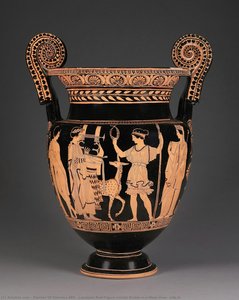
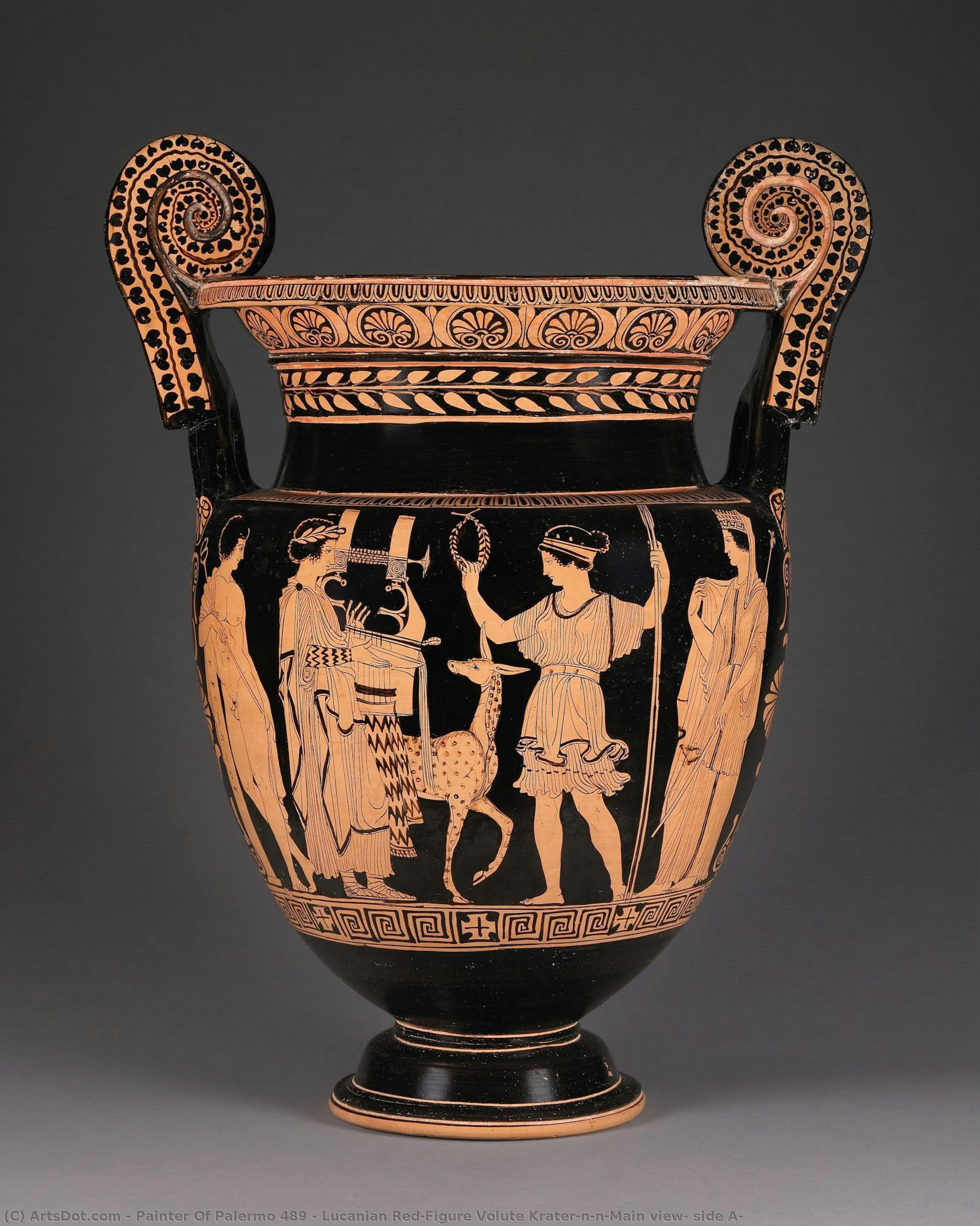
The Lucanian Red-Figure Volute Krater stands as an emblem of Athenian artistic innovation during the Hellenistic period, circa 415–400 BC. Attributed to The Primato Painter—a name synonymous with elegance and meticulous detail—this vessel transcends mere functionality; it embodies a profound engagement with Homeric mythology and represents a pinnacle of Corinthian vase painting technique. Its discovery in Lucania offers invaluable insight into the artistic currents circulating throughout Southern Italy at the time, demonstrating the influence of Greek culture on local traditions.- Subject Matter: The krater’s central scene depicts Dionysus, god of wine and revelry, seated alongside a Maenad—a frenzied devotee of Dionysus—engaged in ritualistic libation. Above them flies Nike, goddess of victory, symbolizing triumph over adversity and divine grace. Complementing this dramatic tableau is Herakles, depicted receiving a branch from Nike, representing strength and heroic virtue. These figures are interwoven with intricate vegetal motifs and swirling drapery, reflecting the pervasive fascination with classical narratives during this era.
- Technique: The Primato Painter’s mastery lies in his flawless execution of the black-figure method—a technique characterized by incised lines and pigment applied in reverse onto the clay surface before firing. This painstaking process allowed for unparalleled precision and dynamism, capturing subtle expressions and postures with remarkable fidelity. The artist skillfully employed a palette of vibrant reds and earthy browns, enhancing the visual impact of the scene and conveying its emotional intensity.
- Historical Context: Produced during a period of considerable artistic experimentation following Alexander the Great’s conquests, this krater reflects the broader Hellenistic preoccupation with grandeur and spectacle. Corinthian vase painting had begun to move away from the idealized forms of Archaic Greece towards more expressive representations of human emotion and mythological drama—a trend powerfully championed by artists like The Primato Painter.
- Symbolism: Dionysus embodies ecstasy, fertility, and liberation – themes central to Hellenistic thought. Nike symbolizes divine victory and aspiration for excellence. Herakles represents heroic strength and resilience. These symbols resonate throughout the krater’s composition, elevating it beyond a simple drinking vessel into a profound meditation on human experience and spiritual ideals.
- Emotional Impact: Viewing this krater evokes a sense of awe and wonder—a testament to the artist's ability to capture the essence of Homeric mythology and convey its emotional power. The meticulous detail, combined with the vibrant colors and dynamic poses of the figures, invites contemplation on themes of divinity, heroism, and ritualistic devotion.
Credit Line: National Gallery of Victoria, Melbourne.
Dimensions: 80.2 × 43.0 × 38.4 cm (31 ½ × 17 ¼ × 15 ¼ in.).
Explore the captivating artistry of The Primato Painter and immerse yourself in the splendor of Lucanian Red-Figure Volute Krater—a masterpiece that continues to inspire admiration for its technical brilliance and symbolic depth.
Obras relacionadas


Biografía del artista
The Enigmatic Maestro of Corinthian Black Figure
The history of ancient Greek ceramic art is often written through the shadows of anonymous masters, and few figures loom as large yet remain as mysterious as the painter of Palermo 489. Operating in the vibrant, experimental atmosphere of Corinth, Greece, between approximately 640 and 625 BC, this artist existed during a transformative epoch. It was a time when the decorative, exotic flourishes of the Orientalizing period were beginning to coalesce into the disciplined, narrative power of the black-figure technique. While his true name has been lost to the sands of antiquity, his artistic fingerprint is indelibly pressed upon the evolution of Greek pottery, marking him as a pivotal bridge between two eras of classical expression.
To study the work of the painter of Palermo 4 0 is to witness the birth of a new visual language. His primary medium was the aryballos—small, elegant vessels used for storing precious scented oils—which required a delicate yet commanding hand. Through the masterful use of incised lines and carefully applied pigments, he achieved a level of detail that breathed life into the clay. This technique allowed for an expressive dynamism, where the silhouettes of figures were not merely static shapes but participants in unfolding dramas. His ability to manipulate the dark slip against the pale clay surface provided a stark, rhythmic beauty that would become the hallmark of Corinthian excellence.
A Legacy Carved in Clay and Lineage
The true greatness of the painter of Palermo 489 lies not only in his individual hand but in the lineage of talent he nurtured. He was far more than a solitary craftsman; he was a foundational educator whose influence rippled through generations of Greek artists. Most notably, he served as the mentor to the Columbus Painter, an artist who would go on to refine the black-figure style with even greater vigor. This pedagogical connection created a stylistic chain reaction, extending his artistic DNA to the Chimaira Painter and the broader Chimaira Group.
Through this lineage, we can trace the development of several key artistic elements:
- The Mastery of Form: The transition from purely decorative patterns to structured, anatomical figures.
- Narrative Depth: The integration of Homeric myths and epic poetry into the very fabric of functional objects.
- Technical Precision: The refinement of incision techniques that allowed for more complex storytelling on a miniature scale.
The influence of his pupils, such as the Chimaira Painter, brought even stronger Near Eastern motifs—like the powerful, stylized lions of Assyrian art—into the Corinthian repertoire. Yet, the seeds of this complexity were sown in the workshop of the painter of Palermo 489. He provided the technical foundation and the conceptual framework that allowed his students to push the boundaries of what ceramic art could achieve.
Historical Significance and the Eternal Flame of Art
Though the surviving fragments of his work are scarce, the historical weight of his contribution is undeniable. He stood at the crossroads of tradition and innovation, capturing the moment when Greek art moved away from the purely ornamental and toward the profoundly human. His engagement with mythological themes—tales of gods, heroes, and the epic struggles of antiquity—helped establish a visual vocabulary that would define Mediterranean culture for centuries.
In the study of ancient ceramics, he remains a symbol of the anonymous genius. He reminds us that the progress of art is often driven by those whose names we may never know, but whose vision continues to shape the world. The painter of Palermo 489 did not merely decorate vessels; he helped forge the aesthetic soul of the Corinthian black-figure tradition, ensuring that even in the smallest aryballos, the grandeur of the Greek spirit could be preserved and passed down through the ages.
painter of palermo 489
Greece
Datos clave
- Artistic Movement Or Style: Black-figure style
- Artists Or Movements Influenced By This Artist: ['Columbus painter']
- Date Of Birth: Living
- Nationality: Greek
- Notable Artworks: ['Aryballoi']
- Place Of Birth: Corinth, Greece
Artículos relacionados

Crimson Threads of Narrative: Exploring Symbolism & Representation in Artworks Featuring the Red Dress
Explore the rich symbolism of the red dress in art history! From ancient power displays to iconic portraits like Cézanne’s 'Madame Cezanne', discover the cultural and artistic significance behind this captivating color. Expert analysis & insights.

Mark Rothko: Las 25 Obras Maestras que Definen la Expresión Abstracta | ArtsDot
Descubre las 25 obras maestras de Mark Rothko, pionero del expresionismo abstracto. Explora la historia, el significado y los colores vibrantes que definen su arte emocional. Reproducciones de alta calidad en ArtsDot.com.

Henri Matisse: Las 25 Obras Maestras que Definieron un Genio del Color | ArtsDot
Descubre las 25 obras maestras de Henri Matisse, el rey del color y padre del fauvismo. Explora su arte moderno, lienzos vibrantes y la historia detrás de cada pintura icónica. Encuentra reproducciones de alta calidad en ArtsDot.com.

Franz Xaver Winterhalter: Court Painter, Academician & Embodiment of Mid-19th Century Portraiture
Explore the life & art of Franz Xaver Winterhalter, the celebrated court painter of the 19th century. Discover his exquisite portraits of royalty and aristocracy – a symbol of prestige and refined taste.
Philip de László: A Portrait of Aristocratic Society & the Cosmopolitan Painter's Evolution
Explore the life & art of Philip de László, master portraitist of European aristocracy. Discover his stunning paintings, royal commissions, and enduring legacy. A guide for discerning collectors.