 Ver en contexto
 Enviar
 Compartir
 Detalles

 Descargar
 Similares
 Radiografía
 Presentación de diapositivas
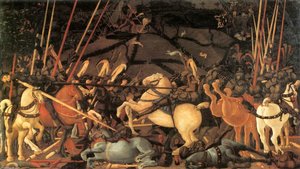
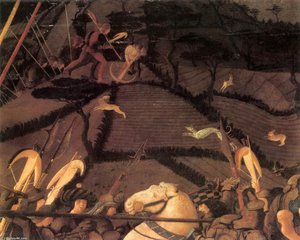
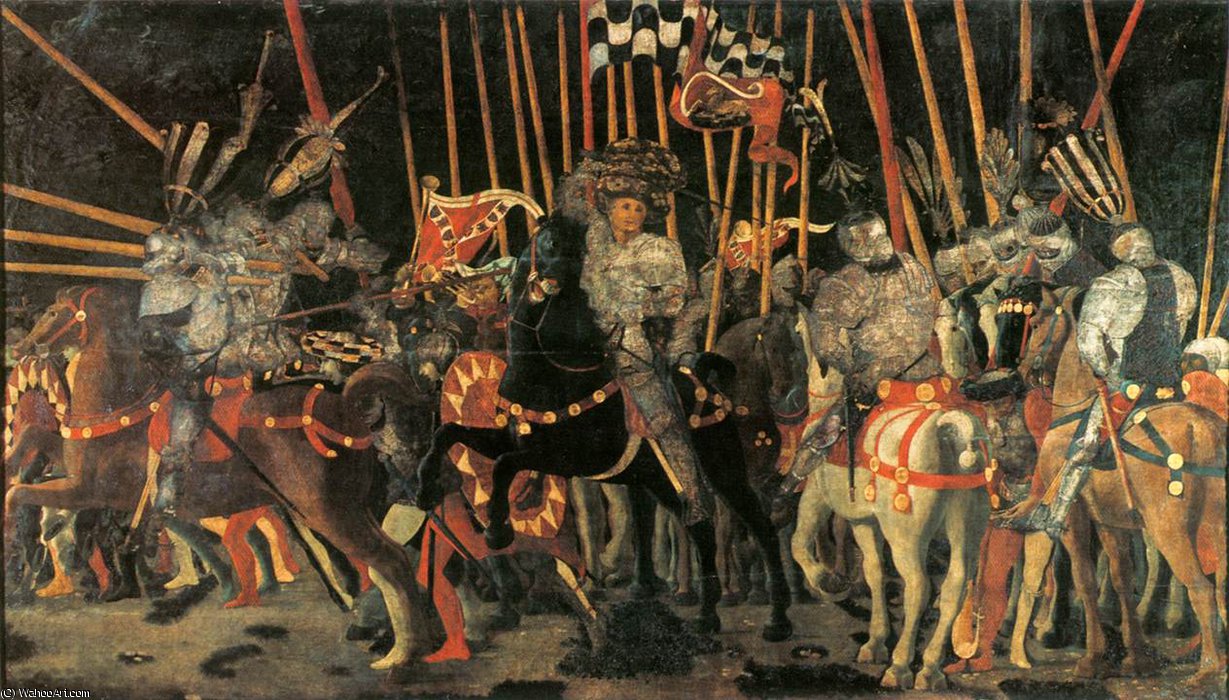
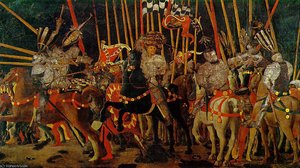
Battle of San Romano - Micheletto da Cotignola


 Ver más
Giclée / Impresión de arte
Impresiones giclée o en lienzo de calidad de museo con producción rápida y opciones de acabado flexibles. ( Comprar pintura hecha a mano Comprar imagen)




P118B $10

P118H $10

P118W $10

P438Z $10

P508JH $12

P508YH $12

P805H $10

P805Z $10

P919BZ $10

P919G $10

P919XJ $10

P959ZH $10

P968JZ $12

W106C $8

W218G $10

W218JH $8

W218Y $10

W307PJ $10

W316G $10

W316PJ $8

W316Y $10

W398PJ $8

W4111J $10

W500HY $15

W500JH $15

W692G $12

W849H $8

W940BG $15

W953PJ $8




Elija entre nuestros tamaños predefinidos que respetan las proporciones originales de la obra.

Puede introducir sus propias dimensiones para adaptarse a un marco o espacio específico. Si el tamaño seleccionado no coincide con las proporciones de la imagen original, recortaremos la obra de arte o extenderemos la imagen con un borde con efecto espejo o de color sólido. Se enviará una maqueta digital para su aprobación antes de que comience la producción.
Tenga en cuenta que la vista previa en pantalla no refleja el recorte o la extensión real. Solo la maqueta mostrará con precisión la composición final.
Aunque existen tamaños personalizados, recomendamos seleccionar una dimensión de la lista predefinida para preservar las proporciones originales.
Envío a todo el mundo () en 2 semanas en lugar de las 4/5 semanas estándar. (29 agosto)

Envío exprés gratuito a todo el mundo

Lienzo de lino de alta calidad

Seguro de envío total

Garantía de reembolso de impuestos aduaneros

Garantía de fidelidad cromática exacta

Política de devolución de 60 días (solo por defectos)

Garantía de devolución del 100% del dinero

Descuento por cantidad
 La opción de vidrio solo está disponible en tamaños inferiores a 110 cm.

Battle of San Romano - Micheletto da Cotignola
Giclée / Impresión de arte
Dimensiones de la reproducción
-


Precio total final
$ 62
The Battle of San Romano: A Triumph of Mathematical Vision
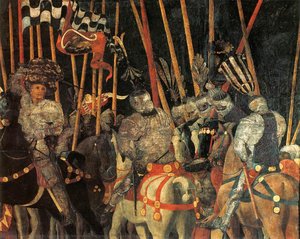
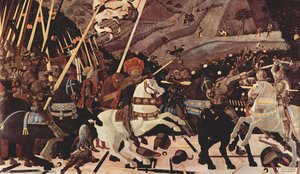
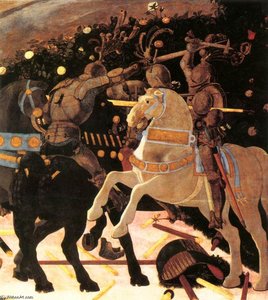
Paolo Uccello’s “Battle of San Romano,” completed around 1450, stands as an unparalleled achievement in Early Renaissance art—a monumental testament to the burgeoning fascination with mathematical principles and a daring exploration of spatial illusion. More than just a depiction of warfare, it represents a pivotal moment in artistic history: the formal embrace of linear perspective, transforming how artists represented reality on canvas.
Commissioned by Giovanni Battista Guadagni for the Palazzo Ducale di Urbino—a symbol of papal power and prestige—the painting commemorates a significant military engagement between Florence and Siena. The scene unfolds with meticulous detail, capturing the chaotic energy of combat. Soldiers clash amidst rubble and fortifications, their movements rendered with astonishing accuracy thanks to Uccello’s groundbreaking use of perspective.
- Style: Florentine Renaissance
- Technique: Tempera on wood – a durable medium favored for altarpieces and monumental commissions.
- Dimensions: Approximately 180 x 316 cm (71 x 124 inches)
A Revolutionary Approach to Space
What distinguishes “Battle of San Romano” from its contemporaries is Uccello’s masterful manipulation of linear perspective. Unlike earlier artists who relied on flattened representations, he painstakingly constructed a three-dimensional space using mathematical calculations—specifically the Pythagorean theorem—to achieve astonishing realism. This wasn't merely about creating an aesthetically pleasing image; it was about capturing the very essence of how human vision perceives depth.
The painting’s composition is deliberately staged to guide the viewer’s eye across the battlefield, emphasizing the importance of spatial relationships. Foreground figures are rendered with greater detail and vibrancy, while those in the background appear smaller and less sharply defined—a technique that convincingly simulates distance. This meticulous attention to perspective elevates the artwork beyond a simple narrative depiction into a profound meditation on visual perception.
Symbolism and Narrative Significance
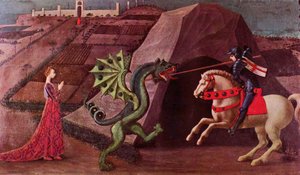
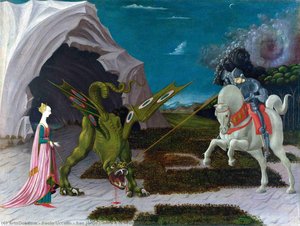
Beyond its technical brilliance, “Battle of San Romano” carries symbolic weight reflecting the anxieties and aspirations of Renaissance Florence. The battle itself represents the ongoing struggle between rival factions vying for dominance—a microcosm of Florentine politics. Furthermore, the depiction of St. George slaying the dragon embodies Christian ideals of courage and triumph over evil.
The inclusion of architectural elements—such as the fortified walls—underscores the importance of defense and stability—themes that resonated deeply with Uccello’s patrons. The artist's deliberate use of color contributes to the overall dramatic effect, highlighting key figures and emphasizing the intensity of the conflict.
Emotional Impact & Legacy
"Battle of San Romano" continues to captivate viewers centuries after its creation. Its sheer scale and technical sophistication are breathtaking, yet it’s more than just a spectacle of artistic prowess; it evokes a palpable sense of urgency and excitement. The painting's enduring influence can be seen in subsequent artists who adopted perspective—establishing it as the cornerstone of Western art.
Today, reproductions of “Battle of San Romano” adorn galleries and private collections worldwide, allowing enthusiasts to experience firsthand the transformative power of Uccello’s vision. It remains an unforgettable masterpiece—a symbol of artistic innovation and a testament to the enduring fascination with capturing the complexities of human experience.
Obras relacionadas
Biografía del artista
vida temprana y formación
Paolo Uccello, nacido Paolo di Dono, fue un distinguido pintor y matemático italiano de Florencia. Era notable por su trabajo pionero en la perspectiva visual en el arte. Nacido en 1397, la vida temprana de Uccello no está bien documentada, pero se sabe que estuvo aprendiz del famoso escultor Lorenzo Ghiberti de 1412 a 1416.carrera y obras notables
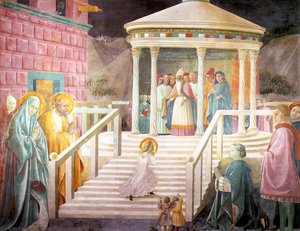
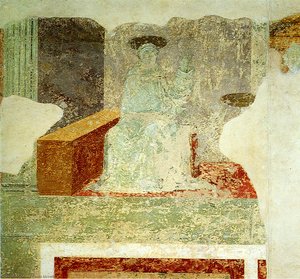
La carrera de Uccello abarcó más de cuatro décadas, durante las cuales produjo numerosas obras de arte, incluyendo pinturas, frescos y retablos. Algunas de sus obras más notables incluyen:- Nacimiento de la Virgen (renacimiento temprano, óleo), una pintura que muestra su uso de la perspectiva para crear una sensación de profundidad.
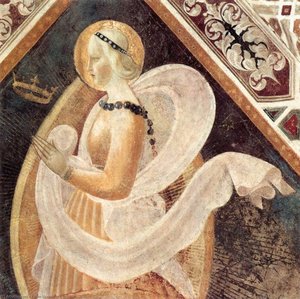
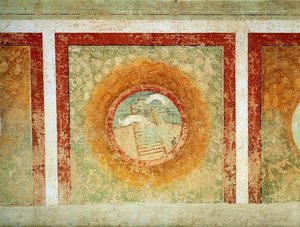
- Frescos San Miniato al Monte 03 (renacimiento temprano, óleo), un fresco que demuestra su innovador uso del color y la luz.
- Adoración del Niño (renacimiento temprano, óleo), una pintura que presenta una representación detallada y naturalista de la forma humana.
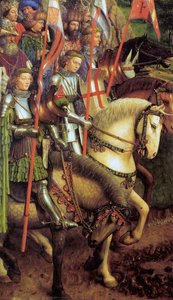
- Estudio de caballero (renacimiento temprano, óleo), un autorretrato que muestra su uso seguro y autónomo de los temas en el arte.
influencia y legado
La obra de Uccello tuvo un impacto significativo en el desarrollo del arte renacentista. Su uso de la perspectiva y su énfasis en crear una sensación de profundidad en sus pinturas influyeron en numerosos artistas, incluyendo a Albrecht Dürer, quien también era conocido por su trabajo pionero en el campo de la perspectiva. Movimientos artísticos clave:- El Renacimiento Temprano
- Renacimiento Italiano
- Gótico Tardío
- Paolo Uccello (1397-1475)
- Albrecht Dürer (1471-1528)
- Lorenzo Ghiberti (1379-1455)
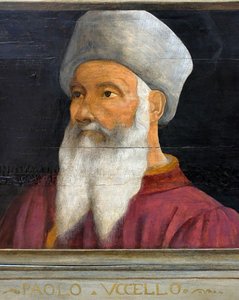
Paolo Uccello
1397 - 1475 , Italia
Datos clave
- Artistas Influenciados: ['Albrecht Dürer']
- Artistas Que Influyeron:
- Lorenzo Ghiberti
- Donatello
- Fecha De Muerte: 1475
- Fecha De Nacimiento: 1397
- Lugar De Nacimiento: Pratovecchio, Italia
- Movimiento Artístico: Renacimiento Temprano
- Nacionalidad: Italiana
- Nombre Completo: Paolo Uccello
- Obras Notables:
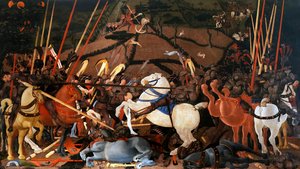
- Batalla de San Romano
- Nacimiento de la Virgen
- San Jorge y el Dragón
- La Inundación
Artículos relacionados

Giclée Prints: Archival Quality & Aesthetic Nuances for the Discerning Collector
Explore the world of giclée prints with ArtsDot. Learn about archival quality, aesthetic nuances & investment potential. Expert guidance for discerning art collectors seeking museum-quality reproductions and lasting value.
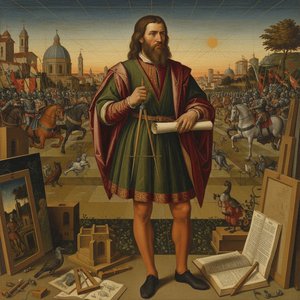
Paolo Uccello: Pioneering Perspective & the Renaissance Pursuit of Visual Truth
Explore the revolutionary art of Paolo Uccello, a Florentine Renaissance master who pioneered perspective. Discover his iconic paintings like 'St. George & The Dragon' and learn about his lasting influence on art history.

The Enduring Legacy of Fine Art Prints: Technique, History & Aesthetic Impact
Explore the rich history & techniques of fine art prints. Discover investment potential, assess authenticity, and learn how to preserve your collection with expert guidance. Trusted insights for discerning collectors.

Echoes of Time: Exploring the Enduring Appeal & Historical Context of Vintage Art Prints
Explore the captivating world of vintage art prints! Discover their history, collecting tips & enduring appeal. Expert insights on chromolithography and building a legacy collection with ArtsDot.
The Enduring Legacy of Printmaking: Techniques, Themes & Artistic Innovation Across Centuries
Explore the rich history of printmaking with ArtsDot. Discover techniques from intaglio to lithography, learn about collecting valuable prints & find museum-quality reproductions. Expert insights for art enthusiasts and collectors.