

 Vista previa
 Compartir
 Compartir
 Ver detalles

 Descargar
 Ver similares
 Radiografía
 Presentación de diapositivas
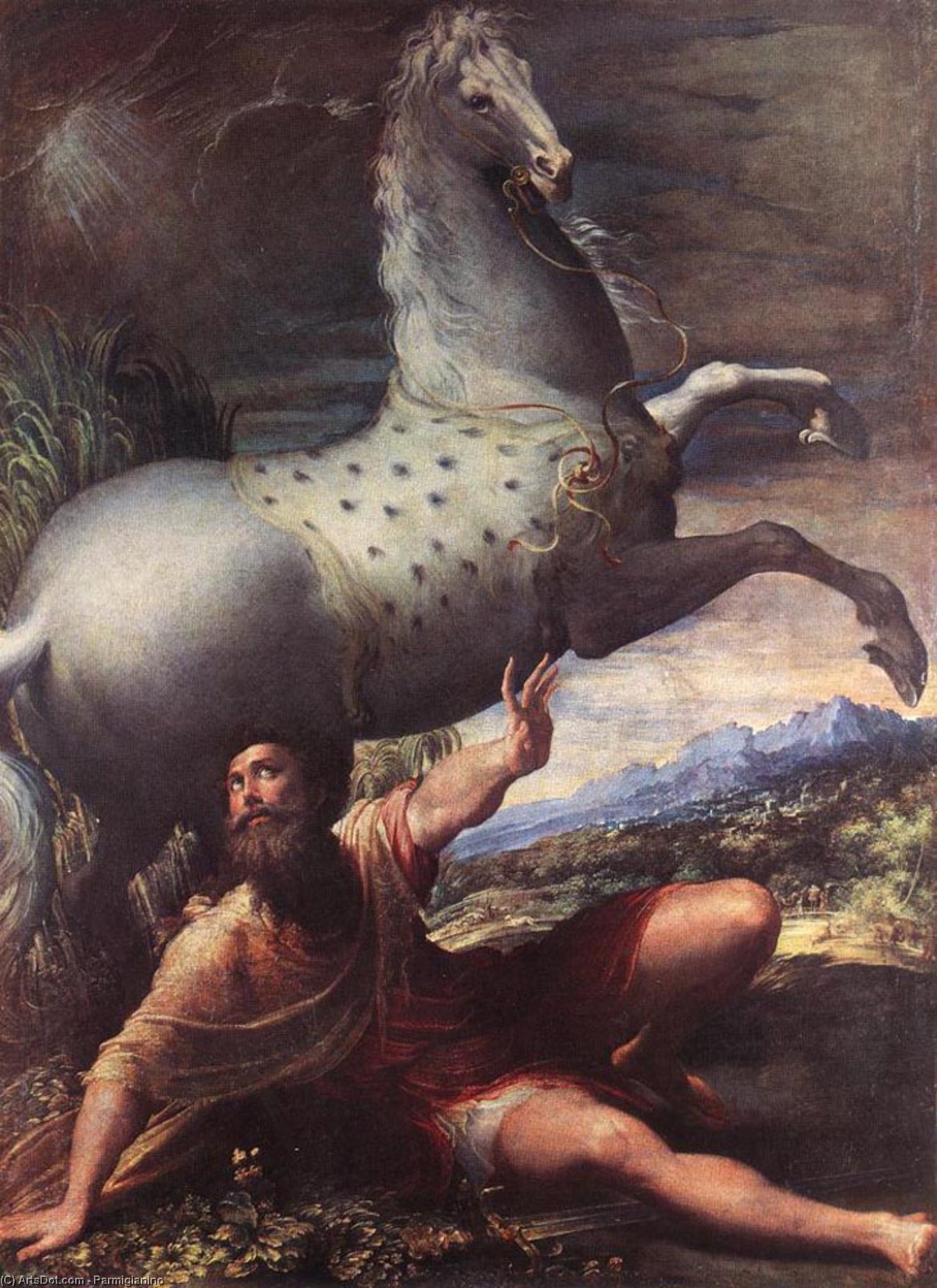
The Conversion of St Paul
 Oil On Canvas
- WallArt
- Mannerism
 Renaissance
 177.0 x 128.0 cm
 Kunsthistorisches Museum
 Leer más
Adquiera una imagen digital de alta resolución y optimizada, muy superior a la vista previa en línea.
Cada archivo es preparado meticulosamente por nuestros especialistas internos mediante el uso de herramientas avanzadas y un experto retoque manual. Nos aseguramos de que cada imagen posea una claridad excepcional, una precisión cromática impecable y un detalle minucioso.
El archivo final se entrega por correo electrónico en un plazo de 72 horas, optimizado para su uso inmediato en entornos profesionales, editoriales y de impresión. Esta es la misma calidad en la que confían los estudios de diseño, las editoriales y las galerías de primer nivel.
Imagen Digital
Descarga un archivo de alta resolución para exhibición personal, impresión y proyectos creativos. ( Pedir impresión Encargar reproducción pintada a mano)
Incluido en cada compra de imágenes digitales
Entrega digital experta, garantizada.
Al elegir ArtsDot.com, no solo está adquiriendo una imagen; está recibiendo una obra de arte digital mejorada profesionalmente, elaborada con precisión y respaldada por una garantía de satisfacción. Esto es todo lo que incluye su pedido, automáticamente:

Entrega rápida por email
Recibirá su archivo de imagen digital en alta resolución por correo electrónico en un plazo de 72 horas tras realizar su pedido, listo para su uso inmediato.

Archivo digital optimizado por IA
Su obra de arte se optimiza profesionalmente mediante herramientas avanzadas de IA y edición manual, garantizando el máximo detalle, claridad y precisión cromática.

Reenvío gratuito de por vida
¿Has borrado o perdido tu archivo por error? No te preocupes: te lo volveremos a enviar en cualquier momento, sin coste adicional.

Sin gastos de importación, siempre
Disfrute de su obra de arte al instante sin aduanas, aranceles ni gastos de envío; las descargas digitales siempre están libres de impuestos.

Garantía de precisión de color
Garantizamos que su imagen digital refleje los colores originales con la mayor fidelidad posible, mediante el uso de herramientas profesionales y gestión del color.

Garantía de satisfacción de 60 días
Si no está satisfecho con su imagen digital, la revisaremos o le reembolsaremos el 100% en un plazo de 60 días, sin preguntas.

100% Garantía de devolución de dinero
¿No está satisfecho? Obtenga un reembolso completo dentro de los 60 días posteriores a la recepción de su archivo digital, sin necesidad de explicaciones.

Descuentos por volumen
Compra 3 imágenes, ahorra 10% - Compra 5, ahorra 15% - Compra 10+, ahorra 20%. Ideal para proyectos creativos, galerías y agencias.
Descripción del coleccionable
A Moment of Divine Disruption
In the quiet tension of Girolamo Francesco Maria Mazzola’s The Conversion of Saint Paul, we witness one of the most profound spiritual transformations in Christian iconography. Painted during the height of the Mannerist movement around 1527-1528, this masterpiece captures the exact heartbeat of a crisis: the moment Saul, the fervent persecutor of Christians, is struck down by a divine light on the road to Damascus. The composition does not merely tell a story; it envelops the viewer in a sense of sudden, overwhelming disorientation. As the figure lies sprawled upon the earth, his physical vulnerability is palpable, contrasted sharply against the powerful, almost unnerving presence of the horse. This is not a scene of peaceful contemplation, but one of violent grace, where the boundaries between the earthly and the divine are momentarily shattered.
The artistry of Parmigianino, often called the little one from Parma, shines through in his ability to manipulate form to evoke psychological depth. Unlike the balanced, harmonious compositions of the High Renaissance masters like Raphael, Parmigianino embraces the deliberate distortions and elongated elegance characteristic of Mannerism. In this work, the musculature of the fallen saint is rendered with a meticulous precision that highlights both his strength and his sudden helplessness. The horse’s head, turned toward the spectator with an arresting gaze, acts as a bridge between the painted world and our own, pulling us into the drama. This technique creates a sense of paradoxical beauty—a hallmark of Parmigianino’s style—where elegance and instability coexist in a single, breathtaking frame.
Luminous Technique and Atmospheric Depth
To behold this painting is to experience a masterclass in the use of light and oil glazing. Parmigianino utilized complex layers of translucent glazes to achieve a luminous, almost ethereal glow that seems to emanate from within the canvas itself. This technique allows for subtle gradations of color, particularly in the way light catches the white coat of the horse and the weathered textures of the landscape. The background, featuring rolling hills and distant mountains under a heavy, clouded sky, provides a sense of vastness that mirrors the magnitude of the spiritual event taking place. The interplay of light and shadow—a precursor to the dramatic chiaroscuro of the later Baroque period—adds a layer of theatricality that makes the scene feel alive and immediate.
For the discerning collector or interior designer, The Conversion of Saint Paul offers more than just historical significance; it provides a profound emotional anchor for any space. The painting’s palette, rich with earthy tones and sudden highlights of brilliance, lends itself to sophisticated decor, whether placed in a classical gallery setting or as a focal point in a contemporary study. It is a piece that invites long periods of contemplation, rewarding the eye with its intricate details and the soul with its narrative of redemption. Owning a high-quality reproduction of this work means bringing into one's home a fragment of the Renaissance spirit—a testament to the enduring power of art to capture the most fleeting and transformative moments of human existence.
Obras relacionadas

Biografía del artista
A Refined Sensibility: The Life and Art of Parmigianino
Girolamo Francesco Maria Mazzola, known to history as Parmigianino – “the little one from Parma” – emerged during the High Renaissance, yet swiftly became a defining figure of the burgeoning Mannerist style. Born in Parma on January 11, 1503, his early life was marked by familial loss; his father, Filippo Mazzola, died when Girolamo was just two years old. Raised by his uncles, Michele and Pier Ilario, both modestly skilled artists themselves, the young Parmigianino received his initial artistic training within this familial circle. This foundation, however, proved merely a springboard for an exceptional talent that would soon eclipse even his mentors. By the astonishing age of eighteen, he had already completed the Bardi Altarpiece, a work demonstrating a maturity and sophistication far beyond his years, signaling the arrival of a truly remarkable artist. The Bardi Altarpiece, with its innovative composition and refined details, immediately established Parmigianino as a force to be reckoned with in the Florentine art world.Florence, Rome, and the Shaping of a Mannerist Vision
Parmigianino’s artistic journey led him to Florence around 1524, where he absorbed the influence of masters like Raphael and Leonardo da Vinci, though he quickly began to forge his own distinct path. He presented Pope Clement VII with three paintings, including a striking self-portrait in a convex mirror – a testament to his technical skill and burgeoning self-awareness. This act secured commissions in Rome, but the city’s artistic landscape was soon disrupted by the tumultuous Sack of 1527. Forced to flee, Parmigianino sought refuge in Bologna, where he painted one of his most celebrated works, the *Holy Family*. It was during this period that his signature style truly crystallized: elongated forms, graceful poses, and a refined sensuality became hallmarks of his art. He wasn’t merely depicting reality; he was reimagining it through a lens of elegance and idealized beauty. This departure from the High Renaissance's emphasis on naturalism marked him as a key innovator of Mannerism, an artistic movement characterized by its artificiality, sophistication, and deliberate distortion of classical forms. The influence of Correggio is particularly evident in his early works, while the dynamism of Michelangelo’s figures can be seen in his later compositions.Masterpieces of Elongation and Grace
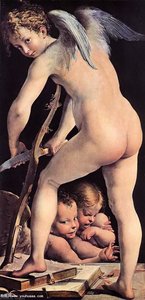
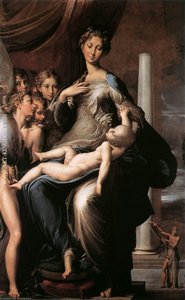
Parmigianino’s legacy rests upon a relatively small but profoundly influential body of work. The *Madonna with the Long Neck* (1534) remains perhaps his most iconic creation. Its unsettling yet captivating composition, featuring figures with elongated necks and limbs, challenges conventional notions of beauty and proportion. This deliberate distortion isn't simply stylistic; it conveys a sense of spiritual yearning and otherworldly grace. Similarly, *Vision of Saint Jerome* (1527), completed during his time in Rome, showcases his mastery of anatomy and perspective, while simultaneously embracing the Mannerist penchant for dramatic compositions and emotional intensity. Beyond these celebrated paintings, Parmigianino’s drawings reveal an extraordinary level of skill and sensitivity. His studies of figures, drapery, and architectural elements demonstrate a meticulous attention to detail and a profound understanding of form. Even his lesser-known works, such as *Bow-Carving Amor*, display the same refined sensibility and technical virtuosity that define his oeuvre. His work is characterized by an exquisite balance between elegance and tension, creating images that are both visually stunning and psychologically complex.A Legacy Interrupted: Parmigianino’s Final Years
Tragically, Parmigianino's promising career was cut short by his untimely death in Casalmaggiore in 1540 at the age of thirty-seven. The circumstances surrounding his demise remain somewhat mysterious; some accounts suggest he succumbed to a fever, while others hint at complications from a fall. Despite his brief life, Parmigianino left an indelible mark on Italian Renaissance art. He stands as one of the most important representatives of Mannerism, influencing generations of artists with his elegant style and innovative approach to form and composition. His work continues to captivate viewers today, offering a glimpse into a world where beauty is not merely observed but actively created – a testament to the enduring power of artistic vision. The frescoes he left unfinished in Parma and Fontanellato serve as poignant reminders of what might have been, yet even in their incomplete state, they reveal the brilliance of a master whose legacy continues to resonate through the centuries. His influence can be seen in artists who followed, adapting and expanding upon his distinctive style.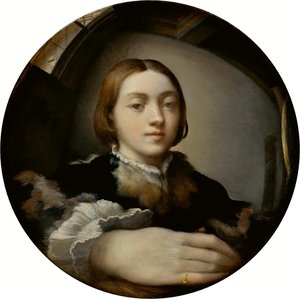
Parmigianino
1503 - 1540 , Italia
Datos clave
- Artistic Movement Or Style: Manierismo
- Artists Or Movements Influenced By This Artist: ['Renacimiento Italiano']
- Artists Who Influenced This Artist:
- Correggio
- Rafael
- Date Of Birth: 11 de enero de 1503
- Date Of Death: 24 de agosto de 1540
- Full Name: Girolamo Francesco Maria Mazzola
- Nationality: Italiano
- Notable Artworks:
- Madonna con el cuello largo
- Visión de San Jerónimo
- Autorretrato en espejo convexo
- Place Of Birth: Parma, Italia

