

 Ver en contexto
 Enviar
 Compartir
 Detalles

 Descargar
 Similares
 Radiografía
 Presentación de diapositivas
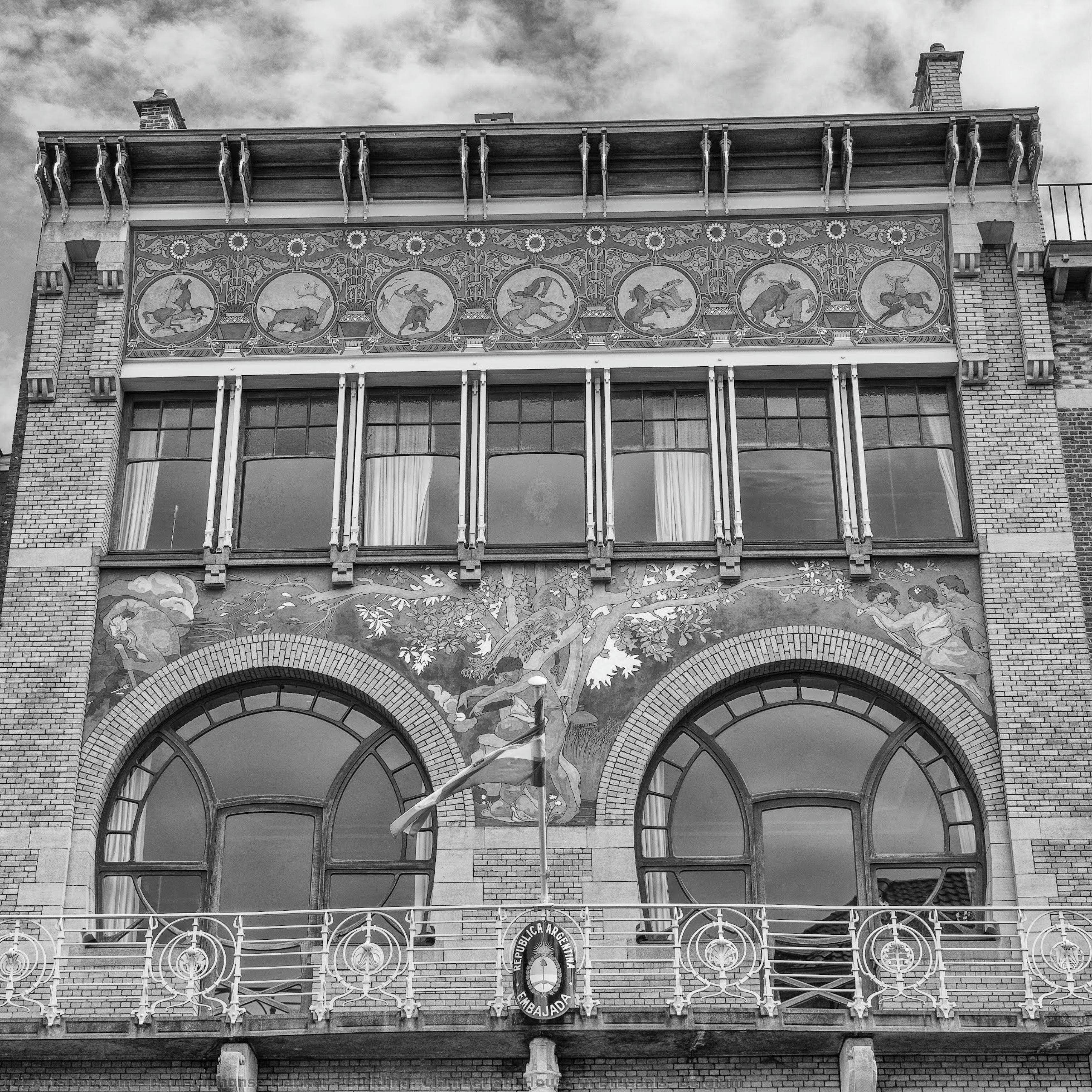
Building. Ciamberlani House in Brussels, Belgium

 Ver más
Reproducción al óleo hecha a mano
Óleo sobre lienzo pintado a mano en el tamaño y marco de su elección, realizado por encargo por nuestros artistas. ( Comprar impresión Comprar imagen)




































Elija entre nuestros tamaños predefinidos que respetan las proporciones originales de la obra.

Puede ingresar sus propias dimensiones para adaptarse a un marco o espacio específico. Si el tamaño seleccionado no coincide con las proporciones de la imagen original, recortaremos la obra o extenderemos la pintura con elementos adicionales pintados a mano. Se le enviará una maqueta digital para su aprobación antes de comenzar la producción.
Tenga en cuenta que la vista previa en pantalla no refleja el recorte o la extensión reales. Solo la maqueta mostrará con precisión la composición final.
Si bien existen tamaños personalizados, recomendamos seleccionar una dimensión de la lista predefinida para preservar las proporciones originales.
Tras realizar el pedido, el equipo de ArtsDot.com enviará un correo electrónico al cliente para solicitar instrucciones y proporcionarle una vista previa del boceto.
Envío a todo el mundo () en 3-4 semanas en lugar de las 5 semanas estándar. (26 agosto). Sin comprometer la calidad.

Envío exprés gratuito a todo el mundo

Lienzo de lino de alta calidad

Seguro de envío total

Garantía de reembolso de impuestos aduaneros

Garantía de fidelidad cromática exacta

Política de devolución de 60 días (solo por defectos)

Garantía de devolución del 100% del dinero

Descuento por cantidad
 La opción de vidrio solo está disponible en tamaños inferiores a 110 cm.

Building. Ciamberlani House in Brussels, Belgium
Técnica de reproducción
Dimensiones de la reproducción
-


Precio total final
$ 313
Obras relacionadas









Biografía del artista
Paul Hankar: The Pioneering Spirit of Belgian Art Nouveau
Paul Hankar (December 11, 1859 – January 17, 1901) stands as a pivotal figure in the history of Belgian art and architecture, inextricably linked to the flourishing movement known as Art Nouveau. Born in Frameries, Hainaut, Belgium—the son of a stonemason—Hankar’s formative years instilled within him an appreciation for craftsmanship and material innovation that would profoundly shape his artistic vision.
His early career focused on sculptural commissions, honing his skills in manipulating stone before he embarked upon formal architectural studies at the Royal Academy of Fine Arts in Brussels. There, he forged a crucial partnership with Victor Horta, establishing a collaborative spirit that mirrored and amplified their shared fascination for groundbreaking techniques—particularly the transformative potential of wrought iron.
Influenced by Eugène Viollet-le-Duc’s advocacy for blending historical inspiration with modern materials like iron and glass, Hankar embraced these principles wholeheartedly. This intellectual grounding fueled his ambition to redefine domestic architecture, resulting in iconic structures that epitomized the Art Nouveau aesthetic—namely, the Hankar House (1893) and Hôtel Ciamberlani (1897), considered among Belgium’s earliest expressions of this revolutionary style.
These commissions weren't merely exercises in design; they represented a deliberate challenge to conventional norms. The facades of these buildings—particularly the Hôtel Ciamberlani—employed asymmetrical compositions and undulating surfaces, mirroring organic forms found in nature. Furthermore, intricate ironwork graced interiors and exteriors alike, creating mesmerizing patterns that captivated visitors and cemented Hankar’s reputation as a visionary innovator.
Beyond his architectural endeavors, Hankar’s mastery extended to furniture design, where he skillfully blended Art Nouveau motifs with functional considerations. His creations—characterized by flowing lines, floral ornamentation, and delicate craftsmanship—became emblems of the era's aesthetic ideals. Notably, his shopfront for Chemiserie Niguet (1896), located on Rue Royale in Brussels, achieved international acclaim for its audacious use of Japanese-inspired window bars and decorative tracery.
Hankar’s legacy transcends stylistic trends; he championed the role of artists within urban planning. His concept for “New Brussels,” envisioned as a harmonious blend of art and architecture—a bold departure from prevailing urban landscapes—demonstrates his unwavering belief in artistic expression as a catalyst for societal progress.
His influence extended beyond Belgium’s borders, notably impacting Otto Wagner's Majolikahaus in Vienna (1898), where he collaborated on the design of monumental decorative panels. Paul Hankar died prematurely in 1901, leaving behind an indelible mark on Belgian art history and securing his place as one of Art Nouveau’s foremost architects—a testament to his unwavering dedication to innovation and artistic vision.
Paul Hankar
1859 - 1901 , Bélgica
Datos clave
- Artistic Movement Or Style: Art Nouveau
- Artists Or Movements Influenced By This Artist: ['Eugène Viollet-le-Duc']
- Artists Who Influenced This Artist:
- Victor Horta
- Henri Beyaert
- Date Of Birth: 1859-12-11
- Full Name: Paul Alphonse Hankar
- Nationality: Belgian
- Notable Artworks:
- Courtesan with necklace of gems
- Building. Ciamberlani House in Brussels
- Place Of Birth: Frameries, Belgium

