 Ver en contexto
 Enviar
 Compartir
 Detalles

 Descargar
 Similares
 Radiografía
 Presentación de diapositivas
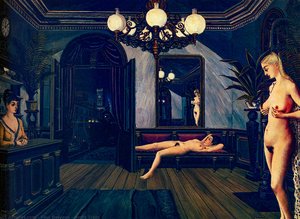
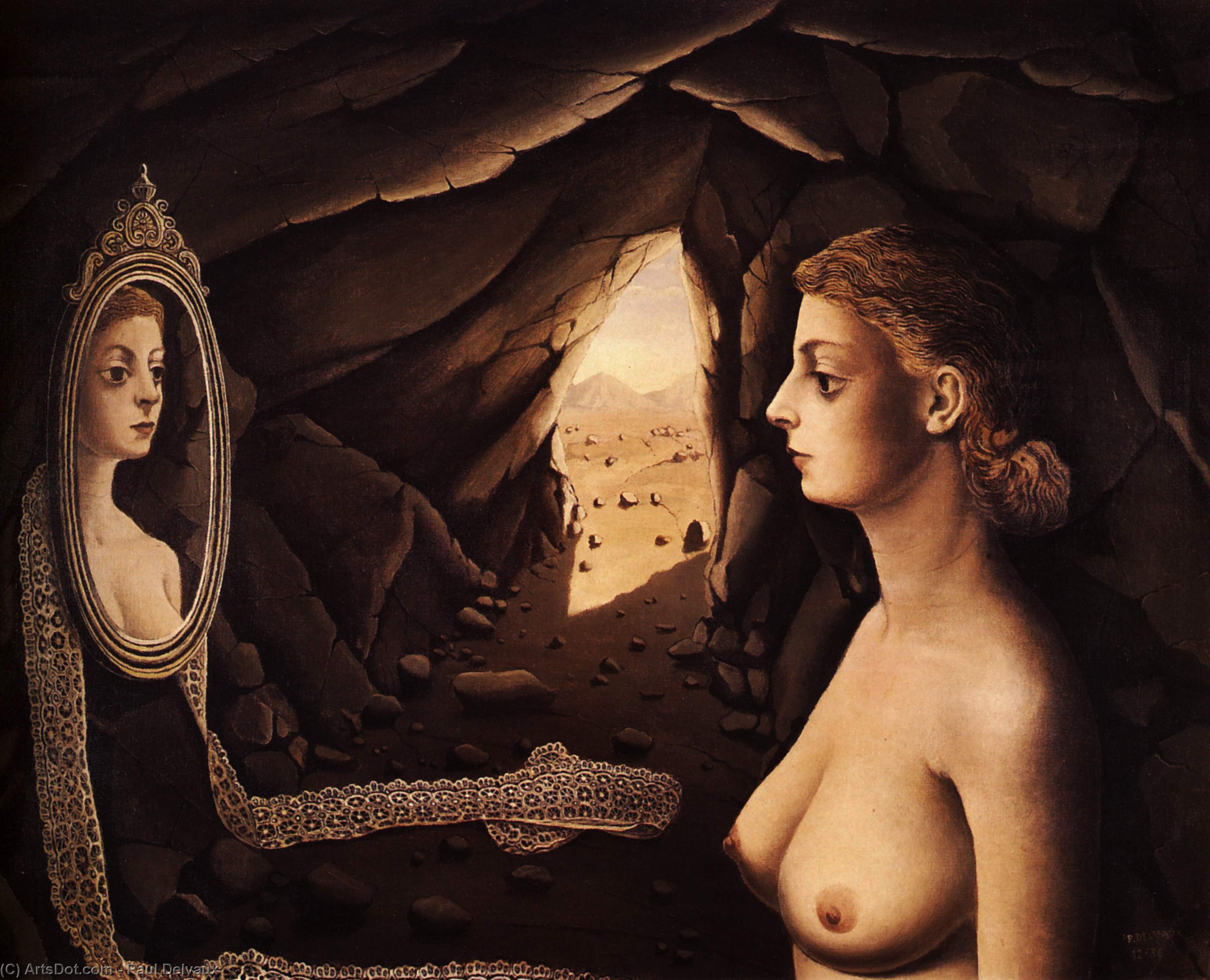
Woman in a Cave
 Oil On Canvas
- WallArt
- Surrealism
 1936
1936 71.0 x 91.0 cm
 Ver más
Giclée / Impresión de arte
Impresiones giclée o en lienzo de calidad de museo con producción rápida y opciones de acabado flexibles. ( Comprar pintura hecha a mano Comprar imagen)




P118B $10

P118H $10

P118W $10

P438Z $10

P508JH $12

P508YH $12

P805H $10

P805Z $10

P919BZ $10

P919G $10

P919XJ $10

P959ZH $10

P968JZ $12

W106C $8

W218G $10

W218JH $8

W218Y $10

W307PJ $10

W316G $10

W316PJ $8

W316Y $10

W398PJ $8

W4111J $10

W500HY $15

W500JH $15

W692G $12

W849H $8

W940BG $15

W953PJ $8




Elija entre nuestros tamaños predefinidos que respetan las proporciones originales de la obra.

Puede introducir sus propias dimensiones para adaptarse a un marco o espacio específico. Si el tamaño seleccionado no coincide con las proporciones de la imagen original, recortaremos la obra de arte o extenderemos la imagen con un borde con efecto espejo o de color sólido. Se enviará una maqueta digital para su aprobación antes de que comience la producción.
Tenga en cuenta que la vista previa en pantalla no refleja el recorte o la extensión real. Solo la maqueta mostrará con precisión la composición final.
Aunque existen tamaños personalizados, recomendamos seleccionar una dimensión de la lista predefinida para preservar las proporciones originales.
Envío a todo el mundo () en 2 semanas en lugar de las 4/5 semanas estándar. (26 agosto)

Envío exprés gratuito a todo el mundo

Lienzo de lino de alta calidad

Seguro de envío total

Garantía de reembolso de impuestos aduaneros

Garantía de fidelidad cromática exacta

Política de devolución de 60 días (solo por defectos)

Garantía de devolución del 100% del dinero

Descuento por cantidad
 La opción de vidrio solo está disponible en tamaños inferiores a 110 cm.

Woman in a Cave
Giclée / Impresión de arte
Dimensiones de la reproducción
-


Precio total final
$ 62
Descripción de la pieza
A Descent into Dream: Paul Delvaux's "Woman in a Cave"
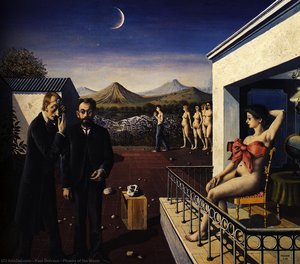
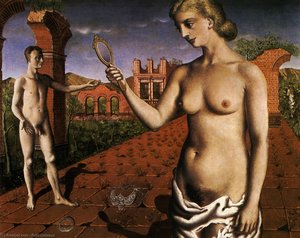
Paul Delvaux’s “Woman in a Cave,” painted in 1936, is not merely a depiction of a scene; it’s an immersion into the unsettling and profoundly beautiful realm of the subconscious. This arresting work, measuring 71 x 91 cm, immediately draws the viewer into a world where reality and illusion blur, a hallmark of Delvaux's signature style and a key element of Surrealism’s exploration of the human psyche. The painting centers around a woman, partially nude and poised within the oppressive darkness of a cavern, her reflection eerily mirrored in an ornate, antique mirror. This duality – presence and absence, self and other – is immediately palpable, setting the stage for a meditation on identity and perception.
- Romanticism and Surrealist Fusion: Delvaux masterfully blends Romantic sensibilities with the precise, almost clinical realism championed by Surrealism. The dramatic lighting, reminiscent of Caspar David Friedrich’s landscapes, evokes a sense of awe and mystery, while the meticulous detail in the woman's skin and the mirror’s texture grounds the scene in a tangible reality.
- The Cave as Symbol: Caves have long represented the unknown, the depths of the self, and the potential for both danger and revelation. Here, the cave isn’t just a physical space; it’s a metaphor for the complexities within the human mind.
Technique and Materiality – A Masterclass in Realism
Executed in oil on canvas, “Woman in a Cave” showcases Delvaux's exceptional technical skill. The smooth blending of colors creates an almost photographic quality, particularly evident in the rendering of the woman’s skin—a testament to his rigorous training in perspective and form. The use of strong diagonal lines guides the viewer’s eye through the composition, adding a dynamic tension to the scene. The rich textures – the cool smoothness of the mirror, the warm tones of the woman's flesh, and the rough stone of the cave walls – are meticulously rendered, inviting close inspection and further contemplation.
- Brushwork: Delvaux’s brushstrokes are controlled yet expressive, contributing to the painting’s overall sense of unease and mystery.
- Color Palette: The dominant browns, ochres, and blacks create a somber atmosphere, punctuated by the striking highlights of gold emanating from the distant landscape – a subtle nod to classical mythology and the allure of unattainable beauty.
Symbolism and Interpretation – Layers of Meaning
Beyond its immediate visual impact, “Woman in a Cave” is rich with symbolic potential. The mirror, as previously noted, represents self-reflection and duality, forcing the viewer to confront their own perceptions and anxieties. The distant landscape, bathed in golden light, could symbolize an idealized future or a dreamlike state – something perpetually out of reach. The woman herself embodies vulnerability and perhaps even a sense of entrapment within her own thoughts. Delvaux’s work invites multiple interpretations, reflecting the inherent ambiguity of the subconscious.
- Reflection: The reflection adds another layer to the symbolism, suggesting that our understanding of ourselves is often distorted or incomplete.
- Dreamlike Quality: The overall atmosphere contributes to a dreamlike quality, characteristic of Surrealist art’s exploration of irrationality and the power of the imagination.
A Timeless Masterpiece – Perfect for Collection & Interior Design
"Woman in a Cave" is more than just a beautiful painting; it's an investment in artistic history. This meticulously reproduced artwork offers a unique opportunity to bring Delvaux’s visionary style into your home or office. Its evocative imagery and profound symbolism make it a captivating addition to any collection, while its size (71 x 91 cm) makes it suitable for a variety of interior design settings. Whether you are an art enthusiast, a collector seeking exceptional Surrealist works, or an interior designer looking for a statement piece, this painting is sure to inspire and intrigue.
Obras relacionadas
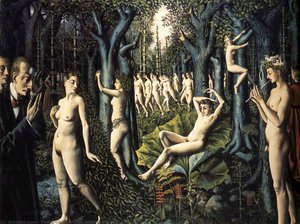
Biografía del artista
Primeros años e influencias
Paul Delvaux, un renombrado pintor belga, nació el 23 de septiembre de 1897 en Wanze, Bélgica. Sus primeros años estuvieron marcados por una variedad de intereses, incluyendo la música, los estudios de griego y latín, así como las obras de Julio Verne y Homero. Estas influencias más tarde moldearían su estilo artístico único.Desarrollo Artístico
El viaje artístico de Delvaux comenzó en la Academia Real de Bellas Artes de Bruselas, donde estudió arquitectura debido a la desaprobación de sus padres por su ambición de convertirse en pintor. Sin embargo, continuó persiguiendo la pintura, asistiendo a clases impartidas por Constant Montald y Jean Delville. Sus primeras obras, principalmente paisajes naturalistas, estuvieron influenciadas por expresionistas flamencos como Constant Permeke y Gustave De Smet.Período Surrealista
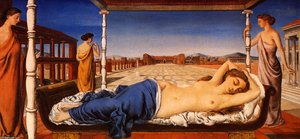
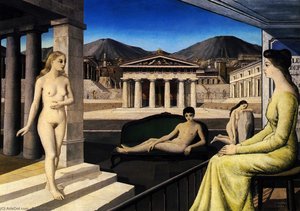
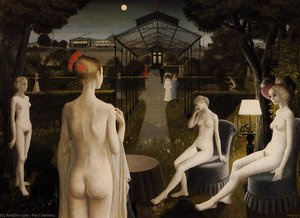
A finales de los años 20 y principios de los 30, las pinturas de Delvaux comenzaron a presentar desnudos en paisajes, mostrando su mezcla única de elementos clásicos y escenas oníricas. Este estilo estuvo fuertemente influenciado por el arte metafísico de Giorgio De Chirico, que conoció a finales de la década de 1920. Un ejemplo notable de este período es "La Venus Durmiente", una cautivadora pintura al óleo que ejemplifica el estilo surrealista de Delvaux.Obras Notables y Museos
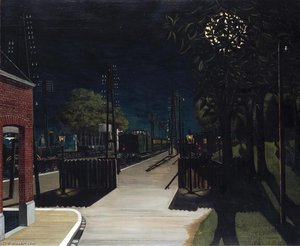
- "Noche de Tren" (1947), una obra maestra del surrealismo, se puede encontrar en el Musée de Toyama en Japón.
- La Tate Gallery en Londres presenta otra versión de "La Venus Durmiente", mostrando el trabajo a gran escala de Delvaux.
Legado e Impacto
El estilo único de Delvaux, que combina elementos clásicos con escenas oníricas, ha dejado un impacto duradero en el mundo del arte. Sus obras continúan siendo celebradas por su belleza y cualidades estéticas. Como artista, Delvaux sigue siendo una figura significativa en el movimiento surrealista, inspirando a futuras generaciones de artistas.- Descubre más sobre la vida y las obras de Paul Delvaux en https://ArtsDot.com/@/paul-delvaux
- Explora la historia del surrealismo y sus figuras clave en https://en.wikipedia.org/wiki/surrealism
- Aprende sobre el impacto del arte metafísico de Giorgio De Chirico en el trabajo de Delvaux en /es/art/show/art-d3cr9h-es/
- 23 de septiembre de 1897: Nació en Wanze, Bélgica
- 1944: Creó "La Venus Durmiente"
- 20 de julio de 1994: Falleció en Veurne, Bélgica

Paul Delvaux
1897 - 1994 , Bélgica
Datos clave
- Artistas Que Influyeron:
- René Magritte
- E. L. T. Mesens
- Giorgio de Chirico
- Fecha De Fallecimiento: 20 de julio de 1994
- Fecha De Nacimiento: 23 de septiembre de 1897
- Lugar De Nacimiento: Wanze, Bélgica
- Movimiento Artístico: Surrealismo
- Nacionalidad: Belga
- Nombre Completo: Paul Delvaux
- Obras Notables:
- El Bosque
- La Dama Rosa
- La Venus Durmiente
- Noche de Tren
Artículos relacionados
Paul Klee: Las 25 Obras Maestras que Definen un Genio del Arte Moderno | ArtsDot
Descubre las 25 obras maestras de Paul Klee, el genio del arte moderno. Explora su expresionismo único, composiciones abstractas y vibrantes paletas de colores. Reproducciones de alta calidad y decoración con arte en ArtsDot.com.

Paul Cézanne: Las 25 Obras Maestras que Definieron el Arte Moderno | ArtsDot
Descubre las 25 obras maestras de Paul Cézanne que revolucionaron el arte moderno. Explora su técnica, inspiración y significado en paisajes, bodegones y retratos. Reproducciones de alta calidad para decorar tu hogar con arte inolvidable. ¡Explora la colección completa en ArtsDot.com!
The Enigmatic Realm of Paul Delvaux: Surrealism, Memory & the Poetics of Disquiet
Explore the haunting dreamscapes of Paul Delvaux, a master of Surrealism. Discover his iconic motifs, classical influences & enduring legacy with ArtsDot.com.

The Enduring Legacy of Oil on Canvas: Technique, History & Aesthetic Impact
Explore the rich history & techniques of oil painting – from Renaissance masters to Impressionism. Discover pigments, layering methods, and why this timeless medium endures. Expert insights for artists & art enthusiasts.
10 Obras Maestras al Óleo sobre Tabla que Revolucionaron la Historia del Arte | ArtsDot
Descubre 10 obras maestras al óleo sobre tabla que revolucionaron el arte. Explora la historia de Van Gogh, Monet y otros artistas clave. Encuentra reproducciones de alta calidad e inspírate para decorar tu hogar con ArtsDot.com.