 Ver en contexto
 Enviar
 Compartir
 Detalles

 Descargar
 Similares
 Radiografía
 Presentación de diapositivas
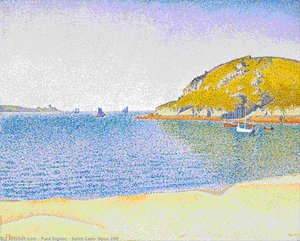
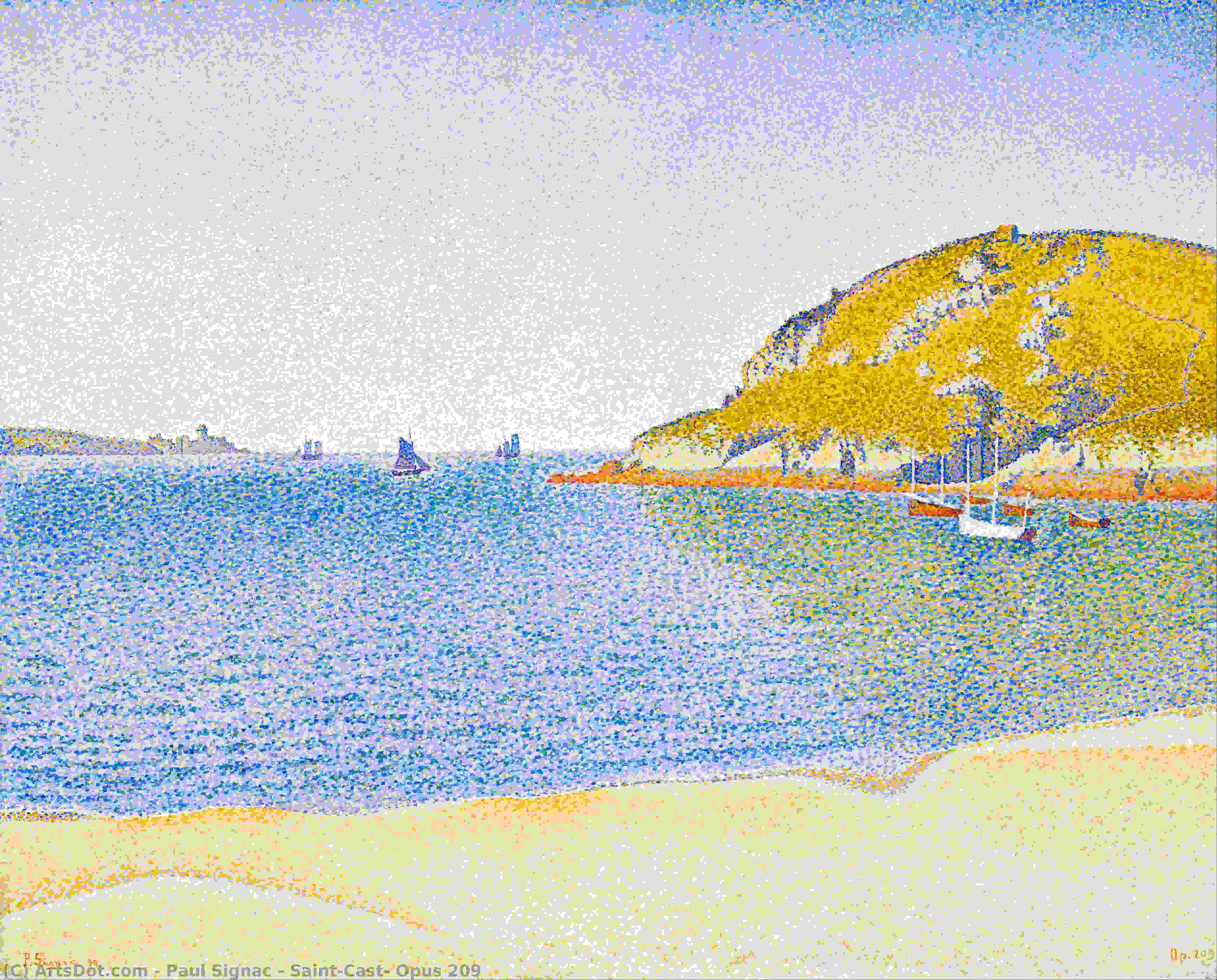
Puerto de Saint-Cast
 Acrílico sobre lienzo
- Arte de pared
- Neoimpresionismo
 1890
1890 82.0 x 66.0 cm
 Museo de Bellas Artes
 Ver más
Reproducción al óleo hecha a mano
Óleo sobre lienzo pintado a mano en el tamaño y marco de su elección, realizado por encargo por nuestros artistas. ( Comprar impresión Comprar imagen)




P118B $10

P118H $10

P118W $10

P438Z $10

P508JH $12

P508YH $12

P805H $10

P805Z $10

P919BZ $10

P919G $10

P919XJ $10

P959ZH $10

P968JZ $12

W106C $8

W218G $10

W218JH $8

W218Y $10

W307PJ $10

W316G $10

W316PJ $8

W316Y $10

W398PJ $8

W4111J $10

W500HY $15

W500JH $15

W692G $12

W849H $8

W940BG $15

W953PJ $8




Elija entre nuestros tamaños predefinidos que respetan las proporciones originales de la obra.

Puede ingresar sus propias dimensiones para adaptarse a un marco o espacio específico. Si el tamaño seleccionado no coincide con las proporciones de la imagen original, recortaremos la obra o extenderemos la pintura con elementos adicionales pintados a mano. Se le enviará una maqueta digital para su aprobación antes de comenzar la producción.
Tenga en cuenta que la vista previa en pantalla no refleja el recorte o la extensión reales. Solo la maqueta mostrará con precisión la composición final.
Si bien existen tamaños personalizados, recomendamos seleccionar una dimensión de la lista predefinida para preservar las proporciones originales.
Tras realizar el pedido, el equipo de ArtsDot.com enviará un correo electrónico al cliente para solicitar instrucciones y proporcionarle una vista previa del boceto.
Envío a todo el mundo () en 3-4 semanas en lugar de las 5 semanas estándar. (31 agosto). Sin comprometer la calidad.

Envío exprés gratuito a todo el mundo

Lienzo de lino de alta calidad

Seguro de envío total

Garantía de reembolso de impuestos aduaneros

Garantía de fidelidad cromática exacta

Política de devolución de 60 días (solo por defectos)

Garantía de devolución del 100% del dinero

Descuento por cantidad
 La opción de vidrio solo está disponible en tamaños inferiores a 110 cm.

Puerto de Saint-Cast
Técnica de reproducción
Dimensiones de la reproducción
-


Precio total final
$ 263
A Pioneering Vision of Impressionism
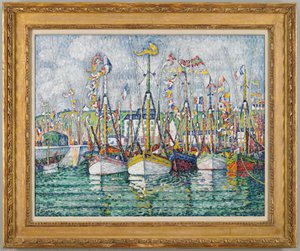
Paul Signac's “Port of Saint-Cast,” painted in 1890, stands as a cornerstone of Neo-Impressionism—a movement born from the restless spirit of artistic innovation that challenged the conventions of its predecessor. More than just a depiction of Brittany’s coastal landscape, it embodies Signac’s unwavering dedication to capturing the ephemeral beauty of light and color through a revolutionary technique: Pointillism. This approach, championed alongside Georges Seurat, wasn't merely about visual representation; it was an audacious attempt to decode the very essence of perception itself—a quest for scientific rigor infused with artistic sensitivity.The Genesis of Pointillism
Georges Seurat’s groundbreaking experiments with optical mixing laid the groundwork for Signac’s distinctive style. Recognizing that human vision blends colors subconsciously, Seurat meticulously applied tiny dots of pure pigment – rather than blending them on the canvas – creating an illusion of vibrancy and depth. This method demanded painstaking precision and unwavering patience, transforming painting into a complex interplay between science and art. Signac embraced this challenge wholeheartedly, elevating Pointillism to its zenith while retaining a profound connection to Impressionistic principles. The influence of Claude Monet’s explorations of light and atmosphere is palpable in Signac's compositional choices—a deliberate mirroring of Monet’s pioneering approach to capturing fleeting moments of natural beauty.A Detailed Examination of Saint-Cast
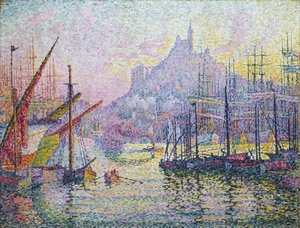
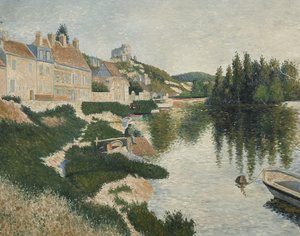
The painting itself presents a serene tableau of Saint Cast, Brittany. Dominating the canvas is the expansive ocean surface, rendered with an astonishing density of minuscule dots – predominantly blues and greens – that shimmer with reflected sunlight. Scattered across this watery expanse are several boats—some moored close to shore, others venturing further out into the sea—their hulls subtly textured by Signac’s meticulous brushwork. Three figures occupy the foreground, likely observing the harbor activity or tending to their vessels; they serve as anchors for the eye and contribute to the overall sense of tranquility. The artist's careful consideration of perspective ensures that depth is conveyed not through traditional shading but through variations in color intensity—a testament to Signac’s mastery of Pointillist technique.Symbolism and Artistic Harmony
Beyond its technical brilliance, “Port of Saint-Cast” resonates with symbolic significance. The coastal setting evokes images of maritime trade, exploration, and the enduring connection between humanity and nature. More importantly, Signac's unwavering commitment to color harmony—a core tenet of Neo-Impressionism—creates an emotional experience for the viewer. The dominant blues convey a feeling of calm contemplation, while subtle hints of yellow and orange inject warmth into the scene, mirroring the radiant glow of the sunlit sky. This masterful orchestration of hues underscores Signac’s belief that art should aspire to capture not just what is seen but also how it feels—a profound legacy for artists who followed in his footsteps.A Lasting Impression
Currently housed at the Museum of Fine Arts, Boston, “Port of Saint-Cast” remains a captivating exemplar of Neo-Impressionism’s artistic achievements and Signac's contribution to the broader trajectory of modern art history. Its enduring beauty lies not only in its meticulous execution but also in its ability to transport us back to a moment of serene contemplation—a timeless reminder of Signac’s visionary grasp of color, light, and the transformative power of artistic innovation.Obras relacionadas
Biografía del artista
Primeros años y formación
Paul victor jules signac, un pintor neoimpresionista francés, nació el 11 de noviembre de 1863 en París. Inicialmente, cursó estudios de arquitectura antes de decidirse a convertirse en pintor a los 18 años. Esta decisión fue influenciada por una exposición de la obra de Claude Monet.Estilo artístico e influencias
El estilo de Signac se caracterizó por el uso de pequeños puntos de color puro, que yuxtapuso para crear una sensación de profundidad y luz. Esta técnica, conocida como puntillismo, se desarrolló en colaboración con Georges Seurat. La obra de Signac también estuvo influenciada por sus viajes a lo largo de la costa europea, donde capturó la belleza de las ciudades portuarias en acuarelas.Obras notables y asociaciones
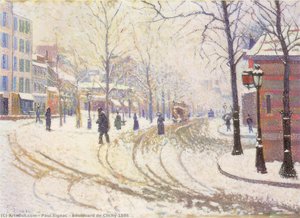
- Boulevard de Clichy (1886), una obra postimpresionista que muestra el meticuloso estilo de Signac.
- El boyero rojo, Saint-Tropez (1895), una vibrante pintura marina con un boi de color rojo anaranjado contra un fondo azul oscuro.
- Miembro fundador de la Société des Artistes Indépendants, que organizó exposiciones anuales que marcaron tendencias en el arte del siglo XX.
Legado e influencia
La obra de Signac tuvo un profundo impacto en el desarrollo del fauvismo, influyendo en artistas como Henri Matisse y André Derain. Como presidente de la Société des Artistes Indépendants, Signac apoyó a los artistas más jóvenes y expuso obras controvertidas de los fauves y los cubistas.- Explore más obras de Paul Signac en https://ArtsDot.com/@/paul-signac
- Descubra la técnica del puntillismo y su influencia en el neoimpresionismo en https://es.wikipedia.org/wiki/Puntillismo
Fechas clave
- 11 de noviembre de 1863: Nacimiento en París
- 1884: Co-fundación de la Société des Artistes Indépendants
- 15 de agosto de 1935: Fallecimiento a los 71 años
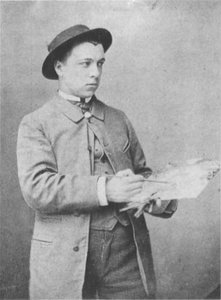
Paul Signac
1863 - 1935 , Francia
Datos clave
- Artistas Que Influyeron:
- Claude Monet
- Eugène Delacroix
- Georges Seurat
- Estilo Artístico: Neoimpresionismo, Puntillismo
- Fecha De Fallecimiento: 15 de agosto de 1935
- Fecha De Nacimiento: 11 de noviembre de 1863
- Influencia En Artistas:
- Henri Matisse
- André Derain
- Lugar De Nacimiento: París, Francia
- Nacionalidad: Francesa
- Nombre Completo: Paul Signac
- Obras Notables:
- Boulevard de Clichy (1886)
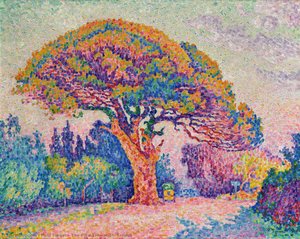
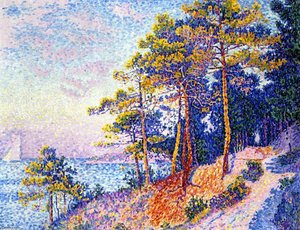
- El Pinar de Saint Tropez
- El Faro, Saint-Tropez
Artículos relacionados

Paul Cézanne: Las 25 Obras Maestras que Definieron el Arte Moderno | ArtsDot
Descubre las 25 obras maestras de Paul Cézanne que revolucionaron el arte moderno. Explora su técnica, inspiración y significado en paisajes, bodegones y retratos. Reproducciones de alta calidad para decorar tu hogar con arte inolvidable. ¡Explora la colección completa en ArtsDot.com!
Paul Klee: Las 25 Obras Maestras que Definen un Genio del Arte Moderno | ArtsDot
Descubre las 25 obras maestras de Paul Klee, el genio del arte moderno. Explora su expresionismo único, composiciones abstractas y vibrantes paletas de colores. Reproducciones de alta calidad y decoración con arte en ArtsDot.com.
Paul Signac: Pointillism, Politics & the Pursuit of Harmony in Modern Art
Explore the life & art of Paul Signac, a key figure in Neo-Impressionism. Discover his Pointillist technique, anarchist beliefs, and stunning coastal scenes. Learn about his influence on modern art history.
Islas Cromáticas: Explorando la Teoría y el Legado del Puntillismo en el Arte del Siglo XIX
Descubre el puntillismo: su origen, técnica innovadora y los artistas clave como Seurat y Signac. Explora la ciencia del color y su legado en la historia del arte. ¡Un análisis profundo y fascinante!
Impresionismo: 10 Obras Maestras que Capturan la Luz y el Momento
Descubre 10 obras maestras del impresionismo de Monet, Renoir y Degas. Explora la luz, el color y las historias detrás de estos icónicos cuadros. Reproducciones de arte en ArtsDot.com para decorar tu hogar con estilo.