 Ver en contexto
 Enviar
 Compartir
 Detalles

 Descargar
 Similares
 Radiografía
 Presentación de diapositivas
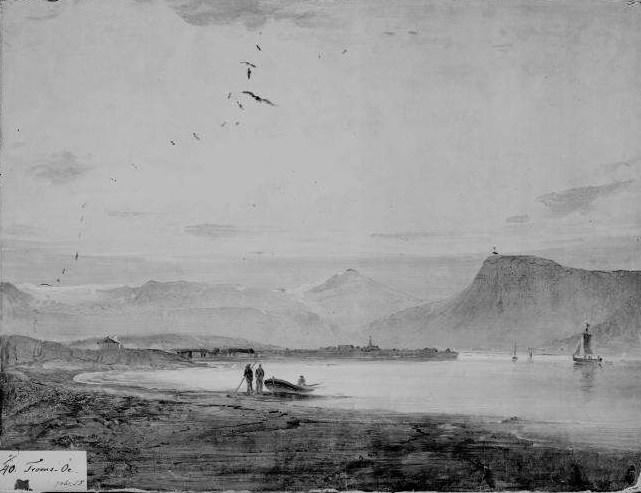
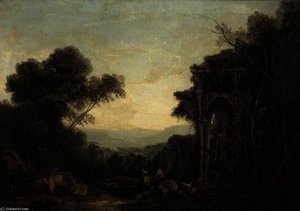
VUE DE TROMS OE (AUJOURD'HUI TROMSO)


 Ver más
Reproducción al óleo hecha a mano
Óleo sobre lienzo pintado a mano en el tamaño y marco de su elección, realizado por encargo por nuestros artistas. ( Comprar impresión Comprar imagen)




































Elija entre nuestros tamaños predefinidos que respetan las proporciones originales de la obra.

Puede ingresar sus propias dimensiones para adaptarse a un marco o espacio específico. Si el tamaño seleccionado no coincide con las proporciones de la imagen original, recortaremos la obra o extenderemos la pintura con elementos adicionales pintados a mano. Se le enviará una maqueta digital para su aprobación antes de comenzar la producción.
Tenga en cuenta que la vista previa en pantalla no refleja el recorte o la extensión reales. Solo la maqueta mostrará con precisión la composición final.
Si bien existen tamaños personalizados, recomendamos seleccionar una dimensión de la lista predefinida para preservar las proporciones originales.
Tras realizar el pedido, el equipo de ArtsDot.com enviará un correo electrónico al cliente para solicitar instrucciones y proporcionarle una vista previa del boceto.
Envío a todo el mundo () en 3-4 semanas en lugar de las 5 semanas estándar. (23 agosto). Sin comprometer la calidad.

Envío exprés gratuito a todo el mundo

Lienzo de lino de alta calidad

Seguro de envío total

Garantía de reembolso de impuestos aduaneros

Garantía de fidelidad cromática exacta

Política de devolución de 60 días (solo por defectos)

Garantía de devolución del 100% del dinero

Descuento por cantidad
 La opción de vidrio solo está disponible en tamaños inferiores a 110 cm.

VUE DE TROMS OE (AUJOURD'HUI TROMSO)
Técnica de reproducción
Dimensiones de la reproducción
-


Precio total final
$ 263
Descripción de la obra
A Sublime Echo of Northern Majesty: Exploring Peder Balke’s “Vue de Troms-Öe”
Peder Andersen Balke (1804 – 1887), born on the humble island of Helgøya in Norway, stands as a singular figure within the landscape tradition of the Romantic era. His life was marked by unwavering artistic dedication amidst challenging circumstances—a testament to the transformative power of passion and perseverance. Growing up immersed in the rugged beauty of the Norwegian countryside instilled in him an enduring fascination with nature’s grandeur, shaping his artistic vision for decades to come. Recognizing his innate talent early on, his community rallied together to secure him a crucial education – a poignant illustration of how creativity can flourish even within modest means. This formative encouragement propelled him toward formal training, initially under Heinrich August Grosch and Jacob Munch, before venturing abroad to hone his skills at the Royal Swedish Academy of Fine Arts in Stockholm alongside Carl Johan Fahlcrantz, ultimately refining his craft through meticulous observation and artistic experimentation.- Subject Matter: “Vue de Troms-Öe” captures a breathtaking panorama of Tromsø (formerly Tromsö), Norway—a coastal city nestled amidst towering mountains and icy fjords. Balke’s depiction isn't merely topographical; it strives to convey the very essence of the region’s dramatic landscape, embodying its austere majesty and captivating atmosphere.
- Style: The artwork firmly anchors itself within the Romantic movement, characterized by an intense emotional response to nature and a preoccupation with sublime beauty—a reaction against Enlightenment rationalism. Balke's style echoes the influence of Caspar David Friedrich and other German landscape painters who sought to evoke spiritual contemplation through meticulously rendered vistas.
- Technique: Executed in oil on canvas, “Vue de Troms-Öe” demonstrates Balke’s mastery of tonal gradation and textural detail. He employs a masterful blend of hatching, crosshatching, and glazing techniques—methods perfected during his time at Stockholm Academy—to achieve remarkable realism and luminosity. The artist's meticulous attention to capturing the subtleties of light and shadow contributes significantly to the painting’s emotive impact.
- Historical Context: Created around 1847, “Vue de Troms-Öe” reflects Balke’s ambition to secure royal patronage—a common aspiration among artists during the Victorian period. As part of a larger series commissioned by Louis Philippe I., it exemplifies the Romantic fascination with portraying dramatic landscapes as expressions of spiritual truth and artistic innovation.
- Symbolic Resonance: Beyond its visual splendor, “Vue de Troms-Öe” speaks to themes of solitude, contemplation, and the grandeur of the natural world—concepts central to Romantic philosophy. The muted palette and atmospheric perspective invite viewers to immerse themselves in a scene that transcends mere representation, fostering a feeling of profound connection with the environment. ## Detailed Analysis: Tromsø’s Silent Majesty The artwork presents a breathtaking panorama of Tromsø, Norway—a city nestled amidst towering mountains and icy fjords—captured with unwavering precision by Peder Balke. More than just a depiction of scenery, it embodies the Romantic spirit's yearning for transcendence through observation of nature’s sublime power. The artist’s deliberate choice of grayscale reinforces this mood, stripping away distracting color hues to focus solely on form and tonal variation—a technique reminiscent of Caspar David Friedrich’s iconic landscapes.
- Composition: Horizontal orientation dominates the canvas, emphasizing the vastness of Tromsø’s mountainous backdrop against which a small coastal settlement is delicately positioned. The shoreline serves as a visual anchor, guiding the eye upwards towards distant peaks shrouded in atmospheric haze—a compositional strategy designed to heighten the sense of depth and grandeur.
- Color Palette: Strikingly devoid of color, “Vue de Troms-Öe” utilizes subtle tonal shifts to sculpt form and convey mood. The darker hues of the foreground mountains contrast sharply with the paler tones of the distant peaks, simulating the effects of atmospheric perspective—a cornerstone of Romantic landscape painting.
- Technique: Executed in graphite or charcoal on paper, Balke’s method is characterized by meticulous hatching and cross-hatching—skills honed during his formative years at the Royal Swedish Academy of Fine Arts. These techniques imbue the artwork with textural richness, capturing the ruggedness of Tromsø's terrain and conveying a palpable sense of immediacy.
- Romantic Ideals: The painting embodies Romantic ideals of individualism, emotion, and reverence for the natural world—values championed by writers like Wordsworth and Coleridge during the same period.
- Peder Balke's Style: Balke’s distinctive style—characterized by bold lines and expressive shading—represents a departure from academic conventions prevalent in his time.
- Landscape as Reflection: Tromsø’s landscape serves as a mirror reflecting humanity's relationship with the natural world—a relationship marked by both admiration and apprehension.
- Emotional Impact: The artwork inspires feelings of serenity, wonder, and connection to the sublime—qualities that align perfectly with Romantic artistic aspirations.
Historical Context & Artistic Influences
Peder Balke’s oeuvre reflects the broader Romantic movement’s fascination with dramatic landscapes and its belief in art’s capacity to inspire awe and contemplation. Like Friedrich, he sought to portray nature not merely as an object of observation but as a force capable of elevating the human spirit—a conviction rooted in philosophical currents that questioned Enlightenment rationalism. The artwork's stylistic echoes of Friedrich are particularly evident in its subdued palette and masterful use of atmospheric perspective—elements that underscore Balke’s commitment to capturing the sublime beauty of Tromsø’s environment.Symbolism & Emotional Resonance
Beyond its formal qualities, “Vue de Troms-Öe (esquisse)” conveys profound symbolic meaning. The depiction of Tromsø’s coastline and distant mountains evokes a sense of solitude and remoteness—themes that resonate with the Romantic preoccupation with confronting existential questions. The muted tones contribute to an atmosphere of quiet contemplation, inviting viewers to immerse themselves in the grandeur of nature and reflect on its enduring power.Detailed Analysis & Artistic Merit
The artist’s masterful command of hatching and cross-hatching techniques elevates “Vue de Troms-Öe (esquisse)” beyond mere representation, transforming it into a powerful expression of visual artistry. The subtle gradations of gray capture the atmospheric perspective with remarkable precision—a hallmark of 19th-century landscape painting and particularly associated with Peder Balke’s oeuvre. Furthermore, the composition—horizontal and emphasizing depth—creates an immersive experience for the viewer, transporting them to the rugged beauty of Tromsø's northern Norwegian terrain. The artwork stands as a testament to Balke’s artistic vision and his ability to convey emotion through meticulous observation and skillful execution. Its enduring appeal lies in its capacity to evoke contemplation and inspire appreciation for the sublime grandeur of nature—a legacy that continues to captivate audiences today.Obras relacionadas

Biografía del artista
Peder Balke: Un Visionario Romántico Noruego
- Nacido: Hegøy, Noruega (1804)
- Fallecido: 1887
Primeros Años y Formación Artística
- Peder Andersen Balke nació en la isla de Helgøya, en el condado de Hedmark, Noruega. Creció en Ringsaker.
- Su familia eran agricultores, pero recibió apoyo de la comunidad local para perseguir sus ambiciones artísticas. Los agricultores de Toten pagaron su educación.
- Comenzó su formación como aprendiz de Heinrich August Grosch en 1827 y también estudió bajo Jacob Munch.
- De 1829 a 1833, fue alumno de Carl Johan Fahlcrantz en la Real Academia Sueca de Bellas Artes en Estocolmo.
- Posteriormente estudió con Johan Christian Dahl de 1843 a 1844.
Estilo Artístico y Obras Clave
- Pintura de Paisaje Romántico: Balke es conocido principalmente por sus representaciones dramáticas del paisaje noruego, caracterizadas por una sensibilidad romántica. Sus obras a menudo presentan una iluminación intensa, efectos atmosféricos y un sentido de grandeza sublime.
- Trabajo con el Pincel Único: Desarrolló un estilo distintivo con pinceladas texturizadas y un uso inusual del color, creando una calidad onírica en sus pinturas.
- Obras Notables: Algunas de sus obras más celebradas incluyen:
- Vue de Christiania (aujourd'hui Oslo) (1872) - Un paisaje urbano dramático que captura la esencia de Oslo.
- El Puerto de Skjervøy (1846) – Muestra una cautivadora escena portuaria con detalles realistas.
- Árboles Viejos (1840) – Representa un paisaje invernal noruego sombrío con una iluminación poderosa.
- Paisaje Marino (1845) - Un paisaje marino dramático que destaca la belleza agreste de la costa noruega.
- Fredrikshald (1852) – Presenta un castillo costero y barcos, mostrando su dominio del realismo.
- El Cabo Norte a la Luz de la Luna (1848) - Captura la belleza asombrosa del Cabo Norte bajo la luz de la luna.
Activismo Social y Vida Posterior
- Defensor de la Justicia Social: Balke no solo fue un artista, sino también un reformador social comprometido. Se involucró activamente en temas de justicia social.
- Proyecto Balkeby: Lideró la construcción de Balkeby, un nuevo suburbio de Oslo diseñado para proporcionar mejores condiciones de vida a los trabajadores. Proporcionó préstamos y estableció reglas estrictas de construcción.
- Defensa de los Artistas: Balke abogó por becas para artistas y pensiones tanto para hombres como para mujeres.
- Legado Familiar: Fue el bisabuelo de la actriz Turid Balke y el tatarabuelo del pianista de jazz Jon Balke.
Significado Histórico y Reconocimiento
- Redescubrimiento y Apreciación: Si bien inicialmente fue pasado por alto, el trabajo de Balke ha experimentado un resurgimiento significativo en el reconocimiento en las últimas décadas.
- Exposiciones Internacionales: Se han celebrado importantes exposiciones de su obra en instituciones prestigiosas como la Galería Nacional de Londres (2014-2015) y el Museo Metropolitano de Arte (2017).
- Influencia en el Arte Nórdico: El estilo y la visión únicos de Balke contribuyeron significativamente al desarrollo del arte romántico en Noruega y en la región nórdica más amplia. Sus pinturas ahora se consideran ejemplos importantes del arte noruego del siglo XIX, celebradas por sus paisajes dramáticos y profundidad emocional.
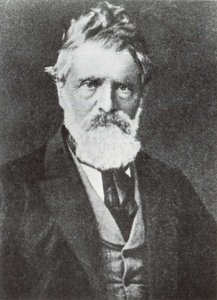
Peder Balke
1804 - 1887 , Noruega
Datos clave
- Artistas Que Influyeron:
- Heinrich August Grosch
- Carl Johan Fahlcrantz
- Johan Christian Dahl
- Fecha De Fallecimiento: 5 de febrero de 1887
- Fecha De Nacimiento: 4 de noviembre de 1804
- Lugar De Nacimiento: Hegøy, Noruega
- Movimiento Artístico: Romanticismo
- Nacionalidad: Noruego
- Nombre Completo: Peder Balke
- Obras Notables:
- Vue de Christiania (Oslo)
- El puerto de Skjervøy
- Árboles viejos
- Paisaje marino
- Fredrikshald
- El Cabo Norte a la luz de luna
Artículos relacionados

Paisajes Románticos: 10 Obras Maestras que Definieron un Movimiento Artístico
Descubre los 10 paisajes románticos más influyentes de artistas como Caspar David Friedrich y Turner. Explora la belleza, el simbolismo y las técnicas del movimiento romántico. Reproducciones de arte exclusivas en ArtsDot.com.
Johan Christian Dahl: Pioneering Norwegian Romantic Landscape Painting
Explore the life & art of Johan Christian Dahl, Norway's first great Romantic painter. Discover his iconic landscapes, cultural impact, and lasting legacy with ArtsDot.

Evocations of Place: A Historical Journey Through Landscape Art
Explore the rich history of landscape art with ArtsDot. Discover renowned artists, movements like Impressionism & Romanticism, and expert guidance for collecting timeless pieces. Find your perfect serene escape today!
El Sublime y lo Pintoresco: Explorando la Emoción y la Naturaleza en la Pintura Romántica de Paisaje
Explora la profunda conexión entre el arte romántico y la naturaleza. Descubre a Caspar David Friedrich, John Constable y otros maestros del sublime y lo pintoresco. Análisis experto e historia del movimiento.

John Constable: Las 25 Obras Maestras del Paisaje Inglés | ArtsDot
Descubre las 25 obras maestras de John Constable, el pintor romántico inglés que capturó la belleza del paisaje. Explora su técnica, historia y significado en ArtsDot.com. Reproducciones de arte de alta calidad para tu hogar.