

 Ver en contexto
 Enviar
 Compartir
 Detalles

 Descargar
 Similares
 Radiografía
 Presentación de diapositivas
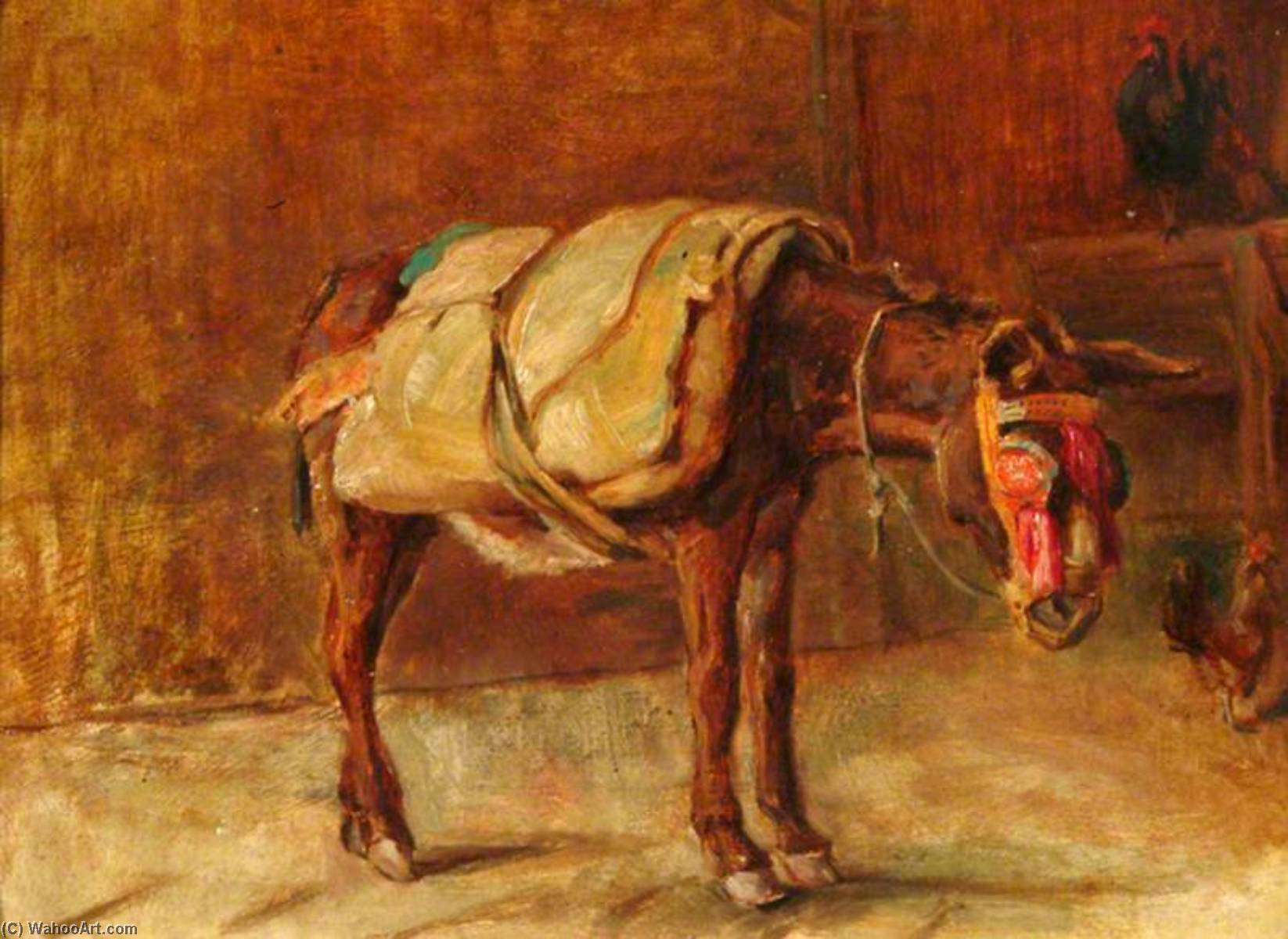
The Italian Donkey
 19.0 x 26.0 cm
 Ver más
Adquiera una imagen digital de alta resolución y optimizada, muy superior a la vista previa en línea.
Cada archivo es preparado meticulosamente por nuestros especialistas internos mediante el uso de herramientas avanzadas y un experto retoque manual. Nos aseguramos de que cada imagen posea una claridad excepcional, una precisión cromática impecable y un detalle minucioso.
El archivo final se entrega por correo electrónico en un plazo de 72 horas, optimizado para su uso inmediato en entornos profesionales, editoriales y de impresión. Esta es la misma calidad en la que confían los estudios de diseño, las editoriales y las galerías de primer nivel.
Imagen Digital
Descarga un archivo de alta resolución para exhibición personal, impresión y proyectos creativos. ( Comprar impresión Comprar pintura hecha a mano)
Incluido en cada pedido de imágenes digitales
Entrega digital experta, garantizada.
Al elegir ArtsDot.com, no solo está adquiriendo una imagen; está recibiendo una obra de arte digital mejorada profesionalmente, elaborada con precisión y respaldada por una garantía de satisfacción. Esto es todo lo que incluye su pedido, automáticamente:

Entrega rápida por email
Recibirá su archivo de imagen digital en alta resolución por correo electrónico en un plazo de 72 horas tras realizar su pedido, listo para su uso inmediato.

Archivo digital optimizado por IA
Su obra de arte se optimiza profesionalmente mediante herramientas avanzadas de IA y edición manual, garantizando el máximo detalle, claridad y precisión cromática.

Reenvío gratuito de por vida
¿Has borrado o perdido tu archivo por error? No te preocupes: te lo volveremos a enviar en cualquier momento, sin coste adicional.

Sin gastos de importación, siempre
Disfrute de su obra de arte al instante sin aduanas, aranceles ni gastos de envío; las descargas digitales siempre están libres de impuestos.

Garantía de fidelidad de color
Garantizamos que su imagen digital refleje los colores originales con la mayor fidelidad posible, mediante el uso de herramientas profesionales y gestión del color.

Garantía de satisfacción de 60 días
Si no está satisfecho con su imagen digital, la revisaremos o le reembolsaremos el 100% en un plazo de 60 días, sin preguntas.

100% Garantía de devolución de dinero
¿No está satisfecho? Obtenga un reembolso completo dentro de los 60 días posteriores a la recepción de su archivo digital, sin necesidad de explicaciones.

Descuentos por pedidos grandes
Compra 3 imágenes, ahorra 10% - Compra 5, ahorra 15% - Compra 10+, ahorra 20%. Ideal para proyectos creativos, galerías y agencias.
Descripción del coleccionable
Artistic Style and Technique
Percy Harland Fisher's use of oil as a medium allows for rich, vibrant colors to be used in The Italian Donkey. The brushstrokes are bold and expressive, giving the painting a sense of depth and texture. The artist's attention to detail is evident in the intricate depiction of the donkey's fur and the surrounding environment. Handmade oil paintings reproductions of The Italian Donkey can be found on ArtsDot.com, allowing art enthusiasts to own a piece of history. The website also features other works by Percy Harland Fisher, including The Grey Horse and Dobbin on the Path (also known as The Wooden Horse).Discovering the Surrey Heath Museum
The Surrey Heath Museum is a hidden gem for art enthusiasts, featuring an impressive collection of handmade oil paintings reproductions and print on canvas of famous artwork. Visitors can discover more about the museum and its art collection by reading Discovering the Surrey Heath Museum (United Kingdom) and its Art Collection on ArtsDot.com.- Percy Harland Fisher is a renowned artist known for his oil paintings.
- The Italian Donkey is one of his most famous works, currently displayed at the Surrey Heath Museum.
- Handmade oil paintings reproductions of The Italian Donkey are available on ArtsDot.com.
For more information about Percy Harland Fisher and his artwork, visit Percy Harland Fisher | ArtsDot.com.
Obras relacionadas




Biografía del artista
Percy Harland Fisher: A Pioneer of Robotic Art and Surgical Innovation
Percy Harland Fisher (1867-1944) remains a curiously compelling figure in the annals of 20th-century art, a British innovator whose legacy extends far beyond conventional artistic boundaries. Often described as a “robotic artist,” Fisher’s work wasn't merely about creating sculptures; it was an exploration into the intersection of mechanics, artistry, and nascent medical technology – a visionary pursuit that foreshadowed developments in surgical robotics decades before their widespread adoption. His career, though relatively short, is marked by a relentless drive to integrate intricate mechanical systems with artistic expression, resulting in a body of work both profoundly unique and remarkably prescient.
Born in Surrey, England, Fisher’s early life offered little indication of the extraordinary path he would forge. Details regarding his formal education are scarce, suggesting a self-taught approach deeply rooted in observation and experimentation. However, anecdotal evidence points to a fascination with clockwork mechanisms and automata from a young age – interests that would become central to his artistic philosophy. Fisher’s work began to gain recognition in the late 19th century, initially through miniature robotic figures and intricate mechanical devices displayed at exhibitions. These early creations weren't simply decorative; they demonstrated an uncanny ability to mimic human movement and behavior, hinting at a deeper understanding of biomechanics.
The TMINI System: A Leap into Surgical Applications
Fisher’s most significant contribution lies in the development of the TMINI system – a remarkably sophisticated miniature robotic arm designed for surgical applications. This wasn't a product of grand technological leaps, but rather a gradual accumulation of knowledge and painstaking refinement over several decades. The genesis of the TMINI can be traced back to Fisher’s observations of surgeons in action, coupled with his own mechanical expertise. He recognized the potential for robotic assistance to enhance precision, minimize invasiveness, and ultimately improve patient outcomes.
Unlike contemporary robotics that relied on bulky machinery, Fisher's design prioritized miniaturization and dexterity. The TMINI consisted of a series of interconnected gears, levers, and actuators – all meticulously crafted from brass, steel, and other precision metals. Crucially, Fisher integrated feedback mechanisms allowing the robot to respond to subtle movements initiated by the surgeon, effectively extending their own hand with unparalleled accuracy. While the system was never fully realized in clinical practice during his lifetime due to technological limitations of the era, its conceptual framework – a miniature robotic arm controlled by human intention – anticipated key advancements in surgical robotics that would emerge in the late 20th century.
Artistic Style and Influences
Fisher’s artistic style defies easy categorization. While undeniably influenced by Victorian-era mechanical art, his work transcends mere imitation. His creations possess a distinctly anthropomorphic quality – figures imbued with a sense of personality and emotion through subtle gestures and facial expressions. The meticulous detail evident in each component, from the intricate gears to the delicately sculpted limbs, speaks to a profound respect for craftsmanship and an unwavering commitment to realism.
Beyond mechanical influences, Fisher’s work demonstrates a sensitivity to classical sculpture and portraiture. His miniature figures often resemble idealized human forms, reminiscent of ancient Greek statues – a testament to his appreciation for timeless beauty and enduring artistic principles. Furthermore, the use of muted color palettes and soft lighting in many of his pieces evokes a sense of nostalgia and quiet contemplation, mirroring the emotional depth found in traditional oil paintings.
Legacy and Historical Significance
Despite facing skepticism and resistance from the established art world, Percy Harland Fisher’s work has garnered increasing recognition in recent decades. His pioneering efforts in robotic art are now viewed as remarkably prescient, foreshadowing developments in fields ranging from medical robotics to industrial automation. The TMINI system, though never fully implemented during his lifetime, stands as a testament to Fisher's visionary thinking and technical ingenuity.
Fisher’s legacy extends beyond the purely artistic realm. His work serves as a powerful reminder of the potential for art to inspire innovation and challenge conventional boundaries. He was not simply an artist; he was a mechanical engineer, a sculptor, and a futurist – a truly unique individual whose contributions continue to resonate with artists and scientists alike. Further research into his life and works is ongoing, promising to reveal even greater insights into the mind of this extraordinary pioneer.

percy harland fisher
1867 - 1944
Breves datos
- Artistic Movement Or Style: Miniature robotics art
- Artists Or Movements Influenced By This Artist: ['TMINI Robotic System']
- Artists Who Influenced This Artist: ['Admiral Scott']
- Date Of Birth: 1867
- Date Of Death: 1944
- Full Name: Percy Harland Fisher
- Nationality: British
- Notable Artworks:
- Mrs Hudson
- The Italian Donkey
- Dog With His Master's Dinner
- Place Of Birth: WahooArt, USA

