

 Ver en contexto
 Enviar
 Compartir
 Detalles

 Descargar
 Similares
 Radiografía
 Presentación de diapositivas
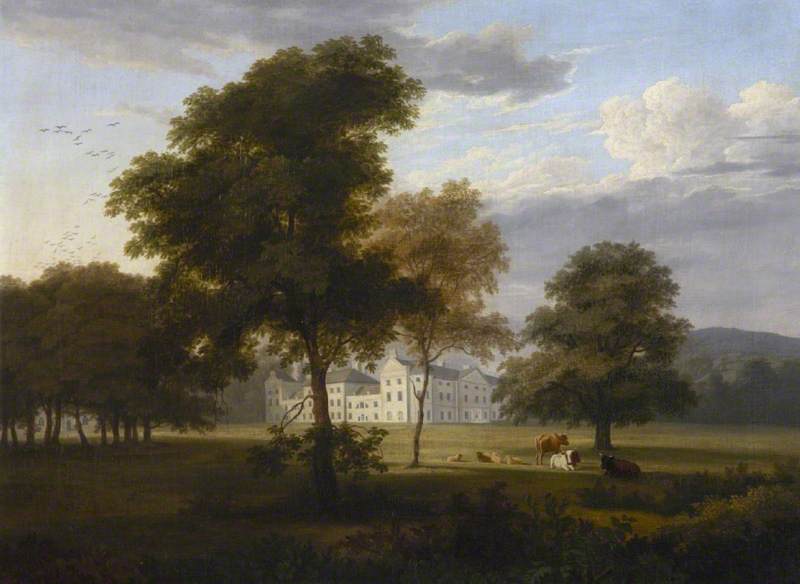
Saltram from the South West
 Romanticism
 1813
1813 49.0 x 66.0 cm
 National Trust
 Ver más
Giclée / Impresión de arte
Impresiones giclée o en lienzo de calidad de museo con producción rápida y opciones de acabado flexibles. ( Comprar pintura hecha a mano Comprar imagen)




































Elija entre nuestros tamaños predefinidos que respetan las proporciones originales de la obra.

Puede introducir sus propias dimensiones para adaptarse a un marco o espacio específico. Si el tamaño seleccionado no coincide con las proporciones de la imagen original, recortaremos la obra de arte o extenderemos la imagen con un borde con efecto espejo o de color sólido. Se enviará una maqueta digital para su aprobación antes de que comience la producción.
Tenga en cuenta que la vista previa en pantalla no refleja el recorte o la extensión real. Solo la maqueta mostrará con precisión la composición final.
Aunque existen tamaños personalizados, recomendamos seleccionar una dimensión de la lista predefinida para preservar las proporciones originales.
Envío a todo el mundo () en 2 semanas en lugar de las 4/5 semanas estándar. (22 agosto)

Envío exprés gratuito a todo el mundo

Lienzo de lino de alta calidad

Seguro de envío total

Garantía de reembolso de impuestos aduaneros

Garantía de fidelidad cromática exacta

Política de devolución de 60 días (solo por defectos)

Garantía de devolución del 100% del dinero

Descuento por cantidad
 La opción de vidrio solo está disponible en tamaños inferiores a 110 cm.

Saltram from the South West
Giclée / Impresión de arte
Dimensiones de la reproducción
-


Precio total final
$ 62
Obras relacionadas
Biografía del artista
Philip Hutchins Rogers (1794 – 1853): A Pioneer of Romantic Landscape Painting
Philip Hutchins Rogers (1794–1853) stands as a significant figure in the annals of British landscape painting, embodying the spirit of Romanticism and marking a pivotal moment in artistic innovation. Born in Plymouth, Devon, Rogers’s formative years were steeped in the burgeoning intellectual fervor of his time—a period characterized by fascination with nature, emotion, and sublime grandeur.
- Early Life & Education: Rogers received his education at Plymouth Grammar School under Dr. John Bidlake, a renowned botanist and geologist who instilled in him a profound appreciation for the natural world. Alongside fellow artists Samuel Prout, Benjamin Haydon, and Charles Lock Eastlake, he honed his artistic skills—a collective that would profoundly shape the aesthetic sensibilities of their era.
- The Influence of Bidlake & Romantic Ideals: Bidlake’s teachings directly impacted Rogers's artistic vision, fostering a belief in capturing not merely visual representations but also conveying the emotional essence of landscapes. This conviction aligns perfectly with the core tenets of Romanticism—a movement that prioritized subjective experience and imaginative interpretation over rational observation.
- Notable Works: Rogers achieved considerable renown for his depictions of Dartmoor National Park, where he meticulously rendered its rugged terrain and atmospheric conditions. His masterpiece, *The Bombardment of Algiers*, commissioned by the Royal Academy in 1813, garnered critical acclaim and was subsequently engraved—a testament to his technical prowess and artistic ambition. Furthermore, Rogers’s explorations of the Spanish coast yielded evocative panoramas that captured the dramatic beauty of the Mediterranean landscape.
Rogers's artistic style distinguished itself through a commitment to realism tempered by expressive brushwork and a masterful use of color—techniques that effectively conveyed the sublime qualities of nature. He skillfully employed convex glass backing, enhancing the luminosity and depth of his paintings, reflecting the Romantic preoccupation with capturing fleeting moments of visual splendor.
- Technique & Materials: Rogers utilized silk or white ‘composition’ as a substrate for his canvases—a practice common during his time—resulting in durable artworks that endure to this day. His etched illustrations for *Dartmoor* exemplify his meticulous attention to detail and his ability to translate geological formations into compelling visual narratives.
- Recognition & Legacy: Rogers's paintings were exhibited at the Royal Academy until 1835, securing his place among Britain’s leading landscape artists. Today, his works reside in collections such as Saltram House—a tangible reminder of his contribution to British art history and a celebration of Romantic idealism.
Rogers's legacy extends beyond his individual achievements; he represents the culmination of scientific observation combined with artistic sensitivity—a paradigm that continues to inspire artists striving to capture the grandeur and emotional resonance of the natural world. His enduring influence underscores the transformative power of art as a medium for conveying profound ideas about humanity’s relationship with its environment.
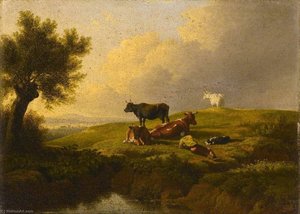
philip hutchins rogers
1794 - 1853
Datos clave
- Artistic Movement Or Style: Romanticism
- Artists Or Movements Influenced By This Artist: ['Charles Lock Eastlake']
- Artists Who Influenced This Artist:
- John Bidlake
- Samuel Prout
- Date Of Birth: 1794 Plymouth Devon England
- Date Of Death: 1853 Lichtenthal Baden-Baden Germany
- Full Name: Philip Hutchins Rogers
- Nationality: English
- Notable Artworks:
- The Bombardment of Algiers
- Dartmoor
- Place Of Birth: Plymouth England
Artículos relacionados
Idyllic Visions: Exploring the Pastoral Scene in Art History – From Arcadia to Modern Interpretations
Explore the captivating history of pastoral art from classical Arcadia to modern masterpieces. Discover key artists like Millet & Cole at ArtsDot. Find serene landscape paintings for your home.
Idyllic Visions: Exploring the Pastoral Tradition in Western Art – Themes, Techniques & Enduring Appeal
Explore the rich history of pastoral art from classical Arcadia to contemporary interpretations. Discover key artists, themes & collecting tips at ArtsDot.
George Barret the Elder: Pioneering British Pastoral Painting & Landscape's Rise
Explore the life & art of George Barret Sr., a pioneer of British pastoral painting. Discover his influence on Romantic landscape art, patronage, and collecting tips from ArtsDot.

Evocations of Place: A Historical Journey Through Landscape Art
Explore the rich history of landscape art with ArtsDot. Discover renowned artists, movements like Impressionism & Romanticism, and expert guidance for collecting timeless pieces. Find your perfect serene escape today!

Paisajes Románticos: 10 Obras Maestras que Definieron un Movimiento Artístico
Descubre los 10 paisajes románticos más influyentes de artistas como Caspar David Friedrich y Turner. Explora la belleza, el simbolismo y las técnicas del movimiento romántico. Reproducciones de arte exclusivas en ArtsDot.com.

