

 Ver en contexto
 Enviar
 Compartir
 Detalles

 Descargar
 Similares
 Radiografía
 Presentación de diapositivas
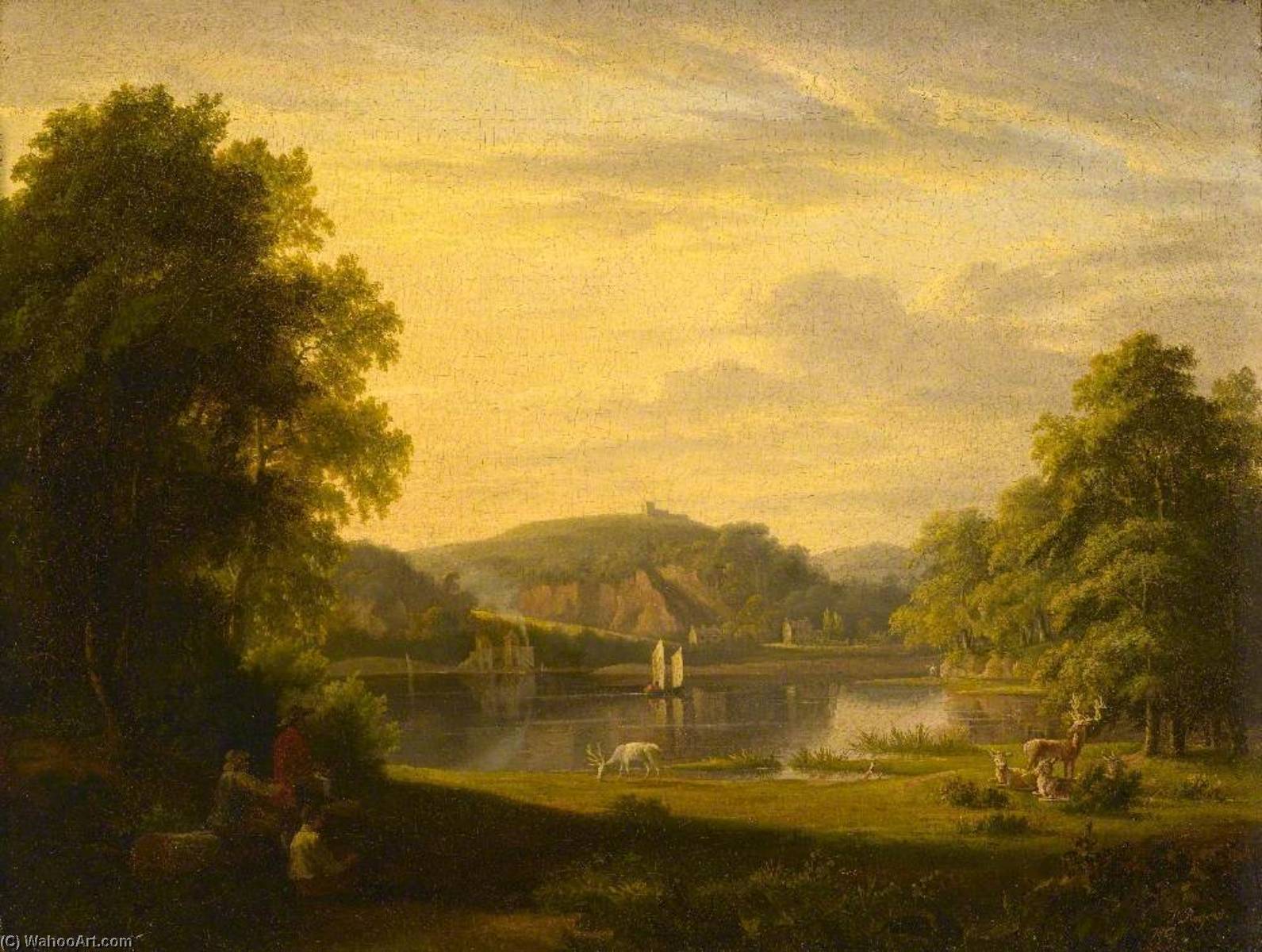
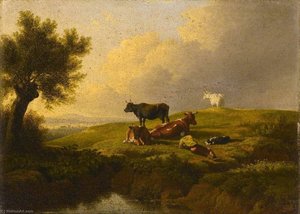
View of the Plym from the Grounds of Saltram House
 1812
1812 41.0 x 53.0 cm
 Museo Real de la Memoria y el Arte
 Ver más
Reproducción al óleo hecha a mano
Óleo sobre lienzo pintado a mano en el tamaño y marco de su elección, realizado por encargo por nuestros artistas. ( Comprar impresión Comprar imagen)




































Elija entre nuestros tamaños predefinidos que respetan las proporciones originales de la obra.

Puede ingresar sus propias dimensiones para adaptarse a un marco o espacio específico. Si el tamaño seleccionado no coincide con las proporciones de la imagen original, recortaremos la obra o extenderemos la pintura con elementos adicionales pintados a mano. Se le enviará una maqueta digital para su aprobación antes de comenzar la producción.
Tenga en cuenta que la vista previa en pantalla no refleja el recorte o la extensión reales. Solo la maqueta mostrará con precisión la composición final.
Si bien existen tamaños personalizados, recomendamos seleccionar una dimensión de la lista predefinida para preservar las proporciones originales.
Tras realizar el pedido, el equipo de ArtsDot.com enviará un correo electrónico al cliente para solicitar instrucciones y proporcionarle una vista previa del boceto.
Envío a todo el mundo () en 3-4 semanas en lugar de las 5 semanas estándar. (6 septiembre). Sin comprometer la calidad.

Envío exprés gratuito a todo el mundo

Lienzo de lino de alta calidad

Seguro de envío total

Garantía de reembolso de impuestos aduaneros

Garantía de fidelidad cromática exacta

Política de devolución de 100 días (solo por defectos)

Garantía de devolución del 100% del dinero

Descuento por cantidad
 La opción de vidrio solo está disponible en tamaños inferiores a 110 cm.

View of the Plym from the Grounds of Saltram House
Técnica de reproducción
Dimensiones de la reproducción
-


Precio total final
$ 263
Obras relacionadas




Biografía del artista
The Soul of the Landscape: The Life and Legacy of Philip Hutchins Rogers
In the golden age of British Romanticism, few artists captured the profound dialogue between humanity and the natural world as poignantly as Philip Hutchins Rogers. Born in the coastal environs of Plymouth, Devon, in 1794, Rogers emerged from a period of intense intellectual awakening. His early years were shaped by the rugged beauty of the English West Country, a landscape that would serve as both his muse and his primary subject. This formative connection to the earth was deepened through his education at Plymouth Grammar School, where he studied under the esteemed botanist and geologist Dr. John Bidlake. It was under Bidlake’s tutelage that Rogers learned to look beyond the mere surface of nature, developing an eye for the scientific precision of flora and geology while simultaneously nurturing a Romantic sensibility that sought the emotional resonance within the wild.
The artistic circle in which Rogers moved was nothing short of extraordinary. Alongside contemporaries such as Samuel Prout, Benjamin Haydon, and Charles Lock Eastlake, he participated in a shared movement that redefined the boundaries of British landscape and marine painting. This cohort of artists shared a fascination with the sublime—the idea that nature could evoke feelings of awe, terror, and spiritual transcendence. Rogers’s work became a bridge between the meticulous observation of his scientific mentors and the expressive, often dramatic, interpretations characteristic of the Romantic era. His ability to blend a commitment to realism with an evocative use of light and atmosphere allowed him to create works that felt both tangibly real and deeply dreamlike.
Mastery of Light and Atmosphere
Rogers’s technical evolution is most evident in his diverse range of subjects, from the maritime drama of the English Channel to the tranquil vistas of the European continent. One of his most significant early achievements was the 1813 masterpiece, The Bombardment of Algiers. Commissioned by the Royal Academy, this ambitious work demonstrated his capacity for large-scale narrative painting and technical prowess, earning critical acclaim and a subsequent engraving that brought his vision to a wider public. This period of his career showcased a mastery of movement and tension, capturing the chaotic energy of naval conflict against the backdrop of an unforgiving sea.
As his career progressed, Rogers’s focus shifted toward more serene and contemplative landscapes. His depictions of Dartmoor National Park are particularly noteworthy; in these works, he meticulously rendered the rugged terrain, the shifting mists, and the atmospheric weight of the moorland, turning the local landscape into a stage for emotional expression. This talent for capturing the "spirit of place" extended to his travels across Europe. His explorations of the Spanish coast yielded evocative panoramas of the Mediterranean, while his later years spent on the Continent—driven by both economic necessity and artistic curiosity—led to stunning depictions of the German countryside. His 1838 work, Bavarian Landscape, stands as a testament to this period, showcasing a peaceful, idyllic harmony between rural life and the majestic mountains of Germany.
A Lasting Impression on British Art
The significance of Philip Hutchins Rogers lies in his ability to harmonize the scientific with the poetic. While his works often featured local views around Plymouth—some of which found permanent homes in prestigious collections like Saltram House—they were never merely topographical records. Instead, they were windows into a world where every hill, tree, and wave carried a weight of meaning. His style, characterized by expressive brushwork and a sophisticated use of color, helped pave the way for future generations of landscape painters to explore the subjective experience of the natural world.
Though he passed away in 1853 near Baden-Baden, his contribution to the British school of painting remains indelible. His legacy is found in:
- The integration of scientific observation and Romantic emotion, a hallmark of his training under Dr. Bidlake.
- The elevation of local landscapes, such as Dartmoor and Plymouth Sound, into subjects of high art and national importance.
- A versatile mastery of genre, ranging from the intense drama of marine combat to the quietude of pastoral European scenes.
Today, the works of Rogers continue to resonate with those who find beauty in the interplay of light, shadow, and the enduring majesty of the earth.
philip hutchins rogers
1794 - 1853
Datos clave
- Artistic Movement Or Style: Romanticism
- Artists Or Movements Influenced By This Artist: ['Charles Lock Eastlake']
- Artists Who Influenced This Artist:
- John Bidlake
- Samuel Prout
- Date Of Birth: 1794 Plymouth Devon England
- Date Of Death: 1853 Lichtenthal Baden-Baden Germany
- Full Name: Philip Hutchins Rogers
- Nationality: English
- Notable Artworks:
- The Bombardment of Algiers
- Dartmoor
- Place Of Birth: Plymouth England