

 Ver en contexto
 Enviar
 Compartir
 Detalles

 Descargar
 Similares
 Radiografía
 Presentación de diapositivas
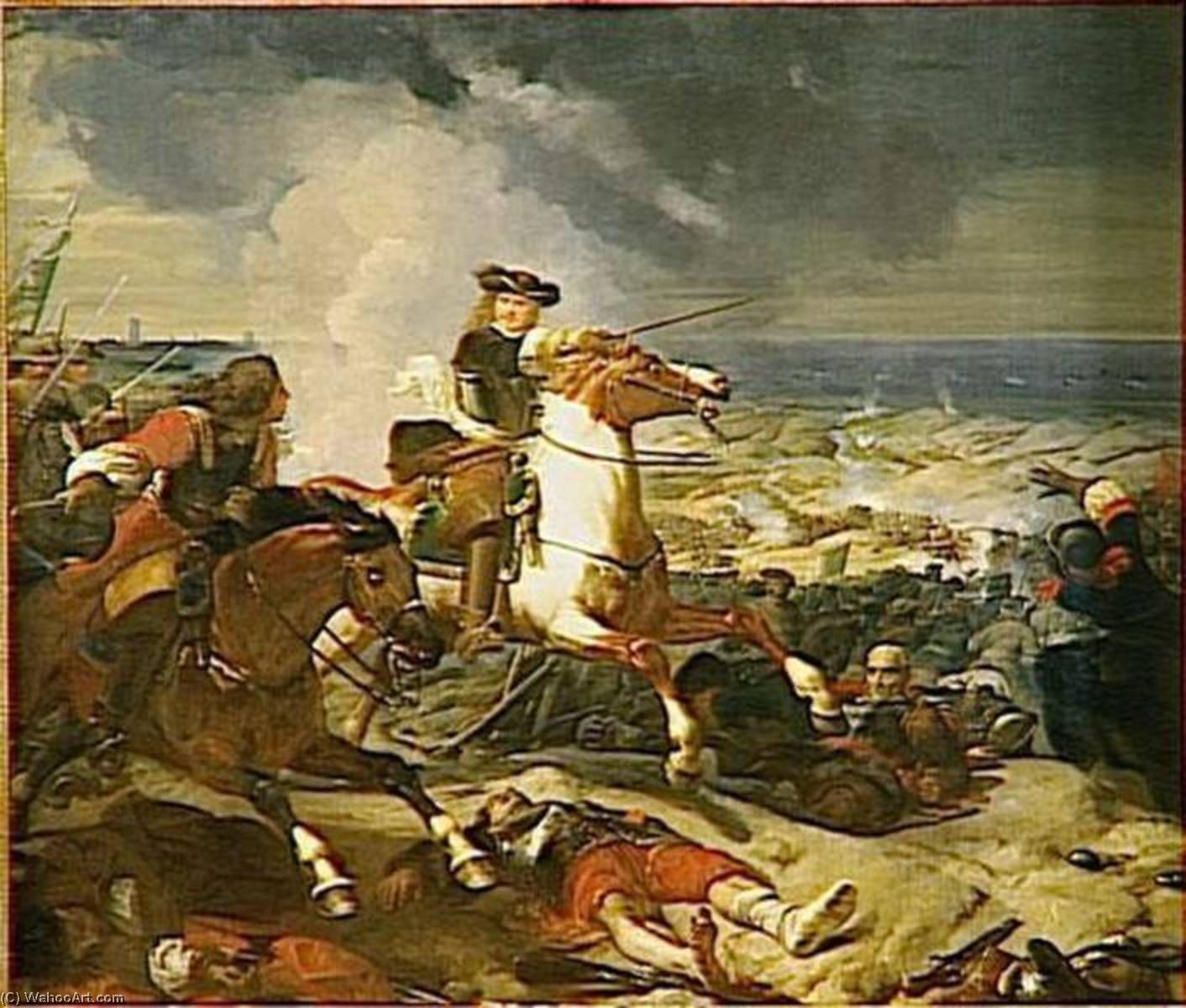
BATAILLE DES DUNES.21 JUIN 1658
 Ver más
Adquiera una imagen digital de alta resolución y optimizada, muy superior a la vista previa en línea.
Cada archivo es preparado meticulosamente por nuestros especialistas internos mediante el uso de herramientas avanzadas y un experto retoque manual. Nos aseguramos de que cada imagen posea una claridad excepcional, una precisión cromática impecable y un detalle minucioso.
El archivo final se entrega por correo electrónico en un plazo de 72 horas, optimizado para su uso inmediato en entornos profesionales, editoriales y de impresión. Esta es la misma calidad en la que confían los estudios de diseño, las editoriales y las galerías de primer nivel.
Imagen Digital
Descarga un archivo de alta resolución para exhibición personal, impresión y proyectos creativos. ( Comprar impresión Comprar pintura hecha a mano)
Incluido en cada pedido de imágenes digitales
Entrega digital experta, garantizada.
Al elegir ArtsDot.com, no solo está adquiriendo una imagen; está recibiendo una obra de arte digital mejorada profesionalmente, elaborada con precisión y respaldada por una garantía de satisfacción. Esto es todo lo que incluye su pedido, automáticamente:

Entrega rápida por email
Recibirá su archivo de imagen digital en alta resolución por correo electrónico en un plazo de 72 horas tras realizar su pedido, listo para su uso inmediato.

Archivo digital optimizado por IA
Su obra de arte se optimiza profesionalmente mediante herramientas avanzadas de IA y edición manual, garantizando el máximo detalle, claridad y precisión cromática.

Reenvío gratuito de por vida
¿Has borrado o perdido tu archivo por error? No te preocupes: te lo volveremos a enviar en cualquier momento, sin coste adicional.

Sin gastos de importación, siempre
Disfrute de su obra de arte al instante sin aduanas, aranceles ni gastos de envío; las descargas digitales siempre están libres de impuestos.

Garantía de fidelidad de color
Garantizamos que su imagen digital refleje los colores originales con la mayor fidelidad posible, mediante el uso de herramientas profesionales y gestión del color.

Garantía de satisfacción de 60 días
Si no está satisfecho con su imagen digital, la revisaremos o le reembolsaremos el 100% en un plazo de 60 días, sin preguntas.

100% Garantía de devolución de dinero
¿No está satisfecho? Obtenga un reembolso completo dentro de los 60 días posteriores a la recepción de su archivo digital, sin necesidad de explicaciones.

Descuentos por pedidos grandes
Compra 3 imágenes, ahorra 10% - Compra 5, ahorra 15% - Compra 10+, ahorra 20%. Ideal para proyectos creativos, galerías y agencias.
Obras relacionadas









Biografía del artista
A Legacy Forged in Classicism: The Life and Art of Charles-Philippe Larivière
Charles-Philippe Larivière, born in 1798 and passing in 1876, stands as a compelling figure within the landscape of 19th-century French academic painting. Though perhaps not a household name today, his career embodies the transition between Neoclassical rigor and the burgeoning Romantic sensibility, ultimately solidifying his reputation as a skilled history painter specializing in scenes of both grand public events and intimate medieval narratives. Larivière’s artistic journey was one deeply rooted in formal training, nurtured by some of the most prominent artists of his time—Paulin Guérin, Jean-Antoine Girodet-Trioson, and Antoine-Jean Gros—and punctuated by prestigious accolades that propelled him into a position of official recognition within the French art establishment. His life unfolded against a backdrop of shifting political tides and evolving artistic tastes, influencing both the subject matter he chose to depict and the manner in which he approached his craft.Early Training and Roman Sojourn
Larivière’s dedication to painting was evident early on, leading him to enter the École des Beaux-Arts in 1813. This immersion into the established artistic curriculum provided a solid foundation in draftsmanship and composition. His talent quickly became apparent; he achieved second prize in the coveted Prix de Rome competition in 1819, followed by a *médaille d'encouragement* in 1820—signals of his burgeoning potential. However, it was his triumph in 1824, winning first prize with “The Death of Alcibiades,” that truly marked a turning point. This victory secured him the esteemed opportunity to reside at the Villa Medici in Rome from 1824 to 1830. The years spent in Italy were formative, allowing Larivière to study firsthand the masterpieces of classical antiquity and Renaissance art. While steeped in this tradition, he also absorbed the growing currents of Romanticism that swept across Europe, a duality that would become characteristic of his mature style.A Painter of History: Themes and Techniques
Upon returning to France, Larivière established himself as an official artist specializing in historical paintings. His subject matter was diverse, yet consistently focused on moments of national significance or dramatic episodes from the past. He became particularly known for his depictions of battles—not merely as scenes of conflict, but as opportunities to explore themes of heroism, sacrifice, and patriotism. The *Ancien Régime* provided ample inspiration, with Larivière recreating pivotal clashes like “The Battle of the Dunes” with meticulous detail and a sense of theatrical grandeur. He also turned his attention to medieval history, bringing to life events such as the battles of Montgisard and Castillon. His technique blended the precision of classical training with a Romantic flair for dramatic lighting and emotional intensity. Larivière’s canvases are characterized by carefully rendered figures, dynamic compositions, and a rich palette that evokes both realism and a sense of historical atmosphere. He wasn't solely focused on large-scale battle scenes; portraits of prominent public figures and religious works also featured in his oeuvre, demonstrating the breadth of his skill.Recognition and Public Commissions
Larivière’s talent did not go unnoticed. He debuted at the Paris Salon in 1827 and continued to exhibit regularly, earning medals in both 1831 and 1855—testaments to his growing reputation among critics and collectors. Crucially, he benefitted from significant public commissions, a hallmark of success for an academic painter of the period. Perhaps most notably, he contributed three paintings to the *Galerie des Batailles* at the Château de Versailles, solidifying his place within the national artistic narrative. In 1836, he was awarded the Légion d'honneur, further cementing his status as a respected artist. His international recognition extended beyond France; he received the Tunisian *Nichan Iftikhar*, acknowledging his contributions to the arts on a broader scale.Lasting Influence and Artistic Legacy
Charles-Philippe Larivière’s artistic lineage is noteworthy, being the grandson of painter Charles Lepointre. His familial connection to the art world undoubtedly influenced his early development. He also held a close relationship with Albert Maigna through marriage. Beyond personal connections, his work reflects a fascinating intersection of artistic movements. While firmly grounded in classical principles—evident in his precise draftsmanship and compositional balance—he embraced the emotional intensity and dramatic flair of Romanticism. His portraits of historical figures for the Musée d'Histoire de France at Versailles, including Marshals Rochambeau, Bugeaud, and Saint-Arnaud, remain valuable historical documents. Even his decorative work, such as the chapel dedicated to Saint-Eustache and cartoons for stained glass windows at the Chapelle Royale de Dreux, demonstrate his versatility. The final painting by Larivière to enter a French public collection—"Le Tasse convalescent au couvent de Saint-Onufre," acquired in 2001 by the Museum of Grenoble—serves as a poignant reminder of his enduring artistic legacy. His work continues to offer insights into the complexities of 19th-century French art and the evolving representation of history, heroism, and national identity.
philippe lariviere
1798 - 1876
Breves datos
- Artistic Movement Or Style: Academic painting, Romanticism
- Artists Who Influenced This Artist:
- Paulin Guérin
- Girodet-Trioson
- Antoine-Jean Gros
- Date Of Birth: 1798
- Date Of Death: 1876
- Full Name: Charles-Philippe Larivière
- Nationality: French
- Notable Artworks:
- Death of Alcibiades
- Battle of the Dunes
- Montgisard
- Castillon

