 Ver en contexto
 Enviar
 Compartir
 Detalles

 Descargar
 Similares
 Radiografía
 Presentación de diapositivas
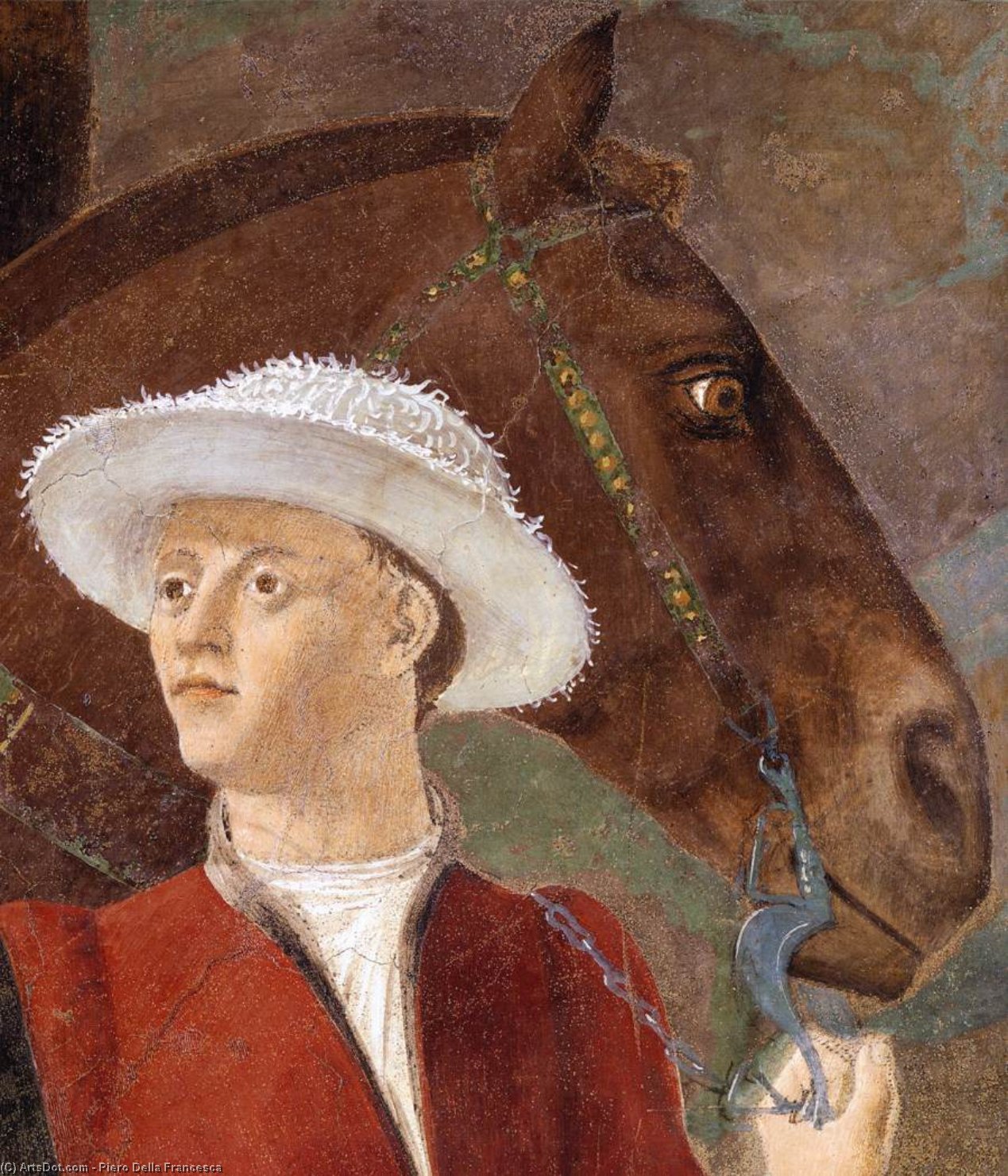
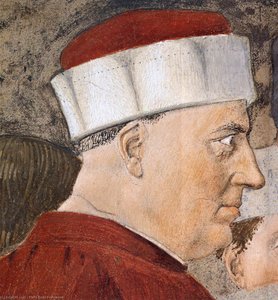
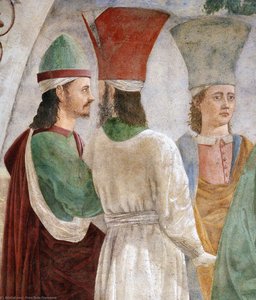
2a. Procession of the Queen of Sheba (detail) (15)


 Ver más
Reproducción al óleo hecha a mano
Óleo sobre lienzo pintado a mano en el tamaño y marco de su elección, realizado por encargo por nuestros artistas. ( Comprar impresión Comprar imagen)




P118B $10

P118H $10

P118W $10

P438Z $10

P508JH $12

P508YH $12

P805H $10

P805Z $10

P919BZ $10

P919G $10

P919XJ $10

P959ZH $10

P968JZ $12

W106C $8

W218G $10

W218JH $8

W218Y $10

W307PJ $10

W316G $10

W316PJ $8

W316Y $10

W398PJ $8

W4111J $10

W500HY $15

W500JH $15

W692G $12

W849H $8

W940BG $15

W953PJ $8




Elija entre nuestros tamaños predefinidos que respetan las proporciones originales de la obra.

Puede ingresar sus propias dimensiones para adaptarse a un marco o espacio específico. Si el tamaño seleccionado no coincide con las proporciones de la imagen original, recortaremos la obra o extenderemos la pintura con elementos adicionales pintados a mano. Se le enviará una maqueta digital para su aprobación antes de comenzar la producción.
Tenga en cuenta que la vista previa en pantalla no refleja el recorte o la extensión reales. Solo la maqueta mostrará con precisión la composición final.
Si bien existen tamaños personalizados, recomendamos seleccionar una dimensión de la lista predefinida para preservar las proporciones originales.
Tras realizar el pedido, el equipo de ArtsDot.com enviará un correo electrónico al cliente para solicitar instrucciones y proporcionarle una vista previa del boceto.
Envío a todo el mundo () en 3-4 semanas en lugar de las 5 semanas estándar. (1 septiembre). Sin comprometer la calidad.

Envío exprés gratuito a todo el mundo

Lienzo de lino de alta calidad

Seguro de envío total

Garantía de reembolso de impuestos aduaneros

Garantía de fidelidad cromática exacta

Política de devolución de 60 días (solo por defectos)

Garantía de devolución del 100% del dinero

Descuento por cantidad
 La opción de vidrio solo está disponible en tamaños inferiores a 110 cm.

2a. Procession of the Queen of Sheba (detail) (15)
Técnica de reproducción
Dimensiones de la reproducción
-


Precio total final
$ 263
A Vision of Faith and Geometry: Exploring Piero della Francesca’s “Procession of the Queen of Sheba”
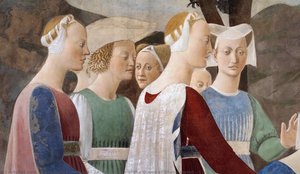
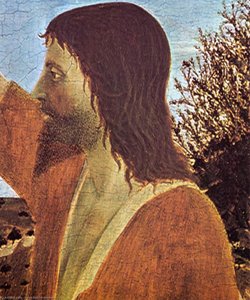
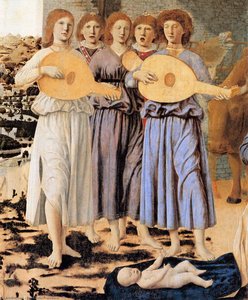
Piero della Francesca, a name synonymous with serene intellect and masterful observation, gifted the world with an extraordinary body of work that continues to resonate centuries later. Within the Basilica of San Francesco in Arezzo, Italy, lies a fragment of his most ambitious project: ‘The Legend of the True Cross,’ a fresco cycle depicting a pivotal biblical narrative. Among its many captivating scenes, “2a. Procession of the Queen of Sheba (detail) (15)” stands as a testament to Della Francesca’s unparalleled ability to fuse historical grandeur with profound artistic innovation. This particular panel, a meticulously rendered depiction of a crucial encounter, offers a window into not only the story of the True Cross but also the artist's deeply considered approach to perspective, composition, and human representation – a world where geometry and faith intertwine seamlessly.Contextualizing a Renaissance Masterpiece
Della Francesca’s ‘The Legend of the True Cross’ was conceived between 1452 and 1466, a period of immense artistic ferment in Italy. Florence, with its burgeoning humanist movement and the revolutionary work of Masaccio, served as a crucial backdrop for Della Francesca's development. He absorbed these new ideas – particularly the exploration of linear perspective – yet tempered them with his own rigorous mathematical training. This isn’t merely a depiction of a biblical story; it’s an intellectual exercise translated into visual form. The fresco tells the tale of Helena, Emperor Constantine’s mother, who discovered the wood of the True Cross, a relic believed to be from the crucifixion of Jesus Christ. The panel in question captures a pivotal moment: the Queen of Sheba's arrival and her profound realization that this seemingly insignificant piece of timber holds the key to salvation.A Symphony of Perspective and Detail
What immediately captivates the viewer is Della Francesca’s masterful manipulation of perspective. He doesn’t simply create a flat representation; instead, he constructs an illusion of depth that draws us into the scene with remarkable precision. The architectural elements – the temple-like structure housing the Queen and Solomon – are rendered with meticulous detail, creating a believable space that feels both monumental and intimate. Each figure is painstakingly detailed, from the folds of their garments to the expressions on their faces. Notice how the figures in the foreground are sharply defined, while those receding into the distance become softer and less distinct, reinforcing the illusion of depth. The artist’s attention to detail extends beyond mere representation; it speaks to a deep understanding of human anatomy and movement. Key Elements to Observe:- Linear Perspective: Della Francesca employs a sophisticated system of linear perspective, creating a convincing sense of space and distance.
- Figural Detail: The figures are rendered with remarkable accuracy and expressiveness, conveying their emotions and roles within the narrative.
- Narrative Integration: The scene seamlessly integrates into the larger story of the True Cross, highlighting its significance as a symbol of faith and redemption.
Symbolism and Spiritual Resonance
Beyond its technical brilliance, “Procession of the Queen of Sheba” is rich in symbolic meaning. The Queen herself represents wisdom and divine knowledge, seeking understanding from King Solomon. Her kneeling posture signifies reverence and humility before a higher power. The wood of the True Cross, initially perceived as worthless, becomes an object of profound spiritual significance – a testament to the transformative power of faith. The entire scene is imbued with a sense of solemnity and awe, reflecting the gravity of the story it depicts. It’s not simply a historical narrative; it's a meditation on faith, destiny, and the enduring mystery of salvation.A Legacy of Artistic Innovation
“2a. Procession of the Queen of Sheba (detail) (15)” by Piero della Francesca stands as a cornerstone of Early Renaissance art. It exemplifies his unique blend of intellectual rigor, technical skill, and profound artistic vision. His meticulous approach to perspective, combined with his ability to imbue his figures with both realism and symbolic weight, continues to inspire artists and captivate viewers today. For those seeking to experience the beauty and depth of this masterpiece firsthand, reproductions by ArtsDot.com offer a remarkable opportunity to appreciate Della Francesca’s genius in exquisite detail. Furthermore, exploring resources like Wikipedia's entry on “True Cross” provides valuable context for understanding the historical and religious significance of this extraordinary work.Obras relacionadas
Biografía del artista
vida temprana y contribuciones artísticas
Piero della Francesca, un pintor, matemático y geómetra italiano reconocido, nació en 1415 en la ciudad toscana de Sansepolcro. Su obra, caracterizada por formas geométricas meticulosas y técnicas pioneras de perspectiva, ha dejado una huella imborrable en el Renacimiento temprano.Estilo artístico y obras notables
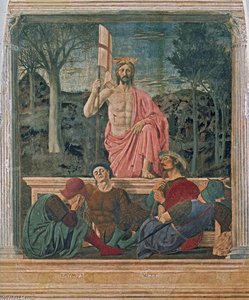
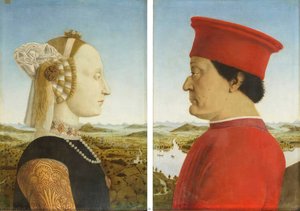
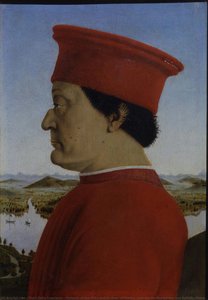
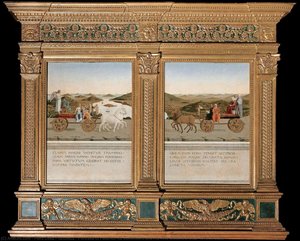
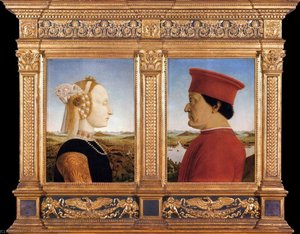
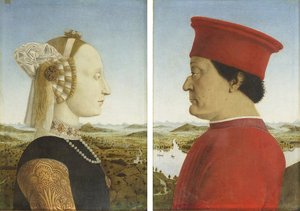
El estilo artístico de Piero se distingue por su humanismo tranquilo, como se ve en su serie de frescos la historia de la cruz verdadera, ubicada en la iglesia de San Francisco en Arezzo. Esta obra maestra sigue cautivando al público con su precisión matemática y su fuerza narrativa serena.- El tríptico de Montefeltro (detalle) (Pinacoteca di Brera, Milán, Italia), un testimonio de su habilidad en óleo sobre tabla.
- La procesión de la reina de Saba (detalle) (San Francisco, Arezzo, Italia), que muestra su experiencia en frescos.
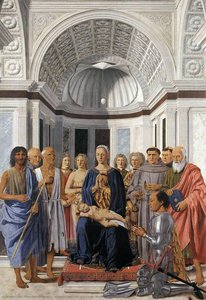
- La Madonna con el Niño y los santos, un ejemplo clásico del arte temprano renacentista al óleo sobre tabla.
- El bautismo de Cristo (detalle), que demuestra su dominio del óleo sobre tabla.
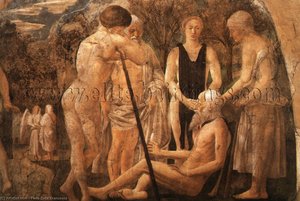
- La muerte de Adán (detalle) (San Francisco, Arezzo, Italia), un ejemplo impactante de su obra en fresco.
Legado e influencia
El legado de Piero se extiende más allá de sus contribuciones artísticas, influyendo en el desarrollo del arte renacentista temprano. Su obra se puede encontrar en varios museos, incluido el Pinacoteca di Brera (Milán, Italia) y la iglesia de San Francisco en Arezzo. Explore más obras de Piero della Francesca en ArtsDot: [https://ArtsDot.com/@/piero-della-francesca](https://ArtsDot.com/@/piero-della-francesca) Descubra las inspiraciones matemáticas y geométricas del artista: [https://en.wikipedia.org/wiki/piero_della_francesca](https://en.wikipedia.org/wiki/piero_della_francesca)Conclusión
El humanismo tranquilo y la meticulosa incorporación de formas geométricas de Piero han consolidado su posición como maestro del Renacimiento temprano. Su legado continúa inspirando a los entusiastas del arte y a los estudiosos por igual, ofreciendo una ventana única al panorama artístico y cultural de Italia en el siglo XV.- Visite la colección de pinturas de Piero della Francesca de ArtsDot: [https://ArtsDot.com/@@/8y3f7g-piero-della-francesca-montefeltro-altarpiece-(detail)]
- Aprenda más sobre la vida y obra del artista en Wikipedia: [https://en.wikipedia.org/wiki/piero_della-francesca](https://en.wikipedia.org/wiki/piero_della-francesca)
Piero della Francesca
1415 - 1492 , Italia
Datos clave
- Artistas Que Influyeron:
- Domenico Veneziano
- Masaccio
- Estilo Artístico: Primer Renacimiento
- Fecha De Muerte: 1492
- Fecha De Nacimiento: 1415
- Influenciado A Artistas:
- Leonardo da Vinci
- Rafael
- Lugar De Nacimiento: San Sepolcro, Italia
- Nacionalidad: Italiana
- Nombre Completo: Piero della Francesca
- Obras Notables:
- Historia de la Vera Cruz
- Retablo de Montefeltro
- Bautismo de Cristo
- Muerte de Adán
Artículos relacionados

Legado en las Paredes: Frescos Familiares que Trascienden el Tiempo
Descubre el arte del fresco muralístico para inmortalizar tu historia familiar. Expertos en frescos personalizados y técnicas ancestrales. Crea un legado visual único con .
Piero della Francesca: Renaissance Perspective, Divine Proportion & the Pursuit of Ideal Form
Explore the revolutionary art of Piero della Francesca – master of perspective, divine proportion & Renaissance humanism. Discover his iconic paintings & lasting influence on art history.

The Enduring Legacy of Fresco Painting: Techniques, History & Contemporary Relevance
Explore the rich history & enduring artistry of fresco painting – from Giotto to Michelangelo! Discover techniques, conservation efforts, & modern applications. Learn how ArtsDot brings this timeless art form to your home.

The Enduring Legacy of Fresco: Technique, History & Artistic Expression Across Cultures
Explore the rich history & enduring legacy of fresco painting! Discover ancient techniques, Giotto's masterpieces, and modern applications. Expert insights for art lovers & professionals.
¿El Arte que Habita Contigo: El Poder Emocional de un Fresco Interior Personalizado?
Descubre el poder emocional de un fresco interior personalizado. Expertos en arte te guían para crear una obra única que refleje tu estilo y valore tu hogar. : calidad, confianza y diseño excepcional.