

 Ver en contexto
 Enviar
 Compartir
 Detalles

 Descargar
 Similares
 Radiografía
 Presentación de diapositivas
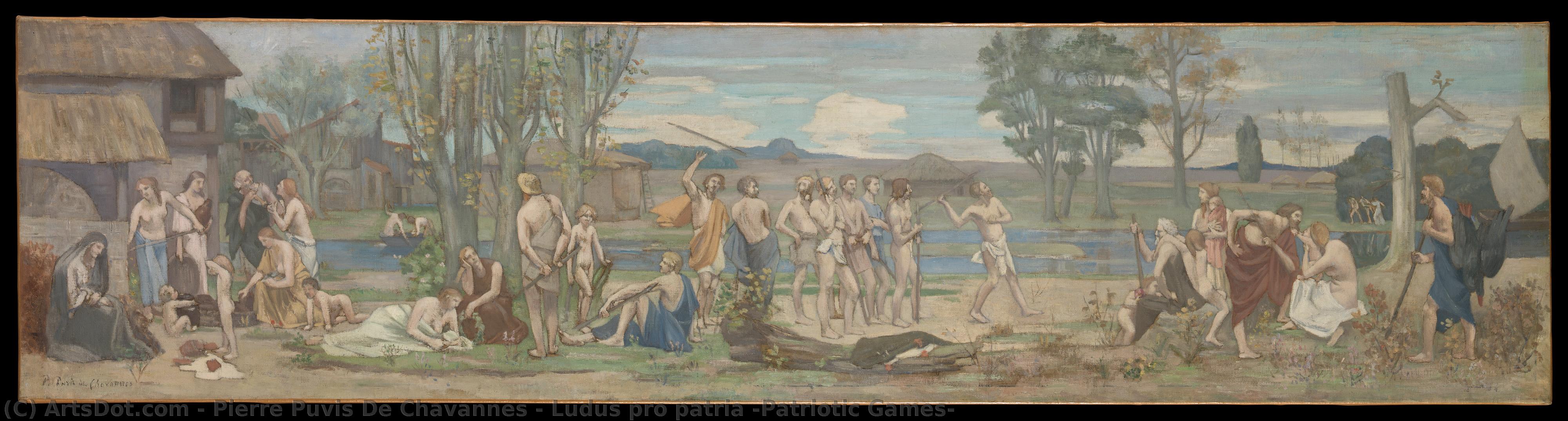
Ludus pro patria (Juegos patrióticos)
 Óleo sobre lienzo
- Arte de pared
- Simbolismo
 1883
1883 33.0 x 134.0 cm
 Museo Metropolitano de Arte
 Ver más
Adquiera una imagen digital de alta resolución y optimizada, muy superior a la vista previa en línea.
Cada archivo es preparado meticulosamente por nuestros especialistas internos mediante el uso de herramientas avanzadas y un experto retoque manual. Nos aseguramos de que cada imagen posea una claridad excepcional, una precisión cromática impecable y un detalle minucioso.
El archivo final se entrega por correo electrónico en un plazo de 72 horas, optimizado para su uso inmediato en entornos profesionales, editoriales y de impresión. Esta es la misma calidad en la que confían los estudios de diseño, las editoriales y las galerías de primer nivel.
Imagen Digital
Descarga un archivo de alta resolución para exhibición personal, impresión y proyectos creativos. ( Comprar impresión Comprar pintura hecha a mano)
Incluido en cada pedido de imágenes digitales
Entrega digital experta, garantizada.
Al elegir ArtsDot.com, no solo está adquiriendo una imagen; está recibiendo una obra de arte digital mejorada profesionalmente, elaborada con precisión y respaldada por una garantía de satisfacción. Esto es todo lo que incluye su pedido, automáticamente:

Entrega rápida por email
Recibirá su archivo de imagen digital en alta resolución por correo electrónico en un plazo de 72 horas tras realizar su pedido, listo para su uso inmediato.

Archivo digital optimizado por IA
Su obra de arte se optimiza profesionalmente mediante herramientas avanzadas de IA y edición manual, garantizando el máximo detalle, claridad y precisión cromática.

Reenvío gratuito de por vida
¿Has borrado o perdido tu archivo por error? No te preocupes: te lo volveremos a enviar en cualquier momento, sin coste adicional.

Sin gastos de importación, siempre
Disfrute de su obra de arte al instante sin aduanas, aranceles ni gastos de envío; las descargas digitales siempre están libres de impuestos.

Garantía de fidelidad de color
Garantizamos que su imagen digital refleje los colores originales con la mayor fidelidad posible, mediante el uso de herramientas profesionales y gestión del color.

Garantía de satisfacción de 60 días
Si no está satisfecho con su imagen digital, la revisaremos o le reembolsaremos el 100% en un plazo de 60 días, sin preguntas.

100% Garantía de devolución de dinero
¿No está satisfecho? Obtenga un reembolso completo dentro de los 60 días posteriores a la recepción de su archivo digital, sin necesidad de explicaciones.

Descuentos por pedidos grandes
Compra 3 imágenes, ahorra 10% - Compra 5, ahorra 15% - Compra 10+, ahorra 20%. Ideal para proyectos creativos, galerías y agencias.
Descripción del coleccionable
Ludus pro patria (Patriotic Games): A Monumental Echo of Ancient Greece
Pierre Cécile Puvis de Chavannes’ “Ludus pro patria,” completed in 1883 and housed now within the Musée de Picardie in Amiens, stands as a singular achievement in French art history—a testament to his unwavering dedication to monumental decorative commissions and an enduring symbol of national aspiration. More than merely depicting athletic prowess, Puvis’s masterpiece embodies a profound engagement with classical ideals and utilizes a masterful blend of neoclassical style and subtle expressive nuance.
- Subject Matter: The painting portrays a sprawling tableau of nude male figures engaged in various physical activities—swimming, wrestling, and contemplative observation—within the idealized setting of ancient Greece. References to the Olympic Games are palpable, reflecting the broader cultural preoccupation with athletic competition during Puvis’s era and serving as a visual embodiment of strength and virtue.
- Style & Influence: Puvis de Chavannes firmly established himself within the neoclassical tradition, drawing inspiration from artists like Ingres and reviving the grandeur and clarity characteristic of the Enlightenment. However, unlike purely formalistic interpretations, his work possesses an inherent dynamism—a carefully orchestrated movement conveyed through flowing lines and soft lighting that transcends mere imitation.
- Technique: Executed in oil paint on canvas, “Ludus pro patria” demonstrates Puvis’s meticulous attention to detail while prioritizing the overall impression of grandeur. The artist skillfully employs glazing techniques – layering translucent pigments over underlying colors—to achieve remarkable tonal depth and luminosity. Textures are rendered with a degree of abstraction, emphasizing organic forms rather than precise realism; subtle brushstrokes contribute to the painting's atmospheric quality.
Historical Context: Created during the formative years of the Third Republic, “Ludus pro patria” reflects the anxieties and ambitions of a nation striving to define its identity amidst rapid social change. Puvis’s decision to depict idealized athletes harkens back to ancient Greece—a civilization revered for its intellectual achievements and martial prowess—serving as a deliberate assertion of moral values and civic responsibility.
Symbolism & Emotional Impact: The nudity of the figures is laden with symbolic significance, representing not only physical strength but also spiritual freedom and purity. Simultaneously, the architectural structures – reminiscent of temples and stadiums – evoke the solemn grandeur of classical antiquity, fostering a contemplative mood. Puvis’s masterful use of muted earthy tones—dominated by ochre, umber, and Sienna—creates an atmosphere of dignified serenity, inviting viewers to contemplate the enduring values embodied in the image.
Conclusion: “Ludus pro patria” remains a captivating artwork due to its harmonious blend of stylistic elegance and emotive resonance. It’s more than just a depiction of sport; it's an eloquent declaration of national pride—a monumental achievement that continues to inspire admiration for Puvis de Chavannes’ artistic vision and enduring legacy.
Obras relacionadas
Biografía del artista
A Life Dedicated to Monumental Visions
Pierre Cécile Puvis de Chavannes, a name often simply rendered as Puvis de Chavannes, occupies a unique and pivotal position in 19th-century French art. Born in Lyon in 1824, he rose to become known as “the painter for France,” a testament to his profound impact on public art during the early years of the Third Republic. His legacy extends far beyond mere decoration; Puvis de Chavannes crafted visual narratives that embodied national ideals and resonated with a generation grappling with political and social transformation. He wasn’t merely illustrating history, but actively shaping its visual memory for the future. His influence on subsequent artists, particularly those aligned with Symbolism and Art Nouveau, is undeniable, and his collaborative spirit extended to working alongside medallists, offering designs and insightful suggestions.From Engineering Aspirations to Artistic Devotion
The early life of Pierre-Cécile Puvis was marked by a trajectory that initially diverged from the world of art. Born into a family of modest means – his father an engineer descended from Burgundy nobility – he received an education at Amiens College and Lycée Henri IV in Paris, preparing him for a career following in his father’s footsteps. However, a serious illness proved to be a turning point, forcing a period of convalescence that allowed space for introspection and the burgeoning of artistic inclinations. A transformative journey to Italy ignited within him a passion for painting, prompting a decisive shift away from engineering and towards a life dedicated to creative expression. He embraced his ancestral heritage by incorporating “de Chavannes” into his name, a subtle assertion of identity and lineage. His formal training included brief mentorships under luminaries like Eugène Delacroix, Henri Scheffer, and Thomas Couture, yet he ultimately favored independent study, establishing a spacious studio near the Gare de Lyon that became a hub for artistic exploration. He diligently honed his understanding of anatomy through classes at the Académie des Beaux Arts, laying a solid foundation for his later monumental works.The Genesis of a Symbolist Style
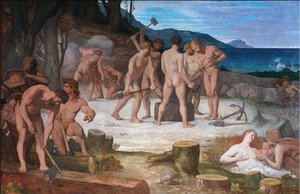
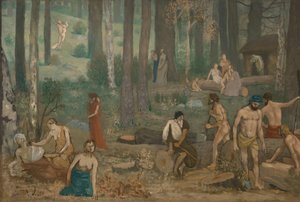
Puvis de Chavannes’s artistic style is generally categorized as Symbolist, though it evolved from roots in Romanticism. His work is instantly recognizable by its simplified forms, rhythmic linear compositions, and a distinctive, muted palette reminiscent of fresco painting. He wasn't interested in photographic realism; instead, he sought to distill essence, to capture the underlying spirit of his subjects. He frequently drew inspiration from classical antiquity and idealized landscapes, weaving allegorical themes into grand narratives. His early commissions, beginning in the 1860s at the Musée de Picardie in Amiens – including *Concordia*, *Bellum*, *Le Travail* (Work), and *Le Repos* (Rest) – established his reputation for large-scale mural paintings. These weren’t simply decorative elements; they were carefully considered statements about civic virtue, labor, and the pursuit of harmony. Later, a significant series of murals commissioned for the Museum of Fine Arts in Lyon further cemented his position as a leading figure in public art. Notable works like *The Woodcutters* (1873), currently housed at the San Antonio Museum of Art, demonstrate his ability to imbue everyday scenes with symbolic weight and poetic grace. Paintings such as *Massilia*, Greek Colony,*Sacred Grove*, and *Study for Patriotism* exemplify his characteristic style and thematic interests, showcasing nude figures within evocative landscapes that invite contemplation.A Lasting Legacy: Influence and Historical Significance
The impact of Puvis de Chavannes on the artistic landscape of France – and beyond – was profound. He is credited with influencing an entire generation of painters and sculptors, particularly those associated with Modernism. His emphasis on simplified forms, decorative patterns, and allegorical themes resonated deeply with artists seeking to break away from traditional academic constraints. Georges de Feure was among his notable protégés, benefiting directly from his guidance and mentorship. Beyond painting, Puvis actively collaborated with medallists, providing designs and suggestions that enriched their work. Émile Zola eloquently lauded his art as “an art made of reason, passion, and will,” capturing the intellectual and emotional depth inherent in his creations. His most celebrated achievement lies in his contribution to the development of public art during a period of significant political and social change in France. His murals weren’t merely aesthetic enhancements; they were intended to embody national ideals and provide visual narratives for civic spaces, fostering a sense of collective identity and shared values. The monumental murals at the Panthéon in Paris, illustrating the life of St. Geneviève, stand as enduring testaments to his skill and vision. Puvis de Chavannes remains an important figure in 19th-century French art, bridging the gap between Romanticism and Symbolism and paving the way for the artistic innovations of the modern era. His work continues to inspire awe and admiration, reminding us of the power of art to shape our understanding of history, culture, and the human condition.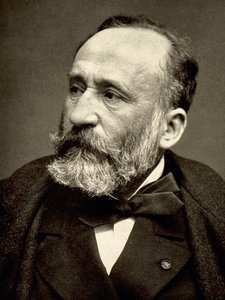
Pierre Cécile Puvis de Chavannes
1824 - 1898 , Francia
Breves datos
- Artistic Movement Or Style: Symbolism
- Artists Who Influenced This Artist:
- Delacroix
- Scheffer
- Couture
- Date Of Birth: December 14, 1824
- Date Of Death: 1898
- Full Name: Pierre Cécile Puvis de Chavannes
- Nationality: Francé
- Notable Artworks:
- The Woodcutters
- Massilia
- Sacred Grove
- Peace
- Study for Patriotism
- Place Of Birth: Lyon, France

