

 Ver en contexto
 Enviar
 Compartir
 Detalles

 Descargar
 Similares
 Radiografía
 Presentación de diapositivas
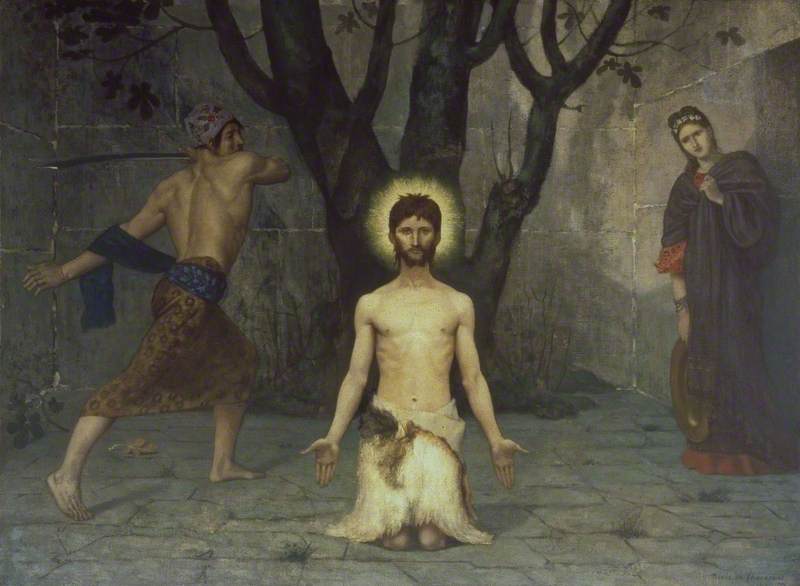
The Beheading of Saint John the Baptist
 Oil On Panel
- Early Renaissance
 1869
1869 125.0 x 166.0 cm
 The Barber Institute of Fine Arts
 Ver más
Adquiera una imagen digital de alta resolución y optimizada, muy superior a la vista previa en línea.
Cada archivo es preparado meticulosamente por nuestros especialistas internos mediante el uso de herramientas avanzadas y un experto retoque manual. Nos aseguramos de que cada imagen posea una claridad excepcional, una precisión cromática impecable y un detalle minucioso.
El archivo final se entrega por correo electrónico en un plazo de 72 horas, optimizado para su uso inmediato en entornos profesionales, editoriales y de impresión. Esta es la misma calidad en la que confían los estudios de diseño, las editoriales y las galerías de primer nivel.
Imagen Digital
Descarga un archivo de alta resolución para exhibición personal, impresión y proyectos creativos. ( Comprar impresión Comprar pintura hecha a mano)
Incluido en cada pedido de imágenes digitales
Entrega digital experta, garantizada.
Al elegir ArtsDot.com, no solo está adquiriendo una imagen; está recibiendo una obra de arte digital mejorada profesionalmente, elaborada con precisión y respaldada por una garantía de satisfacción. Esto es todo lo que incluye su pedido, automáticamente:

Entrega rápida por email
Recibirá su archivo de imagen digital en alta resolución por correo electrónico en un plazo de 72 horas tras realizar su pedido, listo para su uso inmediato.

Archivo digital optimizado por IA
Su obra de arte se optimiza profesionalmente mediante herramientas avanzadas de IA y edición manual, garantizando el máximo detalle, claridad y precisión cromática.

Reenvío gratuito de por vida
¿Has borrado o perdido tu archivo por error? No te preocupes: te lo volveremos a enviar en cualquier momento, sin coste adicional.

Sin gastos de importación, siempre
Disfrute de su obra de arte al instante sin aduanas, aranceles ni gastos de envío; las descargas digitales siempre están libres de impuestos.

Garantía de fidelidad de color
Garantizamos que su imagen digital refleje los colores originales con la mayor fidelidad posible, mediante el uso de herramientas profesionales y gestión del color.

Garantía de satisfacción de 60 días
Si no está satisfecho con su imagen digital, la revisaremos o le reembolsaremos el 100% en un plazo de 60 días, sin preguntas.

100% Garantía de devolución de dinero
¿No está satisfecho? Obtenga un reembolso completo dentro de los 60 días posteriores a la recepción de su archivo digital, sin necesidad de explicaciones.

Descuentos por pedidos grandes
Compra 3 imágenes, ahorra 10% - Compra 5, ahorra 15% - Compra 10+, ahorra 20%. Ideal para proyectos creativos, galerías y agencias.
A Haunting Tableau: The Genesis of a Symbolist Vision
Pierre Cécile Puvis de Chavannes’ “The Beheading of Saint John the Baptist,” painted in 1869, is not merely a depiction of a biblical event; it's an intensely felt meditation on sacrifice, suffering, and the precarious balance between earthly drama and spiritual contemplation. This work transcends simple illustration, embodying the core tenets of Symbolism – a movement that sought to evoke emotions and ideas rather than simply represent reality. Puvis de Chavannes, often dubbed “the painter for France,” deliberately eschewed the polished realism prevalent in his era, opting instead for a style characterized by flattened perspective, simplified forms, and a muted, almost melancholic color palette dominated by browns, grays, ochre, and subtle hints of red. The scene unfolds within an ambiguous space – a shadowed courtyard or chamber that feels both claustrophobic and profoundly resonant with the weight of history.
Early Renaissance Roots & Mannerist Nuances
While firmly rooted in Early Renaissance artistic principles—particularly evident in the carefully constructed triangular composition anchored by Christ’s central figure—the painting subtly incorporates elements of Mannerism. The elongated figures, particularly those of John the Baptist and Herod, possess a slightly unsettling quality, their gestures imbued with an expressive intensity that borders on theatricality. Puvis de Chavannes wasn't simply replicating a biblical narrative; he was actively shaping its visual memory, imbuing it with his own deeply felt emotional response. The deliberate use of line – sharp delineations defining the stone walls and the figures themselves – creates a sense of solidity and confinement, mirroring the psychological state of those involved in this brutal act.
Technique & Materials: A Study in Texture and Light
Examining the painting’s technique reveals a fascinating interplay between meticulous craftsmanship and expressive brushwork. Constructed primarily on oil on panel, Puvis de Chavannes employed visible brushstrokes to create a palpable sense of texture – rough stone walls, the folds of Christ's garments, and the starkness of John’s executioner’s blade are all rendered with a tactile quality. The subdued lighting, casting dramatic shadows that pool around the figures, heightens the scene’s emotional intensity. The choice to work on panel is significant; it lends the surface a unique warmth and depth compared to canvas, contributing to the painting's overall somber mood. Notice how the artist uses layering of paint to create a sense of volume and recession, despite the flattened perspective.
Symbolism & The Weight of Redemption
Beyond its immediate depiction of violence, “The Beheading of Saint John the Baptist” is rich in symbolic meaning. John’s stoic acceptance of his fate—his gaze fixed on the cross—represents a profound understanding of sacrifice and divine redemption. Herod's detached observation speaks to the indifference of earthly power against the backdrop of eternal truths. The young girl, likely Salome or a witness to the event, embodies both vulnerability and a nascent awareness of the tragedy unfolding before her. The painting’s enduring power lies in its ability to evoke not just the horror of the scene but also the complex interplay of faith, suffering, and human nature—a timeless meditation on mortality and the promise of salvation. It's a work that invites contemplation long after initial viewing.
Obras relacionadas

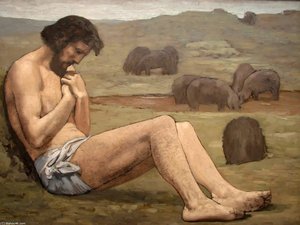
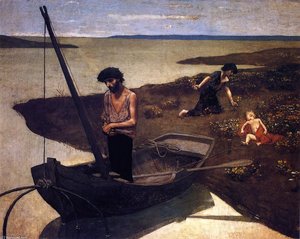
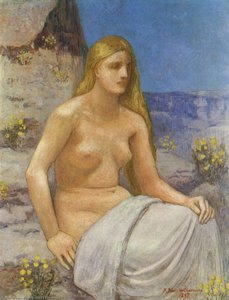
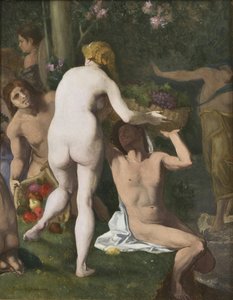
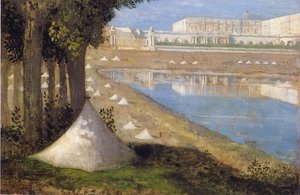
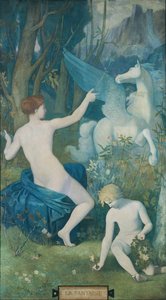
Biografía del artista
A Life Dedicated to Monumental Visions
Pierre Cécile Puvis de Chavannes, a name often simply rendered as Puvis de Chavannes, occupies a unique and pivotal position in 19th-century French art. Born in Lyon in 1824, he rose to become known as “the painter for France,” a testament to his profound impact on public art during the early years of the Third Republic. His legacy extends far beyond mere decoration; Puvis de Chavannes crafted visual narratives that embodied national ideals and resonated with a generation grappling with political and social transformation. He wasn’t merely illustrating history, but actively shaping its visual memory for the future. His influence on subsequent artists, particularly those aligned with Symbolism and Art Nouveau, is undeniable, and his collaborative spirit extended to working alongside medallists, offering designs and insightful suggestions.From Engineering Aspirations to Artistic Devotion
The early life of Pierre-Cécile Puvis was marked by a trajectory that initially diverged from the world of art. Born into a family of modest means – his father an engineer descended from Burgundy nobility – he received an education at Amiens College and Lycée Henri IV in Paris, preparing him for a career following in his father’s footsteps. However, a serious illness proved to be a turning point, forcing a period of convalescence that allowed space for introspection and the burgeoning of artistic inclinations. A transformative journey to Italy ignited within him a passion for painting, prompting a decisive shift away from engineering and towards a life dedicated to creative expression. He embraced his ancestral heritage by incorporating “de Chavannes” into his name, a subtle assertion of identity and lineage. His formal training included brief mentorships under luminaries like Eugène Delacroix, Henri Scheffer, and Thomas Couture, yet he ultimately favored independent study, establishing a spacious studio near the Gare de Lyon that became a hub for artistic exploration. He diligently honed his understanding of anatomy through classes at the Académie des Beaux Arts, laying a solid foundation for his later monumental works.The Genesis of a Symbolist Style
Puvis de Chavannes’s artistic style is generally categorized as Symbolist, though it evolved from roots in Romanticism. His work is instantly recognizable by its simplified forms, rhythmic linear compositions, and a distinctive, muted palette reminiscent of fresco painting. He wasn't interested in photographic realism; instead, he sought to distill essence, to capture the underlying spirit of his subjects. He frequently drew inspiration from classical antiquity and idealized landscapes, weaving allegorical themes into grand narratives. His early commissions, beginning in the 1860s at the Musée de Picardie in Amiens – including *Concordia*, *Bellum*, *Le Travail* (Work), and *Le Repos* (Rest) – established his reputation for large-scale mural paintings. These weren’t simply decorative elements; they were carefully considered statements about civic virtue, labor, and the pursuit of harmony. Later, a significant series of murals commissioned for the Museum of Fine Arts in Lyon further cemented his position as a leading figure in public art. Notable works like *The Woodcutters* (1873), currently housed at the San Antonio Museum of Art, demonstrate his ability to imbue everyday scenes with symbolic weight and poetic grace. Paintings such as *Massilia*, Greek Colony,*Sacred Grove*, and *Study for Patriotism* exemplify his characteristic style and thematic interests, showcasing nude figures within evocative landscapes that invite contemplation.A Lasting Legacy: Influence and Historical Significance
The impact of Puvis de Chavannes on the artistic landscape of France – and beyond – was profound. He is credited with influencing an entire generation of painters and sculptors, particularly those associated with Modernism. His emphasis on simplified forms, decorative patterns, and allegorical themes resonated deeply with artists seeking to break away from traditional academic constraints. Georges de Feure was among his notable protégés, benefiting directly from his guidance and mentorship. Beyond painting, Puvis actively collaborated with medallists, providing designs and suggestions that enriched their work. Émile Zola eloquently lauded his art as “an art made of reason, passion, and will,” capturing the intellectual and emotional depth inherent in his creations. His most celebrated achievement lies in his contribution to the development of public art during a period of significant political and social change in France. His murals weren’t merely aesthetic enhancements; they were intended to embody national ideals and provide visual narratives for civic spaces, fostering a sense of collective identity and shared values. The monumental murals at the Panthéon in Paris, illustrating the life of St. Geneviève, stand as enduring testaments to his skill and vision. Puvis de Chavannes remains an important figure in 19th-century French art, bridging the gap between Romanticism and Symbolism and paving the way for the artistic innovations of the modern era. His work continues to inspire awe and admiration, reminding us of the power of art to shape our understanding of history, culture, and the human condition.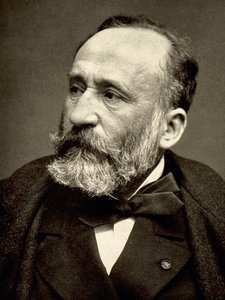
Pierre Cécile Puvis de Chavannes
1824 - 1898 , Francia
Breves datos
- Artistic Movement Or Style: Symbolism
- Artists Who Influenced This Artist:
- Delacroix
- Scheffer
- Couture
- Date Of Birth: December 14, 1824
- Date Of Death: 1898
- Full Name: Pierre Cécile Puvis de Chavannes
- Nationality: Francé
- Notable Artworks:
- The Woodcutters
- Massilia
- Sacred Grove
- Peace
- Study for Patriotism
- Place Of Birth: Lyon, France

