 Ver en contexto
 Enviar
 Compartir
 Detalles

 Descargar
 Similares
 Radiografía
 Presentación de diapositivas
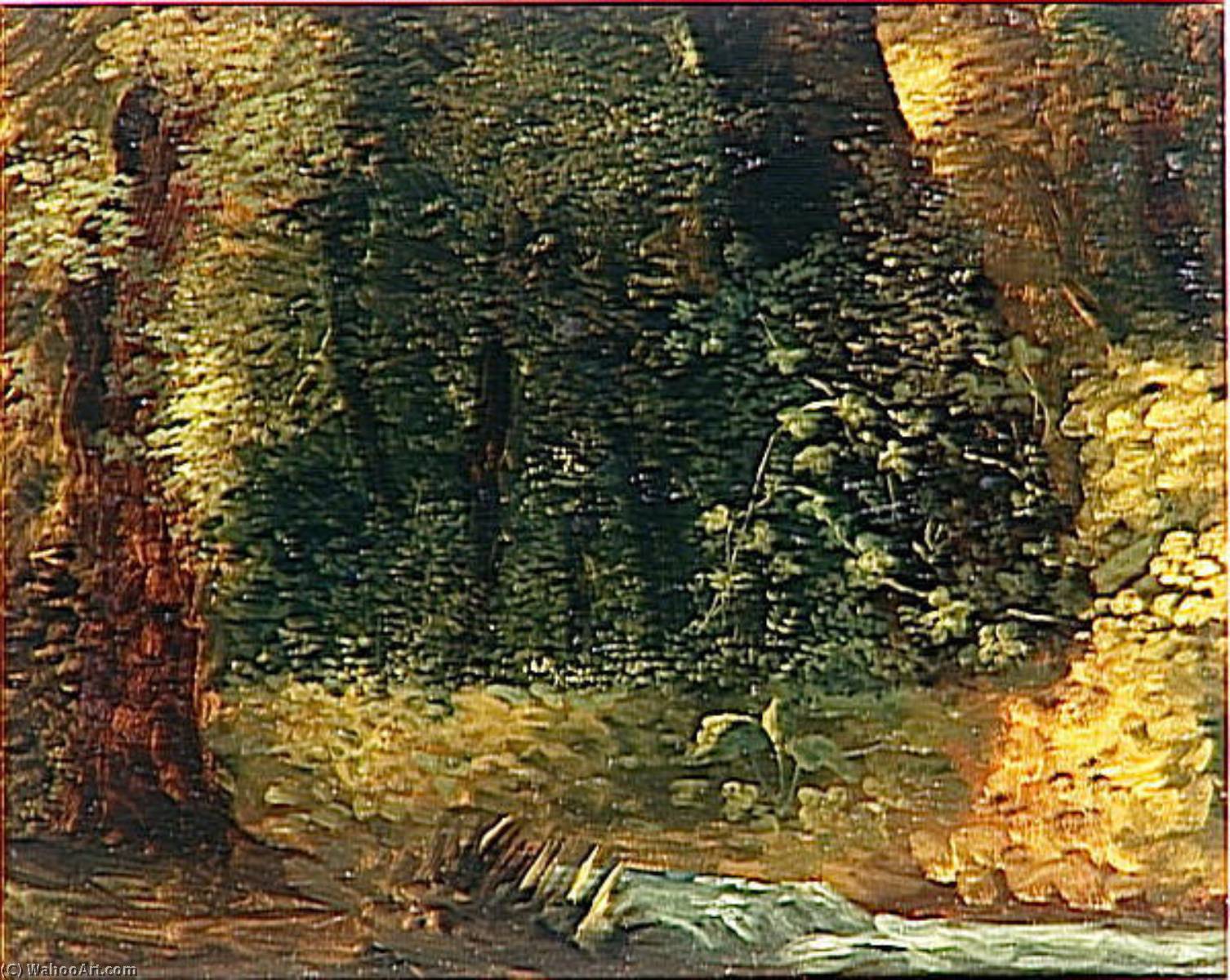
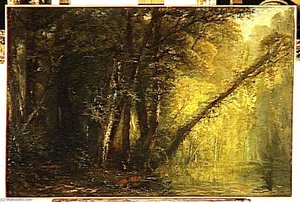
A LA VILLA BORGHESE RUISSEAU COULANT PARMI LES ARBRES


 Ver más
Giclée / Impresión de arte
Impresiones giclée o en lienzo de calidad de museo con producción rápida y opciones de acabado flexibles. ( Comprar pintura hecha a mano Comprar imagen)




P118B $10

P118H $10

P118W $10

P438Z $10

P508JH $12

P508YH $12

P805H $10

P805Z $10

P919BZ $10

P919G $10

P919XJ $10

P959ZH $10

P968JZ $12

W106C $8

W218G $10

W218JH $8

W218Y $10

W307PJ $10

W316G $10

W316PJ $8

W316Y $10

W398PJ $8

W4111J $10

W500HY $15

W500JH $15

W692G $12

W849H $8

W940BG $15

W953PJ $8




Elija entre nuestros tamaños predefinidos que respetan las proporciones originales de la obra.

Puede introducir sus propias dimensiones para adaptarse a un marco o espacio específico. Si el tamaño seleccionado no coincide con las proporciones de la imagen original, recortaremos la obra de arte o extenderemos la imagen con un borde con efecto espejo o de color sólido. Se enviará una maqueta digital para su aprobación antes de que comience la producción.
Tenga en cuenta que la vista previa en pantalla no refleja el recorte o la extensión real. Solo la maqueta mostrará con precisión la composición final.
Aunque existen tamaños personalizados, recomendamos seleccionar una dimensión de la lista predefinida para preservar las proporciones originales.
Envío a todo el mundo () en 2 semanas en lugar de las 4/5 semanas estándar. (4 septiembre)

Envío exprés gratuito a todo el mundo

Lienzo de lino de alta calidad

Seguro de envío total

Garantía de reembolso de impuestos aduaneros

Garantía de fidelidad cromática exacta

Política de devolución de 60 días (solo por defectos)

Garantía de devolución del 100% del dinero

Descuento por cantidad
 La opción de vidrio solo está disponible en tamaños inferiores a 110 cm.

A LA VILLA BORGHESE RUISSEAU COULANT PARMI LES ARBRES
Giclée / Impresión de arte
Dimensiones de la reproducción
-


Precio total final
$ 62
A Woodland Reverie: Delving into Valenciennes’ “A La Villa Borghese”
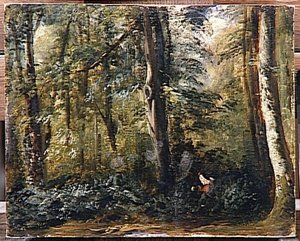
Pierre-Henri de Valenciennes' "A La Villa Borghese Ruisseau Coulant Parmi Les Arbres" is more than a landscape painting; it’s an invitation to step into a sun-dappled sanctuary, a meticulously crafted moment of tranquility captured in oil on canvas. Completed around 1800, this work exemplifies the burgeoning “plein air” movement – a revolutionary shift towards directly observing and recording nature's fleeting beauty – championed by Valenciennes himself. The painting transports us to a dense forest near Rome, likely inspired by his own meticulous studies of the Italian countryside, where he developed his influential theory on landscape painting.
The composition immediately draws the eye into a scene of profound depth and atmospheric perspective. Towering red-brown trees dominate the foreground, their rough bark rendered with an almost tactile quality through thick impasto application of paint. A small, meandering stream snakes its way through the undergrowth, reflecting the diffused sunlight and adding a vital element of movement to the otherwise static scene. The rocky outcrop in the lower center provides a grounding presence, anchoring the viewer’s gaze within this vast woodland.
The Language of Light and Shadow
Valenciennes' mastery lies not just in depicting the landscape itself, but in his skillful manipulation of light and shadow – a technique deeply rooted in the traditions of Dutch Masters. Notice how he uses chiaroscuro to sculpt the forms of the trees, creating dramatic highlights that accentuate their texture and volume. The dappled sunlight filtering through the canopy is rendered with remarkable precision, casting intricate patterns of light and shade across the forest floor. This careful attention to detail elevates the painting beyond a simple representation; it becomes a study in atmospheric effects.
The brushwork itself contributes significantly to the painting’s overall impact. It's visible, layered, and deliberately expressive – a testament to Valenciennes’ commitment to capturing the immediacy of nature. The organic lines that define the trees and rocks are not perfectly rendered but rather convey a sense of spontaneity and observation. This approach aligns with his theory of “landscape portrait,” where the artist paints directly from nature, embracing its inherent imperfections and fleeting changes.
Symbolism and Emotional Resonance
Forests have long held symbolic significance across cultures – representing mystery, the subconscious, and a connection to the natural world. In "A La Villa Borghese," this symbolism is subtly evoked through the painting’s vastness and sense of solitude. The viewer is invited to contemplate the scale of nature, to feel a sense of awe in its grandeur, and perhaps even a touch of introspection.
The overall mood is one of tranquility and serenity, yet there's also an underlying feeling of quiet contemplation. The dappled light, the gentle stream, and the dense foliage combine to create a scene that invites relaxation and escape. It’s a painting that speaks to our innate desire for connection with nature – a reminder of the beauty and solace that can be found in the wilderness.
A Legacy of Observation
“A La Villa Borghese Ruisseau Coulant Parmi Les Arbres” stands as a pivotal work in Valenciennes’ career, solidifying his reputation as a pioneer of “plein air” painting. His emphasis on direct observation and meticulous detail profoundly influenced subsequent generations of landscape artists. Reproductions of this captivating scene offer a window into a world of natural beauty, capturing the essence of a timeless forest experience – a testament to Valenciennes' artistic vision and enduring legacy.
Obras relacionadas

Biografía del artista
Pierre Henri de Valenciennes
Pierre Henri de Valenciennes (Toulouse, 6 diciembre de 1750 – París, 16 febrero de 1819) fue un pintor francés que destacó por su influencia en la elevación del estatus del paisaje pictórico. Nacido en Toulouse, aunque sus datos biográficos son escasos en los registros disponibles, sus contribuciones al mundo artístico están bien documentadas. Su formación inicial y educación no están extensamente registradas, pero se sabe que trabajó en Roma entre 1778 y 1782, donde realizó numerosos estudios de paisaje directamente desde la naturaleza. Esta práctica innovadora fue fundamental para impulsar el desarrollo del paisaje como género artístico reconocido por la época.Contribuciones al paisaje pictórico
Valenciennes fue un verdadero pionero en la promoción del paisaje como objeto de estudio y representación artística. Su teoría sobre este tema, expuesta en su tratado “Reflexiones y consejos a un estudiante sobre pintura, particularmente sobre el género del paisaje” (1800), marcó un punto de inflexión en el pensamiento artístico francés del siglo XIX. Valenciennes defendió la importancia de observar directamente la naturaleza para capturar sus cambios constantes debido a la luz y el clima, una metodología que influyó profundamente en otros artistas activos en Italia como Hubert Robert, Pierre Chauvin y Achille Etna Michallon. Estos pintores adoptaron un enfoque antropológico al paisaje, buscando comprender su relación con el hombre y el entorno, lo cual fue impulsado por las ideas de Valenciennes sobre cómo representar estos elementos con precisión y belleza.Influencias y estudiantes notables
Entre sus alumnos destacaron Jean Victor Bertin, Achille Etna Michallon, Louis Étienne Watelet, Louis François Lejeune y Pierre Prévost, el primer pintor panorámico francés. Estos artistas fueron influenciados por la maestría técnica de Valenciennes y por su visión estética del paisaje clásico, que buscaban emular los principios establecidos por Nicolas Poussin en Roma. Valenciennes también promovió el uso de materiales nuevos y métodos innovadores para lograr efectos especiales en sus obras, como el empleo de colores brillantes y pinceladas audaces que capturaban la atmósfera del lugar representado. Esta actitud vanguardista contribuyó a impulsar el desarrollo del paisaje pictórico francés hacia mediados del siglo XIX.Estilo artístico y legado
Valenciennes desarrolló un estilo propio caracterizado por una gran precisión técnica y una sensibilidad estética excepcional. Sus obras reflejan una profunda comprensión de los principios clásicos de composición y perspectiva, así como una habilidad para transmitir emociones y sentimientos a través del lenguaje visual. Aunque Valenciennes fue considerado un pintor poco dado a la innovación formal, su influencia en otros artistas fue enorme y sus ideas sobre el paisaje siguen siendo relevantes hoy en día. Su tratado “Reflexiones y consejos…” estableció nuevos estándares de pensamiento artístico y abrió camino a nuevas investigaciones sobre cómo representar el mundo natural con belleza y armonía. Además, Valenciennes contribuyó significativamente al desarrollo del género panorámico francés, creando obras maestras que impresionaron a espectadores y críticos de la época. Su legado en el arte francés es indiscutible y sigue siendo estudiado y admirado por artistas y historiadores de arte contemporáneos.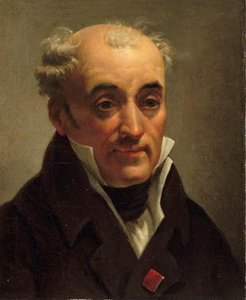
Pierre Henri de Valenciennes
1750 - 1819 , Francia
Datos clave
- Artistic Movement Or Style: En plein air pintura
- Artists Or Movements Influenced By This Artist: ['Claude Lorrain']
- Artists Who Influenced This Artist:
- Jean Victor Bertin
- Achille Etna Michallon
- Date Of Birth: 6 diciembre 1750
- Date Of Death: 16 febrero 1819
- Full Name: Pierre Henri de Valenciennes
- Nationality: Francés
- Notable Artworks:
- Villa Borghese paisaje
- Paisaje con árboles
- Place Of Birth: Toulouse, Francia
Artículos relacionados

Paisajes Románticos: 10 Obras Maestras que Definieron un Movimiento Artístico
Descubre los 10 paisajes románticos más influyentes de artistas como Caspar David Friedrich y Turner. Explora la belleza, el simbolismo y las técnicas del movimiento romántico. Reproducciones de arte exclusivas en ArtsDot.com.

Evocations of Place: A Historical Journey Through Landscape Art
Explore the rich history of landscape art with ArtsDot. Discover renowned artists, movements like Impressionism & Romanticism, and expert guidance for collecting timeless pieces. Find your perfect serene escape today!

John Constable: Las 25 Obras Maestras del Paisaje Inglés | ArtsDot
Descubre las 25 obras maestras de John Constable, el pintor romántico inglés que capturó la belleza del paisaje. Explora su técnica, historia y significado en ArtsDot.com. Reproducciones de arte de alta calidad para tu hogar.
Evocations of Place: A Historical Journey Through Landscape Art
Explore the rich history of landscape art with ArtsDot. Discover renowned artists, movements like Impressionism & tonalism, and expert guidance for collecting timeless pieces. Find your perfect serene escape today!
Henri-Joseph Harpignies: Capturing the Poetic Essence of the French Landscape
Explore the serene landscapes of Henri-Joseph Harpignies, a master of the Barbizon School. Discover his atmospheric paintings, recurring themes & enduring legacy in 19th-century French art. Learn more at ArtsDot.