

 Ver en contexto
 Enviar
 Compartir
 Detalles

 Descargar
 Similares
 Radiografía
 Presentación de diapositivas
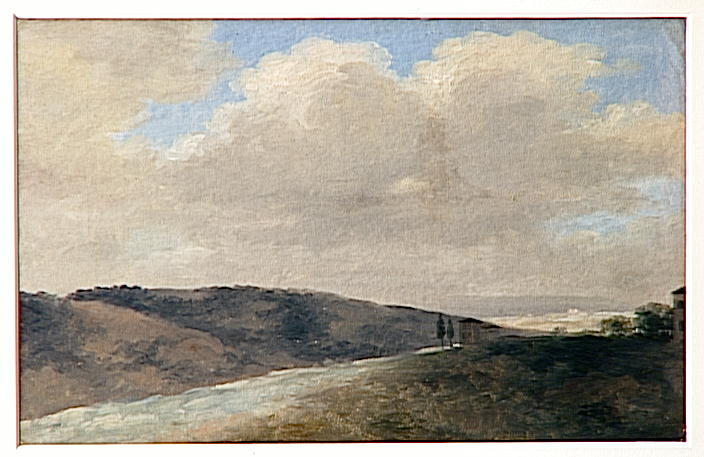
CIEL A LA VILLA BORGHESE LE VALLON


 Ver más
Adquiera una imagen digital de alta resolución y optimizada, muy superior a la vista previa en línea.
Cada archivo es preparado meticulosamente por nuestros especialistas internos mediante el uso de herramientas avanzadas y un experto retoque manual. Nos aseguramos de que cada imagen posea una claridad excepcional, una precisión cromática impecable y un detalle minucioso.
El archivo final se entrega por correo electrónico en un plazo de 72 horas, optimizado para su uso inmediato en entornos profesionales, editoriales y de impresión. Esta es la misma calidad en la que confían los estudios de diseño, las editoriales y las galerías de primer nivel.
Imagen Digital
Descarga un archivo de alta resolución para exhibición personal, impresión y proyectos creativos. ( Comprar impresión Comprar pintura hecha a mano)
Incluido en cada pedido de imágenes digitales
Entrega digital experta, garantizada.
Al elegir ArtsDot.com, no solo está adquiriendo una imagen; está recibiendo una obra de arte digital mejorada profesionalmente, elaborada con precisión y respaldada por una garantía de satisfacción. Esto es todo lo que incluye su pedido, automáticamente:

Entrega rápida por email
Recibirá su archivo de imagen digital en alta resolución por correo electrónico en un plazo de 72 horas tras realizar su pedido, listo para su uso inmediato.

Archivo digital optimizado por IA
Su obra de arte se optimiza profesionalmente mediante herramientas avanzadas de IA y edición manual, garantizando el máximo detalle, claridad y precisión cromática.

Reenvío gratuito de por vida
¿Has borrado o perdido tu archivo por error? No te preocupes: te lo volveremos a enviar en cualquier momento, sin coste adicional.

Sin gastos de importación, siempre
Disfrute de su obra de arte al instante sin aduanas, aranceles ni gastos de envío; las descargas digitales siempre están libres de impuestos.

Garantía de fidelidad de color
Garantizamos que su imagen digital refleje los colores originales con la mayor fidelidad posible, mediante el uso de herramientas profesionales y gestión del color.

Garantía de satisfacción de 60 días
Si no está satisfecho con su imagen digital, la revisaremos o le reembolsaremos el 100% en un plazo de 60 días, sin preguntas.

100% Garantía de devolución de dinero
¿No está satisfecho? Obtenga un reembolso completo dentro de los 60 días posteriores a la recepción de su archivo digital, sin necesidad de explicaciones.

Descuentos por pedidos grandes
Compra 3 imágenes, ahorra 10% - Compra 5, ahorra 15% - Compra 10+, ahorra 20%. Ideal para proyectos creativos, galerías y agencias.
Descripción del coleccionable
A Clouded Vista: Pierre-Henri de Valenciennes’ “Ciel à la Villa Borghese le Vallon”
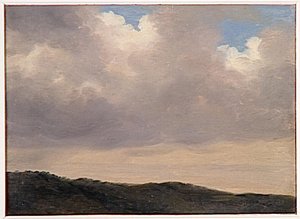
Pierre-Henri de Valenciennes' "Ciel à la Villa Borghese le Vallon" is more than a simple landscape; it’s a carefully constructed meditation on light, atmosphere, and the fleeting beauty of nature. Painted circa 1782-1784, this work offers a glimpse into the burgeoning practice of “en plein air” painting – a revolutionary approach championed by Valenciennes himself that sought to capture the immediacy and dynamism of the natural world directly from observation. The piece, now housed within the Louvre’s Sully Wing, invites us to lose ourselves in its hazy expanse, contemplating the subtle shifts of color and form as if we too were standing on that rolling hillside.
Valenciennes, a pivotal figure in French art history, wasn't merely depicting scenery; he was developing a methodology. His treatise, “Reflections and Advice to a Student on Painting,” outlined his philosophy – the ‘landscape portrait’ – emphasizing the importance of observing light and weather conditions as they unfolded before the artist’s eyes. This is vividly realized in "Ciel à la Villa Borghese le Vallon," where the clouds aren't static forms but seem to breathe, shifting and morphing with an almost palpable energy. The painting’s genesis lies within the vibrant artistic circles of Rome, a period marked by experimentation and a renewed interest in classical ideals intertwined with contemporary sensibilities.
The Language of Light and Color
The color palette is deliberately muted, dominated by shades of grey, brown, beige, and pale blue – a masterful demonstration of atmospheric perspective. Valenciennes skillfully employs these cool tones to create a sense of distance, drawing the eye towards the winding path that snakes its way into the heart of the landscape. Notice how the distant hills gradually fade into a paler wash, suggesting the vastness of the scene and the limitations of human perception. The artist’s use of layering – thin washes of color built upon one another – contributes to the painting's ethereal quality, mimicking the diffusion of light through clouds.
The composition itself is deceptively simple yet profoundly effective. The horizontal format emphasizes the breadth of the vista, while a strong diagonal line created by the path acts as a visual anchor, guiding the viewer’s gaze into the distance. There's an absence of sharp detail; instead, Valenciennes favors soft, blended brushstrokes that create a sense of fluidity and movement. This technique is particularly evident in the depiction of the clouds – they are not rendered with precise outlines but rather as amorphous masses of color, conveying their volume and texture through subtle variations in tone.
Symbolism and Emotional Resonance
Beyond its technical brilliance, “Ciel à la Villa Borghese le Vallon” resonates with a quiet sense of tranquility. The expansive sky, punctuated by billowing clouds, can be interpreted as a symbol of freedom or boundless possibility. Conversely, the rolling hills evoke a feeling of stability and grounding – a reminder of our connection to the natural world. The path itself suggests a journey, both literal and metaphorical, inviting us to contemplate our own place within this vast landscape.
Interestingly, Valenciennes’ work reflects the broader Romantic movement's fascination with nature and its ability to evoke powerful emotions. While not overtly dramatic, the painting possesses an undeniable sense of mood – a subtle melancholy mingled with a profound appreciation for beauty. It’s a testament to the artist’s skill in capturing not just what he saw but also what he felt.
Technique and Materials
The painting is executed primarily in watercolor or gouache on paper, utilizing a loose, expressive brushstroke technique. The layering of thin washes creates a luminous effect, while subtle variations in tone suggest the texture of the land and the movement of the clouds. The choice of materials – delicate watercolors and absorbent paper – perfectly complements Valenciennes’ approach, allowing him to capture the fleeting qualities of light and weather with remarkable sensitivity. The painting's overall impression is one of immediacy and spontaneity, as if it were created in a single, uninterrupted session.
Obras relacionadas
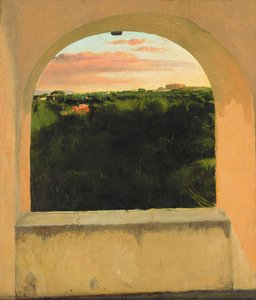
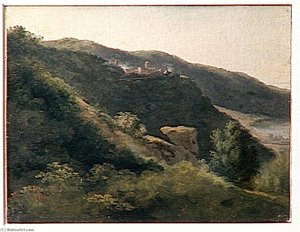
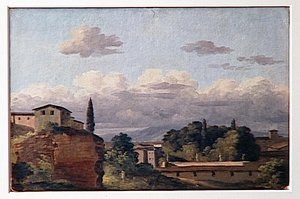
Biografía del artista
Pierre Henri de Valenciennes
Pierre Henri de Valenciennes (Toulouse, 6 diciembre de 1750 – París, 16 febrero de 1819) fue un pintor francés que destacó por su influencia en la elevación del estatus del paisaje pictórico. Nacido en Toulouse, aunque sus datos biográficos son escasos en los registros disponibles, sus contribuciones al mundo artístico están bien documentadas. Su formación inicial y educación no están extensamente registradas, pero se sabe que trabajó en Roma entre 1778 y 1782, donde realizó numerosos estudios de paisaje directamente desde la naturaleza. Esta práctica innovadora fue fundamental para impulsar el desarrollo del paisaje como género artístico reconocido por la época.Contribuciones al paisaje pictórico
Valenciennes fue un verdadero pionero en la promoción del paisaje como objeto de estudio y representación artística. Su teoría sobre este tema, expuesta en su tratado “Reflexiones y consejos a un estudiante sobre pintura, particularmente sobre el género del paisaje” (1800), marcó un punto de inflexión en el pensamiento artístico francés del siglo XIX. Valenciennes defendió la importancia de observar directamente la naturaleza para capturar sus cambios constantes debido a la luz y el clima, una metodología que influyó profundamente en otros artistas activos en Italia como Hubert Robert, Pierre Chauvin y Achille Etna Michallon. Estos pintores adoptaron un enfoque antropológico al paisaje, buscando comprender su relación con el hombre y el entorno, lo cual fue impulsado por las ideas de Valenciennes sobre cómo representar estos elementos con precisión y belleza.Influencias y estudiantes notables
Entre sus alumnos destacaron Jean Victor Bertin, Achille Etna Michallon, Louis Étienne Watelet, Louis François Lejeune y Pierre Prévost, el primer pintor panorámico francés. Estos artistas fueron influenciados por la maestría técnica de Valenciennes y por su visión estética del paisaje clásico, que buscaban emular los principios establecidos por Nicolas Poussin en Roma. Valenciennes también promovió el uso de materiales nuevos y métodos innovadores para lograr efectos especiales en sus obras, como el empleo de colores brillantes y pinceladas audaces que capturaban la atmósfera del lugar representado. Esta actitud vanguardista contribuyó a impulsar el desarrollo del paisaje pictórico francés hacia mediados del siglo XIX.Estilo artístico y legado
Valenciennes desarrolló un estilo propio caracterizado por una gran precisión técnica y una sensibilidad estética excepcional. Sus obras reflejan una profunda comprensión de los principios clásicos de composición y perspectiva, así como una habilidad para transmitir emociones y sentimientos a través del lenguaje visual. Aunque Valenciennes fue considerado un pintor poco dado a la innovación formal, su influencia en otros artistas fue enorme y sus ideas sobre el paisaje siguen siendo relevantes hoy en día. Su tratado “Reflexiones y consejos…” estableció nuevos estándares de pensamiento artístico y abrió camino a nuevas investigaciones sobre cómo representar el mundo natural con belleza y armonía. Además, Valenciennes contribuyó significativamente al desarrollo del género panorámico francés, creando obras maestras que impresionaron a espectadores y críticos de la época. Su legado en el arte francés es indiscutible y sigue siendo estudiado y admirado por artistas y historiadores de arte contemporáneos.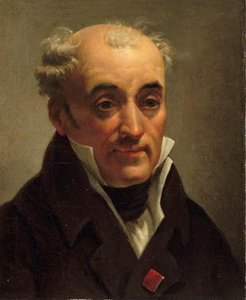
Pierre Henri de Valenciennes
1750 - 1819 , Francia
Breves datos
- Artistic Movement Or Style: En plein air pintura
- Artists Or Movements Influenced By This Artist: ['Claude Lorrain']
- Artists Who Influenced This Artist:
- Jean Victor Bertin
- Achille Etna Michallon
- Date Of Birth: 6 diciembre 1750
- Date Of Death: 16 febrero 1819
- Full Name: Pierre Henri de Valenciennes
- Nationality: Francés
- Notable Artworks:
- Villa Borghese paisaje
- Paisaje con árboles
- Place Of Birth: Toulouse, Francia

