 Ver en contexto
 Enviar
 Compartir
 Detalles

 Descargar
 Similares
 Radiografía
 Presentación de diapositivas
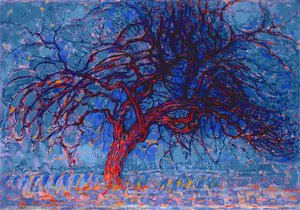
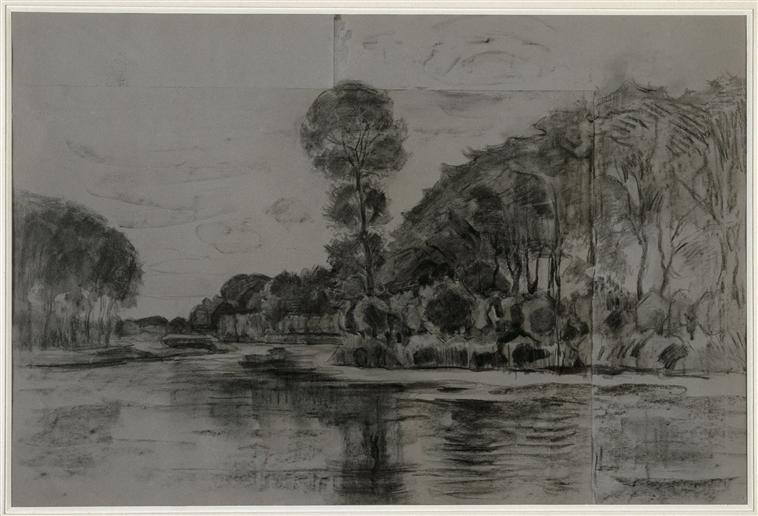
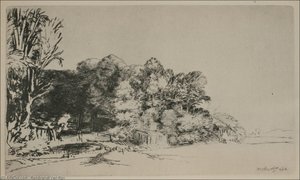
Lonely tree at the Gein


 Ver más
Reproducción al óleo hecha a mano
Óleo sobre lienzo pintado a mano en el tamaño y marco de su elección, realizado por encargo por nuestros artistas. ( Comprar impresión Comprar imagen)




P118B $10

P118H $10

P118W $10

P438Z $10

P508JH $12

P508YH $12

P805H $10

P805Z $10

P919BZ $10

P919G $10

P919XJ $10

P959ZH $10

P968JZ $12

W106C $8

W218G $10

W218JH $8

W218Y $10

W307PJ $10

W316G $10

W316PJ $8

W316Y $10

W398PJ $8

W4111J $10

W500HY $15

W500JH $15

W692G $12

W849H $8

W940BG $15

W953PJ $8




Elija entre nuestros tamaños predefinidos que respetan las proporciones originales de la obra.

Puede ingresar sus propias dimensiones para adaptarse a un marco o espacio específico. Si el tamaño seleccionado no coincide con las proporciones de la imagen original, recortaremos la obra o extenderemos la pintura con elementos adicionales pintados a mano. Se le enviará una maqueta digital para su aprobación antes de comenzar la producción.
Tenga en cuenta que la vista previa en pantalla no refleja el recorte o la extensión reales. Solo la maqueta mostrará con precisión la composición final.
Si bien existen tamaños personalizados, recomendamos seleccionar una dimensión de la lista predefinida para preservar las proporciones originales.
Tras realizar el pedido, el equipo de ArtsDot.com enviará un correo electrónico al cliente para solicitar instrucciones y proporcionarle una vista previa del boceto.
Envío a todo el mundo () en 3-4 semanas en lugar de las 5 semanas estándar. (23 agosto). Sin comprometer la calidad.

Envío exprés gratuito a todo el mundo

Lienzo de lino de alta calidad

Seguro de envío total

Garantía de reembolso de impuestos aduaneros

Garantía de fidelidad cromática exacta

Política de devolución de 60 días (solo por defectos)

Garantía de devolución del 100% del dinero

Descuento por cantidad
 La opción de vidrio solo está disponible en tamaños inferiores a 110 cm.

Lonely tree at the Gein
Técnica de reproducción
Dimensiones de la reproducción
-


Precio total final
$ 263
Descripción de la obra
A Quiet Contemplation: Exploring Piet Mondrian’s ‘Lonely Tree at the Gein’
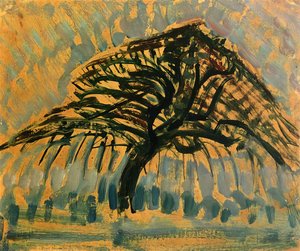
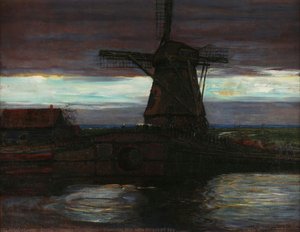
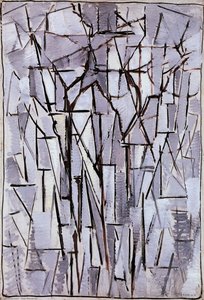
Piet Mondrian's *Lonely Tree at the Gein*, painted in 1907, represents a pivotal moment in his artistic evolution—a step away from the lush landscapes of his formative years and toward the austere geometric abstraction that would define his legacy. Initially influenced by Impressionism and Dutch Landscape Painting, particularly the evocative works of Hague School artists like Hendrik Willem Valkenburg, Mondrian’s early canvases demonstrate a meticulous observation of nature alongside an undeniable impulse to distill its essence into simplified forms. This piece exemplifies this dual fascination; it captures a serene riverside scene populated with cows and horses—familiar elements rendered in muted tones—yet simultaneously embodies Mondrian's nascent quest for universal harmony through reductive visual language.- Subject Matter: The painting depicts a solitary tree standing beside a tranquil body of water, framed by a backdrop of denser foliage. This deliberate choice of subject matter wasn’t merely decorative; it served as a springboard for Mondrian's exploration of fundamental principles.
- Style: While rooted in Impressionism’s embrace of light and color, *Lonely Tree at the Gein* foreshadows Mondrian’s groundbreaking stylistic shift toward Neo-Plasticism. The artist abandons traditional perspective and shading, prioritizing orthogonal lines—horizontal and vertical—to create a flattened composition.
Technique: Impressionistic Foundations Yield Geometric Precision
Mondrian's technique in this early work reflects the influence of Impressionism’s meticulous brushwork and tonal gradations. He employs short, broken strokes to capture the textures of bark and foliage, layering colors subtly to convey atmospheric depth. However, beneath this surface lies a burgeoning awareness of geometric abstraction—a desire to transcend representational illusion and arrive at a more profound understanding of visual reality. The careful blending of hues hints at Mondrian’s ongoing experimentation with color theory, mirroring his engagement with Fauvist principles championed by Matisse and Derain.Historical Context: Embracing Modernity Amidst Artistic Dialogue
Painted during the burgeoning artistic fervor of the early 20th century, *Lonely Tree at the Gein* sits squarely within a period marked by significant intellectual and aesthetic upheaval. The Impressionists’ rejection of academic conventions paved the way for movements like Fauvism and Cubism, challenging established notions of beauty and artistic expression. Mondrian's engagement with these stylistic currents underscores his commitment to pushing boundaries—to questioning traditional methods and exploring new visual vocabularies as he sought to articulate a vision of timeless harmony.Symbolic Resonance: The Tree as Emblematic Isolation
The lone tree itself carries symbolic weight. Traditionally representing resilience, solitude, and connection to the natural world, its solitary posture in *Lonely Tree at the Gein* speaks to Mondrian’s preoccupation with conveying emotional depth through simplified forms. It's a subtle yet powerful gesture—a visual metaphor for the artist’s own intellectual journey toward abstraction, mirroring his desire to distill universal truths into elemental geometric shapes.Emotional Impact: Tranquility and Contemplation Captured in Minimalist Form
Despite its apparent simplicity, *Lonely Tree at the Gein* possesses a remarkable emotional resonance. The muted palette—primarily browns and greens—evokes a sense of quiet contemplation and understated beauty. Mondrian’s masterful use of orthogonal lines creates a feeling of stability and balance, inviting viewers to pause and consider the profound implications of reducing complex visual experience to its most fundamental elements. This artwork remains an enduring testament to Mondrian's pioneering spirit—a captivating glimpse into the genesis of his revolutionary artistic vision.Obras relacionadas
Biografía del artista
**vida temprana y carrera en los Países Bajos (1872-1911)**
pieter cornelis mondriaan, conocido a partir de 1911 como piet mondrian, fue un pintor y teórico del arte holandés nacido el 7 de marzo de 1872, en Amersfoort, Países Bajos. Comenzó su carrera como maestro en educación primaria mientras practicaba la pintura, inicialmente en el estilo impresionista holandés de la Escuela de Ámsterdam.- Su obra temprana, caracterizada por paisajes naturalistas, se puede ver en pinturas como the red mill y trees in moonrise, que se exhibieron en el kunstmuseum den haag.
- La búsqueda de Mondrian por parte de un estilo personal lo llevó a explorar diversos movimientos artísticos, incluyendo el puntillismo y el fauvismo.
- Su primera exposición en 1893 marcó el comienzo de su prolífica carrera.
**la evolución del estilo de Mondrian**
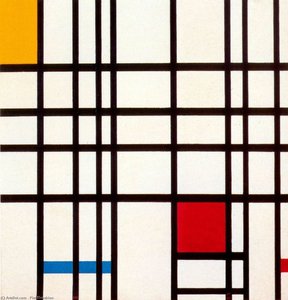
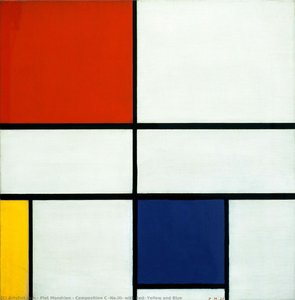
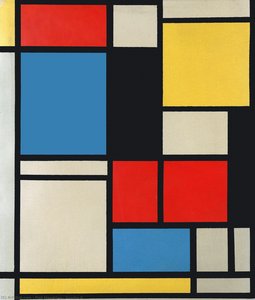
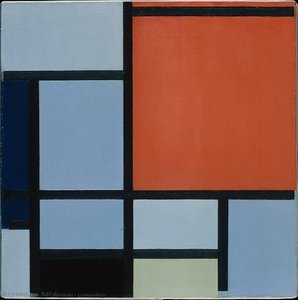
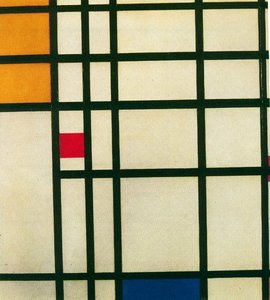
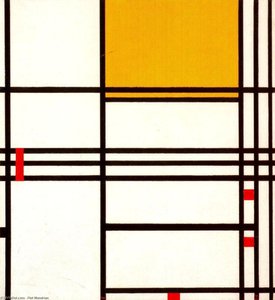
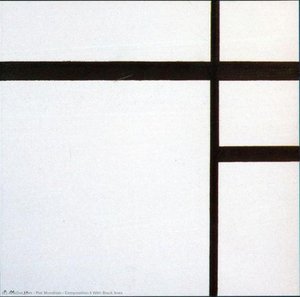
de figurativo a abstracto La dirección artística de Mondrian se desplazó hacia un estilo cada vez más abstracto, culminando en una forma no representacional que llamó neoplasticismo. Esta 'arte plástico puro' tenía como objetivo crear 'belleza universal', limitando su vocabulario formal a los colores primarios (rojo, azul y amarillo), valores (negro, blanco y gris) y direcciones (horizontal y vertical).- Ejemplos de este estilo se pueden ver en pinturas como composition with yellow patch (46 x 46 cm, neoplasticismo, óleo sobre lienzo).
- La obra de Mondrian tuvo una enorme influencia en el arte del siglo XX, impactando no solo la pintura abstracta sino también el diseño, la arquitectura y la moda.
**legado e influencia**
El legado de Mondrian se extiende más allá de su propia obra, influyendo en estilos y movimientos importantes como la pintura de campo de color, el expresionismo abstracto y el minimalismo. El historiador del diseño stephen bayley señaló que Mondrian se ha convertido en un símbolo para todo lo que el modernismo pretendía ser.- Explore más de la obra de Mondrian en ArtsDot.com.
- Aprenda sobre el movimiento De Stijl y su influencia en el arte moderno en wikipedia.
- Descubra otros artistas influyentes como vincent van gogh y su impacto en el mundo del arte.
**obras clave y exposiciones**
* piet mondrian: apple blossom (cubismo) (ver en ArtsDot.com) * piet mondrian: still life with vase of spices ii (cubismo) (ver en ArtsDot.com) * piet mondrian: passionflower (73 x 48 cm, kunstmuseum den haag, post impressionismo, acuarela) (ver en ArtsDot.com)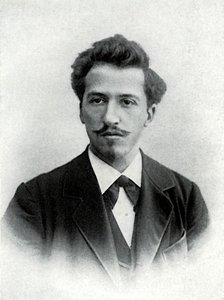
Piet Mondrian
1872 - 1944 , Países Bajos
Datos clave
- Artistas Que Influyeron:
- Hague School
- Puntillismo
- Fauvismo
- Cubismo
- Estilo Artístico: Neoplasticismo, De Stijl
- Fecha De Nacimiento: 7 de marzo de 1872
- Influenciado A Artistas:
- Expresionismo abstracto
- Minimalismo
- Color Field painting
- Lugar De Nacimiento: Amersfoort, Países Bajos
- Nacionalidad: Holandés
- Nombre Completo: Piet Mondrian
- Obras Notables:
- Nueva York I
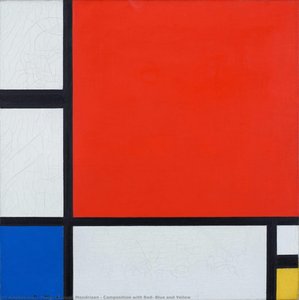
- Composición con Rojo, Azul y Amarillo
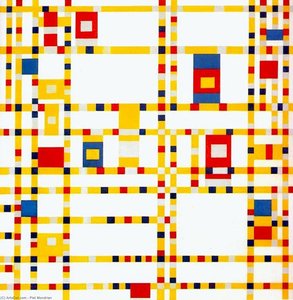
- Broadway Boogie Woogie
- Tableau no. 2
Artículos relacionados
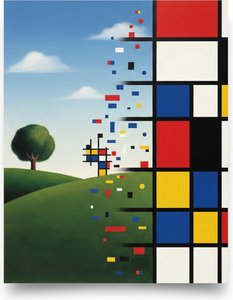
Piet Mondrian: Deconstructing Reality – A Study of Neo-Plasticism & Universal Harmony
Explore the revolutionary art of Piet Mondrian and the principles of Neo-Plasticism. Discover De Stijl's influence, iconic compositions like 'Composition with Red, Yellow and Blue,' and Mondrian’s lasting legacy on modern design.
Arboreal Echoes: A Historical & Artistic Exploration of Trees in Painting
Explore the rich history of trees in painting! Discover symbolism, Romantic masterpieces by Caspar David Friedrich & beyond. A curated journey for art enthusiasts.

Paisajes Románticos: 10 Obras Maestras que Definieron un Movimiento Artístico
Descubre los 10 paisajes románticos más influyentes de artistas como Caspar David Friedrich y Turner. Explora la belleza, el simbolismo y las técnicas del movimiento romántico. Reproducciones de arte exclusivas en ArtsDot.com.
Charles Leickert: Capturing the Dutch Golden Age Light – A Comprehensive Study of Technique, Context, and Legacy
Explore the captivating winter landscapes of Charles Leickert, a master of Dutch Golden Age light & atmosphere. Discover his techniques, symbolism, and lasting legacy – a comprehensive study for art enthusiasts and collectors.
Golden Light & Dutch Skies: Bringing the Magic of Dutch Golden Age Landscapes into Your Home
Transform your home with the breathtaking light of Dutch Golden Age landscapes. Discover how hand-painted oil reproductions of masterworks like Ruisdael and Vermeer bring timeless elegance, atmosphere, and soulful texture to modern interiors. Elevate your space with museum-quality art.