

 Vista previa
 Compartir
 Compartir
 Ver detalles

 Descargar
 Ver similares
 Radiografía
 Presentación de diapositivas
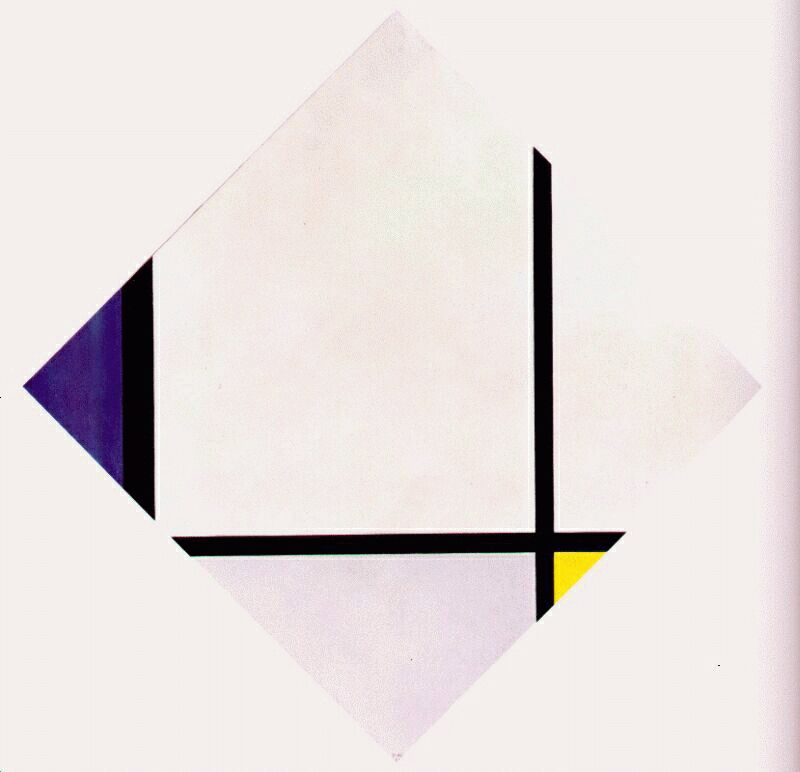
Lozenge Composition 3 Lines Blue Gray Yellow


 Leer más
Adquiera una imagen digital de alta resolución y optimizada, muy superior a la vista previa en línea.
Cada archivo es preparado meticulosamente por nuestros especialistas internos mediante el uso de herramientas avanzadas y un experto retoque manual. Nos aseguramos de que cada imagen posea una claridad excepcional, una precisión cromática impecable y un detalle minucioso.
El archivo final se entrega por correo electrónico en un plazo de 72 horas, optimizado para su uso inmediato en entornos profesionales, editoriales y de impresión. Esta es la misma calidad en la que confían los estudios de diseño, las editoriales y las galerías de primer nivel.
Imagen Digital
Descarga un archivo de alta resolución para exhibición personal, impresión y proyectos creativos. ( Pedir impresión Encargar reproducción pintada a mano)
Incluido en cada compra de imágenes digitales
Entrega digital experta, garantizada.
Al elegir ArtsDot.com, no solo está adquiriendo una imagen; está recibiendo una obra de arte digital mejorada profesionalmente, elaborada con precisión y respaldada por una garantía de satisfacción. Esto es todo lo que incluye su pedido, automáticamente:

Entrega rápida por email
Recibirá su archivo de imagen digital en alta resolución por correo electrónico en un plazo de 72 horas tras realizar su pedido, listo para su uso inmediato.

Archivo digital optimizado por IA
Su obra de arte se optimiza profesionalmente mediante herramientas avanzadas de IA y edición manual, garantizando el máximo detalle, claridad y precisión cromática.

Reenvío gratuito de por vida
¿Has borrado o perdido tu archivo por error? No te preocupes: te lo volveremos a enviar en cualquier momento, sin coste adicional.

Sin gastos de importación, siempre
Disfrute de su obra de arte al instante sin aduanas, aranceles ni gastos de envío; las descargas digitales siempre están libres de impuestos.

Garantía de precisión de color
Garantizamos que su imagen digital refleje los colores originales con la mayor fidelidad posible, mediante el uso de herramientas profesionales y gestión del color.

Garantía de satisfacción de 60 días
Si no está satisfecho con su imagen digital, la revisaremos o le reembolsaremos el 100% en un plazo de 60 días, sin preguntas.

100% Garantía de devolución de dinero
¿No está satisfecho? Obtenga un reembolso completo dentro de los 60 días posteriores a la recepción de su archivo digital, sin necesidad de explicaciones.

Descuentos por volumen
Compra 3 imágenes, ahorra 10% - Compra 5, ahorra 15% - Compra 10+, ahorra 20%. Ideal para proyectos creativos, galerías y agencias.
Descripción del coleccionable
A Journey Towards Abstraction
Piet Mondrian’s ‘Lozenge Composition 3 Lines Blue Gray Yellow’ is not merely a painting; it’s a visual manifesto, a distillation of an artistic philosophy that sought to unlock the underlying principles of universal harmony. Emerging from the vibrant currents of early 20th-century abstraction, this work embodies the core tenets of Neoplasticism – a style Mondrian himself championed as a pathway to spiritual and aesthetic purity. The painting’s impact resides not in what it depicts, for it depicts nothing recognizable, but in *how* it is constructed: a carefully calibrated arrangement of lines, planes, and colors that resonates with an almost mathematical precision. The diamond-shaped canvas itself immediately signals a departure from tradition, rejecting the conventional rectangular format to subtly disrupt our expectations and invite a fresh perspective.
Exploring Neoplasticism
To understand ‘Lozenge Composition 3 Lines Blue Gray Yellow’ one must consider Mondrian’s artistic evolution. Born in Amersfoort, Netherlands, in 1872, he began his career painting naturalistic landscapes, influenced by the Hague School and Dutch Impressionism. However, a growing dissatisfaction with representing the visible world propelled him towards abstraction. A pivotal move to Paris in 1912 exposed him to Cubism, which initially sparked experimentation with deconstructing forms. But Mondrian didn’t simply adopt Cubist principles; he pushed them further, stripping away all representational elements until only the essential geometric structures remained. This relentless pursuit of reduction led to the development of Neoplasticism – a style predicated on the belief that art should reflect the underlying order of the universe. He sought to liberate painting from illusionistic representation and to express its fundamental essence through pure abstraction.
Decoding the Visual Language
The composition itself is deceptively simple. Thick black lines define a network of rectangles and triangles on a predominantly white ground. A cool blue triangle anchors the upper left corner, while a vibrant yellow square provides a counterpoint in the lower right quadrant. The central space is dominated by a large lozenge shape filled with subtle shades of gray and white, intersected by those defining black lines. This isn’t randomness; every element is deliberately placed to achieve a dynamic equilibrium. Mondrian believed that these primary colors – red, blue, and yellow – along with the non-colors of black, white, and gray, represented the fundamental building blocks of reality. The straight lines, devoid of curves or ornamentation, symbolized clarity, order, and objectivity. The absence of shading or texture further emphasizes this flatness, rejecting illusionistic depth in favor of a purely two-dimensional space.
A Legacy of Harmony
‘Lozenge Composition 3 Lines Blue Gray Yellow’ is more than just an aesthetically pleasing arrangement; it's a testament to Mondrian’s unwavering belief in the power of abstraction to reveal deeper truths. His work profoundly influenced not only painting but also architecture, design, and fashion, shaping the visual landscape of the 20th century and beyond. The painting continues to inspire contemporary artists and designers, demonstrating the enduring relevance of his vision – a subtle yet powerful statement for any space.
Historical Context
Created in 1925 during Mondrian’s Parisian period, ‘Lozenge Composition 3 Lines Blue Gray Yellow’ emerged from the influential De Stijl movement. This Dutch artistic group, founded by Mondrian and Theo van Doesburg, championed a radical aesthetic based on geometric abstraction and primary colors. Influenced by thinkers like Rudolf Steiner and Henri Bergson, De Stijl sought to synthesize art and science, aiming for a harmonious unity that transcended subjective experience. The painting reflects the movement’s core principles – simplification, universality, and balance – embodying a desire to express spiritual truth through pure visual form.
Symbolism and Technique
Mondrian's meticulous technique involved applying oil paint in thin layers onto canvas with precise brushstrokes. He adhered strictly to his compositional rules, ensuring that each element contributed to the overall equilibrium of the artwork. The black lines delineate the geometric shapes—rectangles and triangles—creating a framework that emphasizes clarity and order. The use of white provides a neutral backdrop, allowing the colors to stand out prominently. The deliberate placement of the blue triangle and yellow square represents a conscious effort to achieve visual harmony, reflecting Mondrian’s belief in the fundamental role of color and form in conveying spiritual significance.
Obras relacionadas
Biografía del artista
**vida temprana y carrera en los Países Bajos (1872-1911)**
pieter cornelis mondriaan, conocido a partir de 1911 como piet mondrian, fue un pintor y teórico del arte holandés nacido el 7 de marzo de 1872, en Amersfoort, Países Bajos. Comenzó su carrera como maestro en educación primaria mientras practicaba la pintura, inicialmente en el estilo impresionista holandés de la Escuela de Ámsterdam.- Su obra temprana, caracterizada por paisajes naturalistas, se puede ver en pinturas como the red mill y trees in moonrise, que se exhibieron en el kunstmuseum den haag.
- La búsqueda de Mondrian por parte de un estilo personal lo llevó a explorar diversos movimientos artísticos, incluyendo el puntillismo y el fauvismo.
- Su primera exposición en 1893 marcó el comienzo de su prolífica carrera.
**la evolución del estilo de Mondrian**
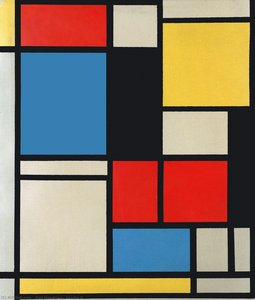
de figurativo a abstracto La dirección artística de Mondrian se desplazó hacia un estilo cada vez más abstracto, culminando en una forma no representacional que llamó neoplasticismo. Esta 'arte plástico puro' tenía como objetivo crear 'belleza universal', limitando su vocabulario formal a los colores primarios (rojo, azul y amarillo), valores (negro, blanco y gris) y direcciones (horizontal y vertical).- Ejemplos de este estilo se pueden ver en pinturas como composition with yellow patch (46 x 46 cm, neoplasticismo, óleo sobre lienzo).
- La obra de Mondrian tuvo una enorme influencia en el arte del siglo XX, impactando no solo la pintura abstracta sino también el diseño, la arquitectura y la moda.
**legado e influencia**
El legado de Mondrian se extiende más allá de su propia obra, influyendo en estilos y movimientos importantes como la pintura de campo de color, el expresionismo abstracto y el minimalismo. El historiador del diseño stephen bayley señaló que Mondrian se ha convertido en un símbolo para todo lo que el modernismo pretendía ser.- Explore más de la obra de Mondrian en ArtsDot.com.
- Aprenda sobre el movimiento De Stijl y su influencia en el arte moderno en wikipedia.
- Descubra otros artistas influyentes como vincent van gogh y su impacto en el mundo del arte.
**obras clave y exposiciones**
* piet mondrian: apple blossom (cubismo) (ver en ArtsDot.com) * piet mondrian: still life with vase of spices ii (cubismo) (ver en ArtsDot.com) * piet mondrian: passionflower (73 x 48 cm, kunstmuseum den haag, post impressionismo, acuarela) (ver en ArtsDot.com)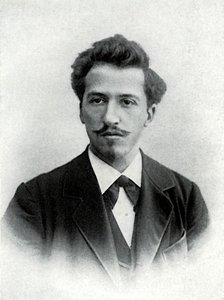
Piet Mondrian
1872 - 1944 , Países Bajos
Datos clave
- Artistas Que Influyeron:
- Hague School
- Puntillismo
- Fauvismo
- Cubismo
- Estilo Artístico: Neoplasticismo, De Stijl
- Fecha De Nacimiento: 7 de marzo de 1872
- Influenciado A Artistas:
- Expresionismo abstracto
- Minimalismo
- Color Field painting
- Lugar De Nacimiento: Amersfoort, Países Bajos
- Nacionalidad: Holandés
- Nombre Completo: Piet Mondrian
- Obras Notables:
- Nueva York I
- Composición con Rojo, Azul y Amarillo
- Broadway Boogie Woogie
- Tableau no. 2

