

 Ver en contexto
 Enviar
 Compartir
 Detalles

 Descargar
 Similares
 Radiografía
 Presentación de diapositivas
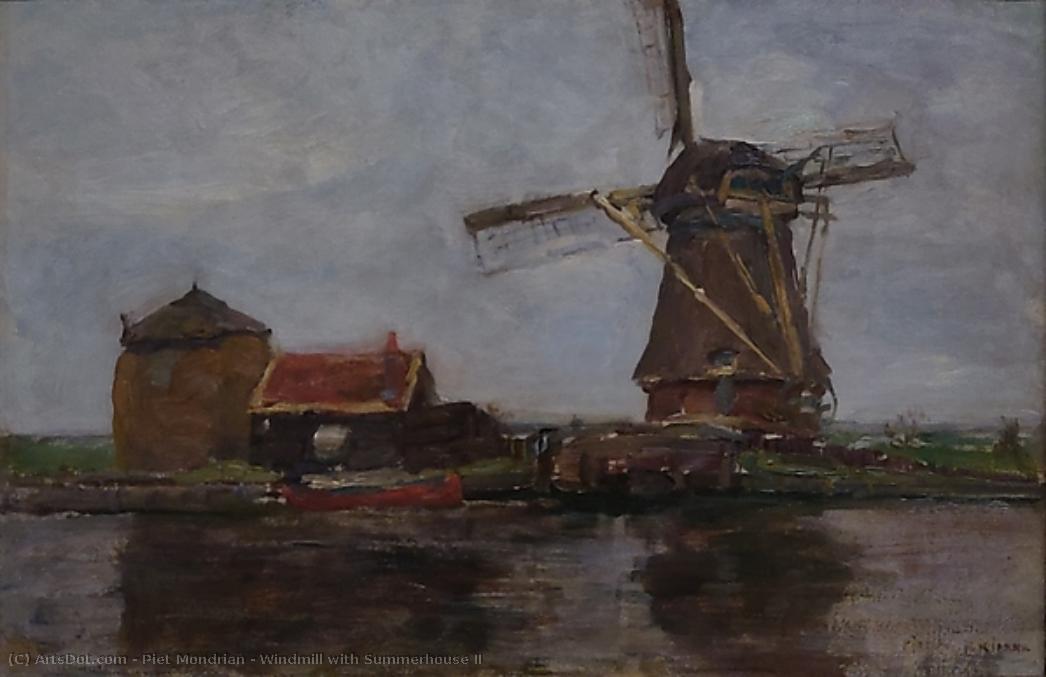
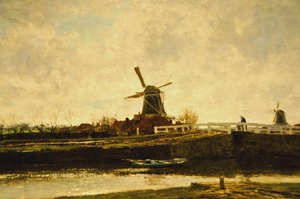
Windmill with Summerhouse II
 Oil On Board
- WallArt
- Neo-Plasticism
 1906
1906- Modern
 37.0 x 57.0 cm
 Ver más
Adquiera una imagen digital de alta resolución y optimizada, muy superior a la vista previa en línea.
Cada archivo es preparado meticulosamente por nuestros especialistas internos mediante el uso de herramientas avanzadas y un experto retoque manual. Nos aseguramos de que cada imagen posea una claridad excepcional, una precisión cromática impecable y un detalle minucioso.
El archivo final se entrega por correo electrónico en un plazo de 72 horas, optimizado para su uso inmediato en entornos profesionales, editoriales y de impresión. Esta es la misma calidad en la que confían los estudios de diseño, las editoriales y las galerías de primer nivel.
Imagen Digital
Descarga un archivo de alta resolución para exhibición personal, impresión y proyectos creativos. ( Comprar impresión Comprar pintura hecha a mano)
Incluido en cada pedido de imágenes digitales
Entrega digital experta, garantizada.
Al elegir ArtsDot.com, no solo está adquiriendo una imagen; está recibiendo una obra de arte digital mejorada profesionalmente, elaborada con precisión y respaldada por una garantía de satisfacción. Esto es todo lo que incluye su pedido, automáticamente:

Entrega rápida por email
Recibirá su archivo de imagen digital en alta resolución por correo electrónico en un plazo de 72 horas tras realizar su pedido, listo para su uso inmediato.

Archivo digital optimizado por IA
Su obra de arte se optimiza profesionalmente mediante herramientas avanzadas de IA y edición manual, garantizando el máximo detalle, claridad y precisión cromática.

Reenvío gratuito de por vida
¿Has borrado o perdido tu archivo por error? No te preocupes: te lo volveremos a enviar en cualquier momento, sin coste adicional.

Sin gastos de importación, siempre
Disfrute de su obra de arte al instante sin aduanas, aranceles ni gastos de envío; las descargas digitales siempre están libres de impuestos.

Garantía de fidelidad de color
Garantizamos que su imagen digital refleje los colores originales con la mayor fidelidad posible, mediante el uso de herramientas profesionales y gestión del color.

Garantía de satisfacción de 100 días
Si no está satisfecho con su imagen digital, la revisaremos o le reembolsaremos el 100% en un plazo de 100 días, sin preguntas.

100% Garantía de devolución de dinero
¿No está satisfecho? Obtenga un reembolso completo dentro de los 100 días posteriores a la recepción de su archivo digital, sin preguntas.

Descuentos por pedidos grandes
Compra 3 imágenes, ahorra 10% - Compra 5, ahorra 15% - Compra 10+, ahorra 20%. Ideal para proyectos creativos, galerías y agencias.
A Symphony of Geometric Harmony
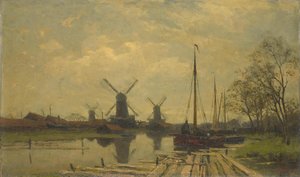
In the quiet landscape of 1906, before the world became acquainted with the radical abstractions of De Stijl, Piet Mondrian captured a moment of profound transition in Windmill with Summerhouse II. This evocative oil on Masonite serves as a breathtaking window into the Dutch countryside, where a towering windmill stands as a sentinel over a tranquil summerhouse and a gentle body of water. At first glance, the viewer is greeted by a picturesque scene of rural life; boats drift lazily across the water, and small figures animate the shoreline, grounding the composition in a sense of peaceful, everyday existence. Yet, beneath this serene surface lies the heartbeat of an artist beginning to distill the chaos of nature into a crystalline structure of pure form.
The technique employed in this early masterpiece reveals Mondrian’s meticulous devotion to capturing light and atmosphere through a lens that bridges Impressionism and the burgeoning Cubist movement. While the subject matter remains rooted in the tradition of the Hague School, his brushwork begins to eschew mere illusionistic representation. Instead, he utilizes precise, orthogonal lines and a carefully curated palette—dominated by soothing shades of purple, blue, and muted earth tones—to create a sense of mathematical precision. This deliberate approach transforms the landscape into a rhythmic arrangement of shapes, where the verticality of the windmill provides a stabilizing force against the horizontal expanse of the water and sky.
Symbolism and the Search for Universal Truth
Beyond its aesthetic charm, Windmill with Summerhouse II is a profound meditation on stability and the elemental forces of life. The windmill, an iconic symbol of Dutch heritage, is rendered not just as a machine of industry, but as an emblem of permanence and strength. Its upright posture offers a structural anchor to the composition, mirroring Mondrian’s lifelong pursuit of finding spiritual truth through geometric balance. Even in this formative stage, one can sense the seeds of his later obsession with primary colors and straight lines; the way he organizes the landscape suggests a desire to find a universal language—a way to express the underlying order of the cosmos through the simplicity of the rectangle and the line.
For the discerning collector or interior designer, this painting offers much more than a decorative element; it provides a focal point of intellectual and emotional depth. The piece possesses a unique ability to anchor a room with its serene atmosphere while simultaneously inviting contemplation of its complex structural layers. Whether placed in a modern gallery setting or a classic study, the artwork’s blend of nostalgic Dutch charm and proto-abstract geometry makes it a timeless addition. It is a rare opportunity to own a piece of art history that captures the exact moment an artist began to peel back the layers of reality to reveal the beautiful, geometric soul beneath.
Obras relacionadas
Biografía del artista
**vida temprana y carrera en los Países Bajos (1872-1911)**
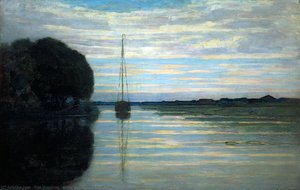
pieter cornelis mondriaan, conocido a partir de 1911 como piet mondrian, fue un pintor y teórico del arte holandés nacido el 7 de marzo de 1872, en Amersfoort, Países Bajos. Comenzó su carrera como maestro en educación primaria mientras practicaba la pintura, inicialmente en el estilo impresionista holandés de la Escuela de Ámsterdam.- Su obra temprana, caracterizada por paisajes naturalistas, se puede ver en pinturas como the red mill y trees in moonrise, que se exhibieron en el kunstmuseum den haag.
- La búsqueda de Mondrian por parte de un estilo personal lo llevó a explorar diversos movimientos artísticos, incluyendo el puntillismo y el fauvismo.
- Su primera exposición en 1893 marcó el comienzo de su prolífica carrera.
**la evolución del estilo de Mondrian**
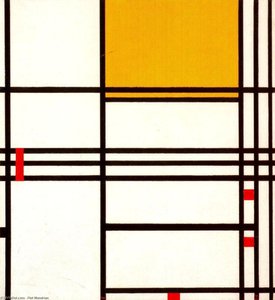
de figurativo a abstracto La dirección artística de Mondrian se desplazó hacia un estilo cada vez más abstracto, culminando en una forma no representacional que llamó neoplasticismo. Esta 'arte plástico puro' tenía como objetivo crear 'belleza universal', limitando su vocabulario formal a los colores primarios (rojo, azul y amarillo), valores (negro, blanco y gris) y direcciones (horizontal y vertical).- Ejemplos de este estilo se pueden ver en pinturas como composition with yellow patch (46 x 46 cm, neoplasticismo, óleo sobre lienzo).
- La obra de Mondrian tuvo una enorme influencia en el arte del siglo XX, impactando no solo la pintura abstracta sino también el diseño, la arquitectura y la moda.
**legado e influencia**
El legado de Mondrian se extiende más allá de su propia obra, influyendo en estilos y movimientos importantes como la pintura de campo de color, el expresionismo abstracto y el minimalismo. El historiador del diseño stephen bayley señaló que Mondrian se ha convertido en un símbolo para todo lo que el modernismo pretendía ser.- Explore más de la obra de Mondrian en ArtsDot.com.
- Aprenda sobre el movimiento De Stijl y su influencia en el arte moderno en wikipedia.
- Descubra otros artistas influyentes como vincent van gogh y su impacto en el mundo del arte.
**obras clave y exposiciones**
* piet mondrian: apple blossom (cubismo) (ver en ArtsDot.com) * piet mondrian: still life with vase of spices ii (cubismo) (ver en ArtsDot.com) * piet mondrian: passionflower (73 x 48 cm, kunstmuseum den haag, post impressionismo, acuarela) (ver en ArtsDot.com)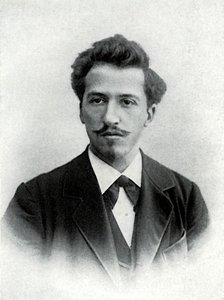
Piet Mondrian
1872 - 1944 , Países Bajos
Breves datos
- Artistas Que Influyeron:
- Hague School
- Puntillismo
- Fauvismo
- Cubismo
- Estilo Artístico: Neoplasticismo, De Stijl
- Fecha De Nacimiento: 7 de marzo de 1872
- Influenciado A Artistas:
- Expresionismo abstracto
- Minimalismo
- Color Field painting
- Lugar De Nacimiento: Amersfoort, Países Bajos
- Nacionalidad: Holandés
- Nombre Completo: Piet Mondrian
- Obras Notables:
- Nueva York I
- Composición con Rojo, Azul y Amarillo
- Broadway Boogie Woogie
- Tableau no. 2