 Ver en contexto
 Enviar
 Compartir
 Detalles

 Descargar
 Similares
 Radiografía
 Presentación de diapositivas
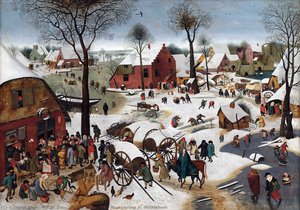
El Censo de Betleém


 Ver más
Reproducción al óleo hecha a mano
Óleo sobre lienzo pintado a mano en el tamaño y marco de su elección, realizado por encargo por nuestros artistas. ( Comprar impresión Comprar imagen)




P118B $10

P118H $10

P118W $10

P438Z $10

P508JH $12

P508YH $12

P805H $10

P805Z $10

P919BZ $10

P919G $10

P919XJ $10

P959ZH $10

P968JZ $12

W106C $8

W218G $10

W218JH $8

W218Y $10

W307PJ $10

W316G $10

W316PJ $8

W316Y $10

W398PJ $8

W4111J $10

W500HY $15

W500JH $15

W692G $12

W849H $8

W940BG $15

W953PJ $8




Elija entre nuestros tamaños predefinidos que respetan las proporciones originales de la obra.

Puede ingresar sus propias dimensiones para adaptarse a un marco o espacio específico. Si el tamaño seleccionado no coincide con las proporciones de la imagen original, recortaremos la obra o extenderemos la pintura con elementos adicionales pintados a mano. Se le enviará una maqueta digital para su aprobación antes de comenzar la producción.
Tenga en cuenta que la vista previa en pantalla no refleja el recorte o la extensión reales. Solo la maqueta mostrará con precisión la composición final.
Si bien existen tamaños personalizados, recomendamos seleccionar una dimensión de la lista predefinida para preservar las proporciones originales.
Tras realizar el pedido, el equipo de ArtsDot.com enviará un correo electrónico al cliente para solicitar instrucciones y proporcionarle una vista previa del boceto.
Envío a todo el mundo () en 3-4 semanas en lugar de las 5 semanas estándar. (1 septiembre). Sin comprometer la calidad.

Envío exprés gratuito a todo el mundo

Lienzo de lino de alta calidad

Seguro de envío total

Garantía de reembolso de impuestos aduaneros

Garantía de fidelidad cromática exacta

Política de devolución de 60 días (solo por defectos)

Garantía de devolución del 100% del dinero

Descuento por cantidad
 La opción de vidrio solo está disponible en tamaños inferiores a 110 cm.

El Censo de Betleém
Técnica de reproducción
Dimensiones de la reproducción
-


Precio total final
$ 263
A Window Into Winter’s Soul: Pieter Bruegel's “The Census at Bethlehem”
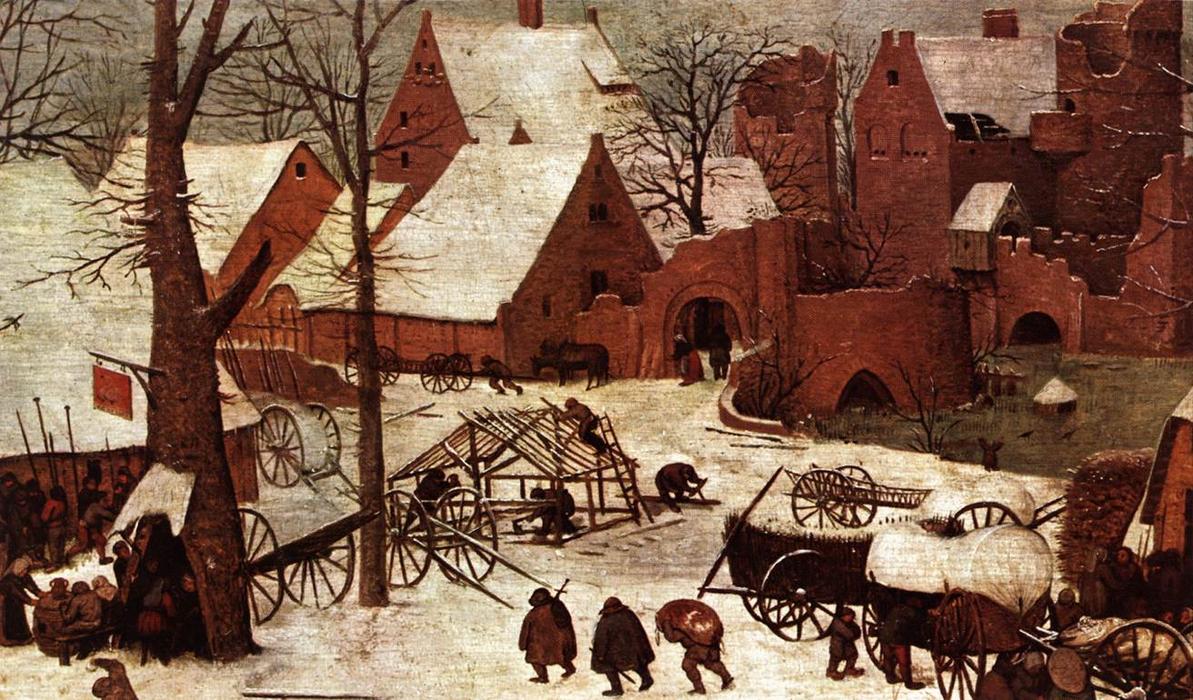
Pieter Bruegel the Elder’s “The Census at Bethlehem,” completed in 1566, transcends mere depiction; it embodies a profound meditation on faith, community, and the enduring spirit of humanity amidst hardship. Housed within the prestigious Musee Royaux des Beaux-Arts de Belgique in Brussels—a repository for over 20,000 artworks—this oil on panel painting stands as a testament to Bruegel’s unparalleled ability to transform biblical narrative into a vibrant tableau of everyday life. More than just a visual record, it's an invitation to contemplate the complexities of existence itself.A Scene Frozen in Time: Composition and Technique
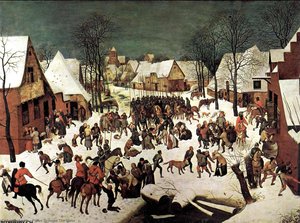
The artwork presents a meticulously crafted winter landscape populated by figures engaged in the arduous task of counting the inhabitants of Bethlehem. Bruegel’s masterful technique—characterized by dense impasto brushstrokes—captures the biting chill of the season with remarkable accuracy. Light plays across the snow-covered rooftops and cobblestone streets, illuminating the faces of villagers huddled together for warmth and sustenance. Notice the subtle gradations of color achieved through layering glazes; these delicate touches contribute to the painting’s atmospheric depth and imbue it with a palpable sense of realism. The artist's keen observation of detail extends beyond the immediate scene—horses pulling carts laden with goods traverse the village, dogs scamper playfully across the snow, and travelers carry backpacks, adding layers of narrative richness.Symbolism Rooted in Faith and Observation
“The Census at Bethlehem” is not simply a snapshot of rural Belgium; it’s infused with symbolic resonance rooted in Christian tradition. The biblical story itself—the pilgrimage to Bethlehem to register for the census decreed by Caesar Augustus—represents a journey toward spiritual renewal and acceptance of God's will. However, Bruegel deftly avoids didacticism, presenting the scene as an honest portrayal of human experience. The villagers’ faces convey a spectrum of emotions – weariness, determination, compassion – reflecting the realities of life under challenging circumstances. Furthermore, the inclusion of animals—particularly horses and dogs—serves as a reminder of the interconnectedness between humanity and nature, highlighting the importance of resilience and adaptability.Historical Context: Renaissance Realism in Flanders
Pieter Bruegel the Elder’s artistic vision aligns perfectly with the broader trends of the Northern Renaissance. Unlike the idealized forms favored by Italian artists during the High Renaissance, Bruegel embraced realism—capturing the textures and nuances of ordinary life with unflinching honesty. His work reflects a humanist preoccupation with observing and interpreting the natural world, mirroring the intellectual fervor of the era. The painting’s creation coincided with a period of religious upheaval in Europe – the Protestant Reformation – yet Bruegel remained steadfast in his commitment to portraying human experience without overt moral judgment. This nuanced approach distinguishes him from many of his contemporaries and elevates “The Census at Bethlehem” to an enduring masterpiece of artistic expression.Emotional Resonance: A Portrait of Human Spirit
Ultimately, “The Census at Bethlehem” speaks to the viewer on a deeply emotional level. Despite the bleak winter setting, Bruegel’s depiction exudes warmth and camaraderie—a testament to the human capacity for compassion and perseverance. The painting invites contemplation about faith, community, and the enduring beauty found within the simplest of moments. It's a reminder that even amidst adversity, humanity retains its dignity and strives toward something greater than itself. A reproduction by ArtsDot.com allows you to experience this timeless artwork’s profound impact firsthand—preserving Bruegel’s vision for generations to come.Obras relacionadas
Biografía del artista
vida temprana y formación
Pieter Brueghel el Viejo, una figura clave en la pintura renacentista, nació y creció en Breda, Bélgica, entre 1525 y 1530. Su maestro, Pieter Coecke van Aelst, era un pintor de Amberes que guió el desarrollo artístico temprano de Bruegel. Después de formarse con Coecke, Bruegel se convirtió en maestro independiente en la gremial de pintores de Amberes en 1551.contribuciones artísticas y estilo
La obra de Bruegel es reconocida por sus innovadoras elecciones de temas, centrándose en paisajes y escenas campesinas. Sus pinturas, como Paisaje con la huida a Egipto (37 x 55 cm, galerías Courtauld de Londres), demostraron su dominio del óleo sobre tabla. El estilo de Bruegel, caracterizado por el uso del claroscuro, creó una sensación de profundidad y realismo, haciendo que sus pinturas se sintieran inmersivas.obras notables y museos
* Paisaje de los Alpes (musée du Louvre, París), una obra ejemplar que muestra las habilidades de Bruegel en la pintura de paisajes. * Triptico (renacimiento del norte, óleo), un notable ejemplo del uso de óleo sobre tabla por parte de Bruegel. * Los Musée Royale de Beaux-Arts en Bruselas cuenta con una impresionante colección de más de 20.000 obras de arte, incluyendo obras de Bruegel.legado e influencia
La influencia de Bruegel en la pintura dorada holandesa y los desarrollos artísticos posteriores es innegable. Su obra ha inspirado a artistas tanto en las artes literarias como en el cine, con referencias a sus pinturas que aparecen en películas como Solaris (1972) y Melancolía (2011). Explore más obras de Bruegel en ArtsDot.com: [https://ArtsDot.com/@/pieter-bruegel-the-elder](https://ArtsDot.com/@/pieter-bruegel-the-elder)- Descubra las obras maestras del Musée Royale de Beaux-Arts (Bruselas, Bélgica): /es/art/show/art-d3cf2d-es/
- Aprenda más sobre la pintura neerlandesa temprana en Wikipedia: [https://en.wikipedia.org/wiki/early_netherlandish_painting](https://en.wikipedia.org/wiki/early_netherlandish_painting)
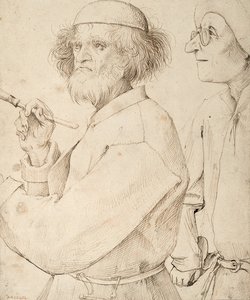
Pieter Bruegel el Viejo
1525 - 1569 , Bélgica
Datos clave
- Artistas Que Influyeron:
- Hieronymus Bosch
- Pieter Coecke van Aelst
- Estilo Artístico: Renacimiento Nórdico
- Fecha De Muerte: 1569
- Fecha De Nacimiento: c. 1525-1530
- Influencia Artística: Pintura dorada holandesa
- Lugar De Nacimiento: Breda, Bélgica
- Nacionalidad: Belga
- Nombre Completo: Pieter Bruegel el Viejo
- Obras Notables:
- Paisaje con la huida a Egipto
- El triunfo de la muerte
- Boda campesina
- Cazadores en la nieve
- La torre de Babel
Artículos relacionados
Pieter Bruegel the Elder: A Master of Genre, Landscape & Social Commentary
Explore the life & art of Pieter Bruegel the Elder, a pivotal figure of the Renaissance. Discover his groundbreaking genre scenes, symbolic landscapes, and lasting influence on art history. Learn more at ArtsDot.
Jan Brueghel the Elder: A Master of Flemish Landscape & Allegory – Exploring Innovation & Influence
Explore the captivating world of Jan Brueghel the Elder, a Flemish Baroque master renowned for his stunning landscapes & allegorical paintings. Discover his collaborations with Rubens and lasting artistic legacy.
Los 25 Tesoros del Kunsthistorisches Museum de Viena: Arte, Historia y Decoración Exclusiva
Descubre los 25 tesoros del Kunsthistorisches Museum de Viena. Explora obras maestras de Rafael, Rembrandt y Vermeer, su historia y técnica. Encuentra reproducciones de arte exclusivas para decorar tu hogar con elegancia. ¡Explora la colección completa en ArtsDot.com!

Paisajes Románticos: 10 Obras Maestras que Definieron un Movimiento Artístico
Descubre los 10 paisajes románticos más influyentes de artistas como Caspar David Friedrich y Turner. Explora la belleza, el simbolismo y las técnicas del movimiento romántico. Reproducciones de arte exclusivas en ArtsDot.com.

Evocations of Place: A Historical Journey Through Landscape Art
Explore the rich history of landscape art with ArtsDot. Discover renowned artists, movements like Impressionism & Romanticism, and expert guidance for collecting timeless pieces. Find your perfect serene escape today!