 Ver en contexto
 Enviar
 Compartir
 Detalles

 Descargar
 Similares
 Radiografía
 Presentación de diapositivas
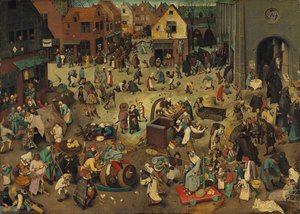
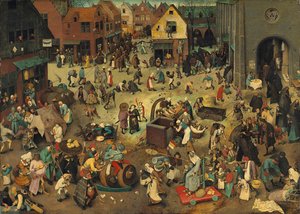
La lucha entre el carnaval y la cuaresma
 Óleo sobre tabla
- Aunque Bruegel el Viejo fue influenciado por el Re
 1559
1559- Renacimiento
 Kunsthistorisches Museum
 Ver más
Giclée / Impresión de arte
Impresiones giclée o en lienzo de calidad de museo con producción rápida y opciones de acabado flexibles. ( Comprar pintura hecha a mano Comprar imagen)




P118B $10

P118H $10

P118W $10

P438Z $10

P508JH $12

P508YH $12

P805H $10

P805Z $10

P919BZ $10

P919G $10

P919XJ $10

P959ZH $10

P968JZ $12

W106C $8

W218G $10

W218JH $8

W218Y $10

W307PJ $10

W316G $10

W316PJ $8

W316Y $10

W398PJ $8

W4111J $10

W500HY $15

W500JH $15

W692G $12

W849H $8

W940BG $15

W953PJ $8




Elija entre nuestros tamaños predefinidos que respetan las proporciones originales de la obra.

Puede introducir sus propias dimensiones para adaptarse a un marco o espacio específico. Si el tamaño seleccionado no coincide con las proporciones de la imagen original, recortaremos la obra de arte o extenderemos la imagen con un borde con efecto espejo o de color sólido. Se enviará una maqueta digital para su aprobación antes de que comience la producción.
Tenga en cuenta que la vista previa en pantalla no refleja el recorte o la extensión real. Solo la maqueta mostrará con precisión la composición final.
Aunque existen tamaños personalizados, recomendamos seleccionar una dimensión de la lista predefinida para preservar las proporciones originales.
Envío a todo el mundo () en 2 semanas en lugar de las 4/5 semanas estándar. (2 septiembre)

Envío exprés gratuito a todo el mundo

Lienzo de lino de alta calidad

Seguro de envío total

Garantía de reembolso de impuestos aduaneros

Garantía de fidelidad cromática exacta

Política de devolución de 60 días (solo por defectos)

Garantía de devolución del 100% del dinero

Descuento por cantidad
 La opción de vidrio solo está disponible en tamaños inferiores a 110 cm.

La lucha entre el carnaval y la cuaresma
Giclée / Impresión de arte
Dimensiones de la reproducción
-


Precio total final
$ 62
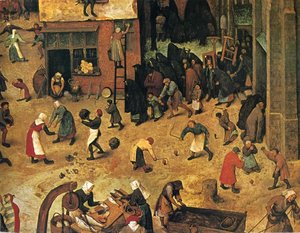
The Fight Between Carnival and Lent (detail)
Pieter Bruegel the Elder, a renowned Netherlandish Renaissance painter and printmaker, is celebrated for his captivating landscapes and peasant scenes. One of his most intriguing works is The Fight between Carnival and Lent, created in 1559. This painting is housed at the Kunsthistorisches Museum in Vienna, Austria.
Context and Symbolism
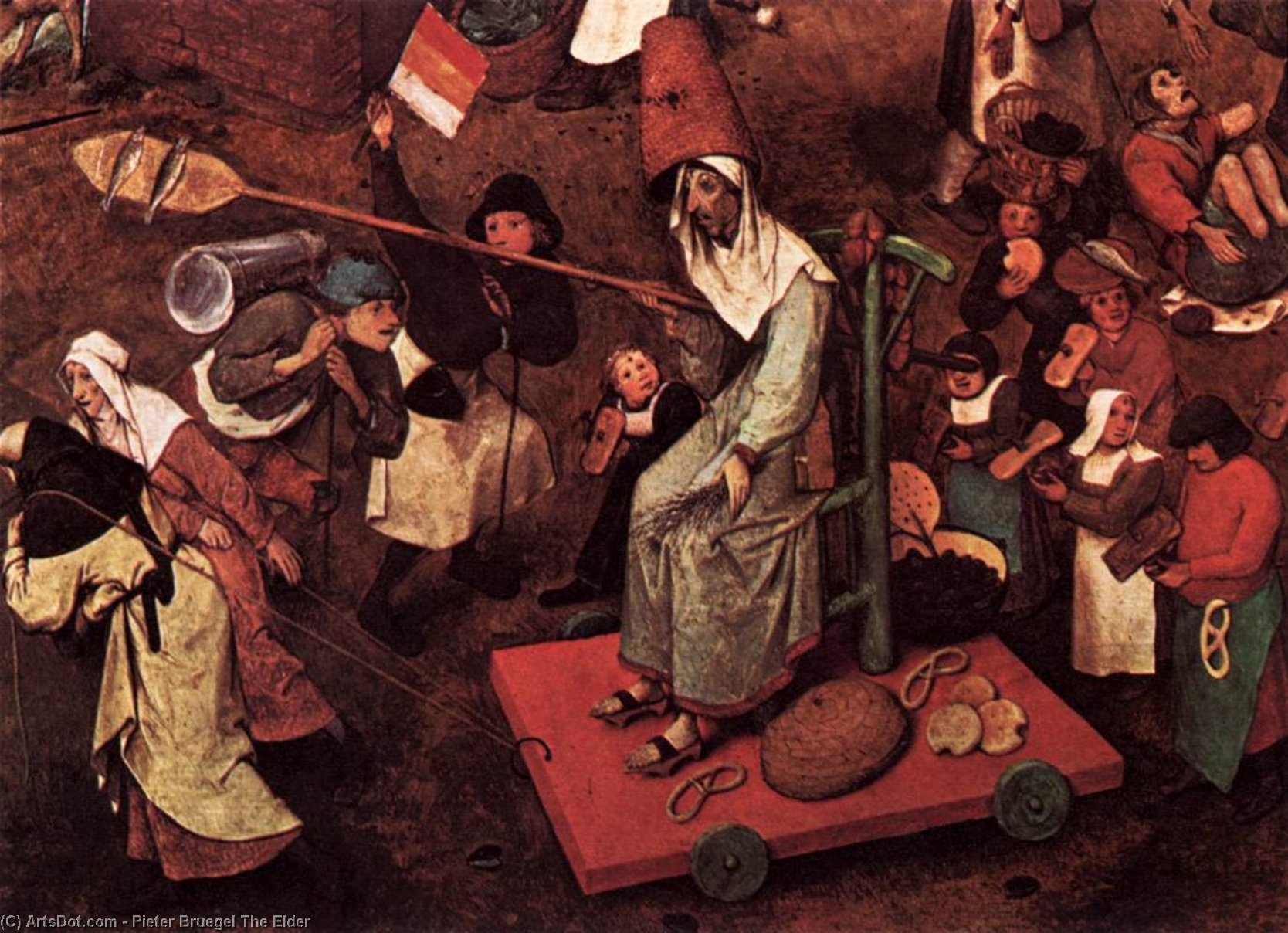
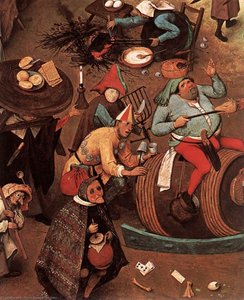
This monumental panorama depicts a vivid scene where two opposing forces, Carnival and Lent, engage in a symbolic battle. The setting is a bustling town square filled with people from various social classes. On one side, the figure of Carnival, representing indulgence and excess, is shown as a large, rotund man riding a beer barrel. In contrast, Lent, symbolizing abstinence and piety, is depicted as a gaunt woman on a cart pulled by fish. The scene is rich in symbolism, reflecting the societal tensions between the pleasures of life and the strictures of religious observance. Bruegel masterfully captures the essence of this conflict through his detailed and expressive characters.
Artistic Techniques
Bruegel’s use of oil on panel allows for a high level of detail and texture, enhancing the overall visual impact of the painting. The composition is carefully balanced, with each element contributing to the narrative. The artist's skill in depicting human emotions and interactions adds depth to the scene. He employs a technique known as “world landscape,” placing the viewer above the action, offering a panoramic perspective that encompasses the entire square.
Historical Significance
The Fight between Carnival and Lent is a significant work in Bruegel’s oeuvre, showcasing his ability to blend humor and social commentary. It reflects the cultural and religious climate of 16th-century Europe, where such themes were common in art and literature. The painting speaks volumes about the anxieties of its time—the struggle between earthly desires and spiritual devotion—a tension that continues to resonate with audiences today.
Legacy and Influence
Bruegel’s innovative approach to subject matter and composition has influenced generations of artists. His works continue to inspire contemporary artists, writers, and filmmakers. For example, his painting Landscape with the Fall of Icarus is referenced in W.H. Auden’s poem “Musée des Beaux Arts.” Bruegel's masterful depiction of everyday life and moral dilemmas cemented his place as a pioneer of genre painting, shaping artistic conventions for centuries to come.
Conclusion
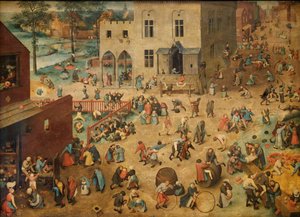
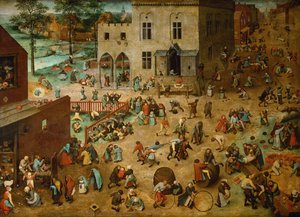
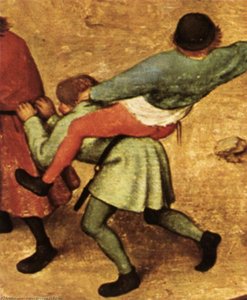
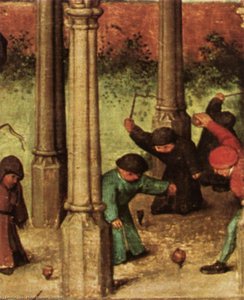
The Fight between Carnival and Lent by Pieter Bruegel The Elder is a masterpiece that encapsulates the artist’s unique blend of humor, social commentary, and artistic skill. It remains a powerful example of Netherlandish Renaissance painting and continues to captivate audiences with its rich symbolism and detailed composition. For those interested in exploring more of Bruegel's works, The Fight between Carnival and Lent is available for viewing at ArtsDot. Additionally, the Kunsthistorisches Museum in Vienna houses an extensive collection of Bruegel’s paintings, including The Dutch Proverbs and Children's Games (detail). To learn more about Pieter Bruegel The Elder and his contributions to art history, visit Pieter Bruegel the Elder on Wikipedia.
Obras relacionadas
Biografía del artista
vida temprana y formación
Pieter Brueghel el Viejo, una figura clave en la pintura renacentista, nació y creció en Breda, Bélgica, entre 1525 y 1530. Su maestro, Pieter Coecke van Aelst, era un pintor de Amberes que guió el desarrollo artístico temprano de Bruegel. Después de formarse con Coecke, Bruegel se convirtió en maestro independiente en la gremial de pintores de Amberes en 1551.contribuciones artísticas y estilo
La obra de Bruegel es reconocida por sus innovadoras elecciones de temas, centrándose en paisajes y escenas campesinas. Sus pinturas, como Paisaje con la huida a Egipto (37 x 55 cm, galerías Courtauld de Londres), demostraron su dominio del óleo sobre tabla. El estilo de Bruegel, caracterizado por el uso del claroscuro, creó una sensación de profundidad y realismo, haciendo que sus pinturas se sintieran inmersivas.obras notables y museos
* Paisaje de los Alpes (musée du Louvre, París), una obra ejemplar que muestra las habilidades de Bruegel en la pintura de paisajes. * Triptico (renacimiento del norte, óleo), un notable ejemplo del uso de óleo sobre tabla por parte de Bruegel. * Los Musée Royale de Beaux-Arts en Bruselas cuenta con una impresionante colección de más de 20.000 obras de arte, incluyendo obras de Bruegel.legado e influencia
La influencia de Bruegel en la pintura dorada holandesa y los desarrollos artísticos posteriores es innegable. Su obra ha inspirado a artistas tanto en las artes literarias como en el cine, con referencias a sus pinturas que aparecen en películas como Solaris (1972) y Melancolía (2011). Explore más obras de Bruegel en ArtsDot.com: [https://ArtsDot.com/@/pieter-bruegel-the-elder](https://ArtsDot.com/@/pieter-bruegel-the-elder)- Descubra las obras maestras del Musée Royale de Beaux-Arts (Bruselas, Bélgica): /es/art/show/art-d3cf2d-es/
- Aprenda más sobre la pintura neerlandesa temprana en Wikipedia: [https://en.wikipedia.org/wiki/early_netherlandish_painting](https://en.wikipedia.org/wiki/early_netherlandish_painting)
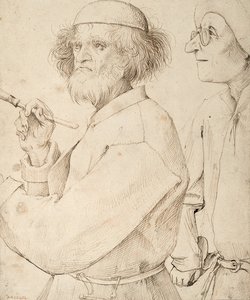
Pieter Bruegel el Viejo
1525 - 1569 , Bélgica
Datos clave
- Artistas Que Influyeron:
- Hieronymus Bosch
- Pieter Coecke van Aelst
- Estilo Artístico: Renacimiento Nórdico
- Fecha De Muerte: 1569
- Fecha De Nacimiento: c. 1525-1530
- Influencia Artística: Pintura dorada holandesa
- Lugar De Nacimiento: Breda, Bélgica
- Nacionalidad: Belga
- Nombre Completo: Pieter Bruegel el Viejo
- Obras Notables:
- Paisaje con la huida a Egipto
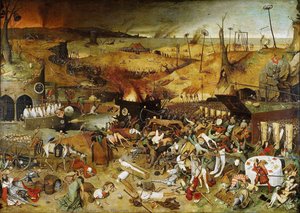
- El triunfo de la muerte
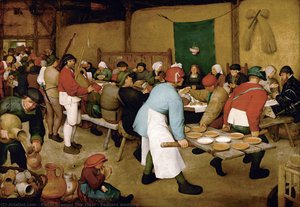
- Boda campesina
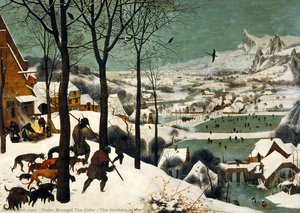
- Cazadores en la nieve
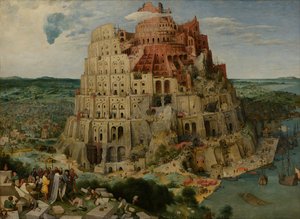
- La torre de Babel
Artículos relacionados
Renacimiento Nórdico: 10 Obras Maestras que Transformaron el Arte |
Descubre 10 obras maestras del Renacimiento Nórdico: Jan van Eyck, Durero y más. Explora la historia, el simbolismo y las técnicas de estos icónicos pintores. Encuentra reproducciones de arte exclusivas en .

Los 10 Maestros del Siglo de Oro Holandés: Arte, Historia y Decoración Exclusiva
Descubre los 10 imprescindibles del Siglo de Oro Holandés: Rembrandt, Vermeer y más. Explora la historia, técnica y belleza de estos lienzos clásicos. Encuentra reproducciones de arte exclusivas para decorar tu hogar en .
El Renacimiento Septentrional: Florecimiento del Realismo y la Innovación Artística
Descubre el Renacimiento Septentrional y la maestría de los Primitivos Flamencos. Explora sus técnicas innovadoras, simbolismo oculto y obras icónicas con ArtsDot.

Reflejos de una Época Dorada: La Pintura Barroca Holandesa y la Innovación Cultural
Descubra la riqueza y el detalle de la pintura barroca holandesa del Siglo de Oro. Explore las obras maestras de Rembrandt, Vermeer y otros artistas clave. Análisis experto e historia cultural.

Los 10 Maestros del Barroco Holandés: Obras que Definen una Época | ArtsDot
Descubre los 10 imprescindibles del Barroco holandés: Rembrandt, Vermeer y más. Explora la historia, técnica y belleza de estas obras maestras. Reproducciones de arte en ArtsDot.com para decorar tu hogar con elegancia.