 Ver en contexto
 Enviar
 Compartir
 Detalles

 Descargar
 Similares
 Radiografía
 Presentación de diapositivas
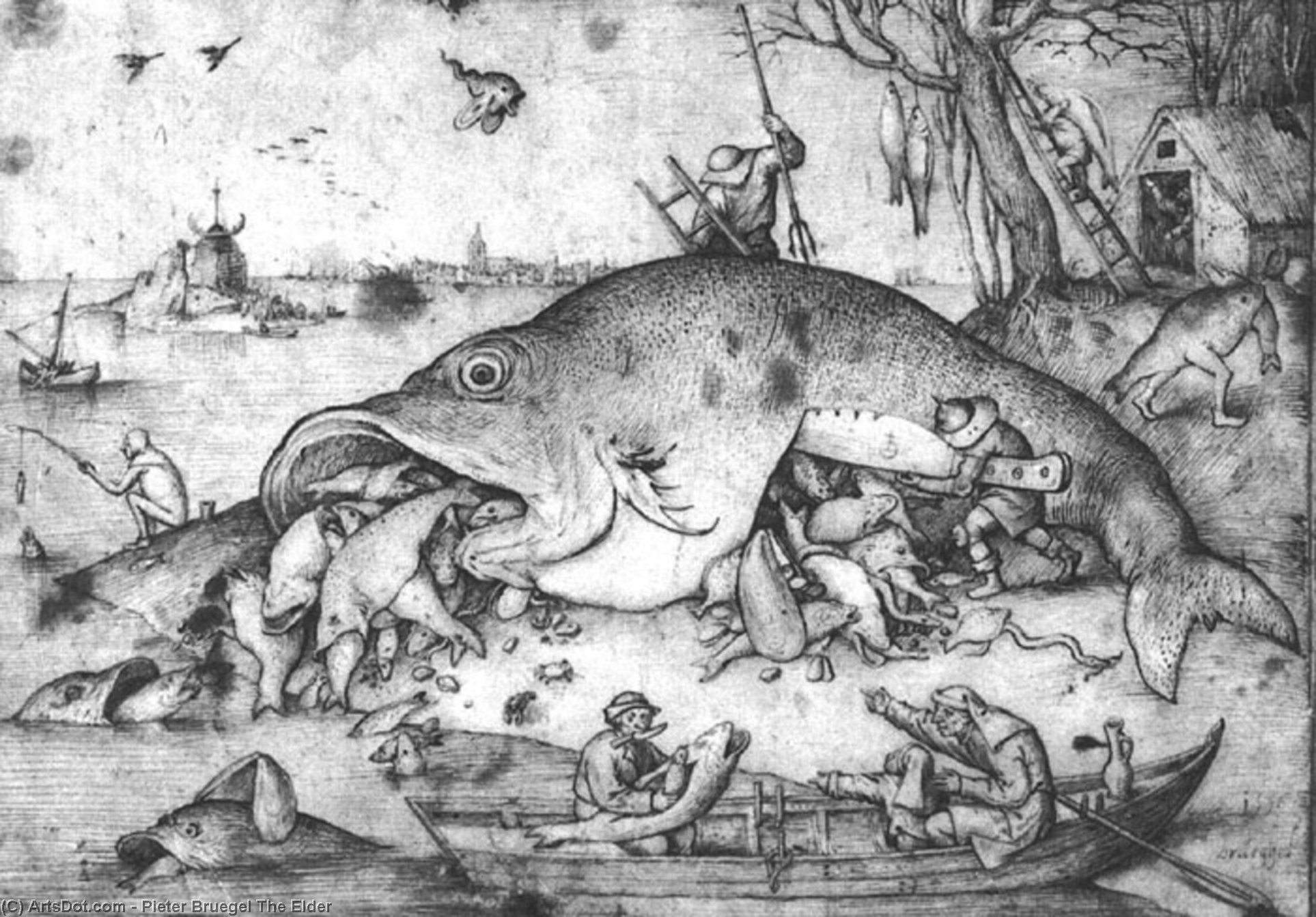
Big fishes eat small fishes
 Acrylic On Canvas
- WallArt
- Northern Renaissance
 1556
1556 22.0 x 29.0 cm
 Ver más
Giclée / Impresión de arte
Impresiones giclée o en lienzo de calidad de museo con producción rápida y opciones de acabado flexibles. ( Comprar pintura hecha a mano Comprar imagen)




































Elija entre nuestros tamaños predefinidos que respetan las proporciones originales de la obra.

Puede introducir sus propias dimensiones para adaptarse a un marco o espacio específico. Si el tamaño seleccionado no coincide con las proporciones de la imagen original, recortaremos la obra de arte o extenderemos la imagen con un borde con efecto espejo o de color sólido. Se enviará una maqueta digital para su aprobación antes de que comience la producción.
Tenga en cuenta que la vista previa en pantalla no refleja el recorte o la extensión real. Solo la maqueta mostrará con precisión la composición final.
Aunque existen tamaños personalizados, recomendamos seleccionar una dimensión de la lista predefinida para preservar las proporciones originales.
Envío a todo el mundo () en 2 semanas en lugar de las 4/5 semanas estándar. (3 septiembre)

Envío exprés gratuito a todo el mundo

Lienzo de lino de alta calidad

Seguro de envío total

Garantía de reembolso de impuestos aduaneros

Garantía de fidelidad cromática exacta

Política de devolución de 60 días (solo por defectos)

Garantía de devolución del 100% del dinero

Descuento por cantidad
 La opción de vidrio solo está disponible en tamaños inferiores a 110 cm.

Big fishes eat small fishes
Giclée / Impresión de arte
Dimensiones de la reproducción
-


Precio total final
$ 62
A Snapshot of Chaos: Examining Pieter Bruegel’s “Big Fishes Eat Small Fishes”
Pieter Bruegel the Elder's "Big Fishes Eat Small Fishes," completed in 1556, stands as a cornerstone of Northern Renaissance art—a visual distillation of anxieties surrounding societal order and the relentless struggle for survival. More than just a depiction of animals consuming their prey, this monumental ink drawing on paper offers a layered commentary on human ambition, greed, and the precarious balance between prosperity and ruin. Its enduring fascination stems from Bruegel’s masterful ability to capture not merely what is seen but what is felt—a palpable sense of unease that continues to resonate with audiences centuries later.The Scene Unfolds: Composition and Narrative Complexity
The painting's horizontal format immediately establishes a commanding presence, anchoring the viewer's gaze upon a colossal fish dominating the central space. This dominant figure isn’t merely an animal; it embodies power—a ruthless leviathan consuming smaller fish, rodents, and even human figures scattered across the landscape. Bruegel eschews strict perspective conventions, favoring instead a densely populated composition that prioritizes narrative over illusionistic realism. The arrangement is deliberately chaotic, mirroring the turbulent political climate of Bruegel’s time – the Spanish Habsburg dominion exerted considerable influence over Flanders, fostering tensions between Catholic piety and burgeoning mercantile interests. This visual dissonance reflects the broader anxieties about societal stability prevalent during the Renaissance.Technique and Texture: Mastering Ink
Bruegel's technique is characterized by painstaking detail achieved through meticulous line work and hatching—a hallmark of Northern Renaissance drawing practice. Fine lines delineate the contours of fish, buildings, trees, and human forms with remarkable precision, while cross-hatching creates textured surfaces that convey depth and volume. The artist skillfully utilizes tonal variations to simulate light and shadow, enhancing the dramatic impact of the scene without resorting to vibrant color palettes. This masterful control over ink demonstrates Bruegel’s dedication to capturing not just visual accuracy but also conveying an emotional atmosphere—a feeling of impending doom mingled with opportunistic activity.Symbolism Beyond the Surface: Allegory and Moral Reflection
“Big Fishes Eat Small Fishes” transcends its literal depiction, functioning as a potent allegory for political maneuvering and social hierarchy. The colossal fish represents those in positions of authority who exploit vulnerabilities and consume resources without regard for the consequences—a critique of unchecked ambition and avarice. The smaller creatures symbolize individuals struggling to survive amidst this competitive environment, highlighting the vulnerability inherent in any position within society. Furthermore, the landscape itself serves as a visual metaphor for the broader anxieties surrounding governance and the potential for societal collapse. Bruegel’s intention was not simply to portray a scene of natural predation; he aimed to provoke contemplation about moral responsibility and the dangers of prioritizing personal gain over collective well-being.A Legacy Enduring: Emotional Impact and Artistic Influence
The painting's subdued palette—primarily shades of gray—contributes to its unsettling mood, fostering a sense of apprehension and emphasizing the bleakness of the depicted circumstances. Despite lacking dramatic highlights or shadows, Bruegel achieves remarkable atmospheric depth through careful attention to tonal gradations and textural variations. This masterful execution exemplifies the Northern Renaissance preoccupation with conveying psychological states alongside visual representations. “Big Fishes Eat Small Fishes” continues to inspire artists and designers alike—its complex composition and evocative symbolism serving as a reminder of the enduring power of art to engage viewers emotionally and intellectually, prompting reflection on fundamental questions about human nature and societal dynamics.Obras relacionadas
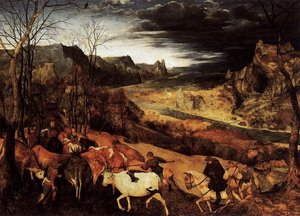
Biografía del artista
vida temprana y formación
Pieter Brueghel el Viejo, una figura clave en la pintura renacentista, nació y creció en Breda, Bélgica, entre 1525 y 1530. Su maestro, Pieter Coecke van Aelst, era un pintor de Amberes que guió el desarrollo artístico temprano de Bruegel. Después de formarse con Coecke, Bruegel se convirtió en maestro independiente en la gremial de pintores de Amberes en 1551.contribuciones artísticas y estilo
La obra de Bruegel es reconocida por sus innovadoras elecciones de temas, centrándose en paisajes y escenas campesinas. Sus pinturas, como Paisaje con la huida a Egipto (37 x 55 cm, galerías Courtauld de Londres), demostraron su dominio del óleo sobre tabla. El estilo de Bruegel, caracterizado por el uso del claroscuro, creó una sensación de profundidad y realismo, haciendo que sus pinturas se sintieran inmersivas.obras notables y museos
* Paisaje de los Alpes (musée du Louvre, París), una obra ejemplar que muestra las habilidades de Bruegel en la pintura de paisajes. * Triptico (renacimiento del norte, óleo), un notable ejemplo del uso de óleo sobre tabla por parte de Bruegel. * Los Musée Royale de Beaux-Arts en Bruselas cuenta con una impresionante colección de más de 20.000 obras de arte, incluyendo obras de Bruegel.legado e influencia
La influencia de Bruegel en la pintura dorada holandesa y los desarrollos artísticos posteriores es innegable. Su obra ha inspirado a artistas tanto en las artes literarias como en el cine, con referencias a sus pinturas que aparecen en películas como Solaris (1972) y Melancolía (2011). Explore más obras de Bruegel en ArtsDot.com: [https://ArtsDot.com/@/pieter-bruegel-the-elder](https://ArtsDot.com/@/pieter-bruegel-the-elder)- Descubra las obras maestras del Musée Royale de Beaux-Arts (Bruselas, Bélgica): /es/art/show/art-d3cf2d-es/
- Aprenda más sobre la pintura neerlandesa temprana en Wikipedia: [https://en.wikipedia.org/wiki/early_netherlandish_painting](https://en.wikipedia.org/wiki/early_netherlandish_painting)
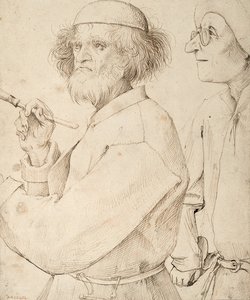
Pieter Bruegel el Viejo
1525 - 1569 , Bélgica
Datos clave
- Artistas Que Influyeron:
- Hieronymus Bosch
- Pieter Coecke van Aelst
- Estilo Artístico: Renacimiento Nórdico
- Fecha De Muerte: 1569
- Fecha De Nacimiento: c. 1525-1530
- Influencia Artística: Pintura dorada holandesa
- Lugar De Nacimiento: Breda, Bélgica
- Nacionalidad: Belga
- Nombre Completo: Pieter Bruegel el Viejo
- Obras Notables:
- Paisaje con la huida a Egipto
- El triunfo de la muerte
- Boda campesina
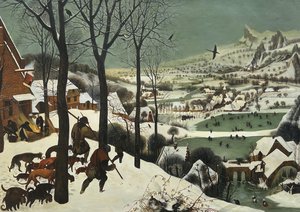
- Cazadores en la nieve
- La torre de Babel
Artículos relacionados
Pieter Bruegel the Elder: A Master of Genre, Landscape & Social Commentary
Explore the life & art of Pieter Bruegel the Elder, a pivotal figure of the Renaissance. Discover his groundbreaking genre scenes, symbolic landscapes, and lasting influence on art history. Learn more at ArtsDot.
Renacimiento Nórdico: 10 Obras Maestras que Transformaron el Arte |
Descubre 10 obras maestras del Renacimiento Nórdico: Jan van Eyck, Durero y más. Explora la historia, el simbolismo y las técnicas de estos icónicos pintores. Encuentra reproducciones de arte exclusivas en .

Katsushika Hokusai: Las 25 Obras Maestras del Ukiyo-e que Transformaron el Arte Japonés | ArtsDot
Descubre las 25 obras maestras de Katsushika Hokusai, el genio del ukiyo-e. Explora 'La Gran Ola', paisajes japoneses y su impacto en el arte moderno. Reproducciones de alta calidad para tu hogar en ArtsDot.com.
Los 25 Tesoros del Kunsthistorisches Museum de Viena: Arte, Historia y Decoración Exclusiva
Descubre los 25 tesoros del Kunsthistorisches Museum de Viena. Explora obras maestras de Rafael, Rembrandt y Vermeer, su historia y técnica. Encuentra reproducciones de arte exclusivas para decorar tu hogar con elegancia. ¡Explora la colección completa en ArtsDot.com!

Paisajes Románticos: 10 Obras Maestras que Definieron un Movimiento Artístico
Descubre los 10 paisajes románticos más influyentes de artistas como Caspar David Friedrich y Turner. Explora la belleza, el simbolismo y las técnicas del movimiento romántico. Reproducciones de arte exclusivas en ArtsDot.com.